8.1: (4) ABC Primary active transporter
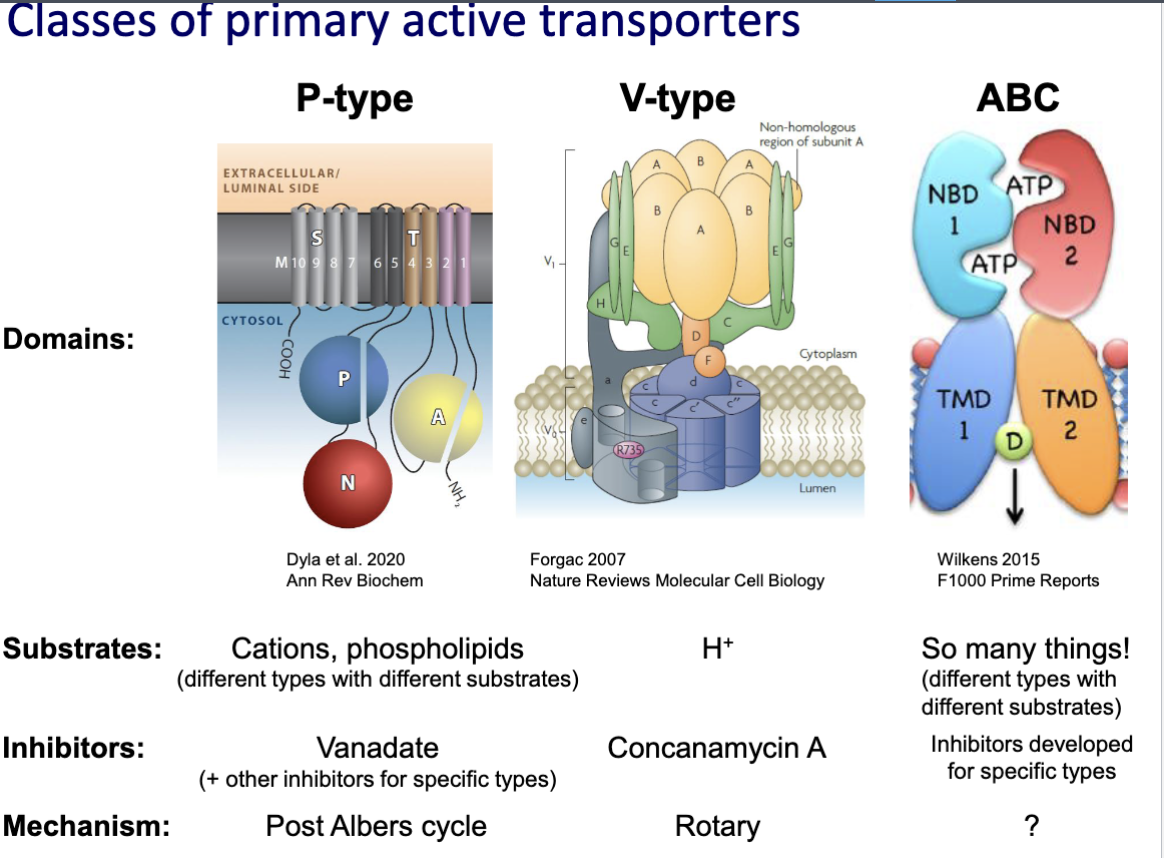
ABC: roles in drug resistance
multidrug efflux system involved in resistance to anticancer drugs
ABCB1—p glycoprotein
binding of taxol induces an occluded conformation and closure of the inter-NBD gap
central pocket of Taxol-bound ABCB1 is lined by amino acids from all 12 transmembrane helices
multiple isoforms of multidrug resistance associated proteins
breast cancer resistance protein
these transporters all hydrolyse ATP and pump diverse drugs out of cancer cells
ABCB1
what distinguishes a substrate and inhibitor?
fewer/a single binding mode
fill the frug-binding cavity more completely
form a larger number of contacts with ABCB1
Think of an ABC transporter (such as P-glycoprotein / ABCB1) as an automatic revolving door on the cell membrane that throws unwanted drugs out of the cell.
Both substrates (drugs that get pumped out) and inhibitors (drugs that block the pump) enter and bind inside the exact same central pocket. However, they affect the door in completely opposite ways:
1. How They Fit in the Pocket
Substrate (e.g., Taxol): Fits flexibly into the pocket, leaving enough room for the protein structure to shift and move.
Inhibitor (e.g., Zosuquidar): Packs tightly into the pocket like a doorstop. It fills the cavity more completely and makes many more structural contacts with the protein, locking it in place and removing its flexibility.
2. How They Affect the Engine "Handles" (NBDs)
Substrates: Allow the two cytosolic engine domains (the NBDs at the bottom) to come together and touch. When these handles close together and bind ATP fuel, the door flips open to the outside and ejects the substrate.
Inhibitors: Push or hold the two NBD handles slightly further apart. Because the handles are kept apart, they cannot close together to burn fuel, trapping the entire transporter in a jammed, occluded state.
3. What Happens to the Pump's Motor (ATPase Activity)
Substrates speed up the motor (stimulate ATP breakdown) because their presence triggers the active pumping cycle.
Inhibitors freeze the motor (inhibit ATP breakdown), shutting down pump activity.
why is reversing multidrug resistance via ABCB1 inhibition so challenging?
it is difficult to inhibit ABCB1 fully while avoiding toxicity
in many cancers other multidrug efflux systems or other resistance mechanisms play important roles
Drug resistance
understand the diverse mechanisms that cells employ to resist the killing effects of small molecules
to design experiments to test hypotheses relating to potential mechanisms of resistance
to suggest strategies for delaying or reversing drug resistance that would be useful in different scenarios