Marketing
Purpose of Market research
Investigate competitors to see their strengths and weakness
Reduced risk when launching a new product or entering a new market
Identify gaps in the market
Identify how customers needs and wants are changing
Methods of Market research
Primary research- interviews, observations and surveys
Secondary research - financial reports, market research reports and online databases
Why is marketing important
Helps businesses understand the needs and wants its customers such as price, quality, choice etc
Market orientation- focuses on the needs of the customers to design a product which satisfies these needs
Product orientation- when a business focuses on the product’s characteristics rather the market it is in
Mass markets- products aimed the majority of the market segment - economies of scale, less unique and lower profit margins
Niche market- only aimed at selected individuals - no economies of scale, high profit , and unique

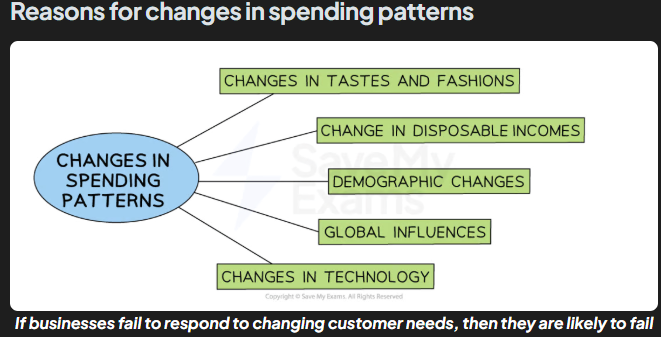
This can be reduced by launching new products, giving better customer service, improving products and minimise costs
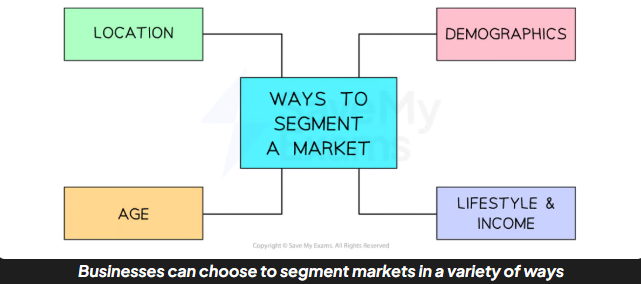
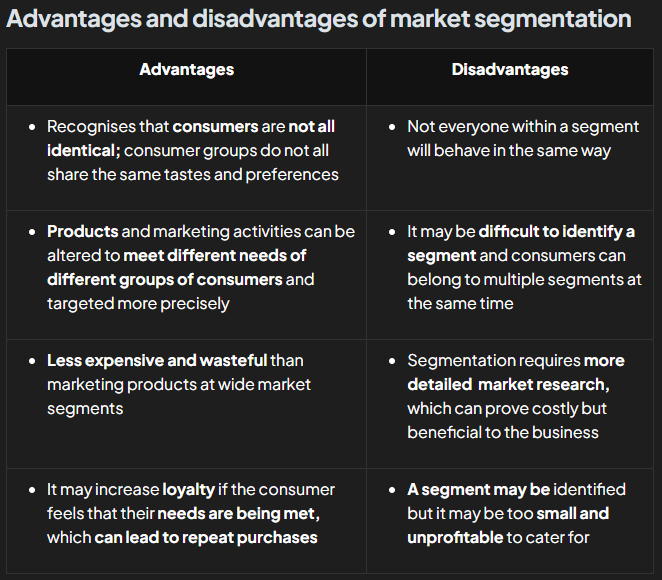
Market segmentation- is the process of dividing a market into groups each of which has distinct customer preferences.
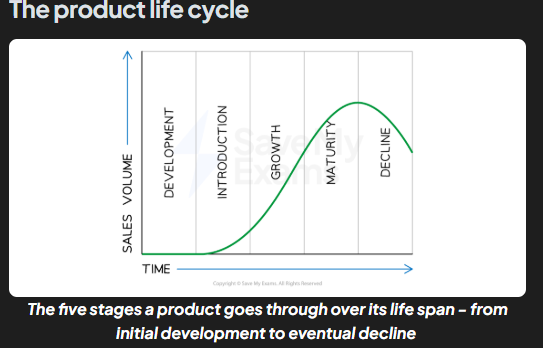
Extension strategies
Product related- modifying the products to make it more appealing to customers eg adding features, increasing capacity and changing design
Promotional related- changing promotional activity related to the product eg change to pricing and advertising.
Boston matrix -is used by the business to analyse their product portfolio
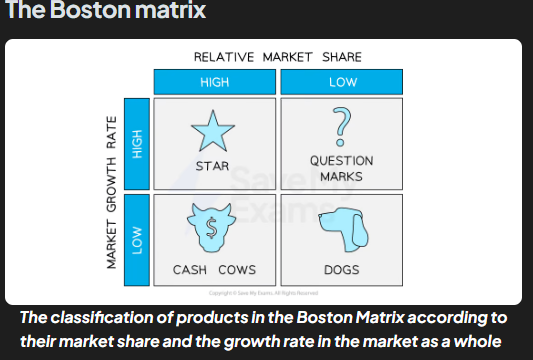
Cash cow- positive cash flow
- negative cash flow
Star- significant positive cash flow
Dog- little revenue for the company
Factors to consider when choosing pricing strategy
cost needed to make profit
stage in product life cycle
competition
technology
USPs
Pricing strategies
Cost plus- price of a product is set by adding a fix markup to guarantee profit
pros- ensures profit made on each item
cons- ignores other factors
Penetration- businesses set a low price for a new product gain market share quickly
pros- more customers are attracted to buy the product
cons- customers may think it is low quality
Competition- price is set based on competitors
pros- matches price of competitors
cons- business must continually monitor competitors prices to remain competitive
Skimming- when a business sets a high price for a new product when it is first introduced .
pros- helps recover development and marketing cost quickly
cons- less useful for new brands and they require customer trust
Promotional - when the business uses temporary sales to attract customers
pros-useful to attract customers
cons- profit margins are lower
Retailer- is a business that sells goods direct to a consumer through a shop
Retailers may have bought the goods from a wholesaler or manufacturer to sell to the consumer
Independent retailers- are not part of a big chain and have a usp
pros of retail- customers can see the product, may not trust buying online, physical interaction
cons of retail- show limited products, maybe more expensive and online exclusive products
E- tailer- is business that sells goods to a consumer online
pro- cheaper, available 24/7
cons- less secure, cannot feel the product
Promotion-reminding customers to buy a product
Advertising- reaches large audience and increase brand awareness but is very expensive eg- newspaper, television, radio and magazine
Sponsorship- when a business provides financial support to an event or etc for marketing exposure
pros- builds brand awareness and ideal way to reach target market
cons-more expensive and difficult to tell impact on sales
Product trials- when a product launches trials are given to customers to try for free
Sale promotions- discounts that encourage customers to buy products
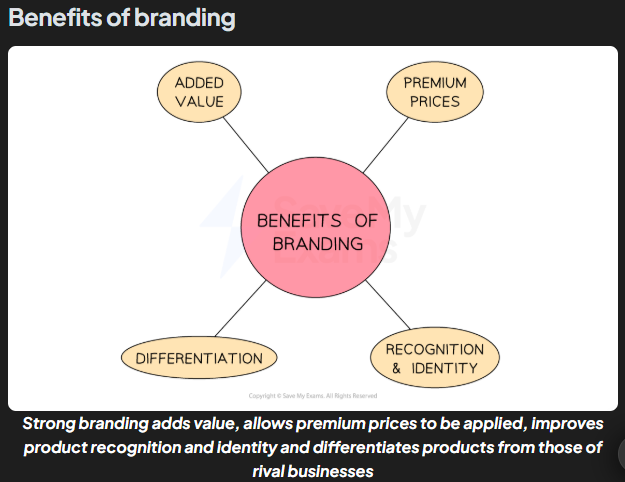
Branding- creating a design/ name that differentiates the product from other companies
pros- brand loyalty
cons- expensive and takes longer
Above the line marketing- advertising to a mass audience eg tv, online adverts
pros- reaches large audience
çons - very expensive
Below the line marketing - personal advertising to niche markets eg poster and local radio
pros- creates awareness
cons- high cost
Public relations- builds a relation between business and public to create a favourable image
pros- improves reputations
cons- expensive
Impact of technology on marketing
Targeted online advertising - directed to specific customer
Viral advertising - business use platforms to promote products by creating eye catching content.
Social media- used to share the product to millions of people