Macro Economis
Supply Side Policies
Definition and Purpose
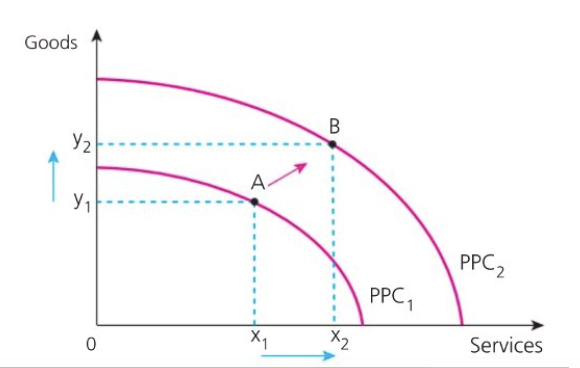
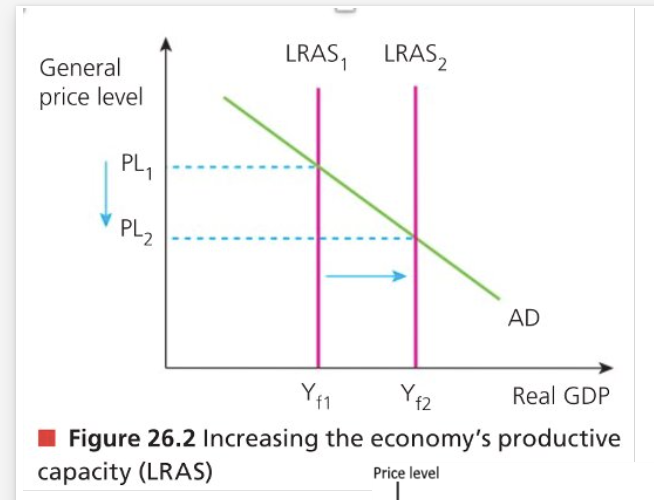
Foster long-term economic growth by increasing the quantity and quality of Factors of Production (FOP): labor, capital, land, and entrepreneurship.
Aim for full employment and achieve potential output.
Types of Supply Side Policies
Market-Oriented Policies:
Reduce government intervention to allow the private sector to enhance productivity through investment.
Strategies include lowering costs and barriers for businesses to stimulate growth and employment.
Interventionist Policies:
Government takes an active role to boost the quantity and quality of FOP in areas where the market fails.
This may involve investing in infrastructure, education, and technology development to ensure that the necessary resources are available for effective production processes.
Goals of Market-Oriented Supply Side Policies
Improve Productive Capacity
Increase output while lowering prices to enhance efficiency.
Enhance Competition and Efficiency
Encourages innovation, reducing prices over time through research and development (R&D).
Promotes labor market flexibility which can reduce unemployment costs.
Focus on minimizing union power and abolishing minimum wages to encourage job flexibility.
Investment Incentives
Lowering costs through tax cuts and deregulation can motivate both firms and households to invest.
Key Market-Oriented Policies
Deregulation
Reduction of rules that can hinder competition, such as eliminating unnecessary business and labor laws.
Case example: The entry of low-cost carriers in the U.S. airline industry has lowered consumer prices.
Privatization
Shift state-owned firms to private ownership to promote efficiency and reduce taxpayer burden.
Note the potential for private monopolies and inefficiencies in essential services.
Trade Liberalization
Promotion of free trade increases competitive pressures on domestic firms, which can improve prices and increase efficiency.
Anti-Trust Policy
Regulation against monopolies to ensure low prices and maintain competition within markets.
Labor Market Policies
Union Power Limitations
Reducing union influence may lower costs for businesses but can lead to income inequality among workers.
Lowering Unemployment Benefits
Can incentivize workers to enter the labor market but may negatively impact living standards.
Minimum Wage Legislation
Reducing or abolishing minimum wages can result in lower unemployment but risk worsening income distribution.
Limitations of Market-Oriented Policies
Equity Issues
Hurting low-income workers by lowering union influence can lead to poorer conditions and higher inequality.
Time Lags
Economic benefits of investment may take considerable time to materialize into job growth.
Power Dynamics
Lobbying from vested interests can hinder the implementation of truly free market policies.
Environmental Concerns
Deregulating industries may lead to increased environmental damage, disproportionately affecting low-income communities.
Interventionist Supply Side Policy Goals
Address Market Failures
Improve productive capacity by increasing the quality and quantity of FOP through targeted government intervention.
Investment in Human Capital:
Emphasizing education and training can enhance worker productivity.
Healthcare Improvements
Access to quality healthcare can increase worker productivity and labor force participation.
Research and Development
Government support for R&D can address market failures in technology and innovation.
Infrastructure and Industrial Policies
Infrastructure Investment
Government investment in transportation and communication can enhance efficiency and lower operational costs for businesses.
Targeted Industrial Policies
Support critical industries through subsidies and tax incentives to drive long-term economic growth.
Comparison of Policies
Market-Based Policies
Fiscal reforms, labor union de-regulation, and incentives for direct investment.
Interventionist Policies
Government financing for infrastructure, healthcare provisions, education funding, and retraining programs.
Supply Side Policy and Aggregate Demand (AD)
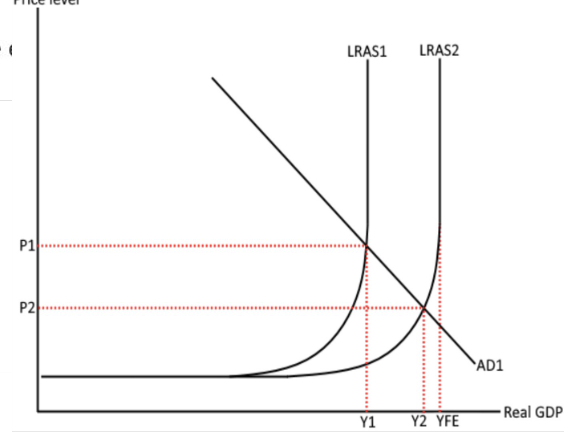
Both market and interventionist policies aim to increase Long-Run Aggregate Supply (LRAS) but can also temporarily raise Aggregate Demand (AD) through government spending (G) and business investment (I).
Conclusion: Considerations
Pros and Cons
Market-oriented policies provide resource allocation efficiency while interventionist policies ensure targeted support to industries or regions. Potential for both to create inequalities, favoring higher income groups or powerful interests.
Future growth strategies may need to balance both approaches to harness the benefits while mitigating the drawbacks.
Targeted Fiscal Policies can lead to short-term increases in AD and long-term enhancements in AS through investments in R&D, infrastructure, healthcare, and education.