Roots
plant roots evolved independently across several major clades durin the Devonian Period (416-360 mya)
oldest evidence comes from clubmosses and their closet relatives the exinct zosterophylls
Development
radicle - embryonic root (first to emerge during seed germination)
features apical meristem
a.k.a root apical meristem (RAM)
primary root forms from the radicle
may develop as tap roots or fibrous roots
hypocotyl is a part of the stem where it transitions into a root
Tap Roots
persistent (retained throughout life)
act as a central axis for branch/lateral/secondary roots
grow in response to:
moisture and nutrient availbility
favorable soil structure
particle aggregation
pore space for gas exchange and moisture retention
tertiary roots emerge from the secondary roots
provide strong anchorage and leverage to resist uproooting and hold the plant upright
Fibrous Roots
start as tap roots
primary roots slow or stop growing
roots start to form from underground shoot tissues (adventitous roots)
basal roots begin at the base of the stem and give rise to hypocotyl roots
stay close to the soil surface
rhizomes (stems) give rise to both shoot tissues and adventitious roots at their nodes
Root Apical Meristems (RAMs)
RAMs are primary root tissues that give rise to:
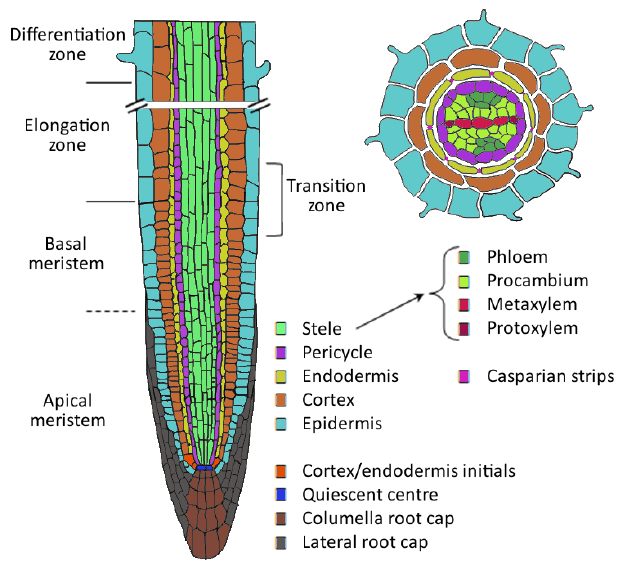
protoderm develops into the root epidermis
ground meristem develps into the cortx
procambium develops into the cambium
vascular tissues arise from the cambium
Root Morphology
stele - central part of root that houses vascular tissues
houses xylem and phloem
arranged in an X-shape in dicots
arranged in a ring around a central pith in monocots
pericycle - outermost part of the stele
gives rise to branch/lateral/secondary roots
cued by lipocalin (protein)
helps form the vascular cambium in plants that produce woody roots
some produce alkaloids
not always present
cortex surrounds the stele
endodermis = innermost cell layer of the cortex and protective layer around the stele
contains the casparian strip,
waxy barrier
controls movement of water and minerals
epidermis on the outside
root tip epidermal cells secrete mucigel
polysaccharide secreted by the golgi apparatus
lubricates, prevents drying, and creates a favorable microbial environment
Moving In
how do we get water and minerals into the roots?
root hairs develop by stretching out epidermal cell wall and filling the space with cytoplasm
cell membranes become embedded with transport proteins to facilitate active transport of mineral (requires ATP)
water can pass through the cell membrane
aquaporins may get incorporated into cell membranes to facilitate faster water absorption
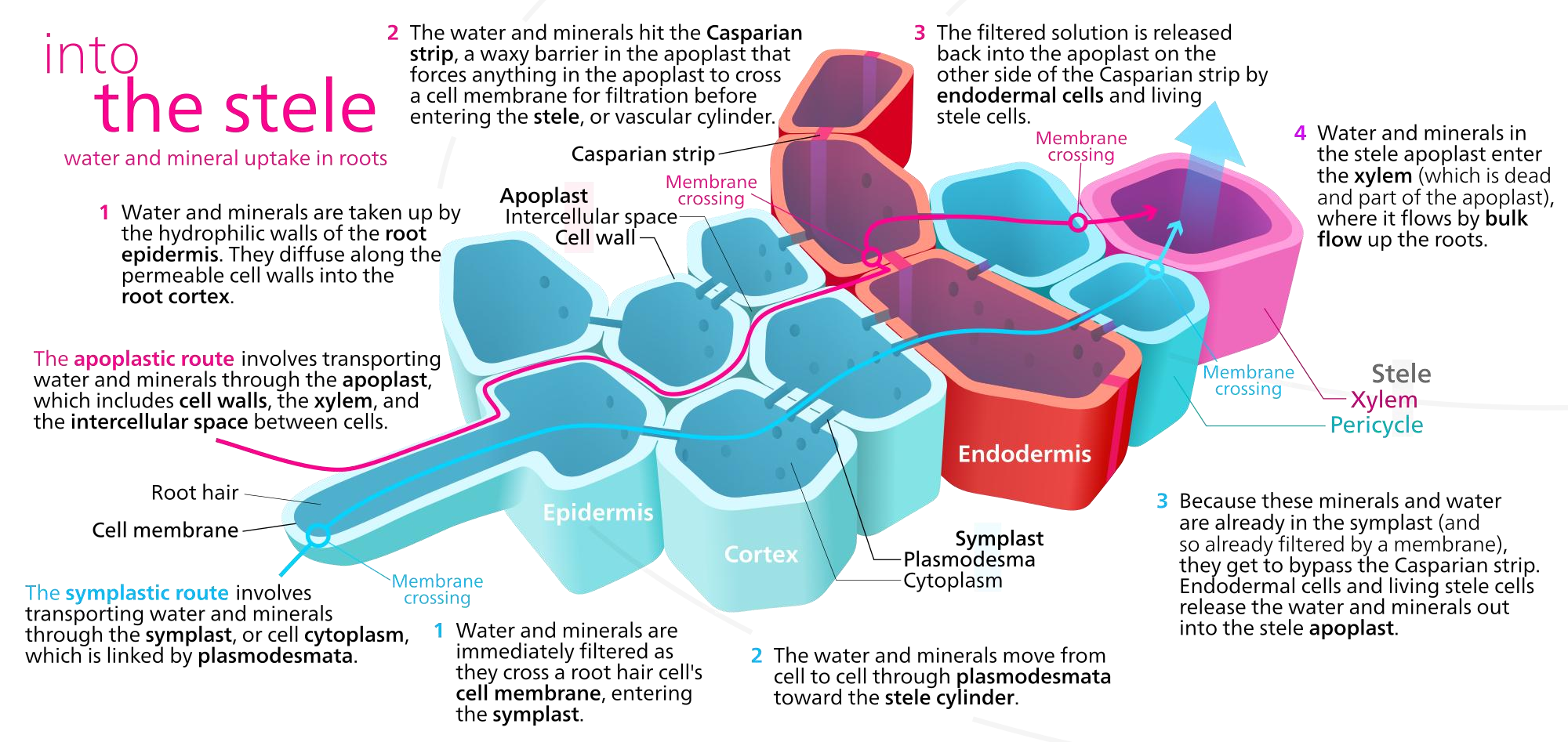
symplastic route - epidermal root hairs uptake into the cytoplasm and pass through plasmodesmata
minerals dissolved in water typically enter this way
apoplastic route - water moves through spaces between cells and within the cell walls
transmembrane route - water crosses plasma membranes (enters and exts each cell) → both symplast and apoplast used
all routes forced to enter the cytoplasm of endodermal cells
casparian strip filters apoplast before enter the stele
eventually enter the xylem
osmotic pressure created by trapped solutes in te casparian strip creates root pressure in some plants, which can push water into the vascular cylinger and up
not all plants develop root pressure
root pressure is higher in spring, but water moves more rapidly through the xylem in summer (due to transpiration)
transpiration (water exiting leaves) is typically the driving force for moving water upward
Root Hormone Production
roots produce cytokinins to promotes cell division and abscisic acid to inhibit cell division and cell expansion
ethylene regulates root hair development and elongation
jasmonis acid produced during development, espically in the pericycle for lateral root develoopment
strigolactones help with root hair growth, especially in nutrient-deficient conditions
also function in signaling to symbiotic fungi
detected by some parasitic plants and used as a cue to germinate
Secondary Compound Production
alkaloids:
nicotine protects from insects and herbivores
berberine protects from microbes/ fungi and is an antioxidant
used in medicine to improve insulin sensitivity, lower cholestrol, and improve gut health
reserpine protects from insects/pathogens (including parasitic nematodes) and helps acclimate during stress
used to treat high blood pressure and some psychiatric conditions
phenolics:
flavonoids and tannins often released as defensive exudates
other aid in nutrient uptake or allepathy (inhibiting the growth of other plants by making soil unfavorable for germination or establishment)
terpenoids:
saponins protect against pathogens, insectsm and herbivores
used to lower cholesterol, fight tumors, and calm inflammation
Storage Roots
biennial plants store food in their roots for survival
these develop through secondary growth
mediated by the cambium
xylem lacks woody cell and is comprised primarily of xylem parenchyma cells that contain strach granules
Roots That Hold Plants Up
prop roots/brace roots - extend from vertically from the stem into the soil to provide extra mechanical support and increased absorption capacity
e.g. corn, figs, and banyan trees
stilt roots - extend horizontally from the basal node at the maiin stem and may grow obliquely
e.g. mangroves
buttress roots - wall-like roots that help support large trees in tropical regions with shallow soils
Mangroves
pneumatorphones are aerial roots specialized for gas exchange
grow upward from primary root systems of a few plants
contain aerenchyma - cortex tissues containing air spaces
allows for ixygen-containing air to diffuse throughout the root
Epiphytic Plants
epiphytes are plants that grow on other plants or objects for physical support
e.g. various orchids, bromeliads, some ferns and bryophytes
not parasitic
get water from rain and water vapor in the air
minerals collected from debris on the supporting plant
Parasitic Plants
parasitic plants penetrate other plants to steal their water and nutrients
have specialized roots called haustoria to facilitate ths
form a vascular union with host to redirect nutrients
union formed via plasmodesmata
some are still photosynthetic
e.g. mistletoe
some are completely parasitic
little to no photosynthesis
e.g. dodder/strangleweed
Microbial Associations
mycorrhizal fungi can help with absorption
nitrogen-fixing bacteria help some plants
can be housed in root nodules made from modified lateral roots
e.g. leumes