HDL and LDLs
cholesterol:
short lipid molecule
uses in the body
important in cell membranes ( maintaining fluidity of membranes)
used to make some steroid sex hormones and growth hormones
used to make some of the components of bile
made in liver and obtained in diet
concerns that too much is bad for us
its a problem because higher cholesterol level, the greater risk of CHD:
45% of CHD deaths in men due to increased cholesterol
47% of CHD deaths in women due to increased cholesterol
lipoproteins:
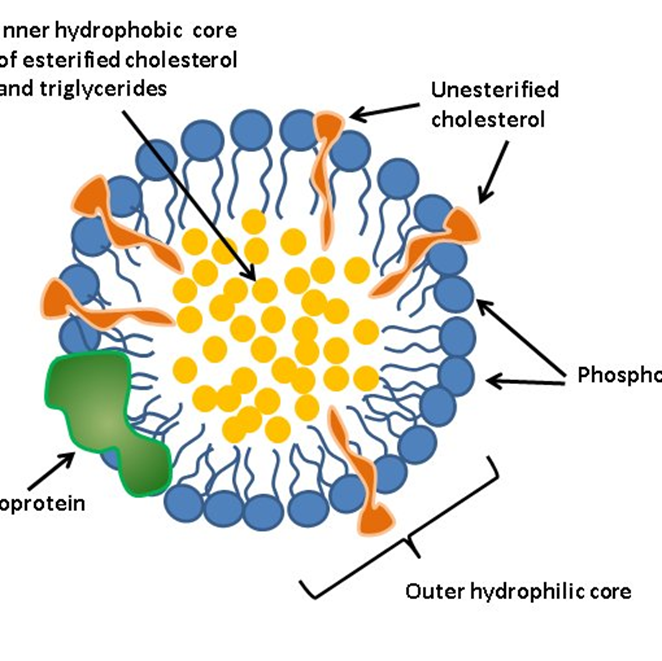
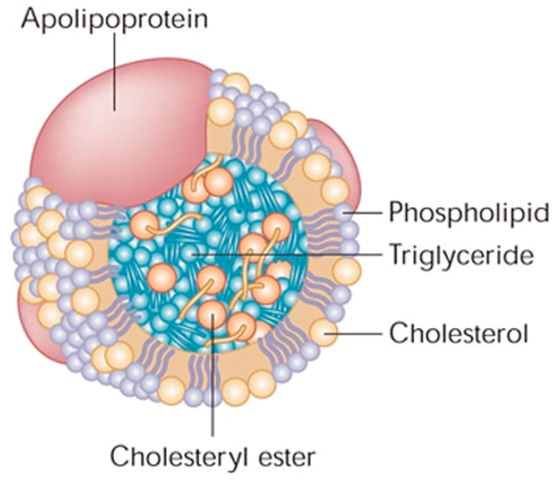
cholesterol is not water soluble so combines with proteins to be transported around the bloodstream ( lipoproteins)
LDL:
triglycerides from saturated fats, cholesterol and protein combine to form LDLs
these circulate in blood and should attach to receptors on cell membranes before being absorbed
excess LDLs overload receptors = too many LDLs in blood
this excess cholesterol starts being deposited on artery walls instead
HDL:
same components as LDL but more protein
made from triglycerides from unsaturated fats
HDLs carry cholesterol from body tissue to liver
this lowers blood cholesterol levels
Genetics and CVD:
rare to get simple mutations to one gene that affect risk of CHD
one example is familial hypercholesterolaemia (HF)
mutations to LDLR gene for LDL receptors
LDL not removed from blood
early onset of CHD
Apolipoprotein gene cluster:
protein component of lipoproteins
example: apolipoprotein A
major protein in HDL helps removal of cholesterol
mutation to apoA gene associated with low HDL levels and higher blood cholesterol, therefore reduced removal to liver for excretion leading to increased CHD risk
Apolipoprotein B ( APOB)
major protein found in LDL cholesterol, mutation results in high LDL levels in blood, therefore increased risk of CHD
Apolipoprotein E (APOE)
major protein found in HDL ( and VLDLs) cholesterol. three common alleles APOE4 slows removal of cholesterol from the blood and therefore increased risk of CHD