Sensory Systems I
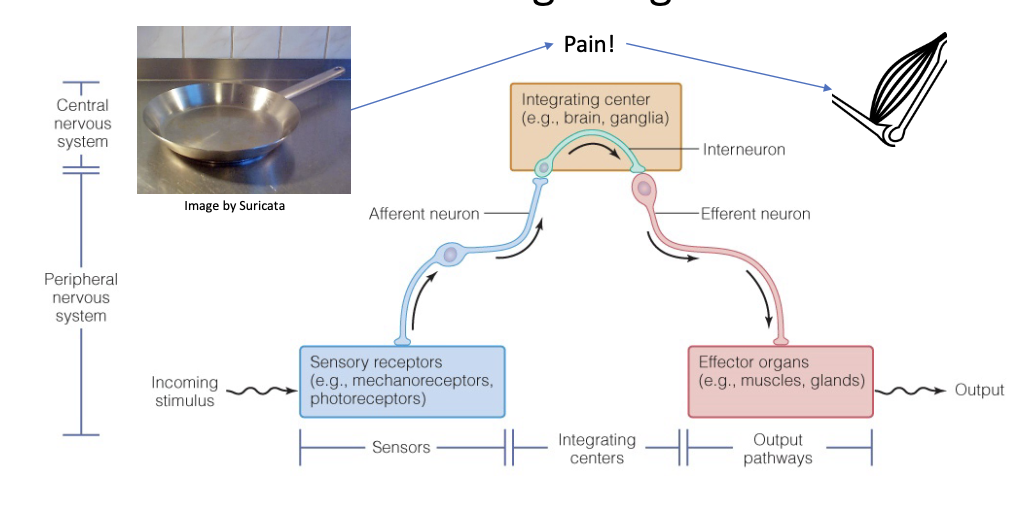
Sensory systems detect stimuli and send information to an integrating center
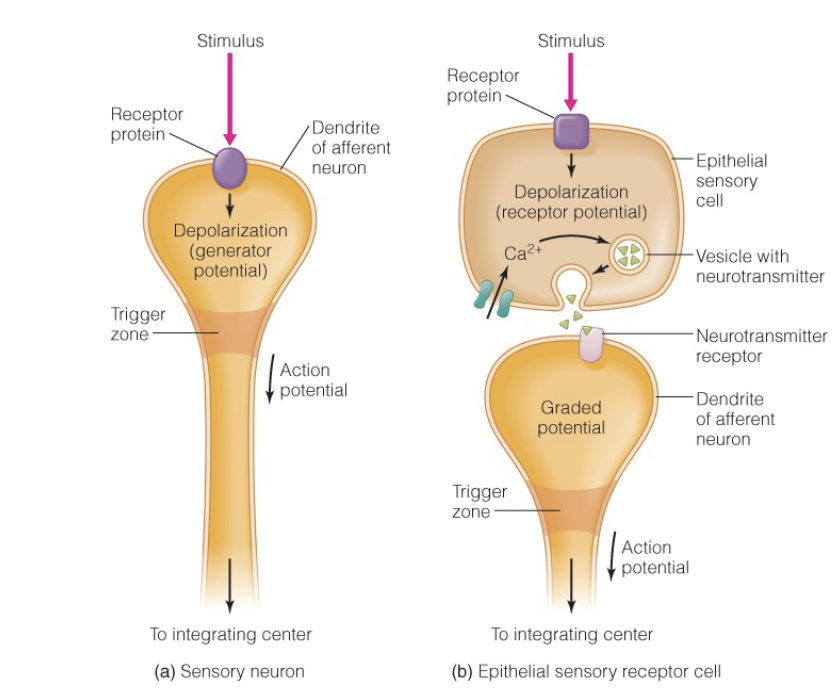
Sensory stimuli are detected in neuron or accessory cells
Sensory receptors covert incoming stimuli into changes in membrane potential
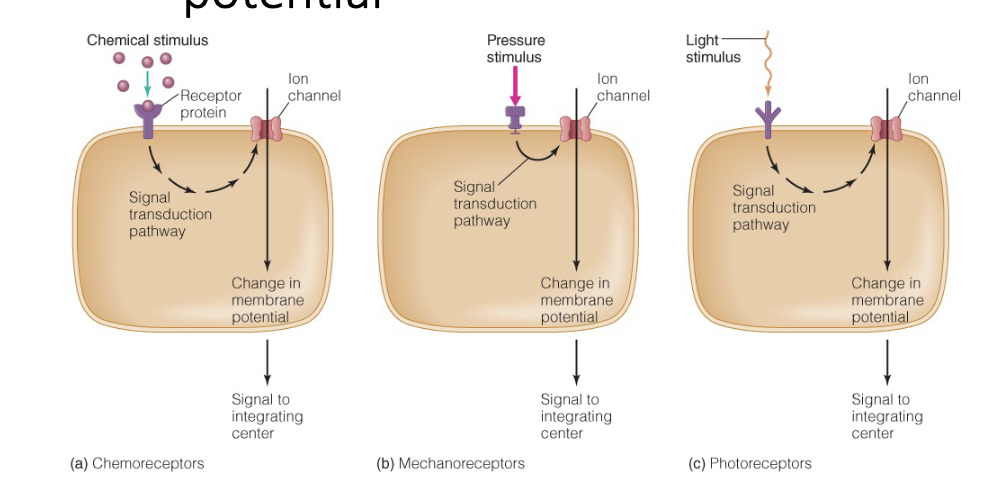
Classes of sensory receptors
Chemoreceptors - detect the presence of chemicals in the environment
Mechanoreceptors - detect pressure and movement, including proprioception
Photoreceptors - detect light
Thermoreceptors - detect temperature
Electroreceptors - detect electric fields
Magnetoreceptors - detect magnetic fields
Sensory receptors convert information about the stimulus into action potentials
4 important features
Stimulus modality
a particular afferent neuron is associated with one type of receptor
each afferent neuron follows a particular pathway for integration
Labeled line theory
specific sensory receptors in our body are dedicated to detecting and transmitting information about specific sensory modalities.
each sensory receptor has a specific "labeled line" that carries information about a particular sensory modality, such as touch, temperature, or pain.
Polymodal receptors are sensitive to multiple sensory modalities
polymodal nociceptors transduce thermal, mechanical, and chemical cues into signals that are sensed as pain
Stimulus location
Stimulus intensity
stimulus duration
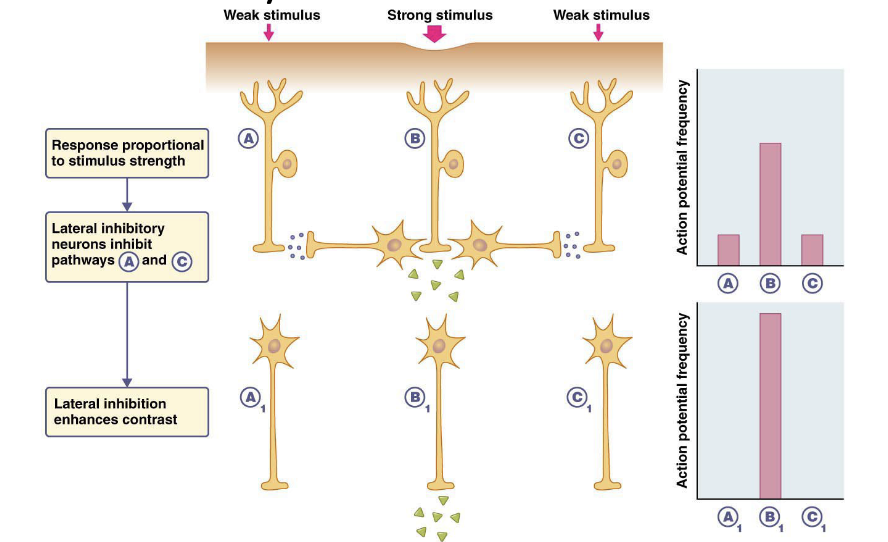
Lateral inhibition further improves acuity
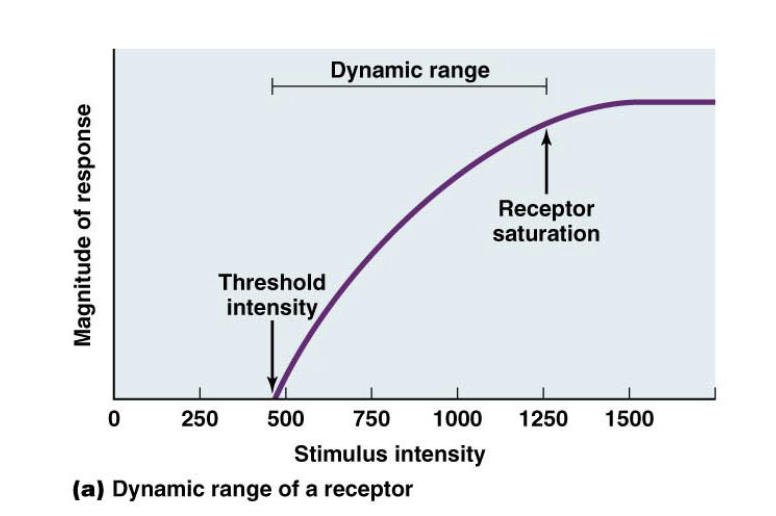
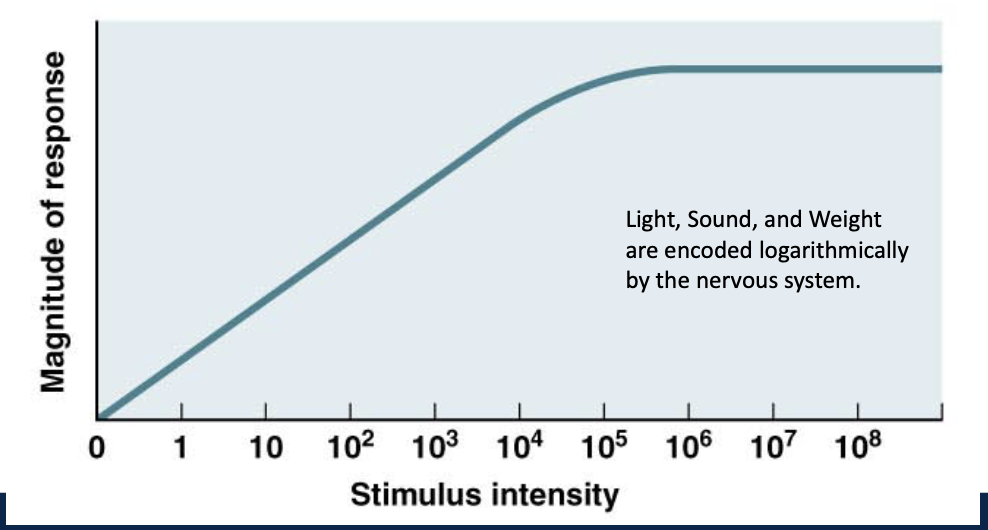
Sensory receptors encode a limited range of stimuli intensities
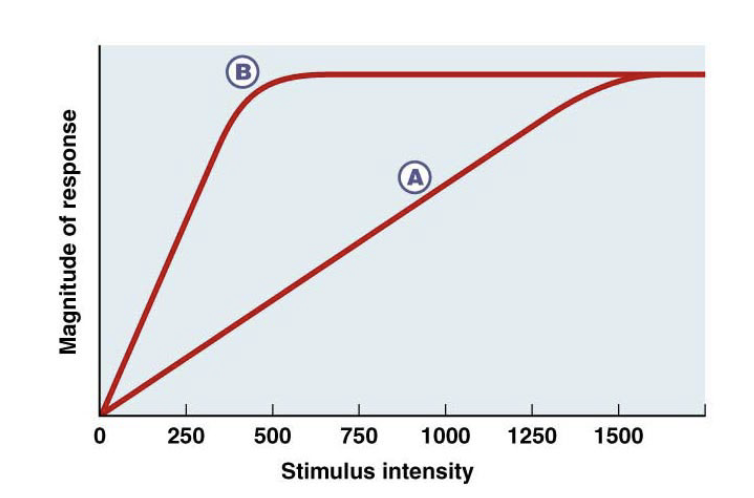
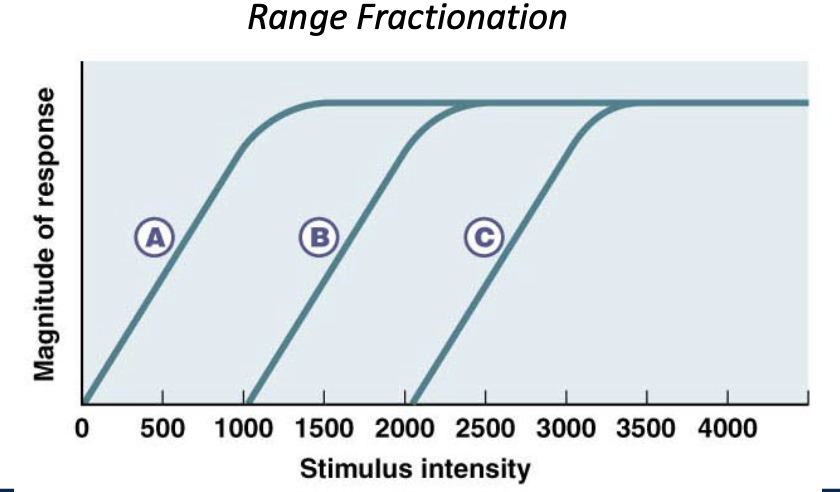
Sensory discrimination improv yes by distributing sensitivity amongst the receptor population
Logarithmic encoding of intensity allows for a compromise between dynamic range and discrimation
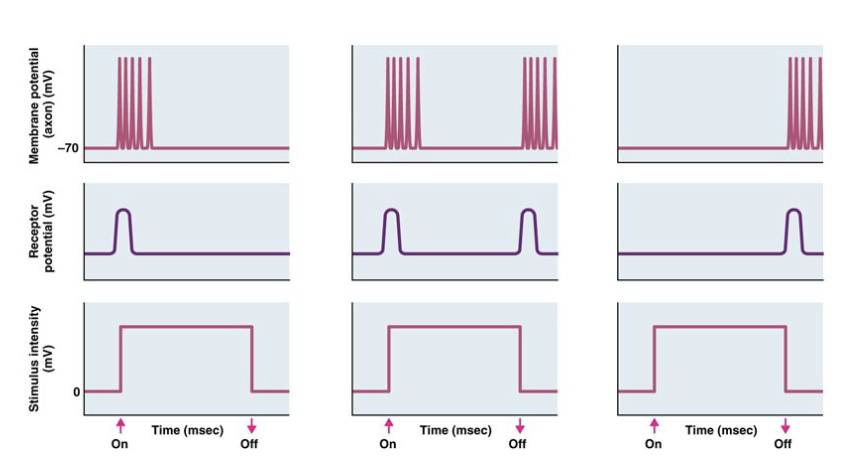
Tonic receptors can encode stimulus duration
Adaption
decrease response to stimulus as duration increases
For prolonged stimuli, adaption can continue until the stimuli is tuned-out
Phasic Receptors
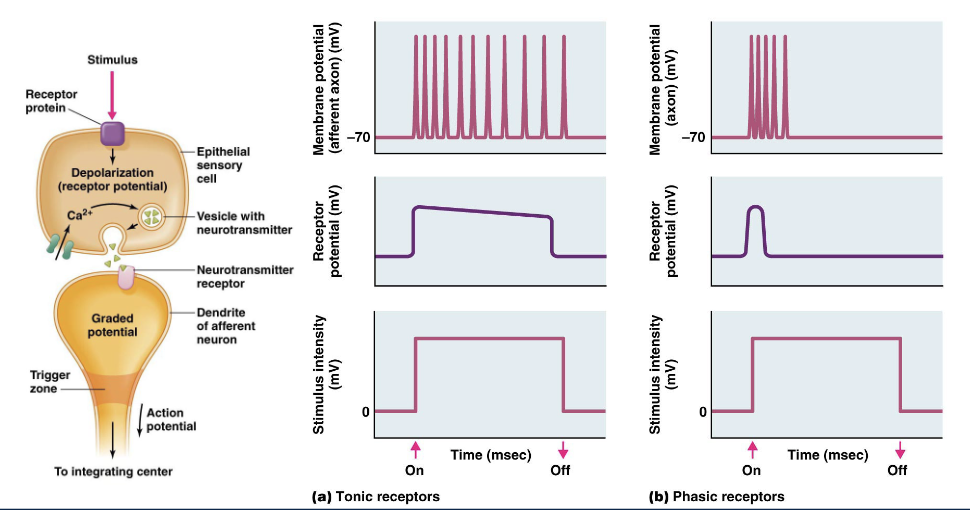
encode changes in stimulus
encode stimulus changes in several ways