Adrenal Gland Disorders
Adrenal Glands
Anatomy- located on top of the kidneys
cortex secretes mineralocorticoids, glucocorticoids, androgens
cortisol is released based on circadian rhythm with peak around 8:00 am, mostly bound to plasma proteins, metabolized in liver, eliminated by kidneys
glucocorticoid regulate metabolism,inflammation,immune response (cortisol)
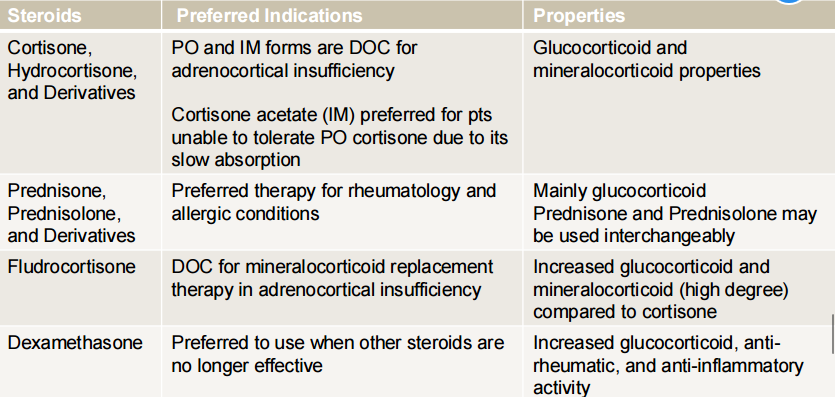
prodrugs cortisone and prednisone to hydrocortisone and prednisolone
contains mineralocorticoid properties and metabolized by CYP450
MOA - enter cell by passive diffusion to bind to receptors to activate and form complex to bind to GRE on DNA.
mineralocorticoid - maintains electrolyte balance and fluid hemostasis (aldosterone)
androgens - sex development and reproductive function and physiological processes (testosterone)
medulla secretes catecholamines
norepinephrine - maintain BP via alpha receptors
epinephrine - increase heart rate, dilate airways, mobilize energy via alpha and beta receptors
stimulated by emotional stress and bodily injury
body experiences stress and hypothalamus releases CRH (corticotropin)
CRH stimulates pituitary to release ACTH (adrenocorticotropic) into blood
ACTH goes to adrenal glands to release cortisol and catecholamines
High levels of cortisol send negative feedback to hypothalamus and pituitary to reduce CRH and ACTH stopping stress response
Addison’s Disease
etiology - autoimmune destruction, tuberculosis, metastatic carcinoma and lymphoma, HIV, aids-related infections destroying adrenal cortex
diagnosed - corticotropin stimulation test showing peak cortisol levels after 30-60 min < 18 mcg/dL
labs - low BP, hyponatremia, hyperkalemia, elevated BUN, random cortisol < 15 mcg/dL for critically ill
signs - hyperpigmentation, hypotension, fever, decreased body hair, vitiligo, hypopituitarism (amenorrhea and cold intolerance)
symptoms - fatigue/weakness, memory impairment, mental depression, anorexia and weight loss, dizziness, headache, N/V/D, abdominal cramps, salt craving
medications - cortisol inhibitors (ketoconazole,metyrapone), cortisol metabolism accelerators (phenytoin,rifampin,phenobarbital), cytotoxic and chemo agents (megestrol,mitotane,mifepristone)
risk factors - T1DM, hashimoto’s, tuberculosis, HIV, cytomegalovirus, anticoagulants, azole antifungals, phenytoin
treatment - hydrocortisone or cortisone in 2-3 divided doses, fludrocortisone for aldosterone deficiency, avoid dexamethasone
Adrenal Crisis
etiology - undiagnosed ACTH deficiency, inappropriate glucocorticoid dose reduction, not adjustments in steroid dose
signs - fever,weakness, apathy, confusion, anorexia, N/V, abdominal pain
symptoms - hyponatremia, hyperkalemia, azotemia (raised BUN and creatine), lymphocytosis, eosinophilia, hypoglycemia
prevention - taper long-term glucocorticoids over months, do ACTH test and morning serum cortisol once daily glucocorticoids same as 20-30 mg of cortisol, d/c glucocorticoid if normal ACTH test or serum cortisol 20+ mcg/dL
treatment - IV glucocorticoid followed by PO, then taper with hydrocortisone prefered since gluco and mineral properties
fluid replace D5NS for BP and fludrocortisone acetate 0.1 mg PO if hyperkalemic
Cushing’s Syndrome
prolonged exposure to high cortisol from overproduction or high dose of exogenous steroids causes hormonal disorder
signs - cerebral or peripheral obesity, moon face, buffalo hump, hyperglycemic, hypotension,elevated lipids, psychiatric changes, osteoporosis, striae (skin thinning), gonadal dysfunction
symptoms - myopathies and muscle weakness
physical assessment - central obesity, facial rounding, buffalo hump, hirsutism
vitals/labs - elevated blood pressure, glucose, lipids
Diagnosis - 24 hr urinary free cortisol > 2-3 x normal range of 20-90 mcg
treatment - ACTH dependent (non-pharm surgery, chemo, irradiation) or ACTH independent (adenoma or carcinoma) both first line is non-pharm then pharm
ectopic ACTH syndrome - steroidogenesis inhibitors like levoketoconazole that blocks cortisol production (Recorlev and osilodrostat (Isturisa)
pituitary-dependent - steroidogenesis inhibitors,
glucocorticoid receptor antagonists like mifepristone (Korlym; block effects of cortisol at receptor)
neuromodulators like pasireotide (signifor; stop ACTH production directly on corticotroph tumors)
Drug Info
PO well absorbed | IV quick onset | IM more water soluble > lipid |
Dexamethasone | Dexamethasone | Dexamethasone |
hydrocortisone | hydrocortisone | hydrocortisone |
methylprednisolone | methylprednisolone | methylprednisolone |
cortisone | cortisone | |
prednisolone | prednisolone | |
triamcinolone | triamcinolone | |
prednisone | betamethasone |
Others topical, intra-articular, inhaled, intranasal
cute helpful pharmacists and physicians marry together and deliver babies
Drug | Brand | Relative Potency | Equivalent Dose mg |
Cortisone | low | 25 | |
Hydrocortisone | Soul-Cortef | low | 25 |
Prednisolone | Millipred Orapred ODT | intermediate | 5 |
Prednisone | Deltasone | intermediate | 5 |
Methylprednisolone | Medrol Solu-medrol | intermediate | 4 |
Triamcinolone | Kenalog | intermediate | 4 |
Dexamethasone | Decadron | high | 0.75 |
Betamethasone | high | 0.6 | |
Fludrocortisone | NA | NA |
General Info
Short-term ADR < 1 month - fluid retention, upset stomach, mood changes/swings, insomnia, increased appetite, weight gain, acute hyperglycemia, acute hypertension
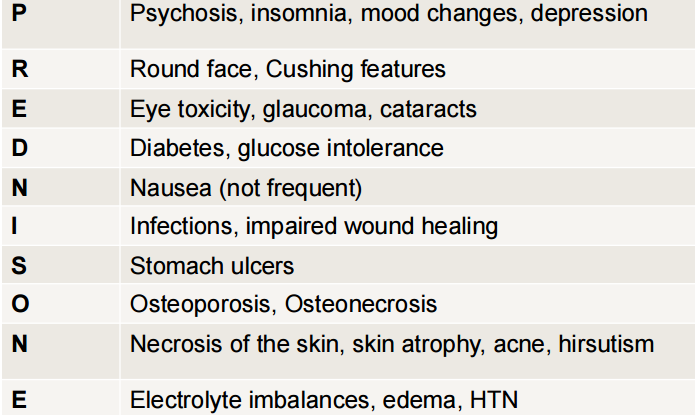
Long-term ADR - osteoporosis, osteonecrosis, hyperglycemia DM, CVD risk, weight gain, myopathy, immunosuppression, Cushing’s
Systemic ADR (PREDNISONE)
Steroid immunosuppression - using 2+ mg/kg/day or 20+ mg/day of prednisone/equivalent for 2+ weeks
avoid live vaccines in immunosuppressed
gradually taper if immunosuppressed or prednisone for 2+ weeks
DDIS - live vaccines raising infection risk, NSAIDs raising GI ulcers, Anticoagulants increased effect, Antidiabetic agents glucose dysregulation, Antibiotics/ Antiviral/ Antifungal can decrease or increase exposure and toxicity
Monitor - weight , BMI, BP ,symptoms/exposure of infections, BMP, CBC, glucose, lipids, BMD and fracture risk, eye exam
General Counseling
do not stop suddenly
take with food in the morning (natural cortisol rhythm and insomnia)
monitor BP and BG, weight, fluids
need for supplemental corticosteroids for stress →injectables and wear bracelet telling condition