Crime Scene to Court - Chpt.18 - examination of documents and handwriting
due to its uniqueness, it was one of earliest forms of identification of individual
areas of expertise:
identification of handwriting and signatures
knowledge of modern office printers
composition of ink, paper and materials from which documents are produced
techniques such as electrostatic detection of impressions (ESDA)
imaging processes which allow origin and history of documents to be studied
qualifications and training
not essential
best form of training is 2-yr apprenticeship alongside highly experienced document examiners before examiner handles own casework
trainee should follow formal training and cover different areas they will encounter in case work
types of cases undertaken
areas where it might be required
criminal prosecution
coroners court
etc
fraud and forgery
money laundering
violent crime, murder, rape
counter terrorism
identity theft
malicious communications
civil litigation
internal investigations
used by police, HMRC, DWP
choosing an expert
up to the individual to ascertain expert is competent and credible
no formal register of experts in UK
should be able to demonstrate solid scientific background at appropriate degree level, period of training in FS lab, possession of fully equipped lab, research in field
member of Chartered Society of FS
expert should undertake range of coursework
prepared to appear in court as expert witness and understand and comply with role
examinations
why?
is it forgery
who wrote document
has it been altered
have paged been removed
are documents from same source
what is history of documents?
types of examination undertaken
to assess comparison/alterations
indented impressions
ink comparison
sequencing of entries
reconstruction of documents and decipherment of obliterated or faded entries
equipment used for examination
good lighting and use of darkened room
hand lens and stereo zoom microscopy allowing magnification of x5 to x40
infrared, UV, high intensity and transmitted light sources for studying inks, alterations, latent marks and for overlaying images accurately
electrostatic detection apparatus (ESDA) or equivalent - study impressions
oblique light and transmitted light sources e.g. light box
methods of recording visual results by either photographic or computer image capture techniques, as well as facilities for preparing demonstration materials for presentation in court
use of specialist equipment shouldn’t deter expert witness from interpreting findings
identification of handwriting
development of handwriting
basic shapes taught in school - particular to each country pretty much
brain injury can affect way of writing or need to re-learn
gender cannot be determined
handwriting tends to attain maturity in early adulthood and remains consistent until effects of old age
construction of character forms
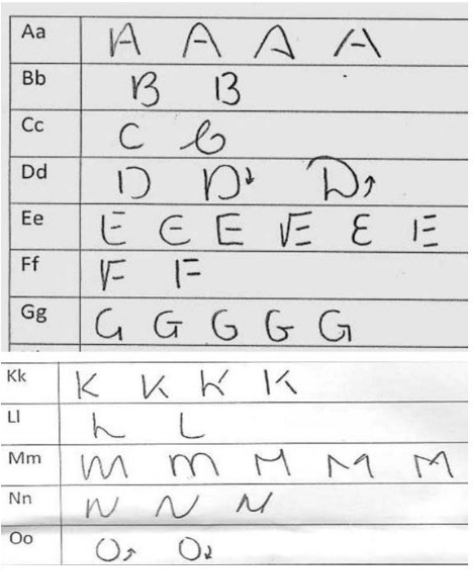
block capital forms e.g. EGHK can be written in distinctly different forms
other alterations are more subtle
characters are generally more rounded or angular
internal and relative proportions of characters will be taken into account
crossing H and T are distinct too
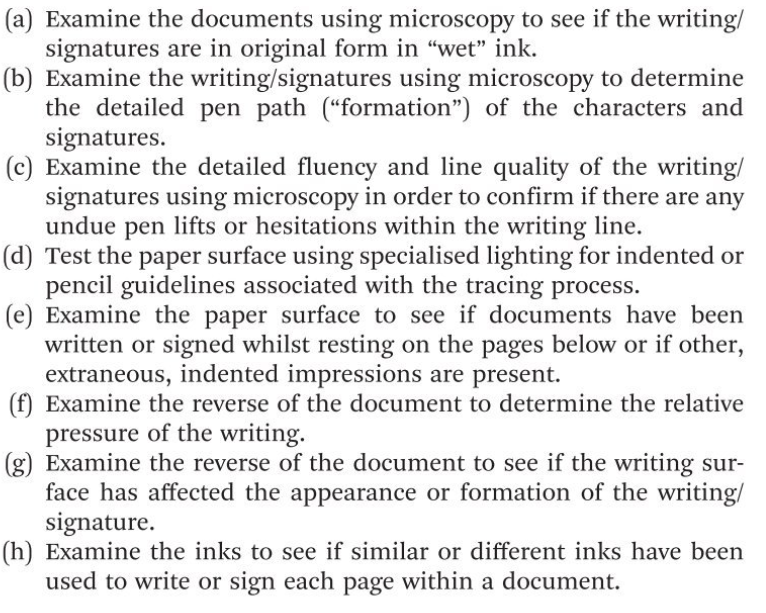
magnification of pen lines
direction of pen lines can sometimes be used to determine R or L handed
ballpoint pen lines frequently show striations following the direction of curves
pen deposits ink after change in direction
lightening of pen strokes can indicate pen leaving paper
striations always move outwards on a curve
other writing instruments produce pen lines that are more difficult to interpret
use of good stereoscopic microscope and proper lighting is essential to study character forms in detail
natural variation →
all handwriting exhibits natural variation
often in shape and proportions but sometimes structure
comparison of writing
compared like with like
letter for letter
punctuation, formation, pen, skill, connectedness, cross strokes
affecting factors on appearance
alcohol - more spread, less legible, uncoordinated movement
drugs - dependent on type and sensitivity - may improve tremors - Parkinsons - others may reduce skill, fluency and coordination'
writing position/surface
graffiti
important to examine reverse of document also
age/illness/mood
Parkinsons - tremor in pen line and “micrographia” - small writing
Alzheimers - loss of control, angular formations, abrupt direction change, repetitions
disguised handwriting
some good some bad
detected by inconsistency in handwriting
simulated handwriting
difficult and cannot be obtained quickly
differences in detail
non-roman script
examiner will be familiar with UK but not other languages too
expression of handwriting conclusions
assemble observation of differences and similarities
everything is probable and isnt 100% true
copy documents
hard to make comparison between copy pictures as details are lost in print
if in copy its not possible to examine:
Graphology
analysis of handwriting to determine personality traits
no scientific basis though
examination of signatures
most used piece of handwriting
applies throughout languages
small amount of comparable features due to natural variation
ideally require original copy due to this fact
frequently the targets of forgery
simulation
using a genuine model to forge
but will bear no resemblance to genuine signature style
tracing
usually in pencil then inked over
detectable by lack of fluency - not the same number of strokes as original
freehand simulation
most encountered way
not most fluent way
can be detected by the unusual pauses before making each character
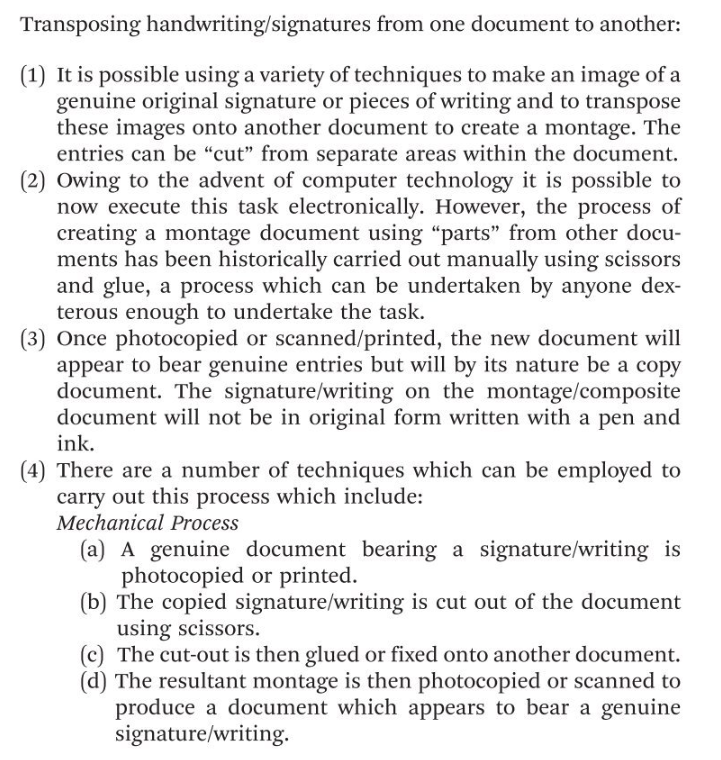
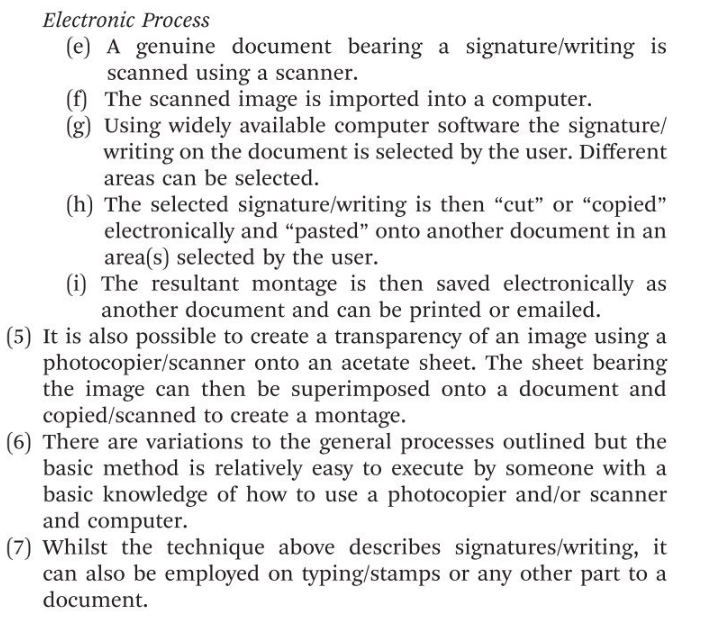
cut and paste simulation
non are superimposable on another
authorship simulation
not normally possible to identify author of simulated signature by comparing with natural handwriting as they are actively supressing their own characteristics
self forgery
intentionally changing length of signature or the obvious omission of a part
made with intent to deny at a later date
vulnerable signatures
signatures are short and simple containing a natural number of pen lifts
wide range of variation
signatures of elderly people naturally contain lack of pen control, undue variation and poorly formed character forms
guided hand signatures
elderly, blind, disabled aided in signing documents
characteristics are mixed between signator and assistant
comparison material
needs to be compared with like words e.g. jones cannot be compared with smith
no ideal material
sign multiple times on piece of paper
identification e.g. passport - signature
examination of copy documents
photocopying or electronic scanning are ways of obtaining copies
must be deemed authentic
copy may be a montage from genuine documents
important to demonstrate origin of document
two types of mark on a photocopy that can be used to do this:
-trash marks — transient and produced by dust particles or debris on glass of photocopier
-drum or mechanism marks — persist for longer period of time and can identify a specific machine, don’t appear on same position on every page but can be detected by constant intervals in which they appear,
interval is directly related to circumference of the drum and not dimensions of document being copied
development of colour photocopiers increases concern for counterfeiting
printing and typewriting
word processors
computer program to prepare a computer file of document which is to be printed
laser and jet ink printers
appearance of the printed characters is to a large extent governed by computer program
introduction of fonts has been important in authentication of documents
laser printers
same principle as photocopier
high quality images
very reproducible
extremely difficult to distinguish between the work of two different laser printers
ink jet printers
commonly used
gives print a slightly ragged appearance
difficult to distinguish between
typewriters
occasionally encountered in casework
hate mail correspondence
fixed bar and single element typewriters
origin and history of documents
authenticity of documents
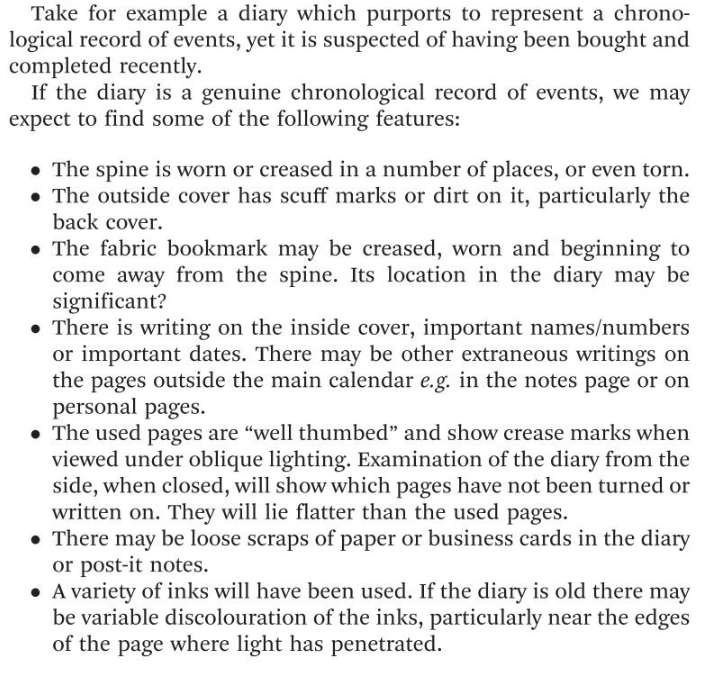
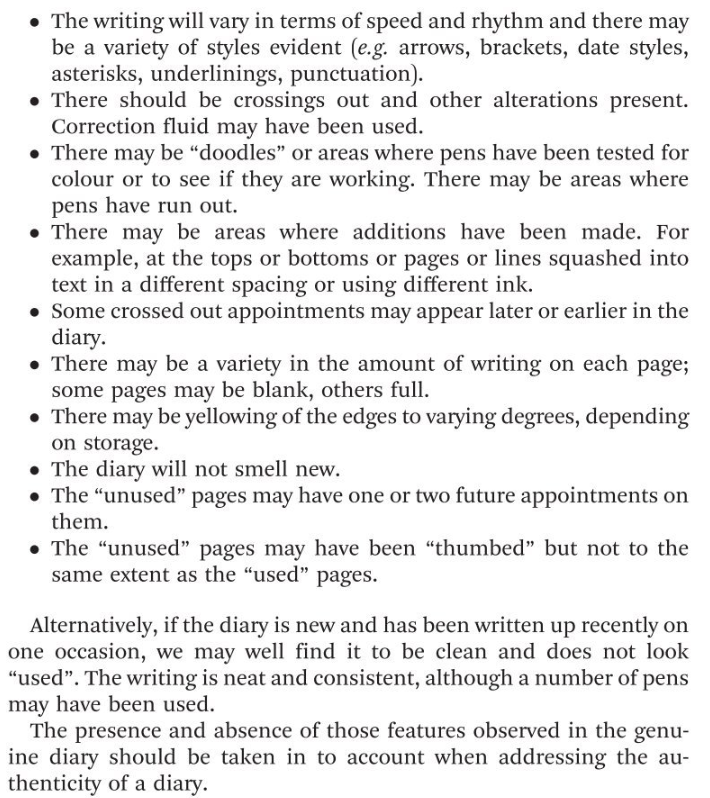
examination of inks
establish if inks are similar or different
view under different lights and UV, spectroscopy and infra red, chromatography
some high end pens contain ‘markers’ to identify important individual who owns the pen
examination of paper
optical brighteners are incorporated into some - different reaction under UV
origin of paper identified by watermark
development of handwriting and signatures over time
demonstrate stages of development
signatures and writing can be matched back to a certain period
impressions
left as a result of writing on stacked material
need to be enhanced to make visible
deep impressions detected using oblique lighting
fainter impressions - electrostatic detection (ESDA) - not always successful
‘secondary impressions’ after storing paper together that deep impression from one paper embosses the other
folds creases and tears
may indicate what was done with the paper
torn edges can be matched to another piece
staples and punch holes
can identify which documents have been stored together
erasures, obliterations and additions
erasing an entry from a document will damage it
mechanical removal will be physically damaging
chemical erasure will leave no trace to unaided eye
can be viewed under UV
stamp and seal identification
e.g. passports
printed documents
specially printed using methods to deter alterations or counterfeiting
fibres can be added to the paper
fugitive inks can be difficult to replicate
studying alterations can identify breaches in documents security
counterfeit must be compared with a real one
procedures, protocols, quality assurance
following same standards
ensure document retains integrity
record processes clearly
examiners report should be comprehensive drawing conclusions and results