ANAPHY Skeletal
THE SKELETAL SYSTEM
Parts of the Skeletal System
bones (skeleton)
joints
cartilages
ligaments (bone to bone ; tendon : bone to muscle)
Divisions
Axial Skeleton - bones of the skull, vertebral column, and rib cage
Appendicular Skeleton - bones of the upper and lower limbs, shoulder and hip
Functions of Bones
support of the body
protection of soft organs
movement due to attached skeletal muscles
storage of minerals and fats
blood cell formation
Bones of the Human Body
the adult skeleton has 206 bones
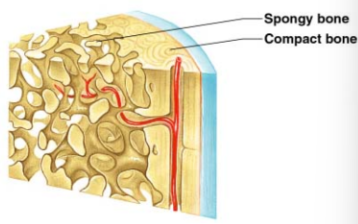
two basic types of bone tissue
Compact Bone - homogenous
Spongy Bone - small needle-like pieces of bone, many open spaces
 Classification of Bones on the Basis of Shape
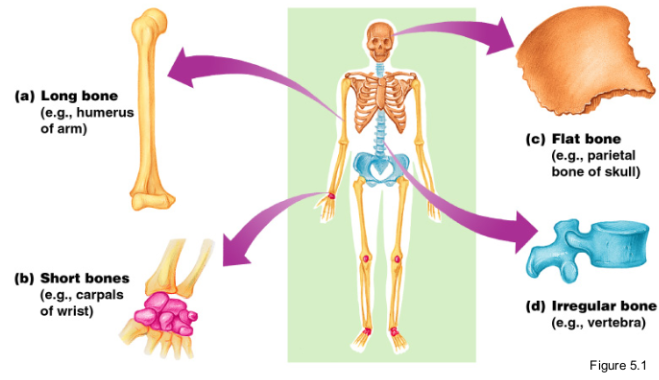
Long Bones
typically longer than wide
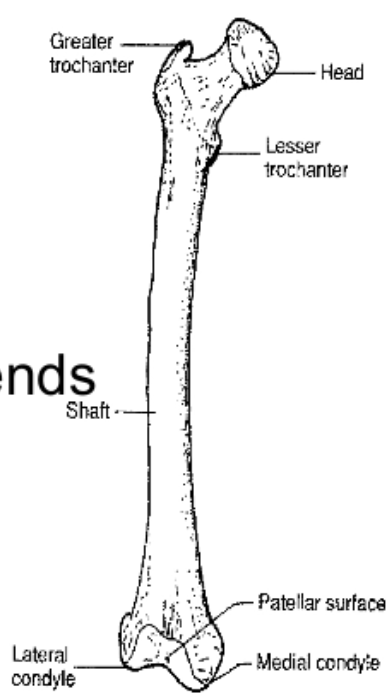
have a shaft with heads at both ends
contain mostly compact bone
femur, humerus
Gross Anatomy of a Long Bone
Diaphysis
shaft (middle)
composed of compact bone
Epiphysis
ends of the bone
composed mostly of spongy bone
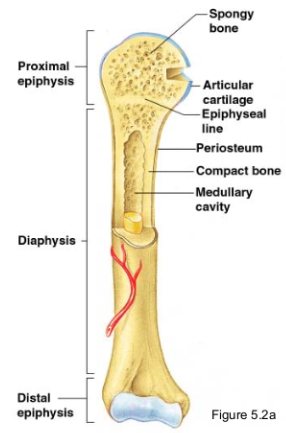
Structures of a Long Bone
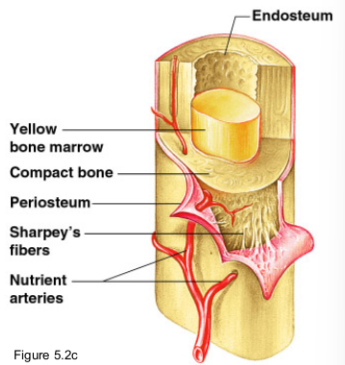
Periosteum
outside covering of the diaphysis
fibrous connective tissue membrane
Sharpey’s Fibers
secure periosteum to underlying bone
Arteries
supply bone cells with nutrients
Articular Cartilage
covers the external surface of the epiphyses
made of hyaline cartilage
decreases friction at joint surfaces
Medullary Cavity
cavity of the shaft
contains yellow marrow (mostly fat) in adults
contains red marrow (for blood cell formation) in infants
Short Bones
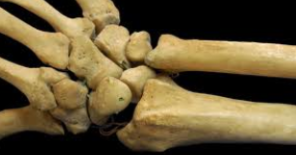
generally cube-shape
contain mostly sponge bone
carpals, tarsals
Flat Bones
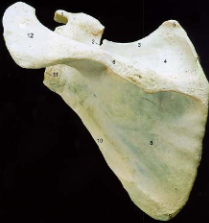
thin and flattened
usually curved
thin layers of compact bone around a layer of spongy bone
skull, ribs, sternum
Irregular Bones
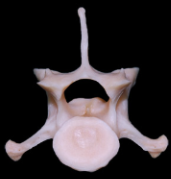
irregular shape
do not fit into other bones classification categories
vertebrae and hip
Types of Bone Cells
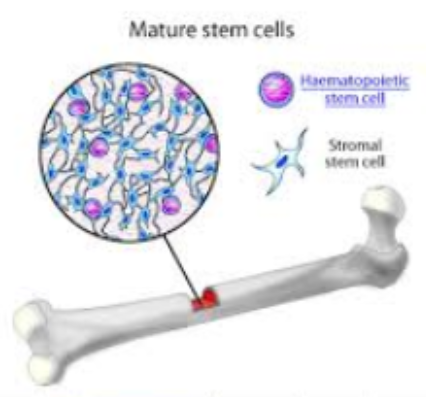
Osteocytes
mature bone cells
Osteoblasts
bone-forming cells
Osteoclasts
bone-destroying cells
break down bone matrix for remodeling and release of calcium
Bone Fractures
a break in a bone
Types of Bone Fractures
Closed (Simple) Fracture
break that does not penetrate the skin
Open (Compound) Fracture\
broken bone penetrates through the skin
bone fractures are treated by reduction and immobilization
realignment of the bone
Common Types of Fractures
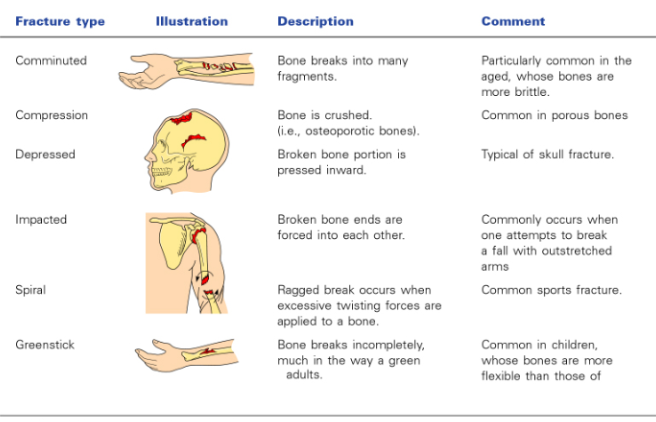
Repair of Bone Fractures
hematoma (blood-filled swelling) is formed
break is splinted by fibrocartilage to form a callus
fibrocartilage callus is replaced by a bony callus
bony callus is remodeled to form a permanent patch
THE AXIAL SKELETON
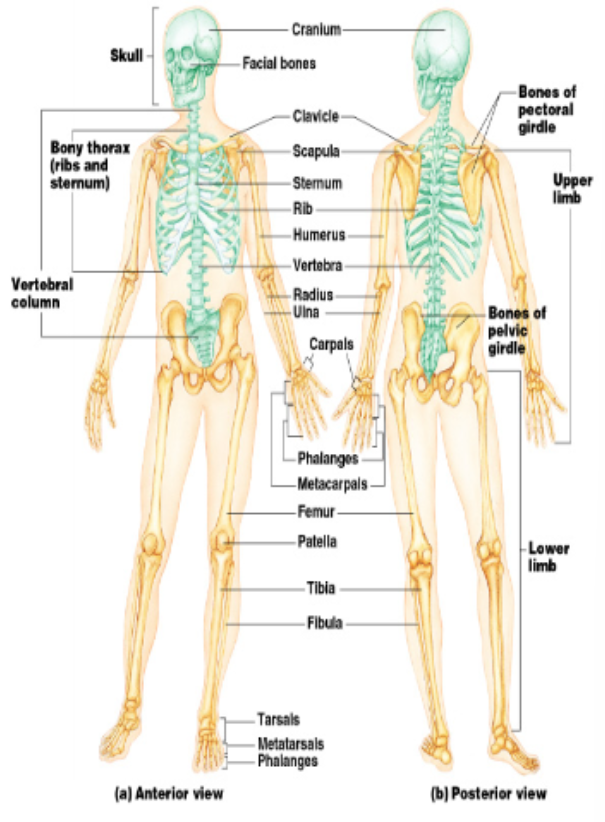
divided into three parts
skull
vertebral column
bony thorax
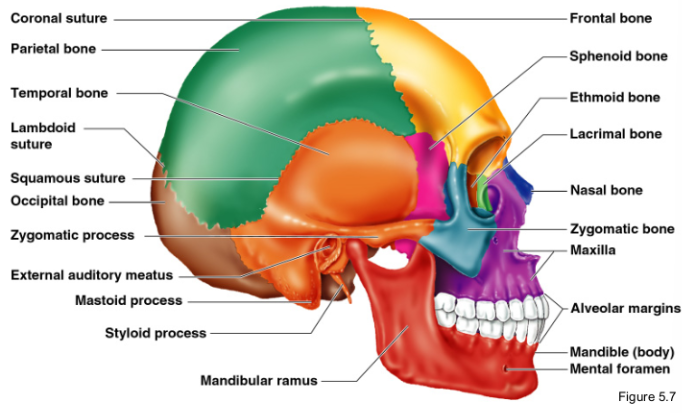
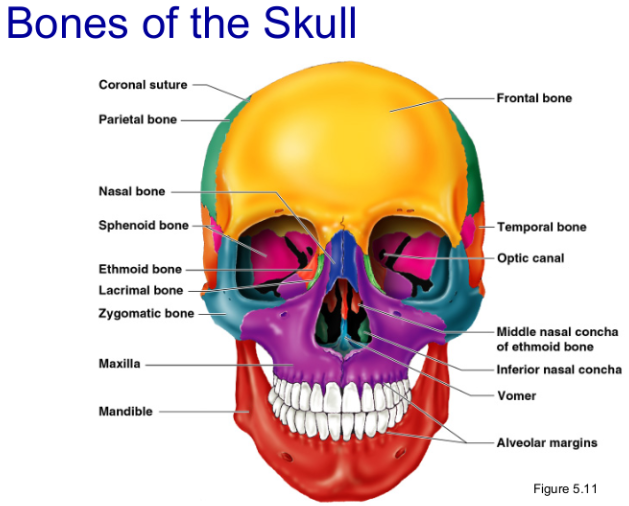
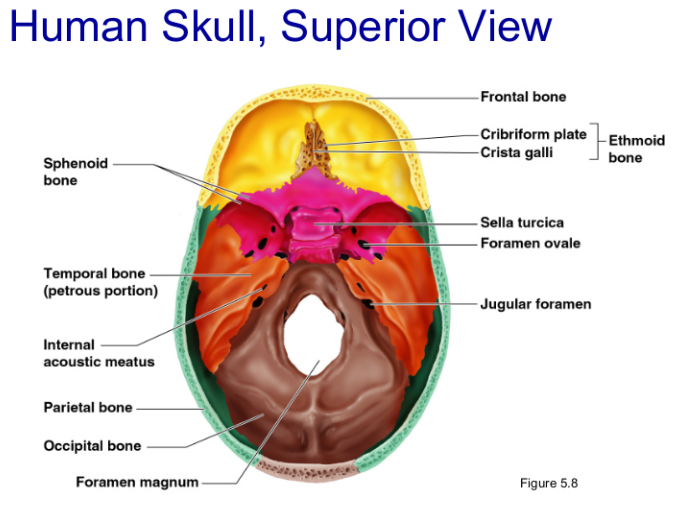
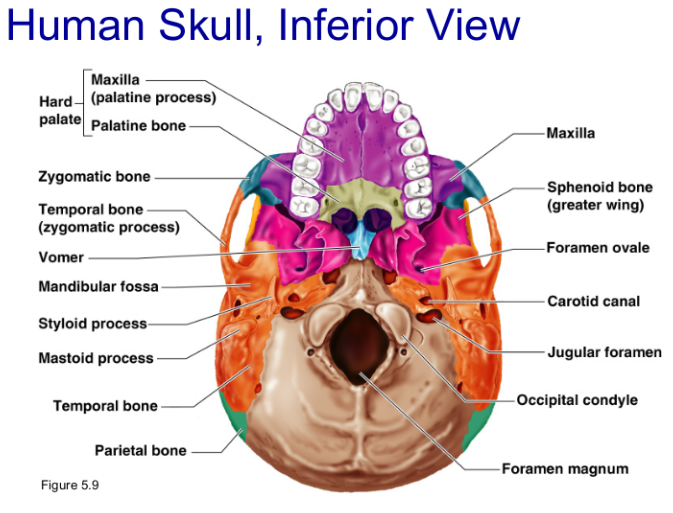
The Skull
two sets of bones
cranium
facial bones
bones are joined by sutures
only the mandible is attached by a freely movable joint
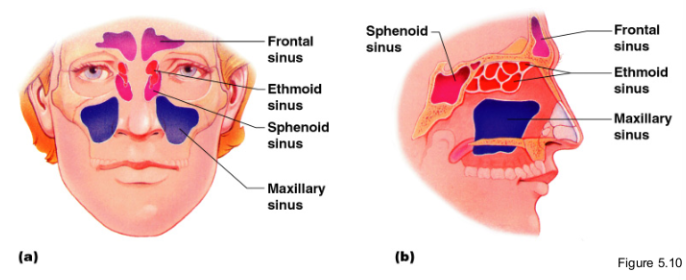
Paranasal Sinuses
hollow portions of bones surrounding the nasal cavity
functions of paranasal sinuses
lighten the skull
give resonance and amplification to voice
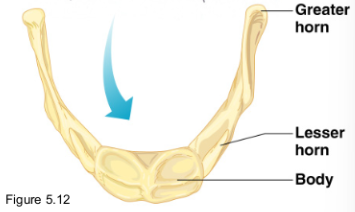
The Hyoid Bone
the only bone that does not articulate (move) with another bone
serves as a moveable base for the tongue
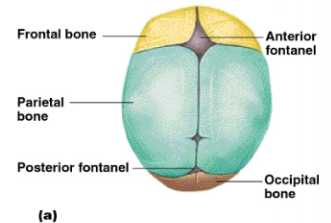
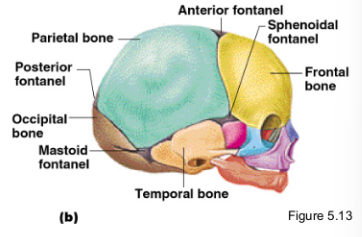
The Fetal Skull
the fetal skull is large compared to the infants total body length
Fontanelles - fibrous membranes connecting the cranial bones
allow the brain to grow
convert to bone within 24 months after birth
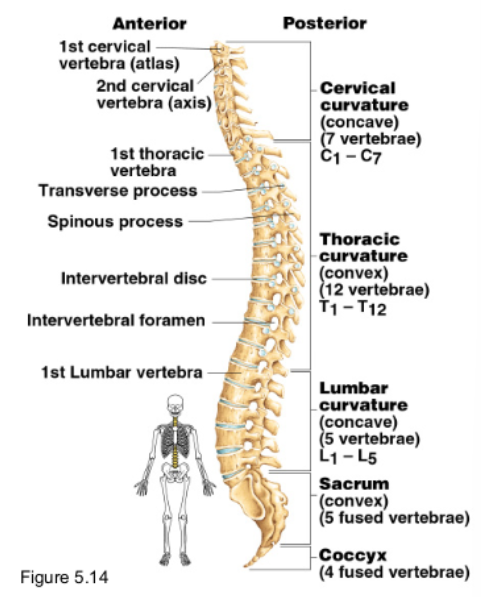
The Vertebral Column
vertebrae separated by intervertebral discs
the spine has a normal curvature
each vertebrae is given a name according to its location
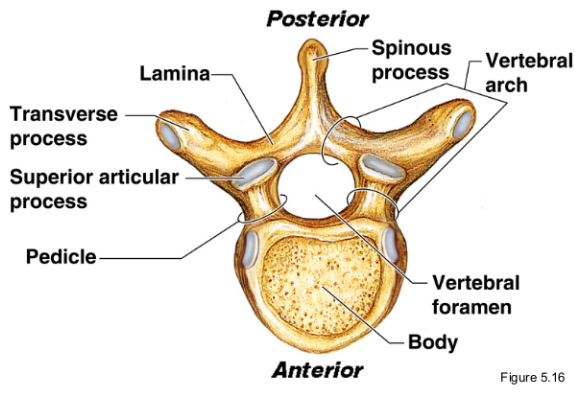
Structure of a Typical Vertebrae
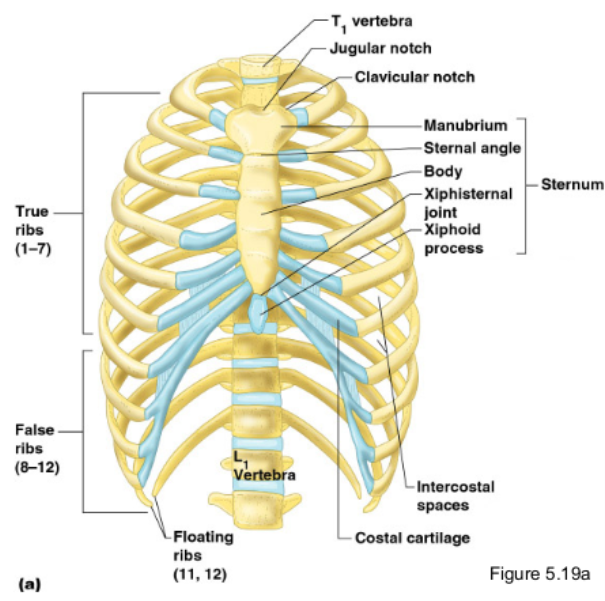
The Bony Thorax
forms a cage to protect major organs
made-up of three parts
sternum
ribs
thoracic vertebrae
THE APPENDICULAR SKELETON
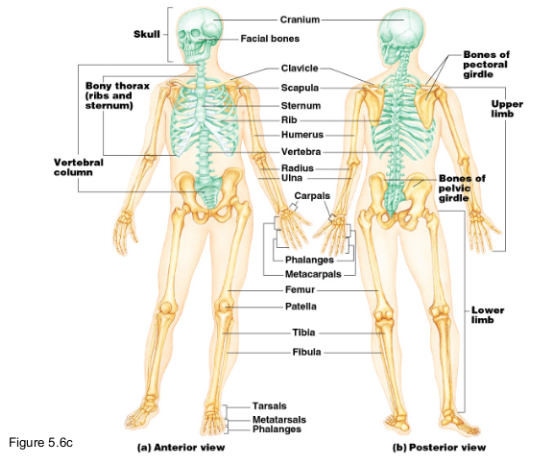
limbs (appendages)
pectoral girdle
pelvic girdle
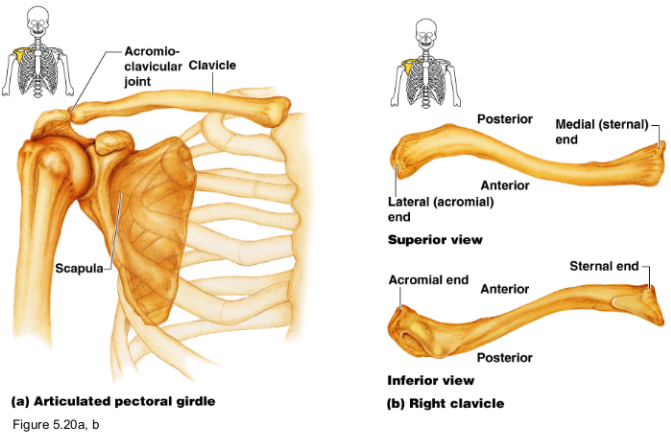
The Pectoral (Shoulder) Girdle
composed of two bones
Clavicle - collarbone
Scapula - shoulder blade
these bones allow the upper limb to have exceptionally free movement
Bones of the Shoulder Girdle
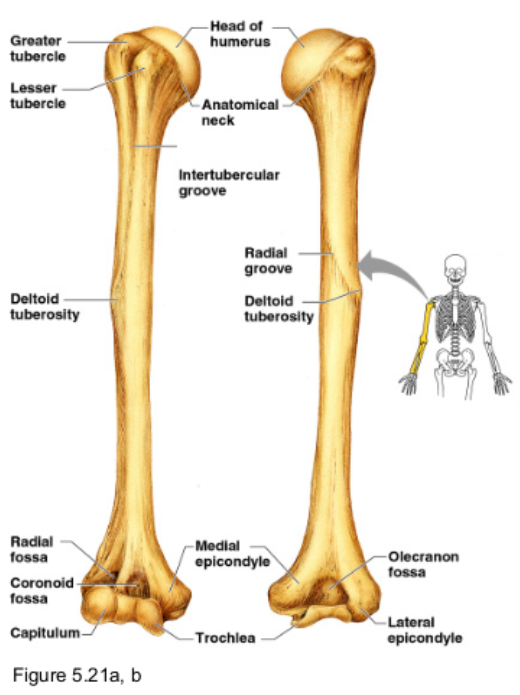
Bones of the Upper Limb
the arm is formed by a single bone
humerus
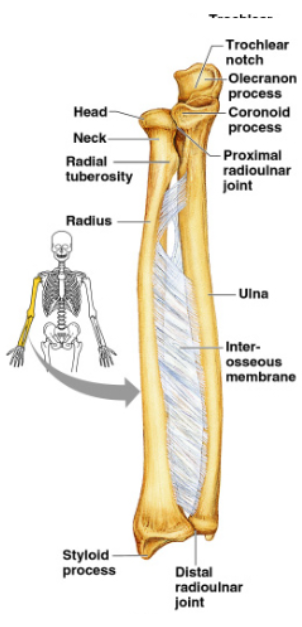
the forearm has two bones
ulna
radius
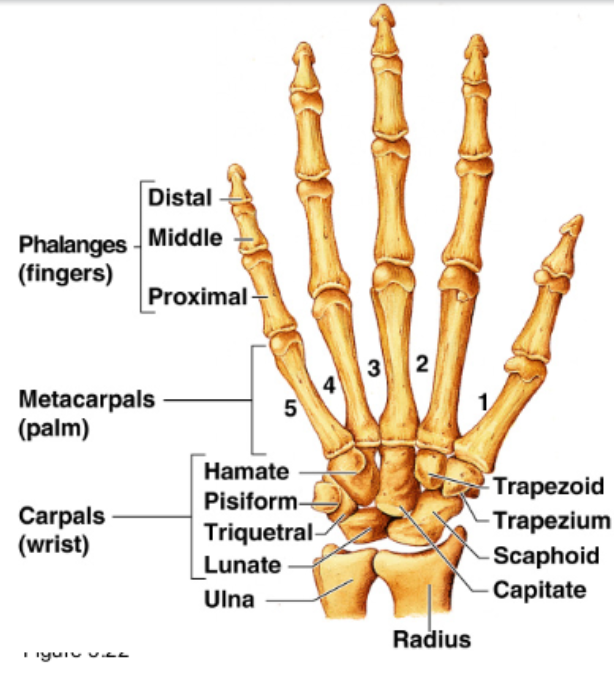
the hand
carpals - wrist
metacarpals - palm
phalanges - fingers
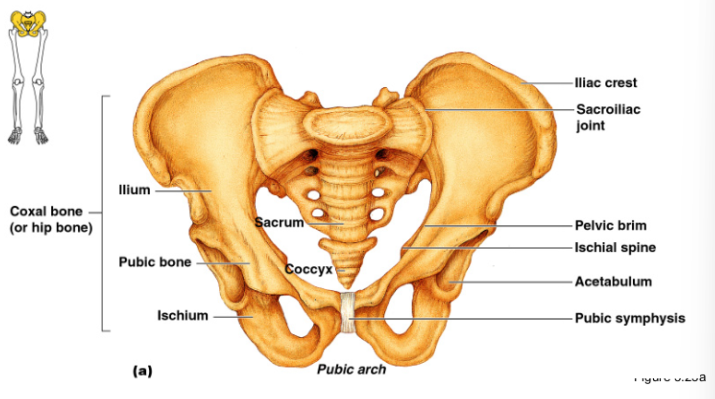
Bones of the Pelvic Girdle
hip bones
composed of three pair of fused bones
ilium
ischium
pubic bone
the total weight of the upper body rests on the pelvis
protects several organs
reproductive organs
urinary bladder
part of the large intestine
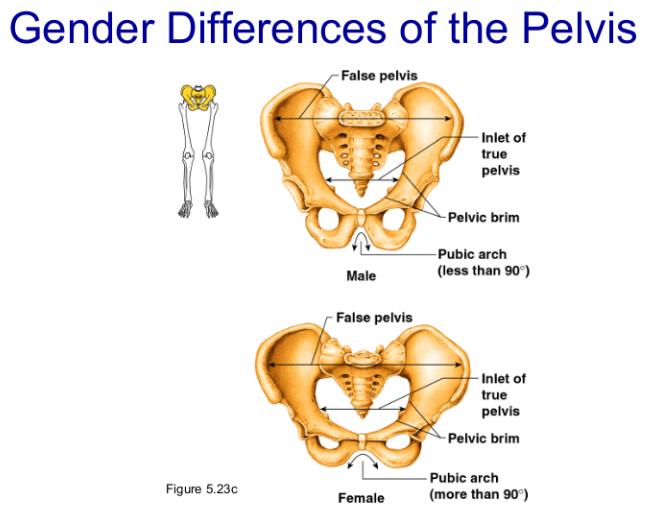
The Pelvis
Bones of the Lower Limbs
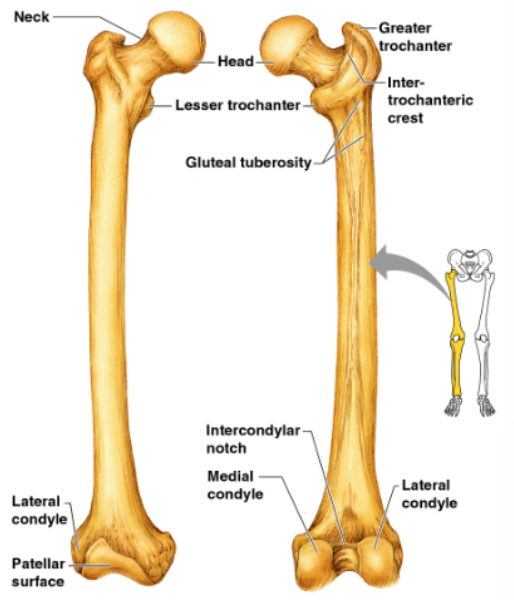
the thigh has one bone
femur - thigh bone
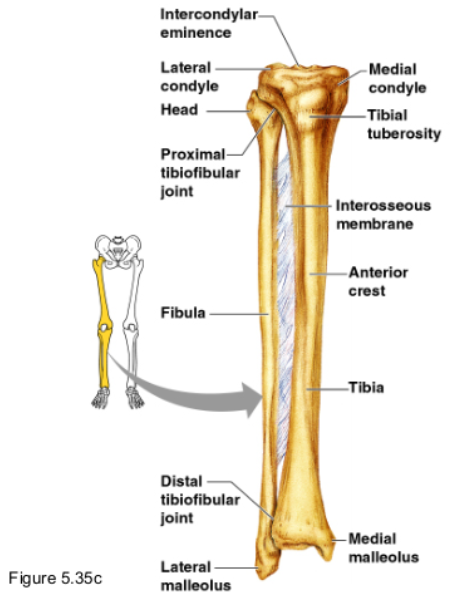
the leg has two bones
tibia
fibula
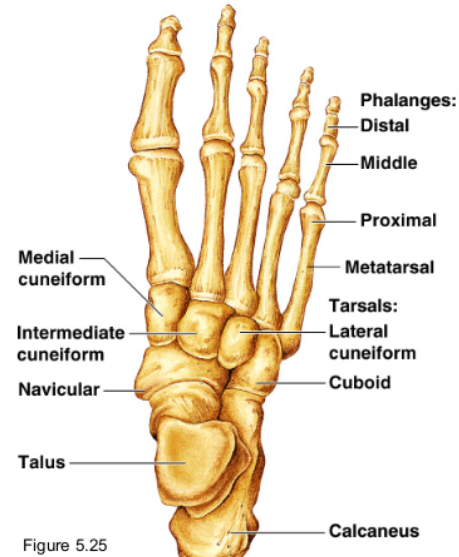
the foot
talus - ankle
metatarsals - sole
phalanges - toes
JOINTS
articulations of bones
functions of joints
hold bones together
allow for mobility
ways joints are classified
functionally
structurally
Functional Classification of Joints
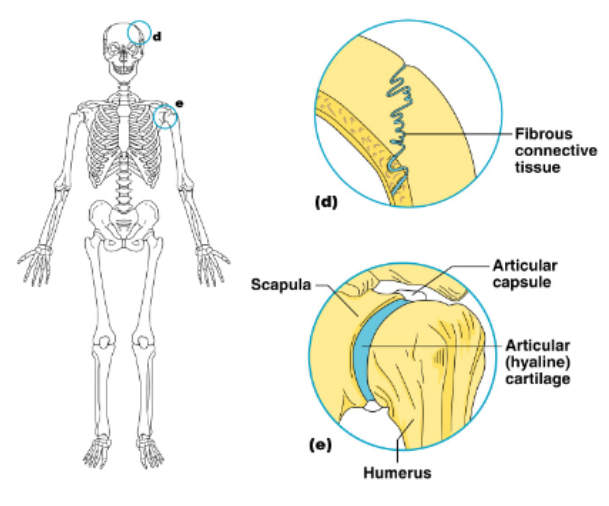
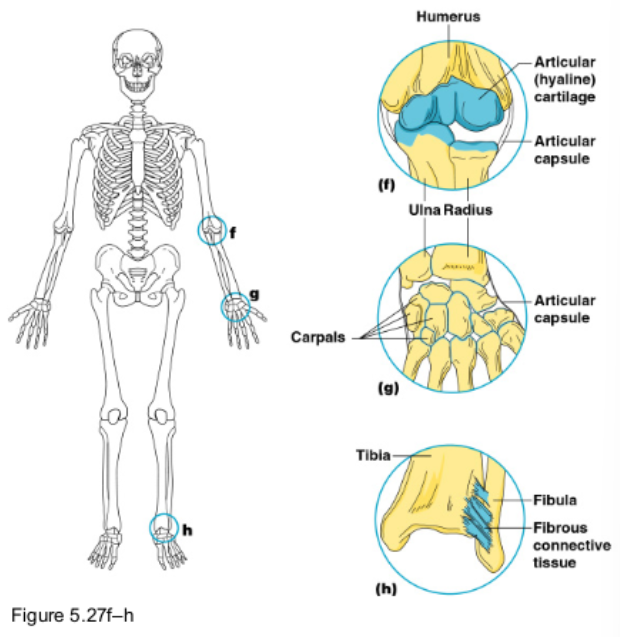
Synarthroses - immovable joints
Amphiarthroses - slightly moveable joints
Diarthroses - freely movable joints
Structural Classification of Joints
Fibrous Joints
generally immovable
bones united by fibrous tissue
synarthrosis or largely immovable
Cartilaginous Joints
immovable or slightly movable
bones connected by cartilage
mostly amphiarthrosis
examples
pubic symphysis
intervertebral joints
Synovial Joints
freely moveable
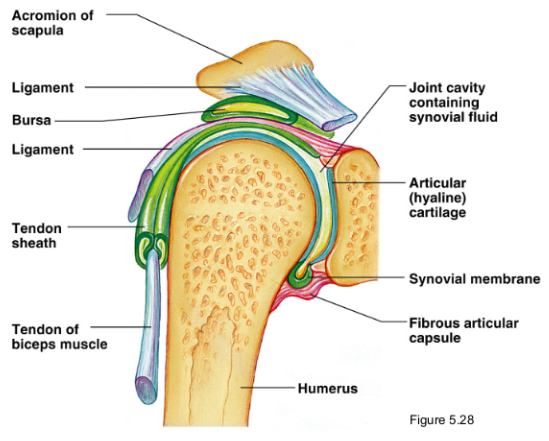
articulating bones are separated by a joint cavity
synovial fluid is found in the joint cavity
features of synovial joints
diarthroses
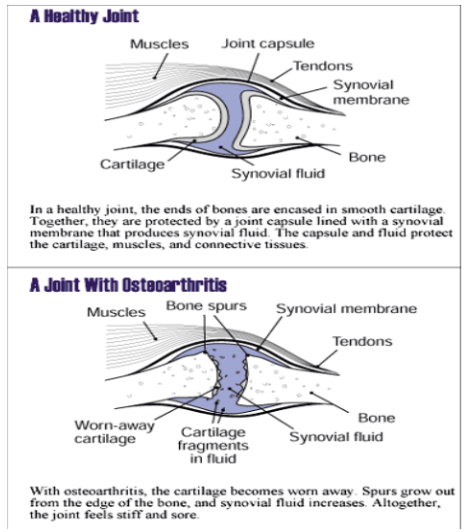
articular cartilage (hyaline cartilage) covers the ends of bones
joint surfaces are enclosed by a fibrous articular capsule
have a joint cavity filled with synovial fluid
ligaments reinforce the joint
structures associated with the synovial joint
bursae
flattened fibrous sacs
lined with synovial membranes
filled with synovial fluid
not actually part of the joint
tendon sheath
elongated bursa that wraps around a tendon
types of synovial joints based on shape
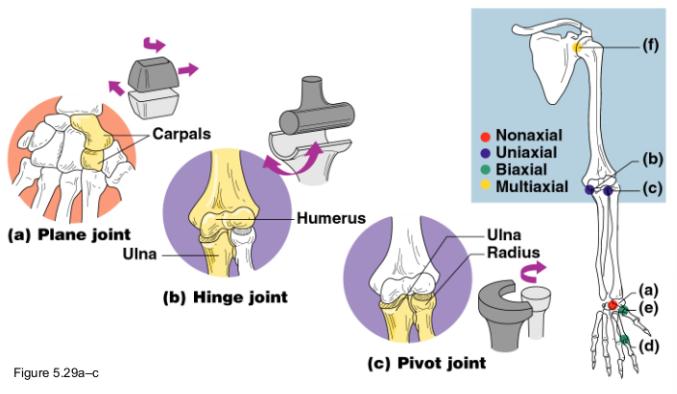
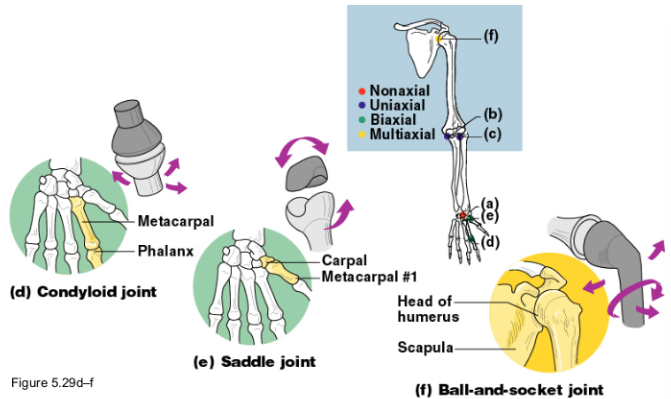
Inflammatory Conditions Associated with Joints
Bursitis
inflammation of a bursa usually caused by a blow or friction
Tendonitis
inflammation of tendon sheaths
Arthritis
inflammatory or degenerative diseases of joints
over 100 different types
the most widespread crippling disease in the United States
Clinical Forms of Arthritis
Osteoarthritis
most common chronic arthritis
probably related to normal aging processes
Rheumatoid Arthritis
an autoimmune disease - the immune system attacks the joints
symptoms begin with bilateral inflammation of certain joints
often leads to deformities