Checking Voltage
Overview of Electrical Circuits
Vehicles use electrical circuits to supply power and ground to various components.
These circuits typically operate between 50 millivolts (mV) and 15 volts (V).
If a circuit fails or malfunctions, a digital multimeter (DMM) can be used to diagnose and locate the problem.
Reasons to Check Circuits for Voltage
Circuit Diagnosis
There are several reasons to troubleshoot a circuit and test voltage.
Common causes include poor circuit performance, such as:
A headlight bulb that appears dimmer than normal.
A power window motor that operates slowly or weakly.
Instrument Cluster
Another reason to check circuits for voltage is to determine if electrical components are functioning properly.
Examples include instrument cluster lights or headlights that are too bright.
Sensor
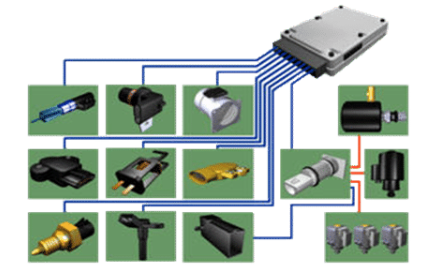
Diagnosing sensor signal issues is another reason to check circuits for voltage.
Example: a fuel tank pressure sensor code indicating a faulty signal or voltage problem.
Interior Lighting
Another reason to troubleshoot a circuit and test voltage is when an electrical device is inoperative or malfunctioning.
Examples include:
A radio that doesn’t turn on or function correctly.
Interior lights that don’t illuminate when the door is opened.
Door chimes that don’t sound, or that stay on after the door is closed.
Checking Fuses
Lastly, checking if a fuse or other circuit protection device is intact and not blown is another reason to troubleshoot a circuit and test voltage.