Digestion
What Happens to the Food We Eat?
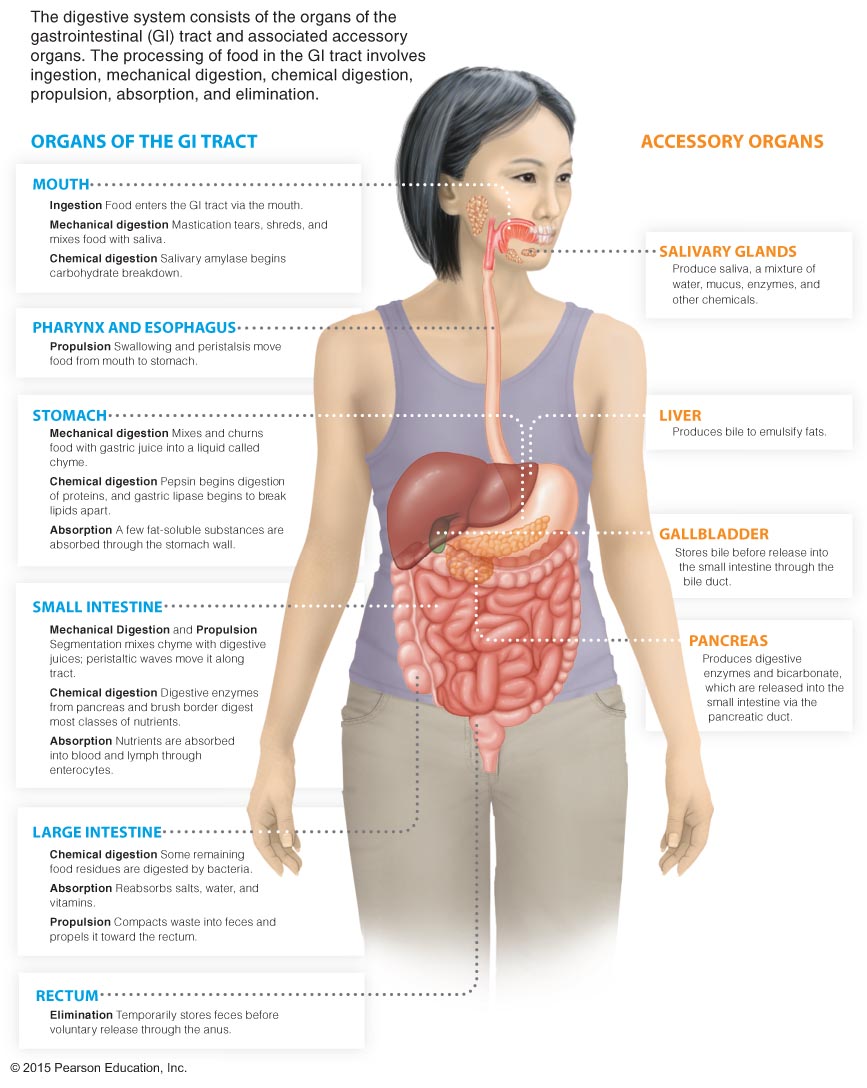
•Gastrointestinal (GI) tract: series of organs arranged as a long tube through which the food passes
•The GI tract includes
•Organs such as the stomach and intestines
•Sphincters: muscles that control the passage of material from one organ to the next
© 2018 Pearson Education, Inc.
Digestive System
© 2018 Pearson Education, Inc.
Digestion: The Mouth
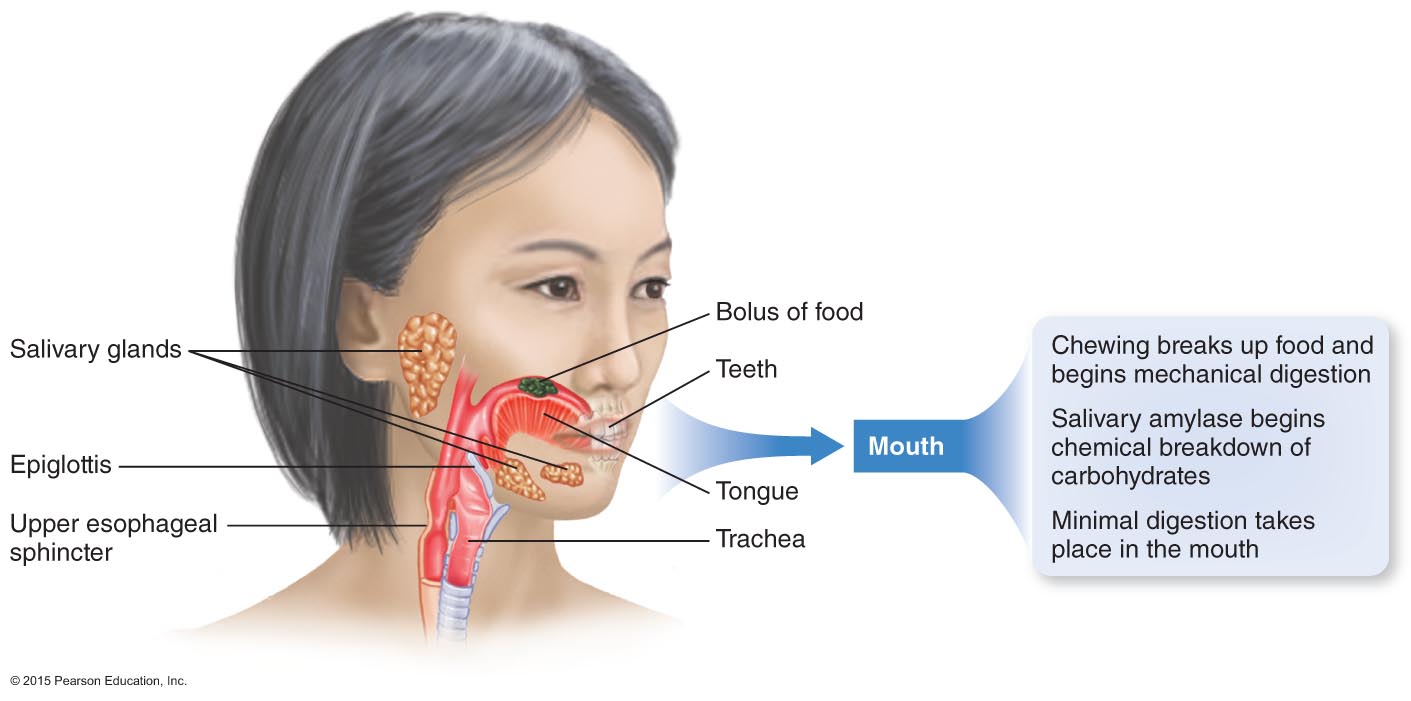
•Digestion begins in the mouth
•Chewing is the mechanical digestion that breaks food into smaller pieces
•Some chemical digestion takes place in the mouth
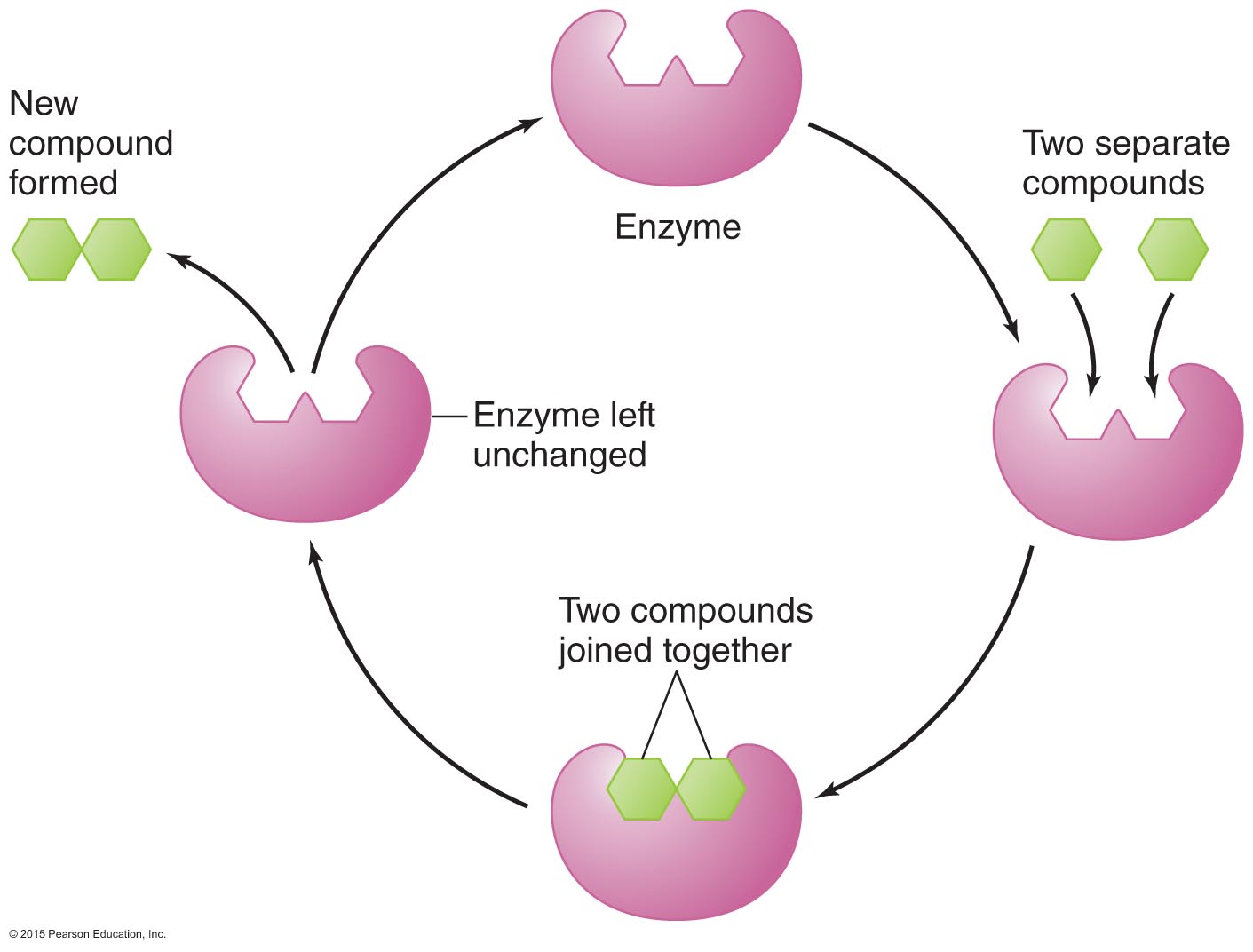
•Salivary amylase: an enzyme produced by the salivary glands that begins the chemical digestion of carbohydrates
© 2018 Pearson Education, Inc.
Digestion: The Mouth (cont.)
© 2018 Pearson Education, Inc.
Digestion: The Mouth (cont.)
© 2018 Pearson Education, Inc.
Digestion: The Mouth (cont.)
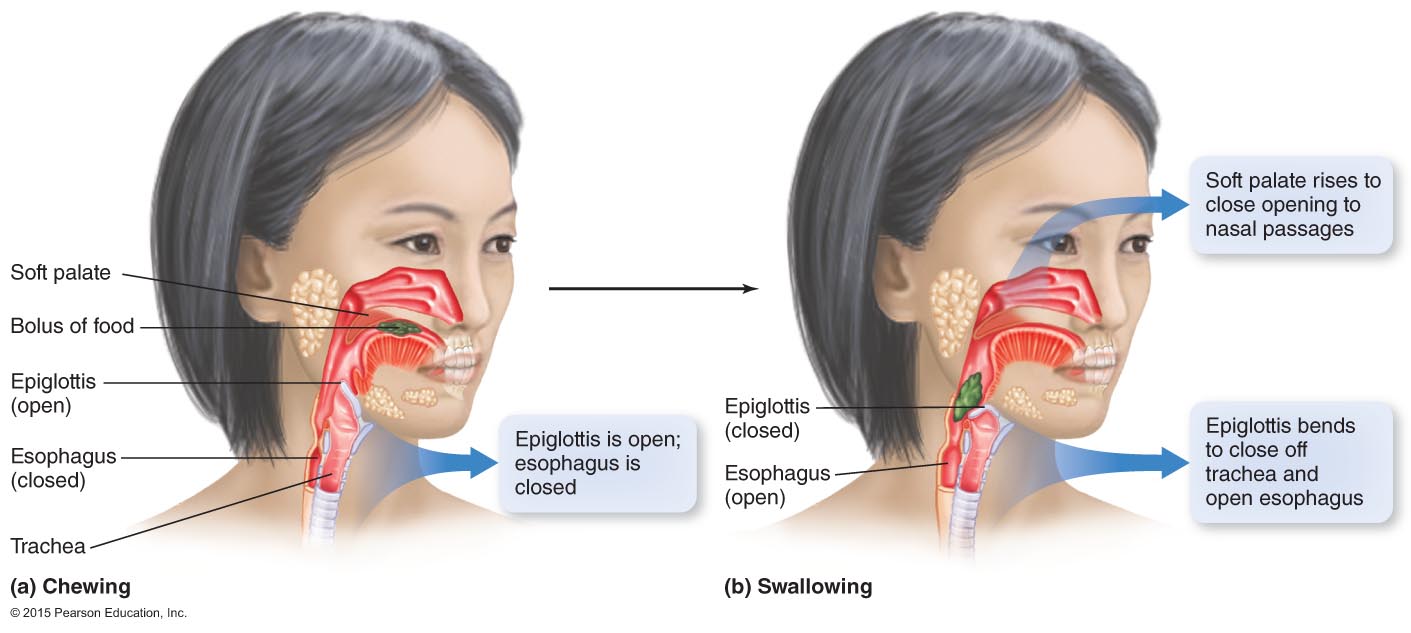
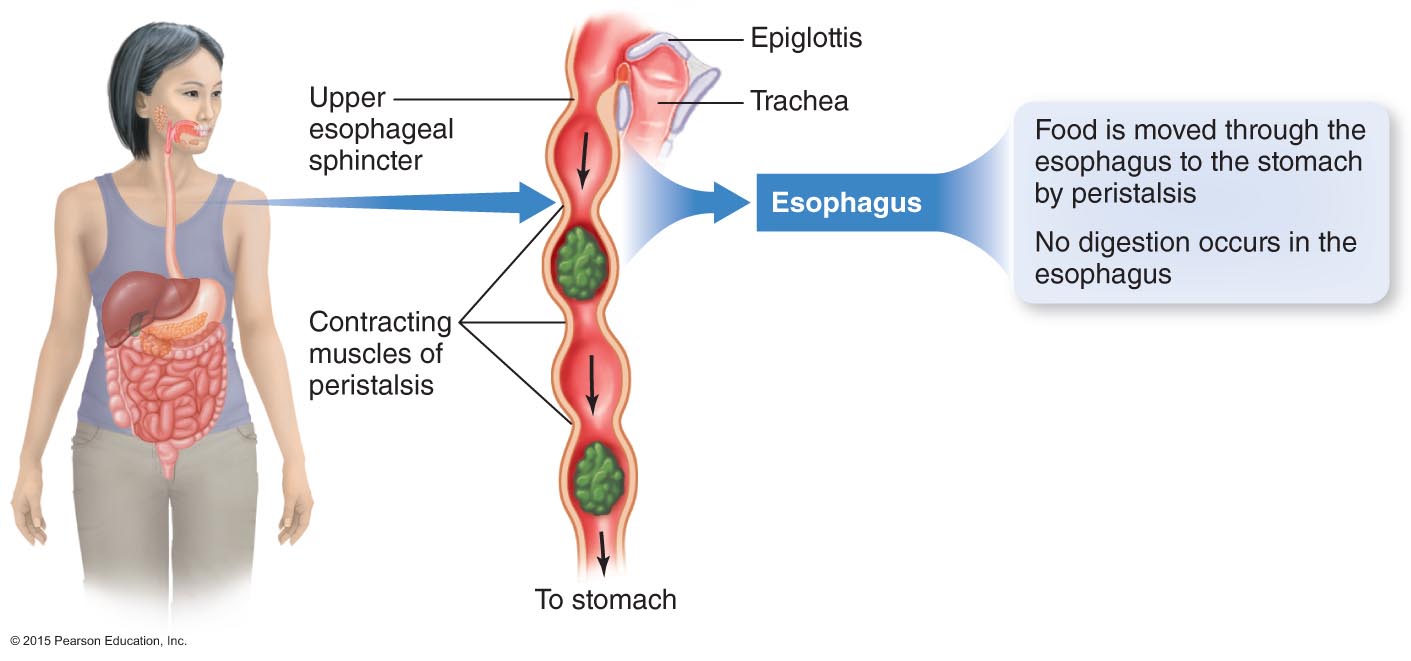
•The esophagus propels food into the stomach
•The epiglottis covers the opening to the trachea during swallowing
•Food travels from the mouth to the stomach through the esophagus
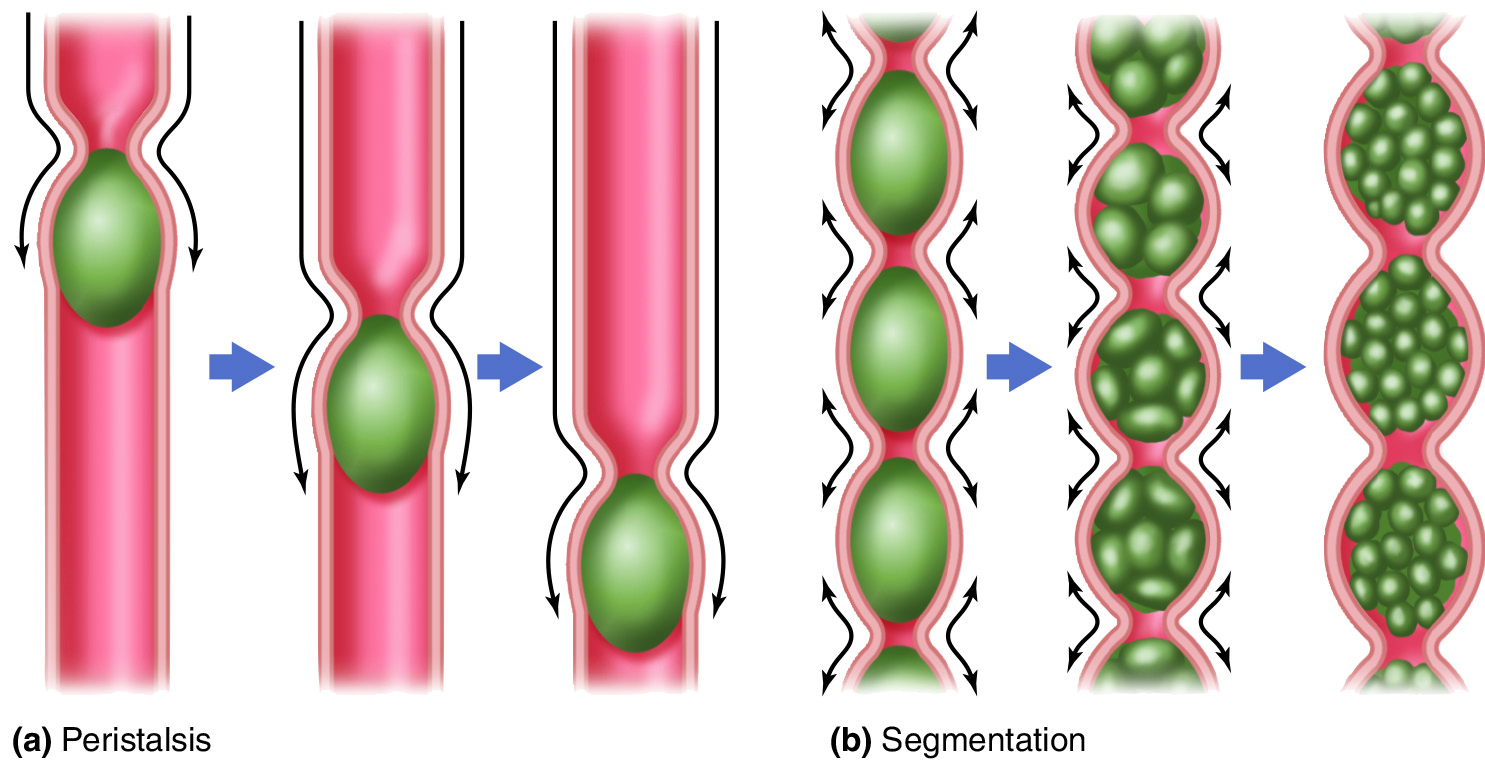
•Peristalsis is the muscular contractions moving food through the GI tract
•The gastroesophageal sphincter separates the esophagus from the stomach
© 2018 Pearson Education, Inc.
Digestion: Chewing and Swallowing
© 2018 Pearson Education, Inc.
Digestion: Peristalsis
© 2018 Pearson Education, Inc.
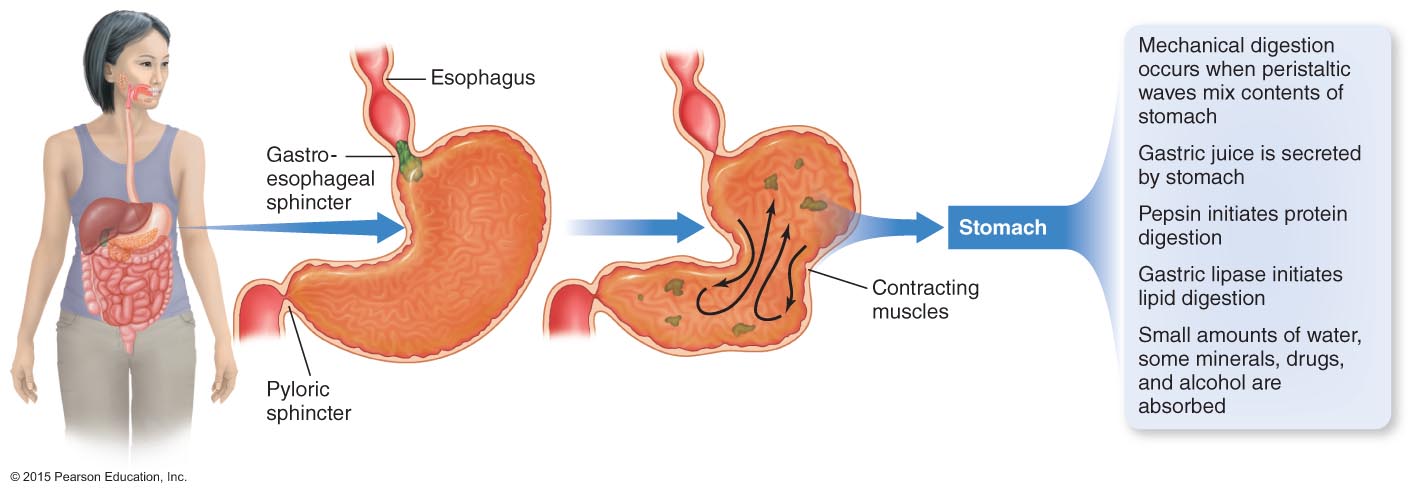
Digestion: Stomach
•The stomach mixes, digests, and stores food
•Digestion in the stomach includes
•Extensive mechanical digestion to mix food with gastric juice
•Chemical digestion of proteins and fats
© 2018 Pearson Education, Inc.
Digestion: Stomach (cont.)
Gastric juice contains
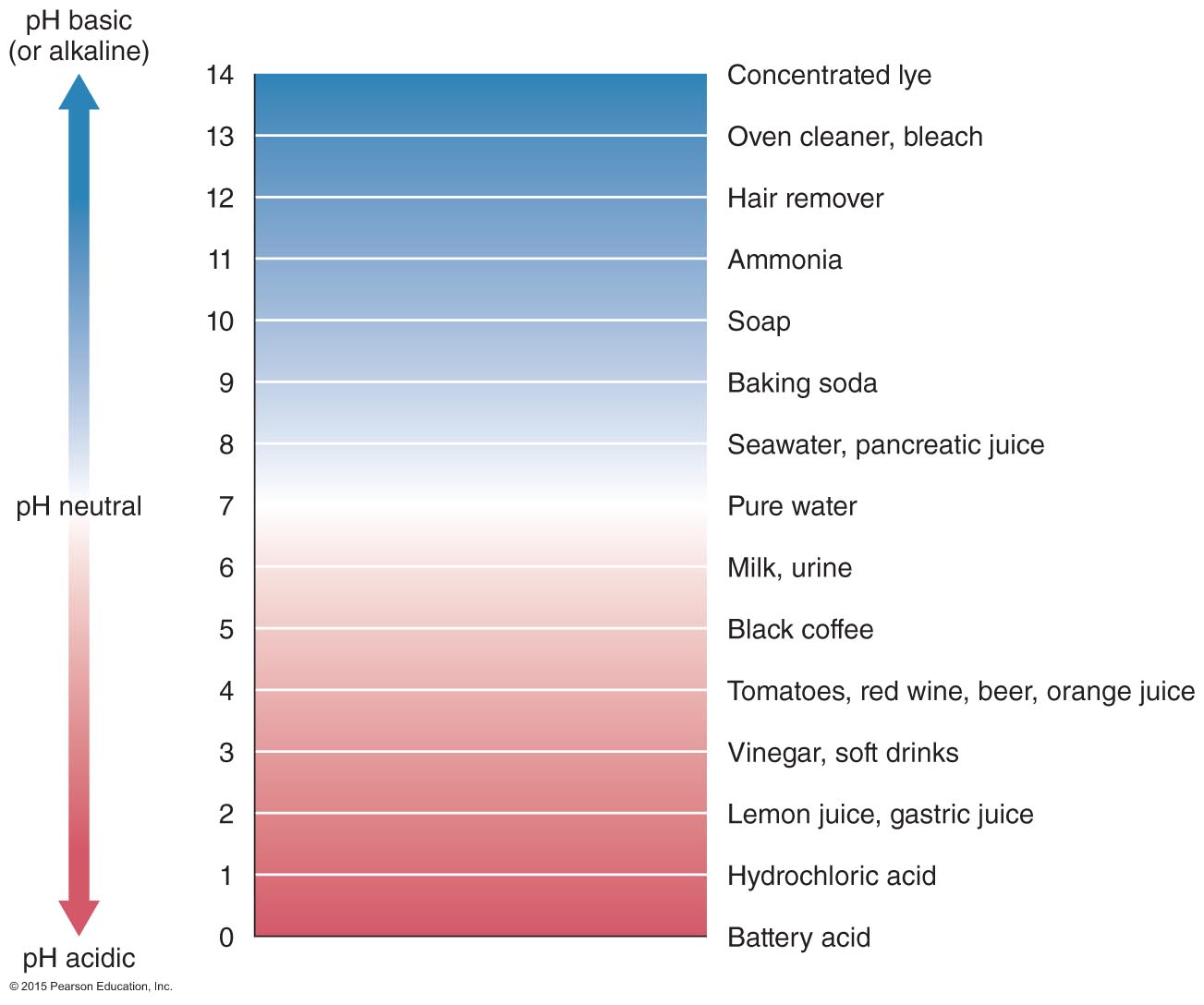
•Hydrochloric acid (HCl): to denature proteins and activate pepsin
•Intrinsic factor: a protein critical to the absorption of vitamin B12
•Pepsin: an enzyme to digest protein
•Gastric lipase: an enzyme to digest fat
Chyme: semisolid product of mechanical and chemical digestion in the stomach
© 2018 Pearson Education, Inc.
Digestion: Stomach (cont.)
© 2018 Pearson Education, Inc.
Hydrochloric Acid on the pH Scale
© 2018 Pearson Education, Inc.
Loading…
Digestion: Small Intestine
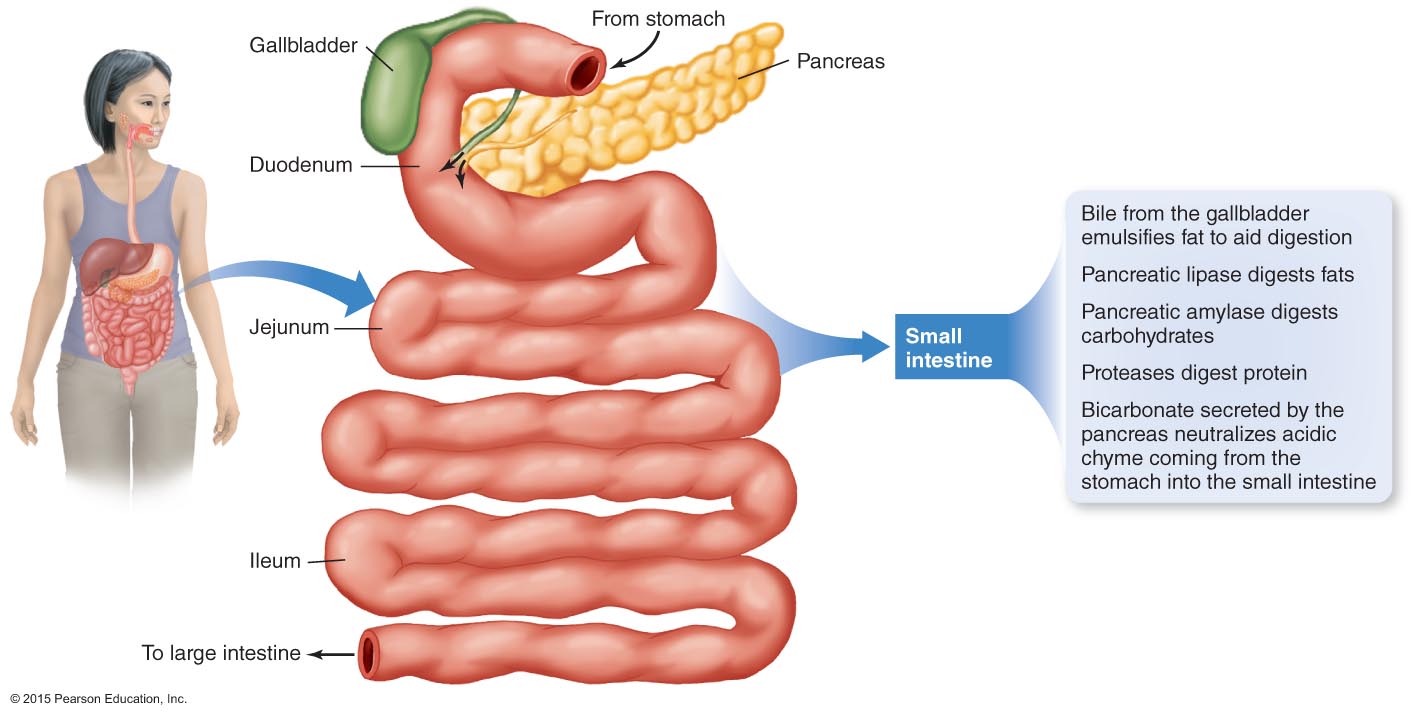
•From the stomach, chyme is slowly released through the pyloric sphincter to the small intestine
•Chemical digestion continues in the small intestine using pancreatic enzymes and bile
© 2018 Pearson Education, Inc.
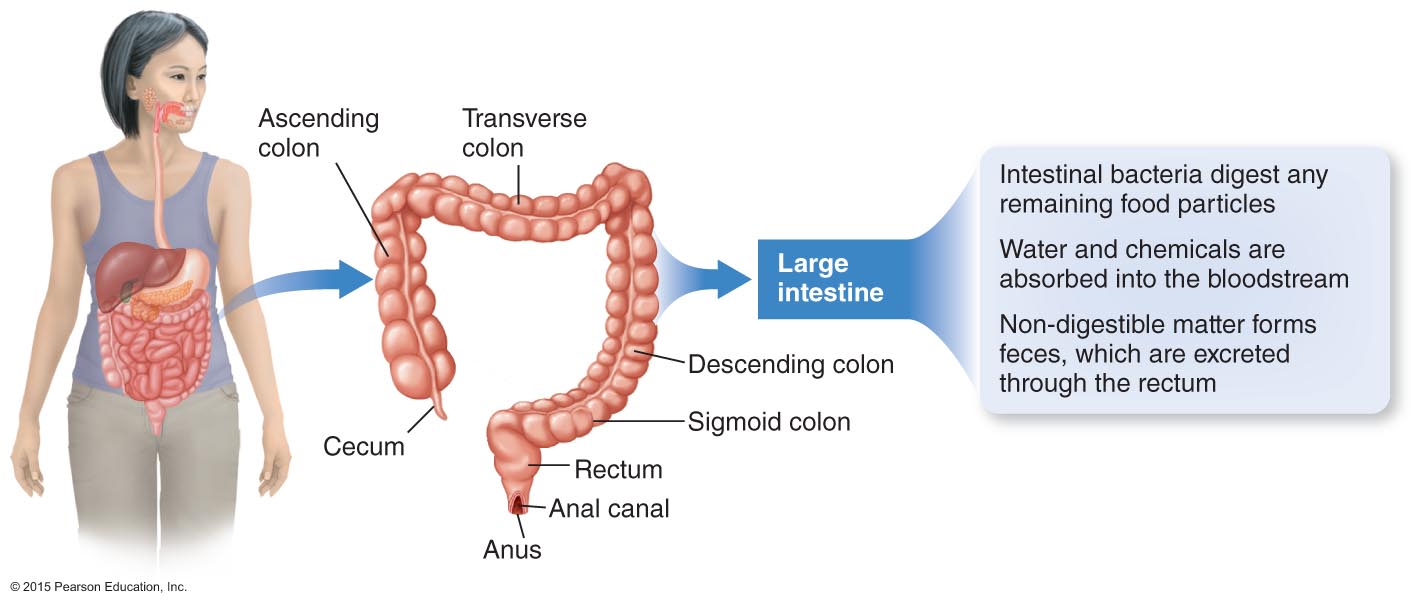
Digestion: Large Intestine
•Undigested food components move through a sphincter called the ileocecal valve to the large intestine
•In the large intestine
•Very little digestion takes place
•Material is stored 12–24 hours prior to elimination
•Water and some nutrients are absorbed
© 2018 Pearson Education, Inc.
Elimination
© 2018 Pearson Education, Inc.
Digestion: Accessory Organs
•Surrounding the GI tract are several accessory organs:
•Salivary glands
•Liver: produces bile, which emulsifies fats
•Pancreas
•Produces many digestive enzymes
•Produces bicarbonate to neutralize chyme
•Gallbladder: stores bile
© 2018 Pearson Education, Inc.
Absorption
•Absorption: the process of taking molecules across a cell membrane and into cells of the body
•A small amount of absorption occurs in the stomach
•Most absorption of nutrients occurs in the three sections of the small intestine
•Duodenum
•Jejunum
•Ileum
© 2018 Pearson Education, Inc.
Digestion: Accessory Organs (cont.)
© 2018 Pearson Education, Inc.
Absorption (cont.)
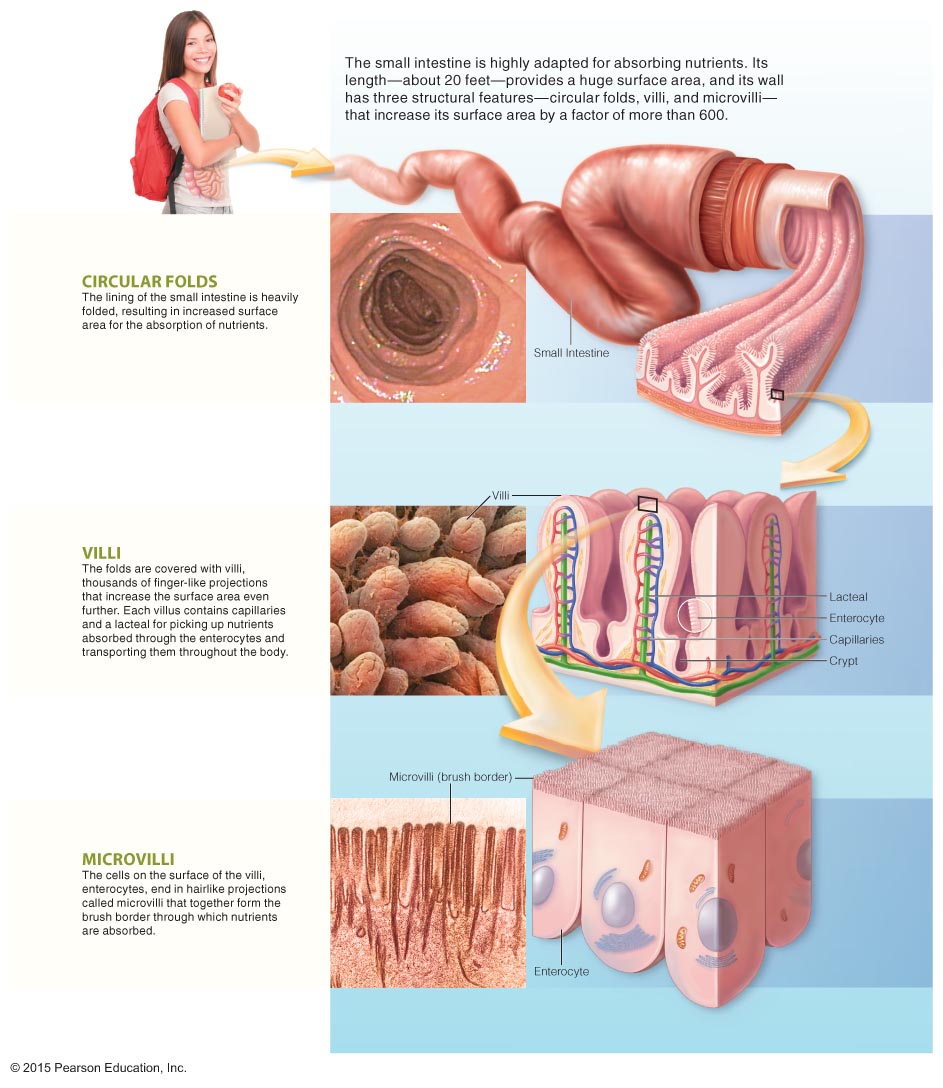
•The lining of the GI tract has special structures to facilitate absorption
•Villi: folds in the lining that are in close contact with nutrient molecules
•Brush border: composed of microvilli that greatly increase the surface area
© 2018 Pearson Education, Inc.
Absorption (cont.)
© 2018 Pearson Education, Inc.
Absorption (cont.)
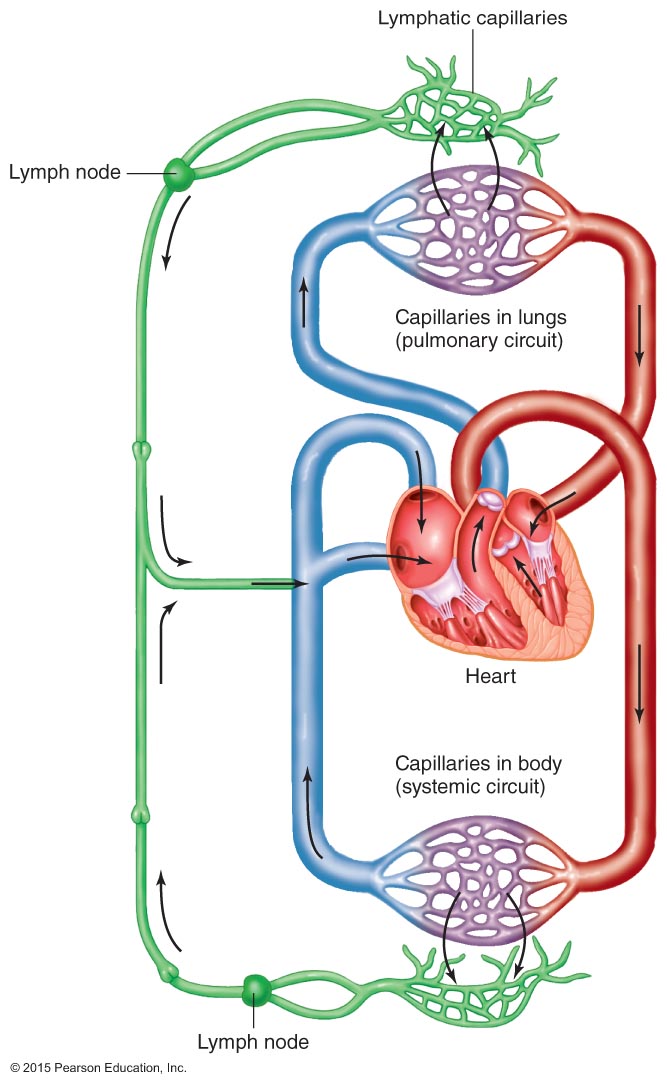
•Water-soluble nutrients (carbohydrate, protein, minerals, and some vitamins) enter the portal vein
•The portal vein transports these nutrients to the liver
•Fat-soluble nutrients (lipids and some vitamins) enter the lymphatic vessels
•Lymphatic vessels transport these nutrients directly to the bloodstream
© 2018 Pearson Education, Inc.
Transport by Blood and Lymph
© 2018 Pearson Education, Inc.
Absorption (cont.)
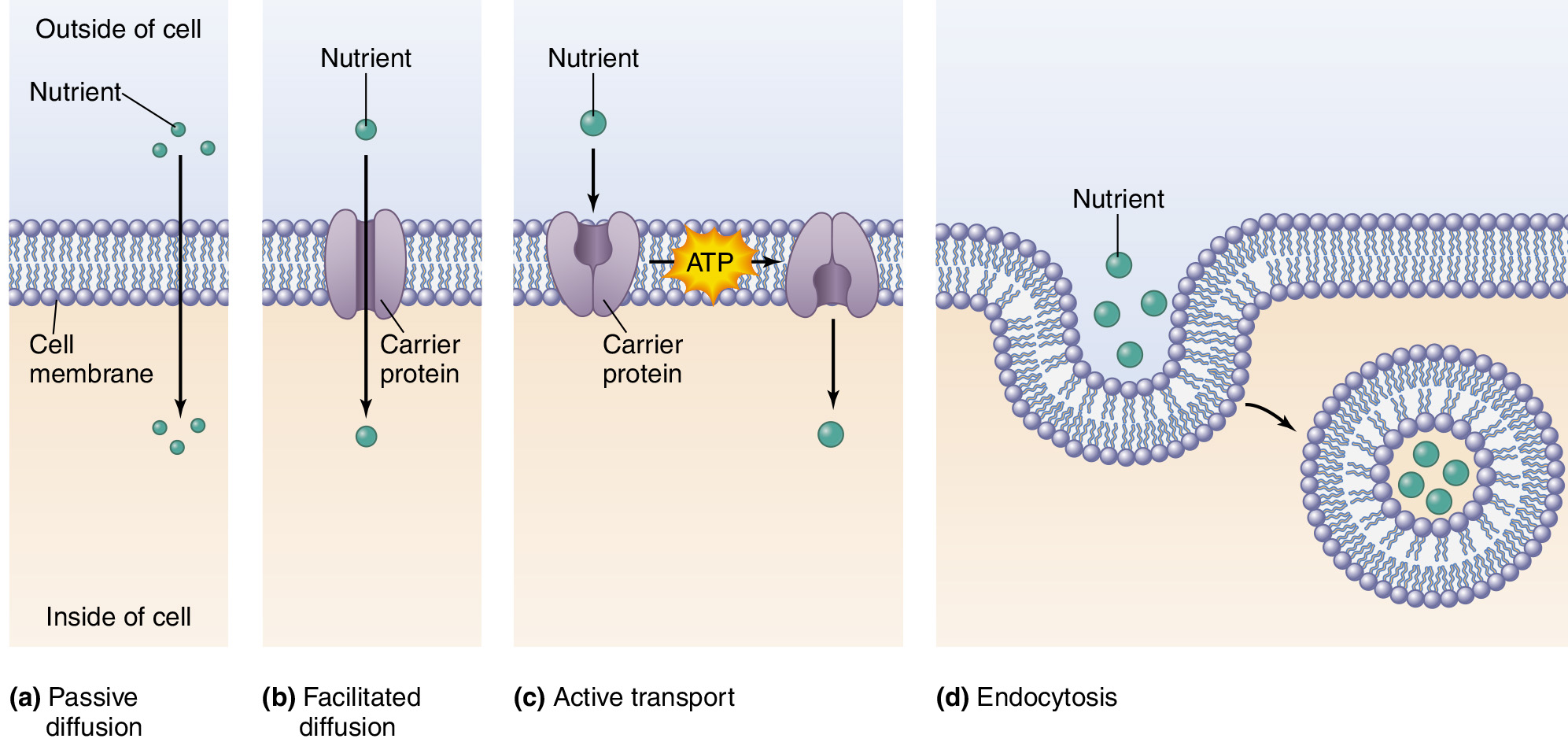
•Nutrients are absorbed across the mucosal membrane and into the blood stream or lymph by:
•Passive diffusion
•Facilitated diffusion
•Active transport
•Endocytosis
© 2018 Pearson Education, Inc.
Absorption (cont.)
© 2018 Pearson Education, Inc.
The Role of the Neuromuscular System
•Two components of the neuromuscular system regulate the activities of the GI tract
•The muscles of the GI tract mix and move food
•Both voluntary and involuntary muscles
•Nerves control the contractions and secretions of the GI tract
•The enteric nervous system (ENS)
•Other branches of the autonomic nervous system
•The central nervous system (CNS)
© 2018 Pearson Education, Inc.
GI Muscles
© 2018 Pearson Education, Inc.
GI Tract Disorders
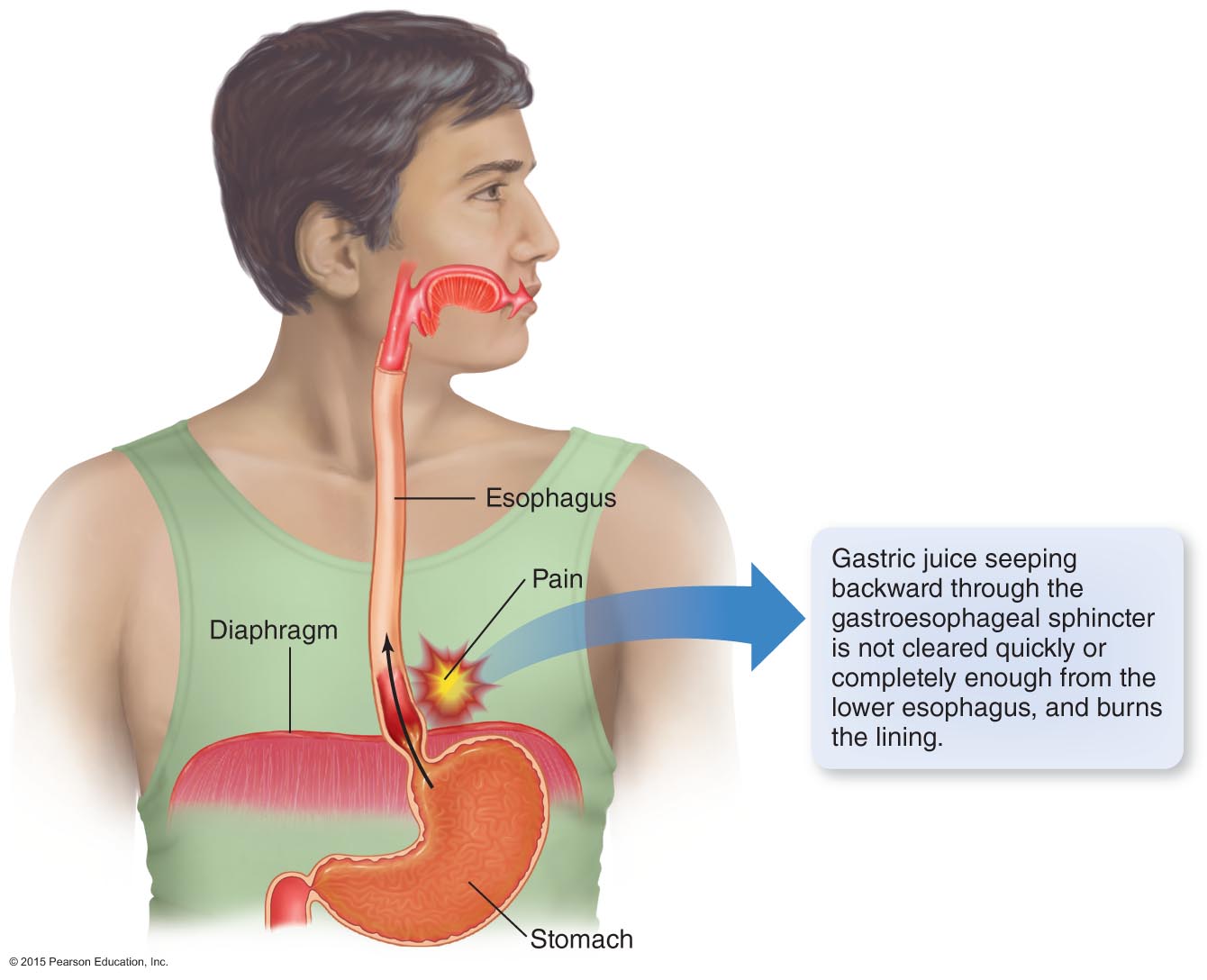
•The lining of the stomach is designed to cope with hydrochloric acid, but other regions of the GI tract are not
•Heartburn is caused by hydrochloric acid in the esophagus
•Gastroesophageal reflux disease (GERD) is a chronic disease for which painful, persistent heartburn is the most common symptom
© 2018 Pearson Education, Inc.
Heartburn
© 2018 Pearson Education, Inc.
GI Tract Disorders (cont.)
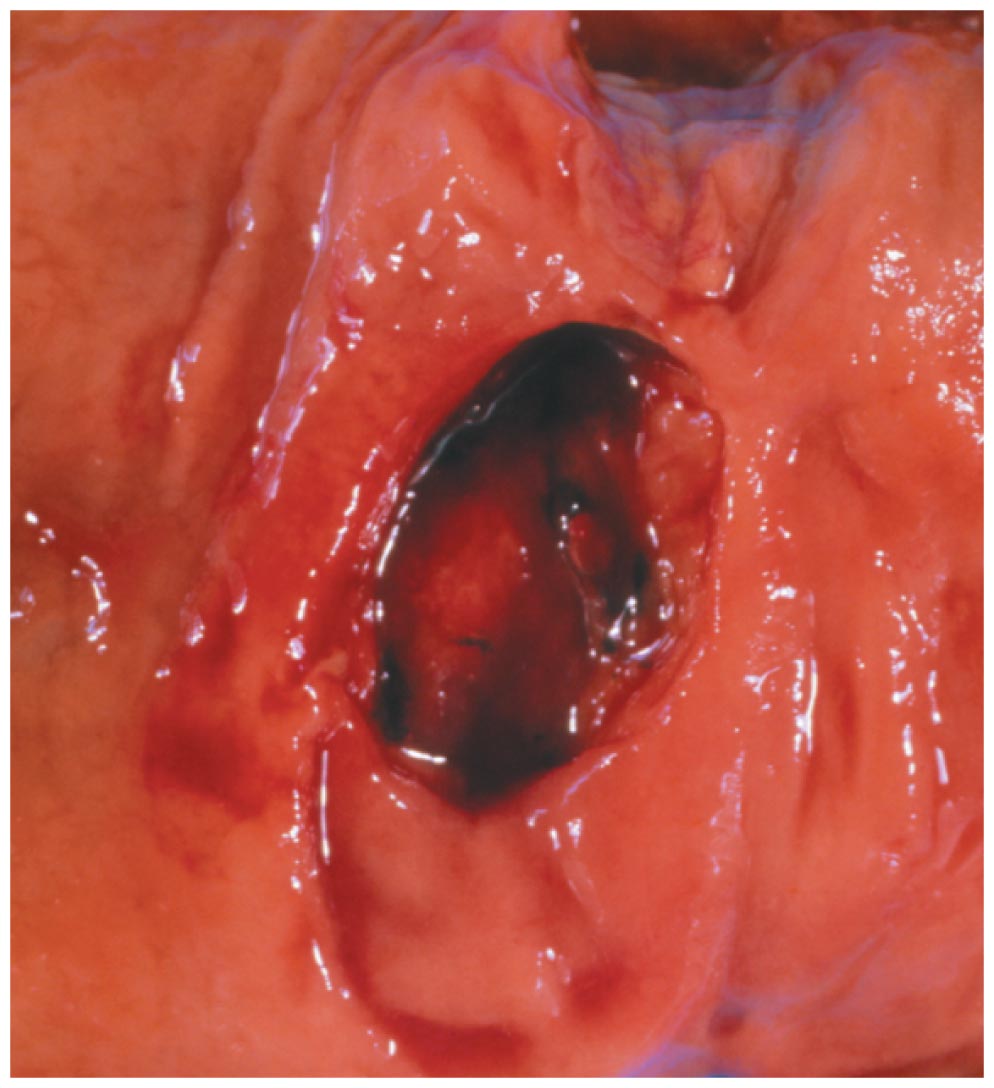
•Peptic ulcers are regions of the GI tract that have been eroded by HCl and pepsin
•The bacterium Helicobacter pylori contributes to the production of both gastric and duodenal ulcers
© 2018 Pearson Education, Inc.
Peptic Ulcer
© 2018 Pearson Education, Inc.
GI Tract Disorders (cont.)
•Vomiting often accompanies a gastrointestinal infection such as the norovirus
•Cyclic vomiting syndrome (CVS) is a chronic condition involving severe nausea and vomiting that can last for hours or days
© 2018 Pearson Education, Inc.
GI Tract Disorders (cont.)
•Diarrhea can be caused by
•Food intolerances
•Infection of the GI tract
•Stress
•Bowel disorders
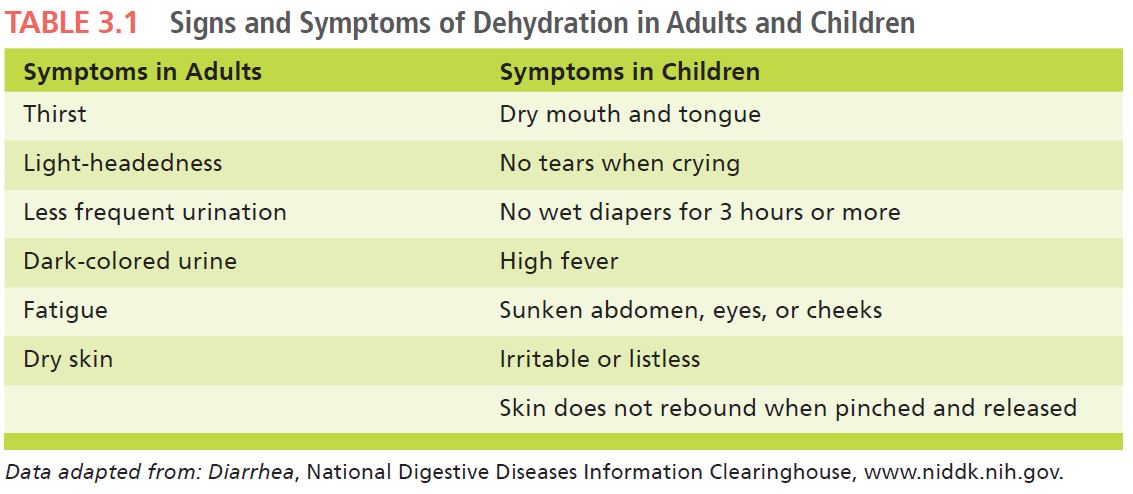
•Can lead to severe dehydration
•Is more dangerous for children and the elderly
•Constipation: no stool passed for two or more days
© 2018 Pearson Education, Inc.
Signs and Symptoms of Dehydration
© 2018 Pearson Education, Inc.
GI Tract Disorders (cont.)
•Irritable bowel syndrome (IBS) is a disorder that interferes with normal colon function
•Symptoms of IBS include
•Abdominal cramps and bloating
•Either diarrhea or constipation
•IBS is more common in women than in men
© 2018 Pearson Education, Inc.
GI Tract Disorders (cont.)
•Cancer can develop in any region of the GI tract
•The most common forms are
•Oral cancer
•Pancreatic cancer
•Colorectal cancer
© 2018 Pearson Education, Inc.
In Depth: Disorders Related to Foods
•Food intolerance: a particular food causes numerous unpleasant symptoms, including
•Gas
•Pain
•Diarrhea
•The immune system is not involved
•Food allergy: hypersensitivity reaction of the immune system to a component in a food
© 2018 Pearson Education, Inc.
In Depth: Disorders Related to Foods (cont.)
Celiac disease is an autoimmune disease that is also considered a genetic disorder
•Complete intolerance for gluten, a protein found in wheat, rye, barley, and triticale
•Can damage the small intestine, leading to poor absorption of nutrients
•Requires a diet lacking wheat, rye, barley, and triticale
© 2018 Pearson Education, Inc.
Non-Celiac Gluten Sensitivity
•Some individuals may have a negative GI reaction when consuming gluten, but do not have Celiac Disease
–Bloating
–Abdominal pain
–Diarrhea
–Possible joint pain
•Symptoms improv