Protein synthesis and DNA
Protein Synthesis and DNA
DNA (deoxyribonucleic acid)
The genetic material of eukaryotic cells is stored in the nucleus, for example in animal and plant cells
DNA is found in thread-like structures called chromosomes
Chromosomes are made from very long molecules of DNA
A gene is a short section of DNA that controls a feature or trait
Genes control traits by coding for specific proteins, such as enzymes, hormones, and structural proteins
Almost every cell contains the same DNA; exceptions include red blood cells (no nucleus) and gametes
The complete DNA of an organism is called its genome
Structure of DNA
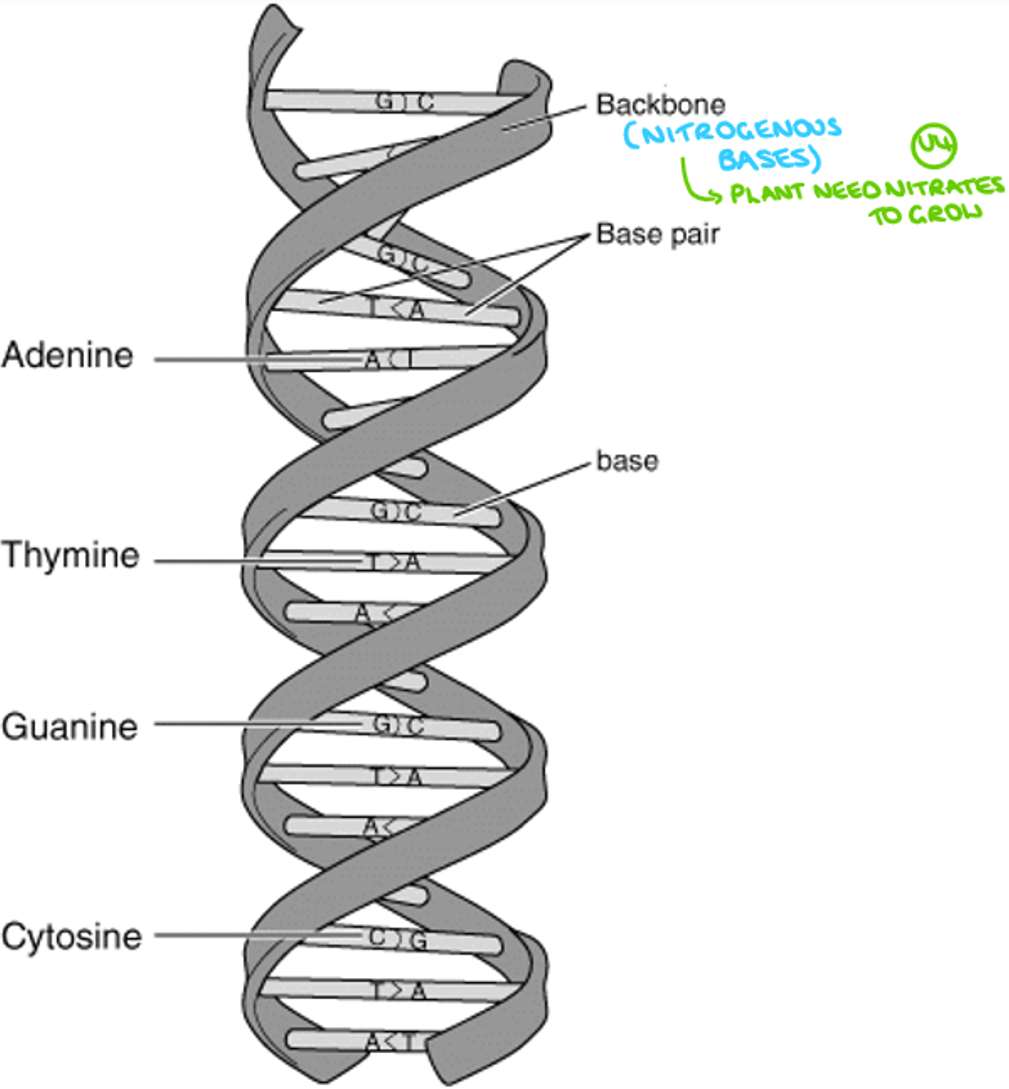
DNA is a long double helix made of two strands held together by weak hydrogen bonds
Each strand has a sugar-phosphate backbone with bases projecting outwards
There are four bases: adenine (A), thymine (T), cytosine (C), and guanine (G)
Bases pair by complementary base pairing: A with T, and C with G
The base sequence carries genetic information
Genes and Proteins
Proteins are made from amino acids
There are 20 different amino acids used to make proteins
The type and order of amino acids determines a protein’s shape and function
The order of bases in DNA determines the order of amino acids
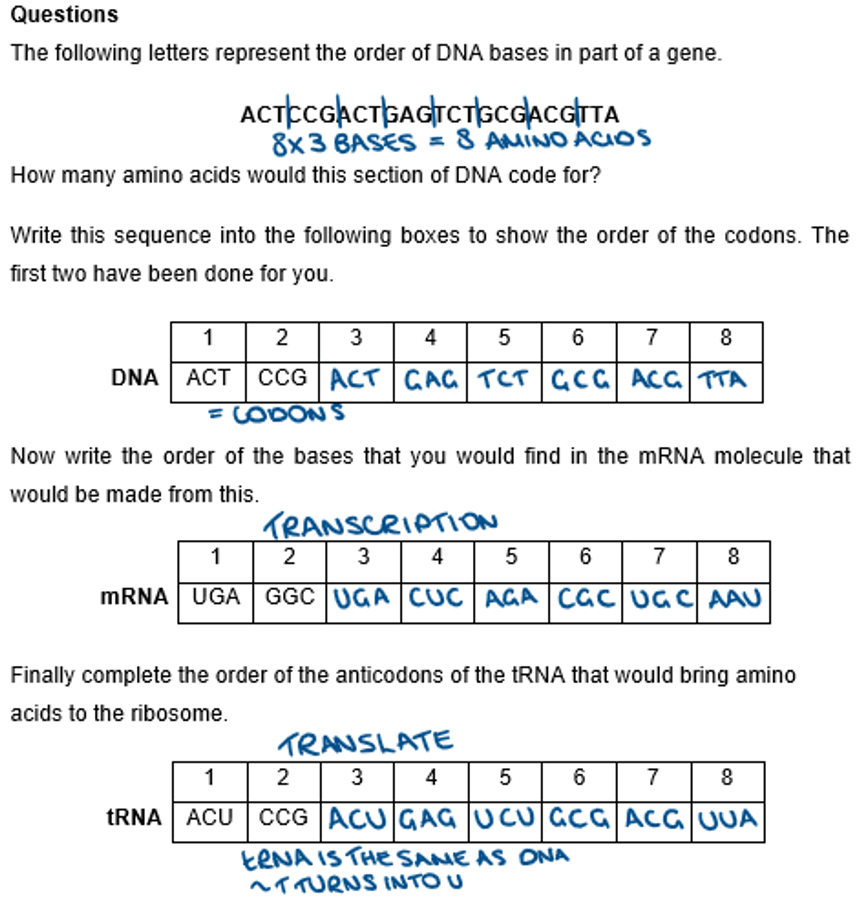
Three bases code for one amino acid; this triplet is called a codon
Amino acids join to form polypeptide chains, which fold into functional proteins
Codons and Amino Acids

Different base sequences produce different proteins
Changing the base sequence changes the protein made
One DNA molecule can contain many genes, each coding for a different protein
Example: genes in skin cells code for melanin, which affects skin colour
RNA
RNA is similar to DNA but is single stranded
RNA contains uracil instead of thymine
RNA can leave the nucleus, unlike DNA
Two main types are involved in protein synthesis:
mRNA:
It carries a copy of the gene from the nucleus to the ribosome
It is linear and looks like a single strand of DNA
The sequence of bases can vary molecule to molecule
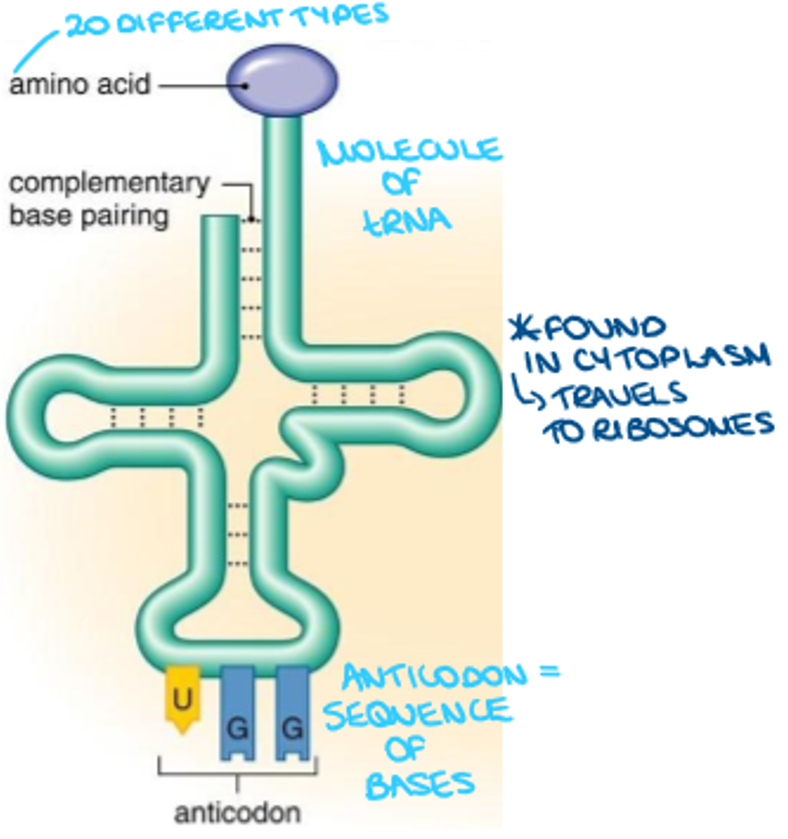
tRNA:
It carries specific amino acids to the ribosome
It is folded into a 3D shape
They all have the same sequence of bases apart from in one place, called the anticodon
Whihc amino acid a molecule carries depends on the sequence of its anticodon
Protein Synthesis
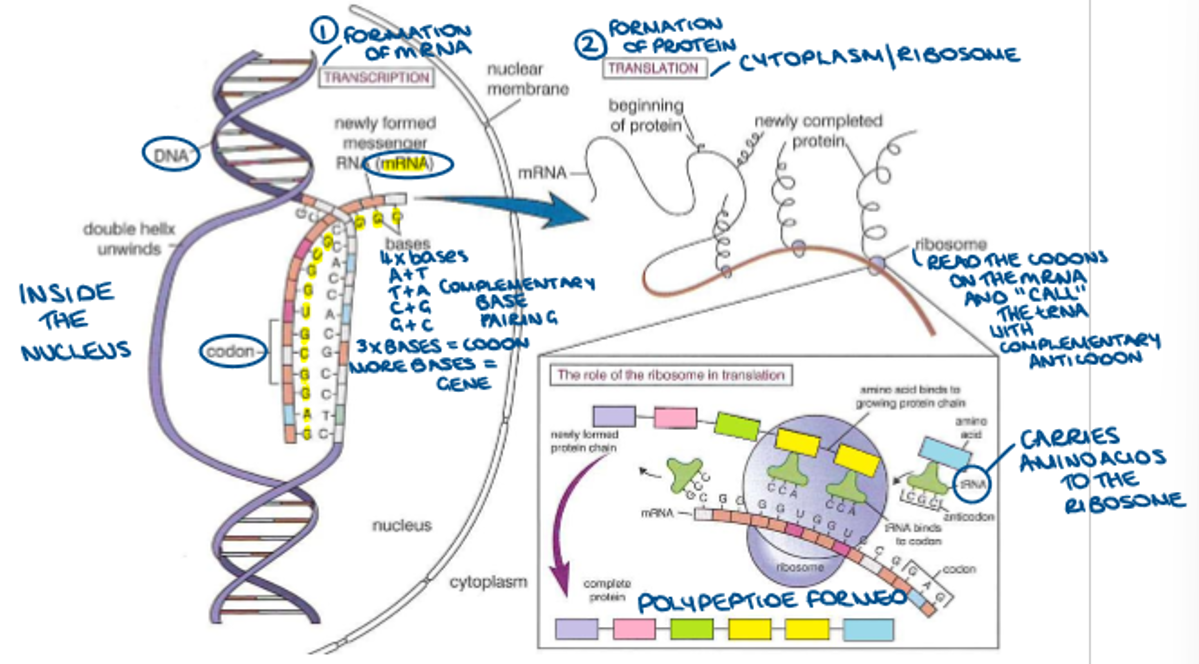
A mRNA copy is made of the gene in the DNA and it is called transcription
The mRNA leaves the nucleus and travels to a ribosome
The tRNA also arrive at the ribosome carrying amino acids
The tRNA arrive in the correct order as their anticodons have to match the codons of the mRNA
The amino acids on the tRNA join to form a polypeptide (protein) chain and this is called translation
Protein synthesis occurs in two stages: transcription and translation
These processes allow instructions in DNA to be used to make proteins
Transcription
Occurs in the nucleus
DNA unwinds and the two strands separate at the gene
One strand acts as a template
mRNA is formed using complementary base pairing
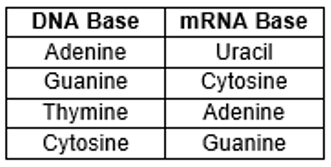
Base pairing rules during transcription:
DNA adenine pairs with RNA uracil
DNA thymine pairs with RNA adenine
DNA cytosine pairs with RNA guanine
DNA guanine pairs with RNA cytosine
mRNA then leaves the nucleus and moves to a ribosome
This is called transcription because you are copying the information between 2 similar molecules
Translation
Occurs at the ribosomes in the cytoplasm
The ribosomes binds to the first 2 codons of the mRNA
Two tRNA molecules with the complementary anticodons arrive at the ribosome and bind to the first 2 codons of the mRNA
The ribosome attaches to the mRNA
tRNA molecules bring amino acids to the ribosome
Anticodons on tRNA are complementary to codons on mRNA
Amino acids are joined together to form a polypeptide chain
The ribosome moves along the mRNA until the protein is complete
Their amino acids are joined to the growing proteins
Mutations
A mutation is a change in the DNA sequence or the amount of DNA
The sequence of bases in the mRNA will also be different
A different tRNA molecule could come to the ribosome and this could alter the order of the amino acids so that the wrong protein is made
Mutations in genes can change codons and amino acid sequences
This may change the shape and function of a protein
Frequently mutations occur in an area of the DNA that is not a gene. This will not cause any proteins to be changed. It is known as neutral or silent
If a mutation occurs in a gene it can change how it works and it will often have a small effect such as losing the ability to roll your tongue.
However sometimes they could have a significant effect like diseases
Many mutations are neutral, some are harmful, and a few are beneficial
Mutations in body cells can lead to cancer
Mutations in gametes can be inherited
Causes of Mutations
Mutations occur naturally at low rates
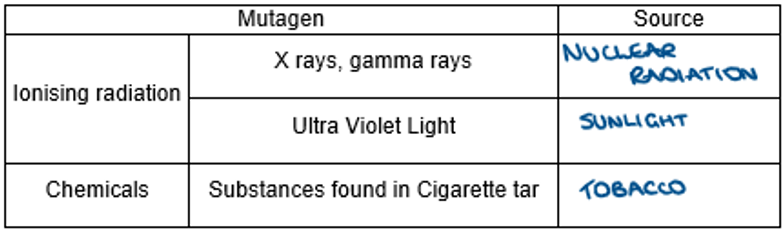
The rate can be increased by exposure to mutagens
Keywords Glossary
Word | Definition |
|---|---|
Genome | The complete set of DNA in an organism |
Codon | Three bases that code for one amino acid |
Ribosome | Site of translation where proteins are made |
Transcription | Production of mRNA from DNA in the nucleus |
Translation | Assembly of amino acids into proteins at ribosomes |
mRNA | Carries the genetic code from nucleus to ribosome |
tRNA | Carries amino acids to the ribosome |
Anticodon | Three bases on tRNA complementary to an mRNA codon |