Posterior Carpal Region. Fovea radialis (Anatomical Snuffbox)
Posterior Carpal Region and Fovea Radialis (Anatomical Snuffbox): Anatomy, Clinical Significance, and Structures
The posterior carpal region, also known as the dorsal wrist, contains important structures, including the anatomical snuffbox (also known as the fovea radialis). The anatomical snuffbox is a triangular depression on the lateral side of the wrist that is clinically significant for both diagnosis and treatment of certain wrist and hand conditions. This region is important for carpal bone articulation, tendon movements, and is crucial for radiographic examination of the wrist.
Anatomy of the Posterior Carpal Region
The posterior carpal region consists of the carpal bones, tendons, and ligaments that enable wrist extension and thumb movement. Key anatomical landmarks include the anatomical snuffbox, a depression visible when the thumb is extended.
1. Carpal Bones
The carpal bones that form the wrist joint also contribute to the posterior carpal region. These bones allow a wide range of motion and articulation.
Proximal row of carpal bones:
Scaphoid: Located on the radial (lateral) side of the wrist.
Lunate: Positioned next to the scaphoid, forming part of the carpal arc.
Triquetrum: Medial to the lunate.
Pisiform: A small sesamoid bone that sits atop the triquetrum.
Distal row of carpal bones:
Trapezium: The lateral bone in the distal row.
Trapezoid: Medial to the trapezium.
Capitate: The largest bone in the distal row.
Hamate: Located on the medial side of the wrist.
2. Anatomical Snuffbox (Fovea Radialis)
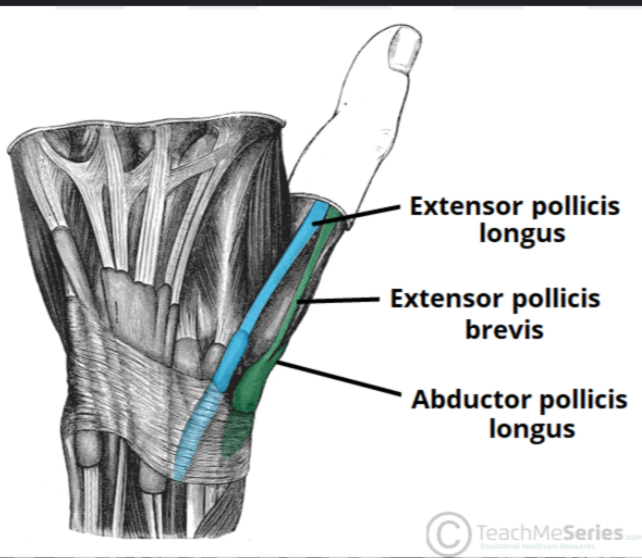
The anatomical snuffbox is a triangular depression on the lateral side of the wrist, visible when the thumb is fully extended. It is bordered by tendons of muscles that allow thumb extension and is clinically significant for the identification of scaphoid fractures.
Boundaries:
Medial (ulnar) border: Tendon of the extensor pollicis longus (EPL).
Lateral (radial) border: Tendons of the extensor pollicis brevis (EPB) and abductor pollicis longus (APL).
Floor: The floor is formed by the scaphoid and trapezium bones.
Contents of the Anatomical Snuffbox:
Radial artery: The radial artery passes through the snuffbox, providing blood supply to the thumb and lateral aspect of the hand.
Superficial branch of the radial nerve: Provides sensory innervation to the skin over the dorsal aspect of the thumb.
Scaphoid bone: The scaphoid is often palpated in this region during physical examinations, especially when diagnosing fractures.
Cephalic vein: This vein often passes through the snuffbox.
Clinical Significance of the Posterior Carpal Region and Anatomical Snuffbox
The anatomical snuffbox is an important landmark in diagnosing wrist injuries, particularly scaphoid fractures, and has significant implications for vascular and nerve assessment in the hand and wrist.
1. Scaphoid Fracture
Definition: The scaphoid is one of the most commonly fractured bones in the wrist, especially after a fall on an outstretched hand (FOOSH injury). The anatomical snuffbox is a key region for palpating the scaphoid to identify fractures.
Symptoms:
Pain or tenderness in the anatomical snuffbox.
Swelling and bruising may develop around the wrist.
Difficulty moving the thumb or wrist.
Diagnosis:
Tenderness over the anatomical snuffbox is a common sign of a scaphoid fracture.
X-rays or CT scans are often used to confirm the fracture. Scaphoid fractures may not always be visible on initial X-rays, requiring repeat imaging after a few weeks.
Treatment:
Immobilization with a thumb spica splint or cast to prevent movement and promote healing.
Severe fractures or non-union may require surgical intervention.
2. Radial Artery Injury
The radial artery passes through the anatomical snuffbox and can be injured in cases of trauma to the wrist. Injury to this artery can compromise blood supply to the thumb and hand, resulting in vascular insufficiency.
Symptoms:
Weak or absent radial pulse at the wrist.
Coldness or pallor of the thumb or fingers.
Diagnosis and Treatment:
Doppler ultrasound or angiography can be used to assess blood flow.
Surgical repair or embolization may be required for significant arterial injury.
3. De Quervain’s Tenosynovitis
This condition is caused by inflammation of the tendons in the first dorsal compartment, which includes the abductor pollicis longus (APL) and extensor pollicis brevis (EPB). Inflammation of these tendons can cause pain in the anatomical snuffbox.
Symptoms:
Pain and swelling at the base of the thumb, often radiating into the wrist.
Pain increases with activities that involve thumb movement, such as gripping or lifting.
Diagnosis:
Finkelstein’s test: Involves making a fist with the thumb inside the fingers and then ulnar deviating the wrist. Pain over the snuffbox is indicative of De Quervain's tenosynovitis.
Treatment:
Conservative measures, including rest, ice, and NSAIDs.
Corticosteroid injections may be used in more severe cases.
Surgical release of the first dorsal compartment can be considered for refractory cases.
4. Radial Nerve Lesions
The superficial branch of the radial nerve, which provides sensory innervation to the dorsum of the hand, passes near the anatomical snuffbox. Injury to the radial nerve can cause sensory deficits in the thumb and dorsum of the hand.
Symptoms:
Numbness or tingling over the dorsal thumb and first two fingers.
Reduced sensation or loss of touch over the lateral aspect of the hand.
Treatment:
Radial nerve injuries can often be treated conservatively with splints and physical therapy.
Severe cases may require nerve repair or decompression surgery.
Blood Supply to the Posterior Carpal Region
The radial artery plays a key role in the blood supply to the posterior carpal region. It passes through the anatomical snuffbox and provides oxygenated blood to the thumb and lateral portions of the hand. The ulnar artery, although not directly passing through the snuffbox, supplies the medial aspects of the hand.
Radial artery:
Provides the deep palmar arch and contributes to the dorsal carpal branch, supplying the posterior wrist region.
Ulnar artery:
Supplies the superficial palmar arch, which contributes to the blood supply of the fingers and hand.
Nerve Supply to the Posterior Carpal Region
Superficial branch of the radial nerve:
Provides sensory innervation to the dorsal aspect of the thumb and first two fingers.
Median nerve:
Though it does not pass through the anatomical snuffbox, it innervates the thenar muscles (muscles of the thumb) and provides motor innervation to the flexor muscles of the forearm.
Ulnar nerve:
Innervates the hypothenar muscles and provides sensory innervation to the little finger and part of the ring finger.
Summary
The posterior carpal region and anatomical snuffbox are crucial for understanding wrist anatomy and hand function. The anatomical snuffbox, formed by the tendons of the extensor pollicis longus (EPL), extensor pollicis brevis (EPB), and abductor pollicis longus (APL), is clinically significant for the diagnosis of conditions such as scaphoid fractures, De Quervain's tenosynovitis, and radial artery injury. The region also contains the radial artery and superficial branch of the radial nerve, making it an important landmark for both vascular and nerve assessment. Understanding the anatomy of this region is critical for diagnosing and treating wrist injuries and disorders.