blood pressure
oxgenated blood from lungs to systemic circulation
de-exgyenated blood pump back into lungs
hydrostatic pressure- force of liquid against wall of container
blood pressure- force on walls of blood vessel by blood
systolic pressure- max pressure in vessels during contraction of ventricles
diastolic pressure- pressure on ventricles at rest
blood pressure- cardiac output x peripheral resistance
cardiac output- volume of blood pumped by left ventricle into aorta per minute.
peripheral resistance- measurment that blood flows through vessel.
how is blood pressure controlled?-
sympathetic nervous system:
stimulation of SNS through vasoconstriction and vasodialation
bararoceptors (pressure receptors):
aortic arch, internal carotid, large vessels in neck
stimulate by stretch of artery wall
if BP rise artery wall stretched and barorceptors send impulse to vasomotor center (in brain) to lower heart rate.
kidneys:
control water loss from urine
high blood pressure causes blood vessels to narrow and aldosterone is released which helps kidneys retain salt and water.
chemoreceptors:
found in aortic arch and carotid artery
response to low levels of CO2
severe hypoxia produce sympathetic stimulation and inc heart rate and BP
normal BP- 100/60mmHg - 140/90mmHg
normal pulse- 60-100 bpm(adult) 110-160 bpm(neonate)
sounds to hear while taking BP:
clear tapping- systolic reading
sound less clear- mumur
clear sound return
muffling of sound
sound disappear- diastolic reading
factors affecting BP:
accuracy of equipment
cuff size (too small/ too big)
position of woman
emotional state
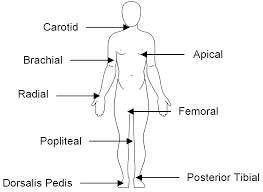
sites for taking pulse:
temperature control:
heat loss from air temp
heat from 1 surface to other
touching cold surface
heat gained from- metabolic rate/ physical activity/ extreme external environment