Chapter One Book Notes - Cells, Genomes, and the Diversity of Life
all living things are made of cells: small, membrane-enclosed units filled with a concentrated aqueous solution of chemicals and endowed with the extraordinary ability to create copies of themselves by growing then dividing in two
similarities of living things include
variety in individual particulars
constancy in fundamental mechanisms
UNIVERSAL FEATURES OF LIFE ON EARTH
consume free energy to exist
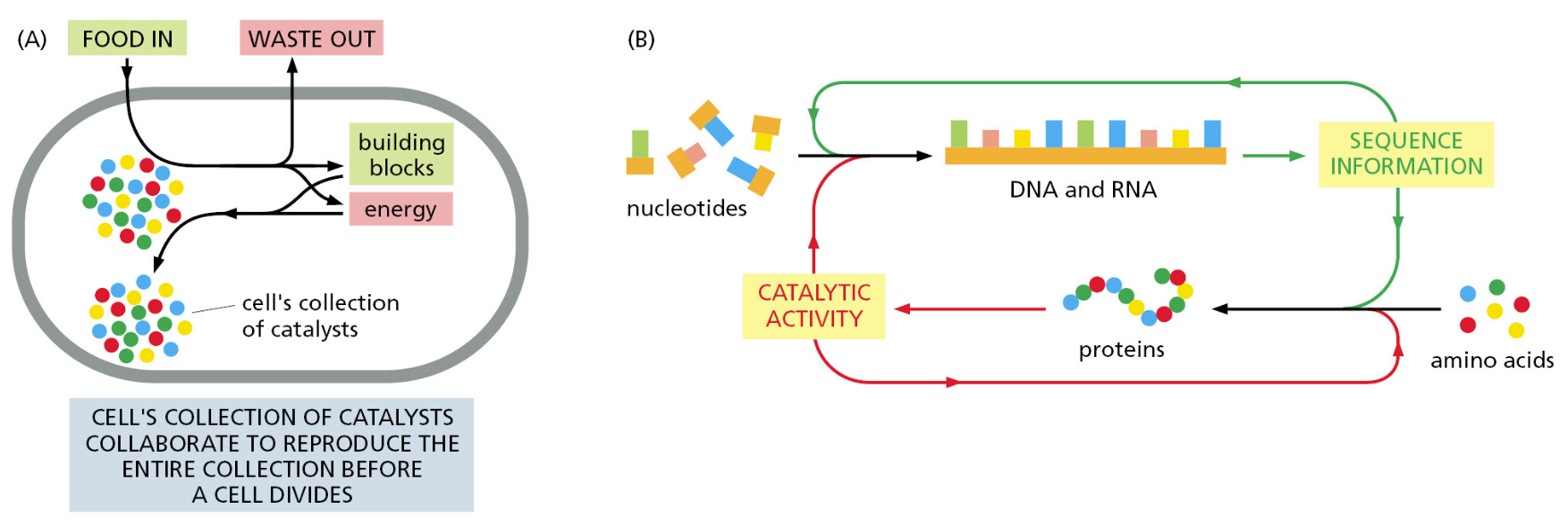
free energy used to drive a very complex system of chemical reactions that create and maintain the cell organization
reproduction ~ genetic information
heredity: distinguishes life from other processes with a distinct link between parent and progeny
origination from a universal common ancestral cell which existed roughly 3.5-3.8 billion years ago
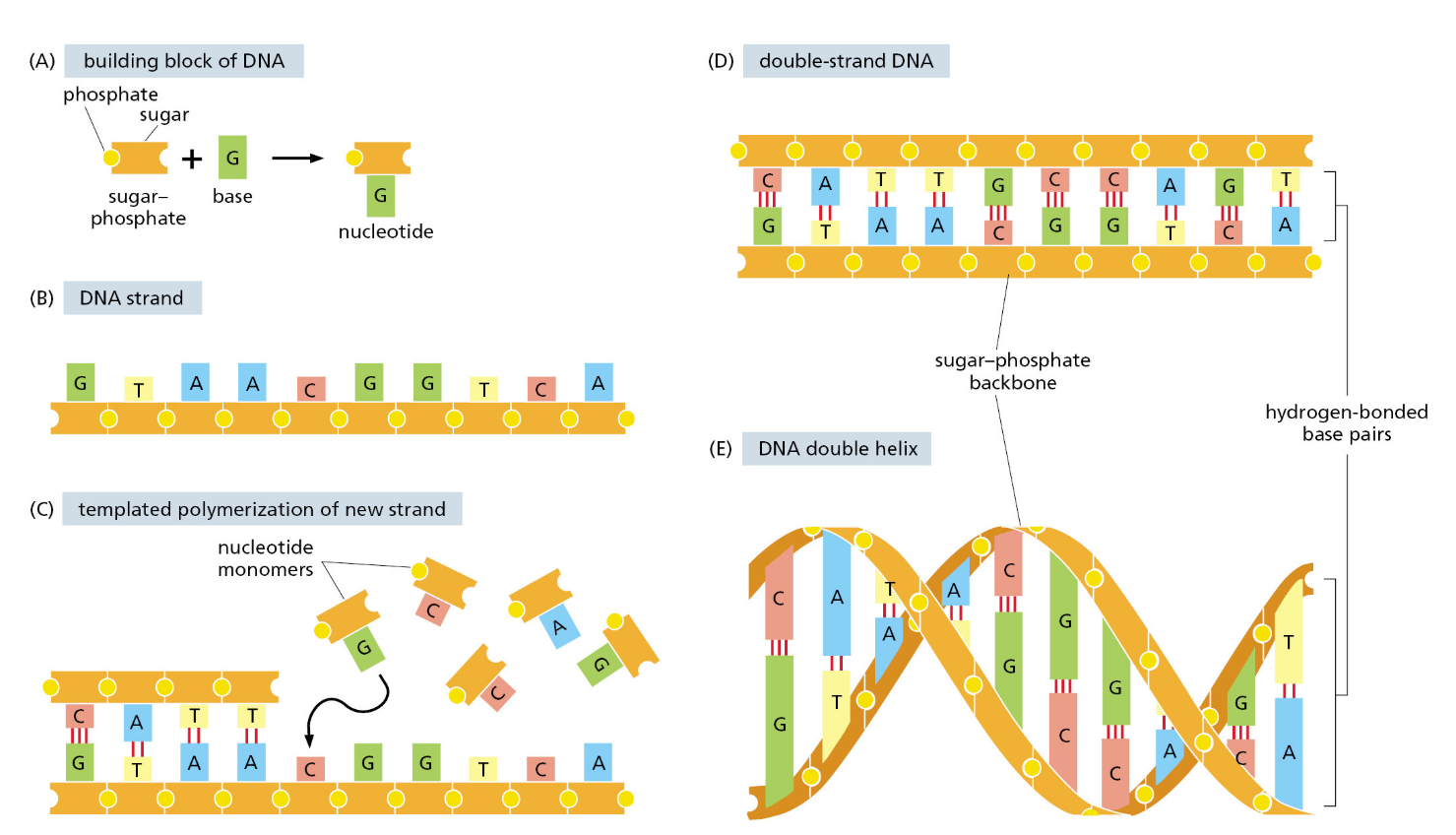
all cells store their hereditary information in the form of double-strand DNA molecules
long, unbranched, paired polymer chains composed of monomers called nucleotides (A, T, G, C)
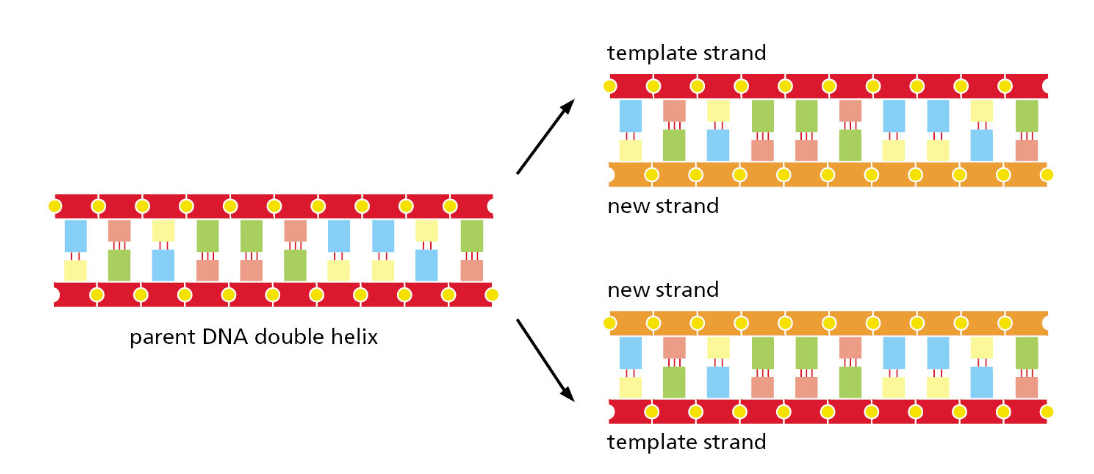
all cells replicate their hereditary information by templated polymerization
each nucleotide has a sugar with a phosphate group and a base which are connected through polymer chains
base-pairing holds monomers in place and controls the selection of which one of the four monomers will be added next in a growing strand
two strands twist to form a double helix
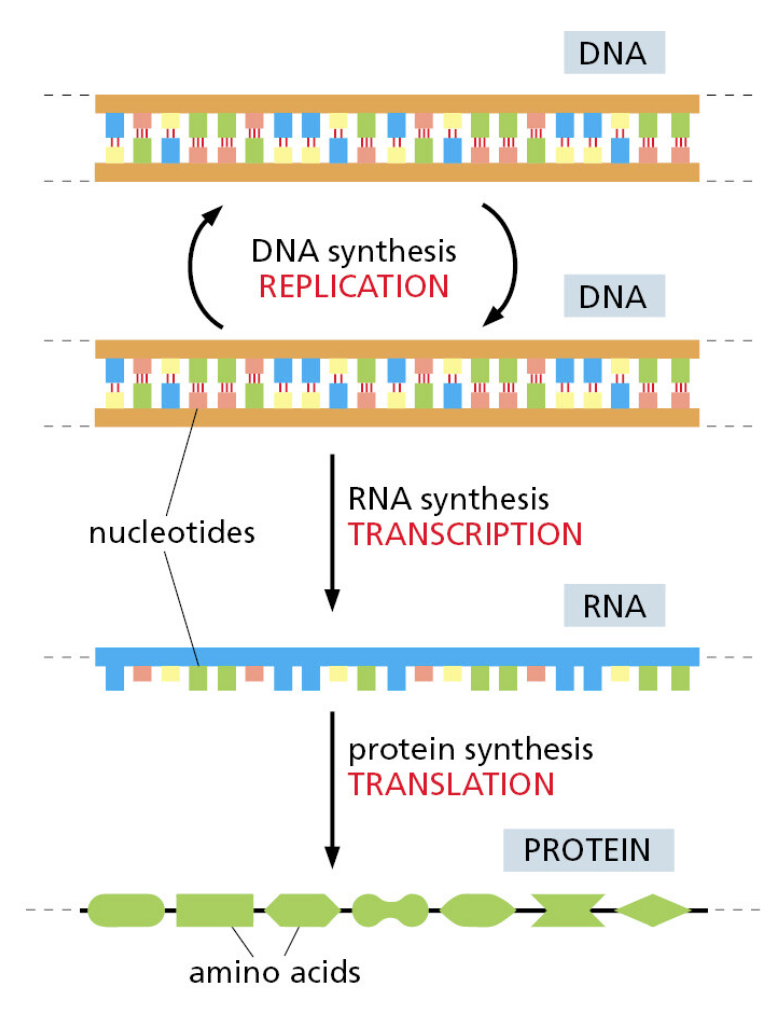
all cells transcribe portions of their DNA into RNA molecules
DNA expresses its information through biology polymers RNA molecules and protein molecules
transcription of the DNA strand is read to produce RNA
translation of the RNA strand is read to produce proteins (polypeptide chain of amino acids)
all cells use proteins as catalysts
proteins are catalysts used to cause chemical reactions
protein structure dictates protein function
some proteins have active sites which allow them to act as enzymes that catalyze reactions that create or break covalent bonds
all cells translate RNA into protein in the same way
mRNA is read in codons which corresponds to a particular tRNA retrieving the encoded amino acid
each protein is encoded by a specific gene
a gene is a segment of DNA sequence corresponding to a single protein or to a single catalytic, regulatory, or structural RNA molecule
expression of individual genes is regulated
the cell adjusts the rate of transcription and translation according to the cellular environment
life requires a continual input of free energy
a cell maintains chemical equilibrium by intaking free energy and raw material to drive necessary synthetic reactions
molecules tend to favor lower energy states
molecules snapping together to form this low energy state release chemically available energy
all cells function as biochemical factories
cells require ATP, DNA, RNA and organic molecules for survival
all cells are enclosed in a plasma membrane across which nutrients and waste materials must pass
cell membranes are selective and amphiphilic
cells produce lipids whose chemical properties cause them to self-assemble into structures that a cell needs
the cell uses membrane transport proteins
cells operate at a microscopic scale dominated by random thermal motion
individual cells self-assemble and become highly organized for cell function
motor proteins are enzymes that use the energy of ATP hydrolysis for a wide variety of purposes
pumping ions across the plasma membrane
translocating large assemblies from one intracellular site to another
propelling the cell through its environment
Brownian motion
describes spontaneous movement caused by random molecular collisions
drives diffusion and it determines the rate of biochemical reactions as molecules collide with one another within the cell interior
e.g. Brownian rachet of actin filaments
GENOME DIVERSIFICATION AND THE TREE OF LIFE
the tree of life has three major domains: eukaryotes, bacteria, and archaea
DNA sequencing of species genome has allowed us to establish a family tree of evolutionary relationships and assign distinct characteristics
the number of differences between the DNA sequences of two organisms can provide a direct, objective, and quantitative indication of the evolutionary distance between them
the more similar the rRNA sequences, the more recently the two species diverged from a common ancestor and the more related they are
eukaryotes make up the domain of life that is most familiar to us
eukaryotes possess a membrane bound nucleus which enclosed DNA within
differences between eukaryotes and prokaryotes include:
eukaryote cells are larger than prokaryotic cells
they have many membrane bound organelles that prokaryotes do not have
the eukaryotic genome is bigger
on the basis of genome analysis, bacteria are the most diverse group of organisms on the planet
characteristics of bacteria:
typically small, measuring a few um in linear dimension
tend to live independently or in loosely organized colonies
bacteria are usually spherical or rod-shaped
possess tough protective coat (cell wall) beneath a plasma membrane
has a cytoplasmic compartment & interior is highly organized
bacteria live in a wide variety of ecological niches & vary in their biochemical capabilities
bacteria can affect human health
examples of bacterial species wiping out human lives include the bubonic plaque and the tuberculosis pandemic
Archaea: the most mysterious domain of life
the known species are small and lack internal membrane-bound organelles
differ from bacteria through the chemistry of their cell walls, the kinds of lipids which comprise their membrane, and the range of biochemical reactions that they can carry out
archaea resemble bacteria in their outward appearance but their genomes are more closely related to eukaryotes than bacteria
archaea can live in extreme environments such as acid hot springs and salt lakes as well as being present in soils, seawater, and on our skin
believed to be the predominant life-form in soil and seawater & play a role in recycling nitrogen and carbon
cells can be powered by a wide variety of free-energy sources
organotrophic : getting food by feeding on other living things or organic chemicals they produce
phototrophic : feed on energy from the sun
includes photosynthetic bacteria, algae, and plants
lithotrophic : feed on nutrients from rocks
get energy from aerobic reactions (using molecular oxygen from the environment)
some species live in hydrothermal vents on the sea floor & get energy anaerobically
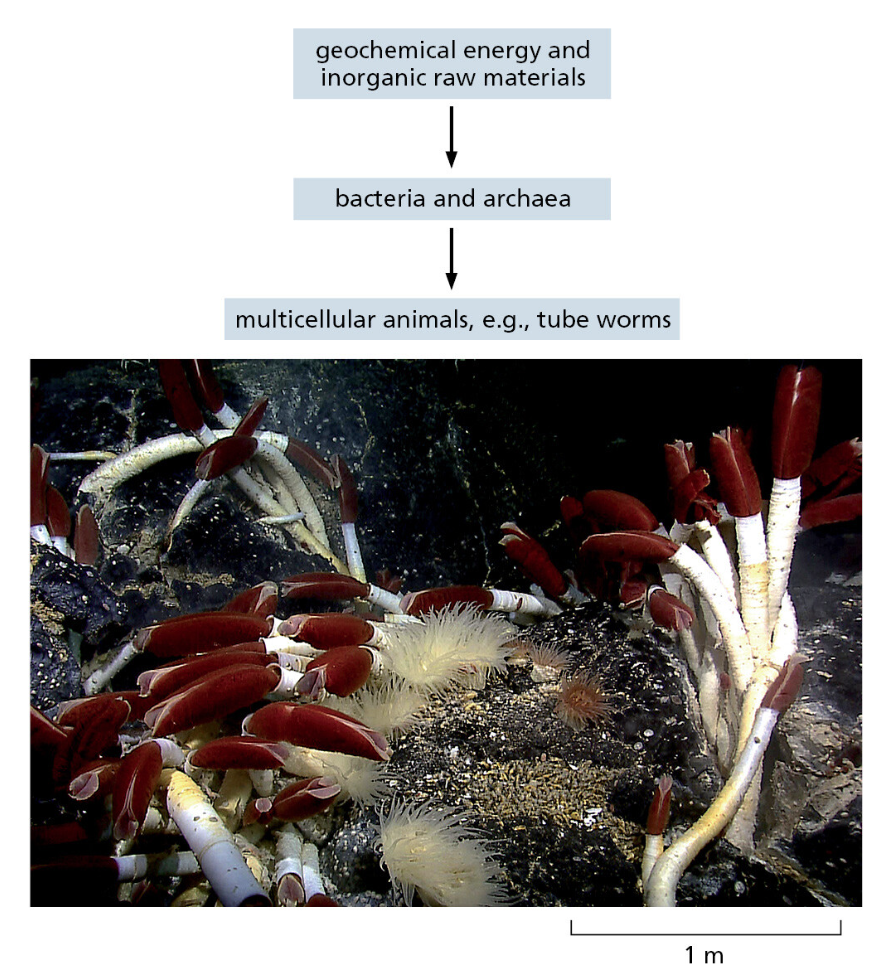
some cells fix nitrogen and carbon dioxide for other cells
N & C must be fixed to make these elements biosynthetically available
endosymbiosis associations to acquire the nutrients needed
genomes diversify over evolutionary time, producing new types of organisms
errors in the genetic code are called mutations
can either be good, neutral, or bad
good changes due to mistake tend to be perpetuated
neutral changes may be perpetuated or not; depends on whether the altered cell or its lineage will succeed
bad changes lead to cell death
mutation & natural selection these errors prompts evolution of genetic specifications to change which may be favorable if the organism can exploit the environment more effectively to survive and reproduce
some parts of the genome will change more readily compared to other in the course of evolution
highly optimized genes that are essential for protein or RNA synthesis cannot be altered very easily (become highly conserved)
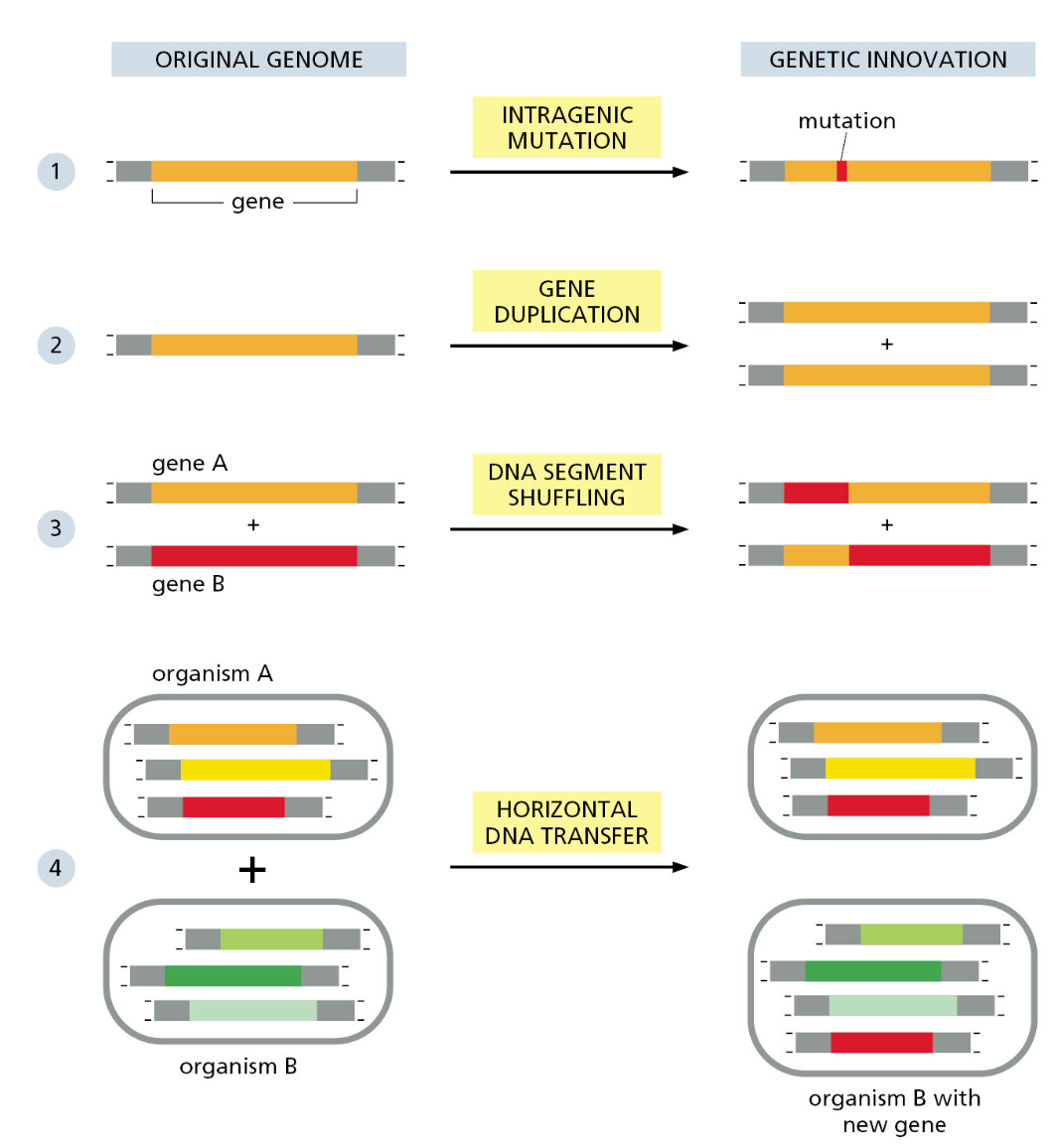
new genes are generated from preexisting genes
intragenic mutation
an existing gene can be randomly modified by changes in its DNA sequence, through various types of errors that occur in the process of DNA replication and DNA repair
gene duplication
an existing gene can be accidentally duplicated, creating a pair of initially identical genes within a single cell; these two genes may then diverge in the course of evolution
DNA segment shuffling
two or more existing gene can break and rejoin to make a hybrid gene consisting of DNA segments that originally belonged to separate genes
horizontal gene transfer
a piece of DNA can be transferred from the genome of one cell to another & between species
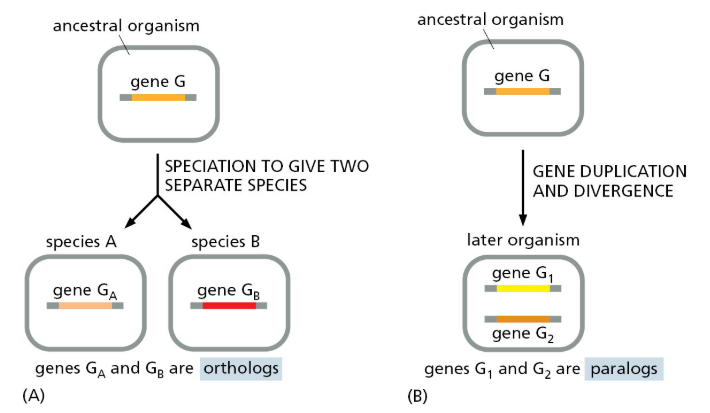
gene duplications give rise to families of related genes within a single genome
gene families were established through the analysis of the DNA sequence of prokaryotic genomes
in the case of accidental inappropriate duplication of just part of the genome, the two gene copies can acquire mutations and become specialized to perform different functions within the same cells and its progeny
must be distinguished from the genetic divergence that occurs when one species of organism splits into two lines of descent at a branch point in the tree
orthologs: genes in two separate species that derive from the same ancestral gene in the last common ancestor of those two species
paralogs : genes that are similar in sequence because they're the result of a gene duplication event occurring in an ancestral organism
homologs : one of two or more genes that are similar in sequence as a result of derivation from the same ancestral gene
the function of a gene can often be deduced from its nucleotide sequence
family relationships among genes are important for:
evolutionary interest
deciphering gene functions
gene sequence determines gene function so hypothesizing the function of a gene can come from known homologs
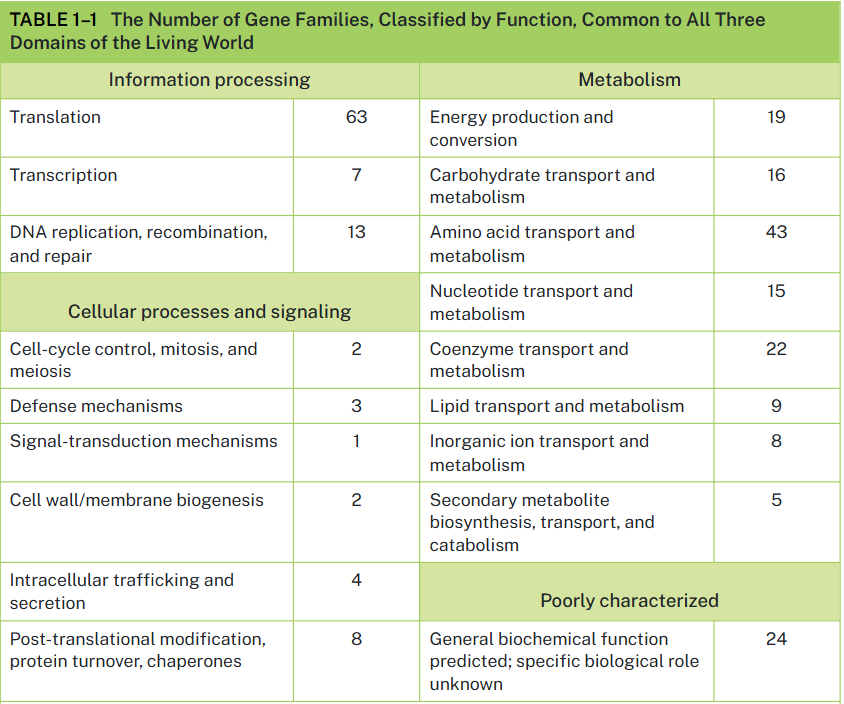
more than 200 gene families are common to all three domains of life
individual species have often lost some of their ancestral genes and other genes have almost certainly been acquired by horizontal gene transfer from another species and therefore are not truly ancestral
genome comparisons suggest both lineage-specific gene loss and horizontal gene transfer have been major factors in evolution (in bacteria & archaea)