Oncology
Oncology FNN 301
Daniela Malta
Learning Objectives
Basic Pathophysiology of Cancer
Explain the pathophysiology of cancer and its impact on metabolism and nutritional status.
Nutrition Risk Factors
Identify key nutrition risk factors, screening tools, and assessment components (ABCDs) for adult oncology patients.
Role of Cachexia and Inflammation
Discuss cachexia, inflammation, and muscle preservation in cancer care, including consideration of oral nutrition supplements and EPA-containing formulas.
Core Nutrition Recommendations
Summarize core nutrition recommendations for cancer care, aligned with ESPEN and CCS guidelines.
Impact of Cancer Treatments on Nutrition
Describe how common cancer treatments influence nutritional needs.
Nutrition-Related Treatment Side Effects
Recognize common nutrition-related side effects (e.g., anorexia, mucositis, dysgeusia, xerostomia, diarrhea, early satiety) and apply evidence-based strategies for their management.
Evaluation of Diets
Critically evaluate fad or restrictive diets (e.g., ketogenic, alkaline, no-sugar diets) using current evidence, providing patient-friendly guidance.
Cancer in Canada in 2024
A study published in the Canadian Medical Association Journal (CMAJ) presents projected estimates for cancer in Canada in 2024.
Key findings:
Cancer Diagnoses:
247,100 Canadians expected to be diagnosed with cancer.
ex. pancreatic is the most aggressive
Cancer Deaths:
88,100 Canadians predicted to die from cancer in 2024.
Cancer death rates expected to be 37% higher in males than females based on sex assigned at birth.
Most Common Cancer Deaths:
Lung Cancer: 23.5%
Colorectal Cancer: 10.7%
Pancreatic Cancer: 6.9%
Breast Cancer: 6.2%
Prostate Cancer: 5.7%
These five types are expected to account for over half of all cancer deaths in Canada in 2024.
Most Commonly Diagnosed Cancers in 2024
While melanoma is highly preventable, the incidence rates are expected to increase for both genders.
Most Common Cancers Diagnosed:
Males:
1. Prostate (21.9%)
2. Lung (11.6%)
3. Colorectal (11.1%)
4. Bladder (7.3%)
Females:
1. Breast (25.4%)
2. Lung (14.4%)
3. Colorectal (9.3%)
4. Uterine (7.2%)
Cancer Definition
Cancer is characterized by
Uncontrolled cell growth and division without normal regulatory signals and could infiltrate other cells and nearby tissue
Ignoring signals that induce apoptosis (programmed cell death).
Formation of tumors (malignant tumors invade surrounding tissues and can metastasize) with the exception of leukemia, which does not form solid tumors but circulates the body.
Cancer Cell Characteristics
Cancer cells exhibit several distinguishing characteristics:
Invasion: They invade surrounding tissues and have the capacity to spread to distant sites.
Angiogenesis: They can stimulate growth of new blood vessels to supply nutrients and oxygen.
Immune Evasion: They evade and sometimes manipulate the immune system for survival; they can disguise themselves from immune cells making it tricky to treat
Genetic Abnormality: They possess abnormal chromosomes and altered metabolism, enabling efficient nutrient use to foster rapid growth, often in a catabolic state.
immune cells will attach to try an ddestroy to prevent any harm to tissues in the body
Development of Cancer
Cancer develops due to gene mutations that disrupt normal cell growth controls.
Mutations may arise from:
Errors during cell division.
Environmental exposures (e.g., chemicals, radiation).
The body typically repairs or eliminates damaged cells, but this process diminishes with age, leading to increased cancer risk.
Each cancer has unique genetic mutations that can accumulate over time (you can start with one type of therapy then if a mutation forms, you would have to implement a different therapy
Metastasis
Metastatic Cancer:
Defined as cancer that has spread to another body part but retains the original tumor’s cell type.
Cancer cells in metastases maintain morphological and functional characteristics similar to the original cancer.
Treatment focuses on controlling growth and alleviating symptoms; however, metastatic cancer is often more challenging to cure.
Cancer Statistics and Preventability
Approximately 40% of cancer cases could be avoided through healthier living and public health policies.
Key modifiable risk factors and their estimated cancer cases prevented (2015):
Tobacco Use: 32,700
Low Fruit Intake: 6,700
Low Vegetables Intake: 3,500
Alcohol Consumption: 3,300
Other factors include:
Sedentary behaviour (3,200 cases)
Occupational exposures (asbestosis: 2,300; radon: 1,700)
Air pollution (1,700)
Various infections contributing to cancer development (3,000 total).
Cancer Disparities
Higher breast cancer mortality rates reported among Black women and First Nations/Métis women, often diagnosed with more aggressive forms and at younger ages.
Socioeconomic status links lower income to poorer cancer survival due to reduced access to early screening, diagnosis, and treatment.
Rural and remote populations face barriers leading to poorer outcomes, mainly due to inadequate screening practices.
Cancer Diagnosis & Screening Procedures
Screening Tests by Area:
Breast Cancer: Mammogram (age 40–74, every 2 years) and clinical breast exam.
Cervical Cancer: Pap test or HPV test (age 25–69, every 5 years) and pelvic exam.
Colorectal Cancer: FIT (fecal immunochemical test) test yearly/bi-yearly, with colonoscopy if positive; abdominal exam.
Prostate Cancer: PSA (prostate specfic antigen) blood test combined with shared decision-making; digital rectal exam.
Skin Cancer: No formal screening; recommended skin exams and mole monitoring.
Laboratory Tests in Cancer Diagnosis
Blood, urine, or other fluid tests can indicate cancer presence through levels of specific substances produced as a response to cancer:
Tumor Markers: Substances produced either by cancer cells or other cells in response to cancer (e.g., calcitonin, CA-125).
Diagnostic Imaging Methods
Common imaging methods include:
Blood Tests
CT Scan
MRI (Magnetic Resonance Imaging)
Nuclear Scans
Ultrasound
X-rays
PET Scan (Positron Emission Tomography)
Biopsy: Involves taking a tissue sample for analysis.
Cancer Staging Explained
Cancer is staged based on progression:
Stage 0: In situ, not spread.
Stage I: Small, localized cancer, has not spread.
Stage II: Cancer has grown, still localized.
Stage III: Spread to lymph nodes or nearby tissues.
Stage IV: Metastatic, has spread to other organs.
Treatment Modalities for Cancer
Treatment approaches include:
Surgery: Removal of tumors.
Chemotherapy: Systemic treatment using medications to inhibit cancer growth.
Radiation Therapy: High doses of radiation to destroy cancer cells.
Immunotherapy: Harnessing the immune system to combat cancer.
Targeted Therapy: Targeting specific pathways or markers in cancer cells.
Hormone Therapy: Targeting hormone-sensitive cancers.
Stem Cell Transplantation: Replacing diseased bone marrow with healthy stem cells.
Chemotherapy
Chemotherapy uses medications to halt or slow down cancer cell growth.
Administration methods include oral, intravenous (IV), injection, intraperitoneal, intra-arterial, and topical.
Types include:
Adjuvant Chemotherapy: Given after surgery to eliminate residual cancer cells.
Neoadjuvant Chemotherapy: Given before surgery to shrink tumors and optimize surgical outcomes.
Nutrition-Related Chemotherapy Side Effects
Common side effects include:
Anorexia
Nausea and Vomiting
Mucositis: Inflammation of mucous membranes, affecting any oral cavity areas.
Diarrhea and Constipation
Weight Loss
Taste Alterations: Altered taste perception including ageusia, hypogeusia, and dysgeusia.
Xerostomia: Dry mouth
Fatigue
Radiation Therapy
Delivers high doses of radiation to target and destroy cancer cells.
Toxicity can localize to the area treated; common types include:
external beam: administered by linear accelerators on a daily basis in outpatient setting 5 days a week for 5-6 weeks
internal radiation.
may have possibility to not be able to control bowel movements through the bladder and fecal matter (may have sores in mouth, trouble swallowing and create burns on skin)
Nutritional Side Effects of Radiation
General: Anorexia and fatigue.
Oropharyngeal:
Nausea
Mucositis
Xerostomia
Taste alterations
Abdominal/Pelvic Issues:
Nausea and vomiting
Diarrhea
Malabsorption and perforations.
Cancer and Malnutrition
Malnutrition is characterized by inadequate nutrition intake or uptake, leading to decreased physical and mental function.
Estimated prevalence in cancer patients ranges between 40% and 80%.
Malnutrition significantly impacts quality of life, therapy efficacy, and has been linked to an estimated 10-20% of deaths in cancer populations.
Unintentional weight loss and muscle loss/sarcopenia is observed in 15-50% of cancer patients.
Nutritional inadequacies occur if a patient cannot eat for a week or ingest less than 60% of their nutritional needs.
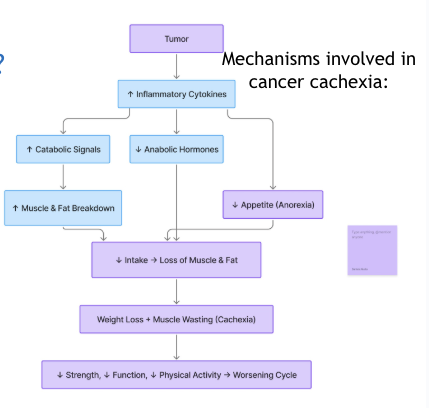
Cachexia
A multifactorial syndrome characterized by ongoing skeletal muscle loss, which cannot be fully reversed by nutritional support.
Mechanisms associated with cancer cachexia include tumor-mediated malnutrition, inflammation, and metabolic changes.
can happen over weeks or sevreal months depending on person’s nutritional status
cancer = hyper metabolic, catabolic state
Nutrition Assessment in Cancer Patients
Assessment Tools: Use validated tools like the Patient-Generated Subjective Global Assessment (PG-SGA) and Subjective Global Assessment (SGA) for comprehensive evaluations.
Categories of Assessment (ABCDs):
A - Anthropometrics: Evaluating weight history, BMI, and weight changes.
B - Biochemical Assessment: Key indicators such as CBC, ferritin, electrolytes, albumin levels.
C - Clinical Assessment: Nutritional impact symptoms (nausea, vomiting, diarrhea), visible muscle loss, micronutrient deficiency signs.
D - Dietary Intake: Comparing intake against estimated needs over a regular pattern of consumption; reliance on ONS (suppliment)
Starvation-Related Malnutrition Metabolism
chronic starvation with absence of inflammation characterized by reduced energy intake
can be reversed by nutrition support
Day 1-2
mobilization of triglycerides from adipose tissue and gluconeogenesis by liver
Day 3
ketone production begins
Day 7+
ketone increase, muscle sparing
Weeks 3-6
ketones major brain fuel
only 20g of muscle is degraded
Nutritional Therapy Objectives
Aim to:
Prevent malnutrition
Optimize nutrition during treatment
Develop tailored interventions during recovery.
Energy and Protein Requirements in Cancer Therapy
Energy Needs:
Most cancer patients: 25–30 kcal/kg/day.
Hypermetabolic patients: >/= 30–35 kcal/kg/day.
Older adults, low activity, non-metastic breast or prostate cancer : >/=21–25 kcal/kg/day.
Protein Needs:
General patients: 1.0–1.5 g/kg/day.
Cachexia patients: ≥ 1.2 g/kg/day with resistance exercise recommended.
Micronutrient Supplementation
Ensure intake meets Recommended Dietary Allowance (RDA) levels.
Standard multivitamin recommended when intake is inadequate.
Specific deficiencies (iron, B12, folate, vitamin D) should be addressed based on clinical assessments.
Omega-3 Fatty Acids (EPA)
EPA is beneficial in cancer care by:
Reducing inflammation by decreasing cytokines associated with muscle breakdown.
Helping to stabilize appetite and weight, improving nutritional support when combined with protein intake.
Should be coupled with resistance exercise to maximize muscle preservation.
Dietary Recommendations
Avoid Extreme Dietary Restrictions:
High-dose supplementation is often harmful, particularly in cancer contexts.
Nutrition Delivery Modes:
Oral Nutrition Supplements if intake falls below 75% of needs. - Prefer enteral nutrition where feasible, reserve parenteral nutrition for emergencies.
The Canadian Cancer Society Guidelines
Follow Canada's Food Guide:
Half of your plate should consist of vegetables and fruits.
Consumption of high-fiber and whole grains is encouraged.
Choose healthy fats and ensure variety in protein sources, favoring alternatives to red meats.
Common Resources for Managing Side Effects
Resources and links provided for managing anorexia, nausea, vomiting, diarrhea, taste changes, dry mouth, etc.
Dietary Impacts of Misinformation
Misleading health claims may cause unnecessary anxiety, weight fluctuations, or fatigue.
Elimination of all forms of sugars may lead to nutritional deficiencies affecting patient recovery.
Dietary Myths and Realities
Ketogenic Diet: Evidence insufficient to recommend for cancer therapy; risks of muscle loss and malnutrition involved.
Organic Foods: No significant evidence supports that they reduce cancer risk more than conventional foods.
Alkaline Diets: Blood pH is tightly regulated; dietary changes cannot significantly alter pH levels in a manner affecting cancer.
Conclusion
No diet has been proven to universally cure cancer or prevent its recurrence. Nutrition strategies should focus on maintaining health, tolerating treatment, and preventing malnutrition.
End of Notes