Solids
Hooke's Law
States that F α Δx provided the limit of proportionality has not been exceeded.
where k, spring constant is the force needed to extend the material by 1m.
Notes
Tensile force causes stretching.
Compressive force causes squashing.
k will be the same whether you stretch or squash the spring
Force - extension graph
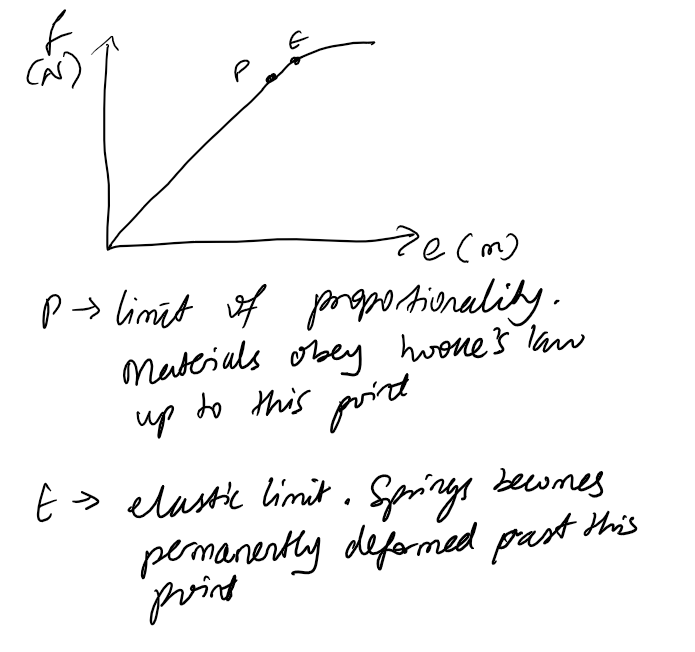
Gradient: spring constant
Area: elastic strain energy
Energy stored in a spring
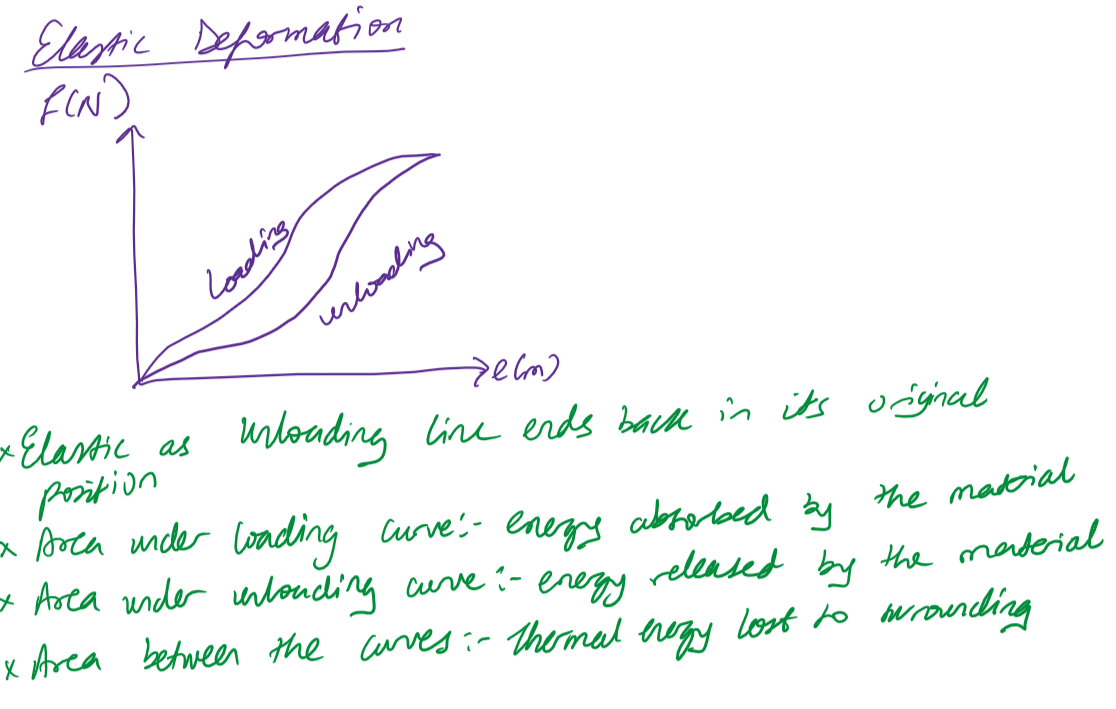
Elastic Deformation
Goes back to original shape once load is removed.
Extension is temporary as atoms move relative to their equilibrium position without changing their overall position.
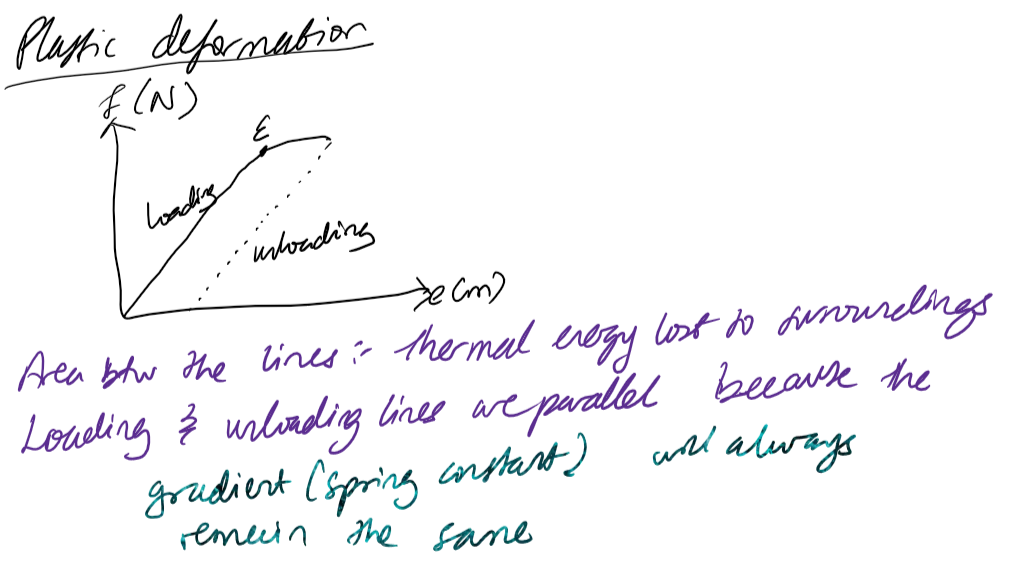
Plastic Deformation
Material becomes permanently deformed when the load is removed.
Resulting extension will be permanent as atoms do not return to their original position.
Stress
The force a material can take per unit area.
Strain
The ratio of extension to the original length.
Stress - strain graph
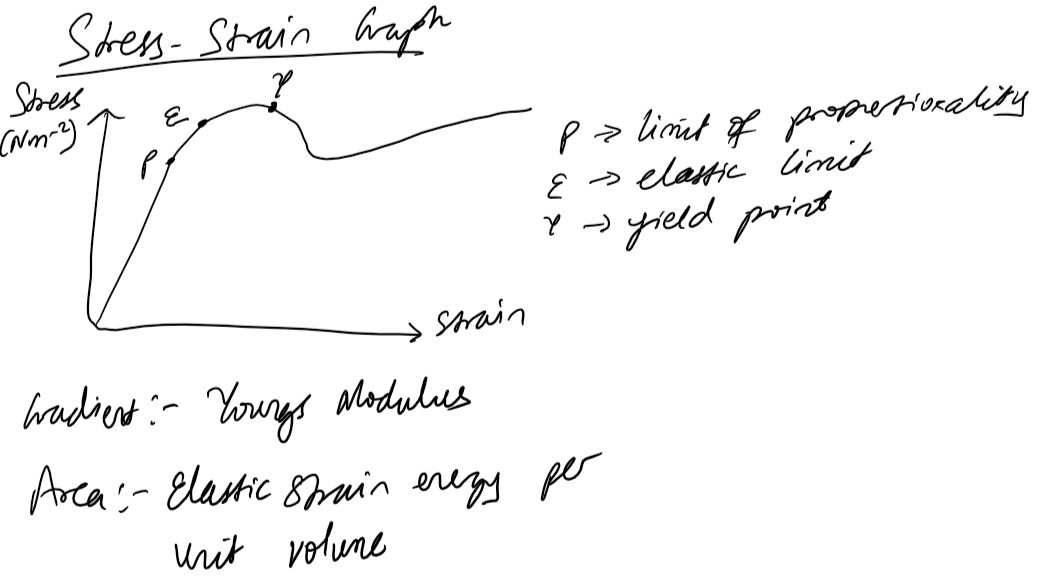
Yield Point
A large amount of plastic deformation will take place with a small or reduced load.
Stress - Strain Terminology
Strong: Copes with a lot of stress before it breaks
Weak: Break if subject to too much stress
Stiff: Doesn't stretch much when loaded
Ductile: Stretches a lot under plastic deformation before breaking
Brittle: Undergoes no plastic deformation