Unit 3b: Complex Numbers
Lesson 3.2b Conjugates with Radicals
Introduction
02.10.26
Conjugate radicals or binomial pairs like 𝐚+√𝐛 and 𝐚-√𝐛 that share the same terms, but have opposite signs between them. Their product always eliminates the radical, resulting in an integer.
(𝐚+√𝐛)(𝐚-√𝐛)=𝐚²-𝐛
*The goal is not to eliminate a radical completely but as a step in the solving process, leading us towards an asemtope unit
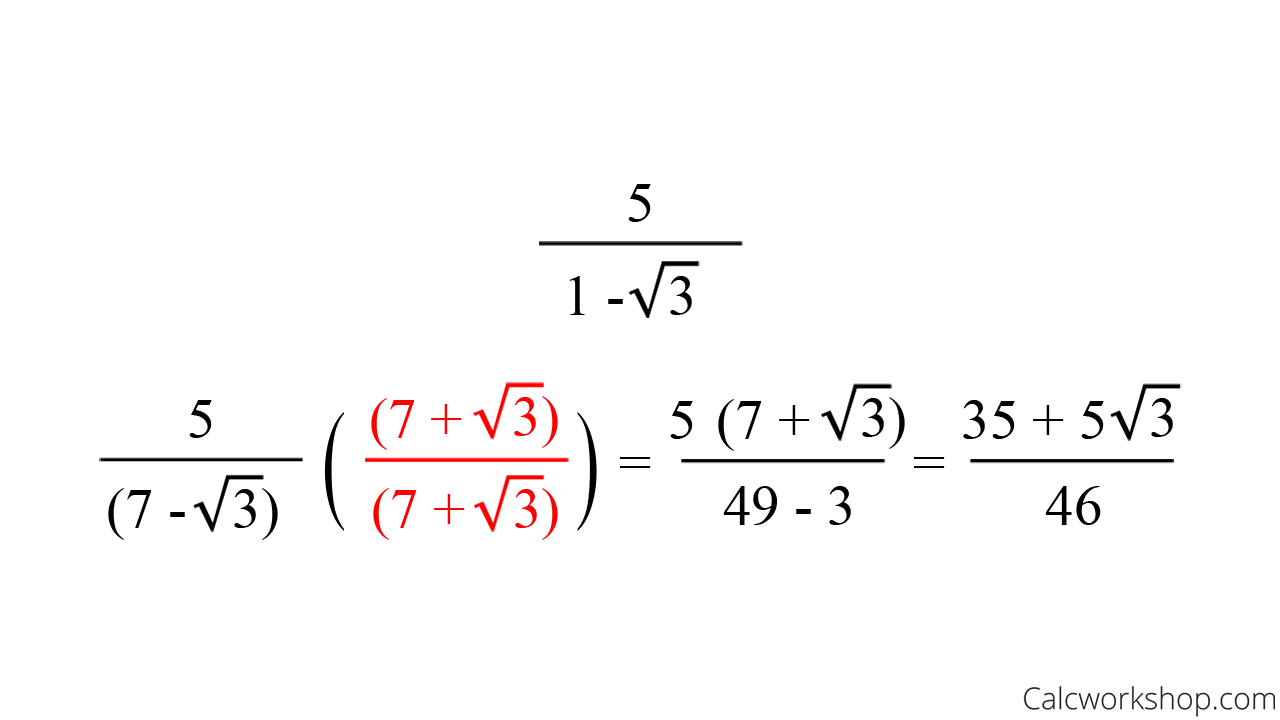
multiply the entire fraction by the conjugate of whichever part of the fraction contains a radical expression.
⭐T️he conjugate is essentially the inverse. Because we can’t do anything with the actual radical, only the other signs like the added or subtracted piece are changed.
Do not cross multiply! (Unlike geometry) Only multiply straight across. Because the middle terms of multiplication cancel out in the denominator, the square root is simply undone and the rest of multiplied as usual.
⭐️Pay attention to the different signs of the conjugates in multiplication
Do not solve/double distribute the actual top part (we don’t have to as of now) but instead wait until the final simplification to see if there is a GCF, then divide everything by that to simplify.
Examples with 𝐢
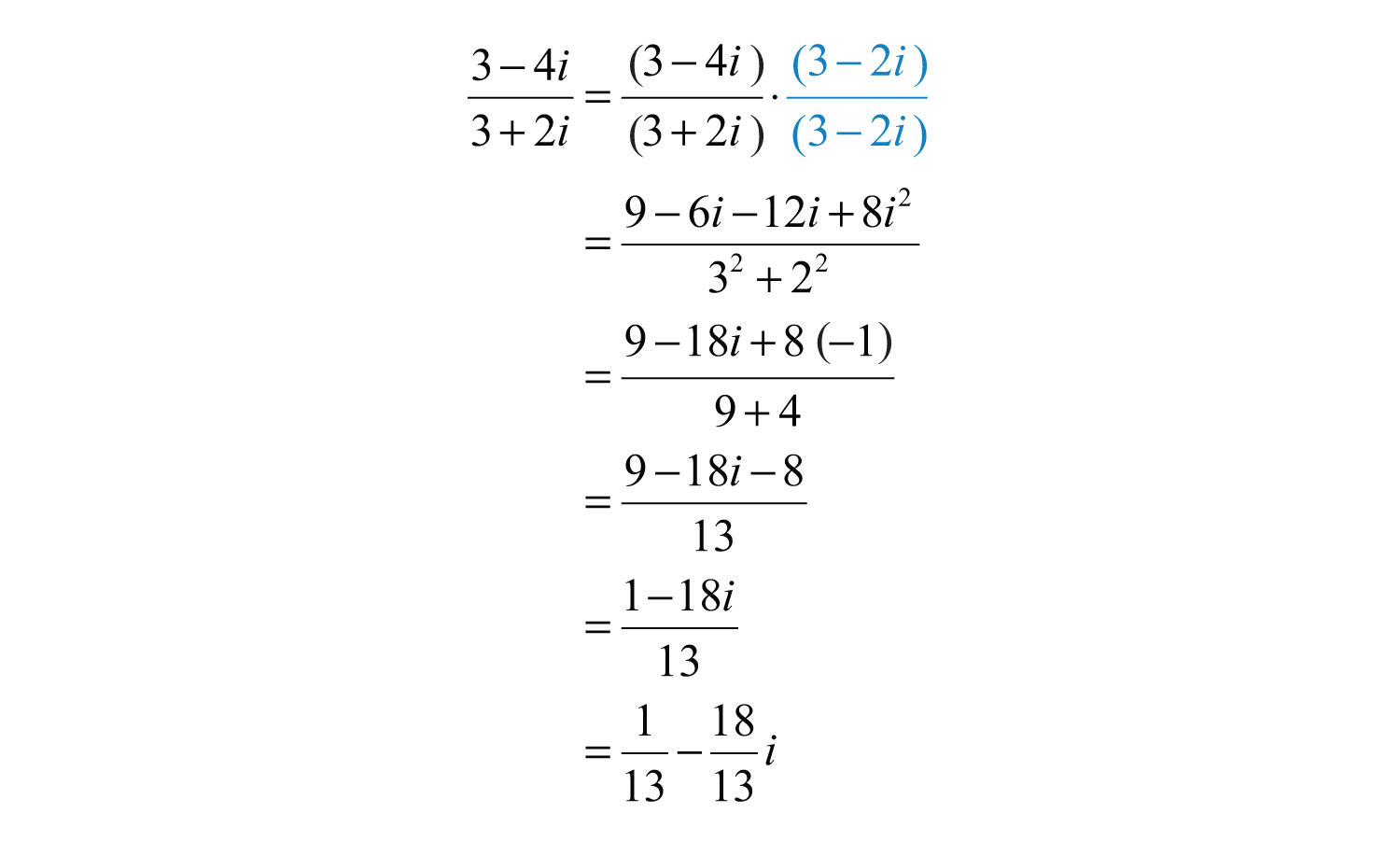
Similar to dealing with radicals
Tips for Solving Conjugate Radicals with Imaginary Numbers
Algebra II (Accelerated) – Test Prep
1. Know why you use conjugates
You multiply by a conjugate to:
Eliminate imaginary terms in the denominator
Eliminate radicals when they’re paired with an imaginary number
Key idea:
(𝐚 + 𝐛𝐢)(𝐚 − 𝐛𝐢) = 𝐚² + 𝐛²
The middle terms cancel because 𝐢² = −1.
2. Always change negative radicals first
Before doing anything else, rewrite square roots of negatives:
√(−𝐚) = 𝐢√𝐚
Example:
√(−18) = 𝐢√18 = 3𝐢√2
This step is often skipped — and it’s a common test mistake.
3. Conjugates: change the sign only in the middle
If you see:
𝐚 + 𝐛𝐢√𝐚 → conjugate is 𝐚 − 𝐛𝐢√𝐚
𝐢√5 − 3 → conjugate is 𝐢√5 + 3
Do not change:
exponents
coefficients
radicals themselves
4. Multiply entire numerator and denominator
When rationalizing denominators:
Multiply the entire fraction by the conjugate
FOIL carefully
Example:
2 / (3 + 𝐢√5) · (3 − 𝐢√5) / (3 − 𝐢√5)
5. Memorize this shortcut (huge time-saver)
When multiplying conjugates:
(𝐚 + 𝐛𝐢)(𝐚 − 𝐛𝐢) = 𝐚² + 𝐛²
Example:
(4 + 3𝐢)(4 − 3𝐢) = 16 + 9 = 25
No FOIL needed if it’s a true conjugate pair.
6. Watch the sign of 𝐢²
Always replace:
𝐢² = −1
Example:
(𝐢√7)² = −7
Many students lose points by writing +7.
7. Final answers should look like this
Depending on the problem:
No imaginary numbers in the denominator
Simplified radicals
Written in standard form like 𝐚 + 𝐛𝐢 when possible
8. Common test traps to avoid
Forgetting to multiply both numerator and denominator
Leaving √(−𝐚) instead of converting to 𝐢√𝐚
Sign errors with 𝐢²
Not simplifying radicals at the end
9. What to practice the night before
Focus on:
Rationalizing denominators with 𝐢
Multiplying conjugates
Writing answers in standard form 𝐚 + 𝐛𝐢