Evidence based assessment and assessment techniques
Evidenced-Based Assessment & Assessment Techniques
Overview
The Nursing Assessment
Key Components
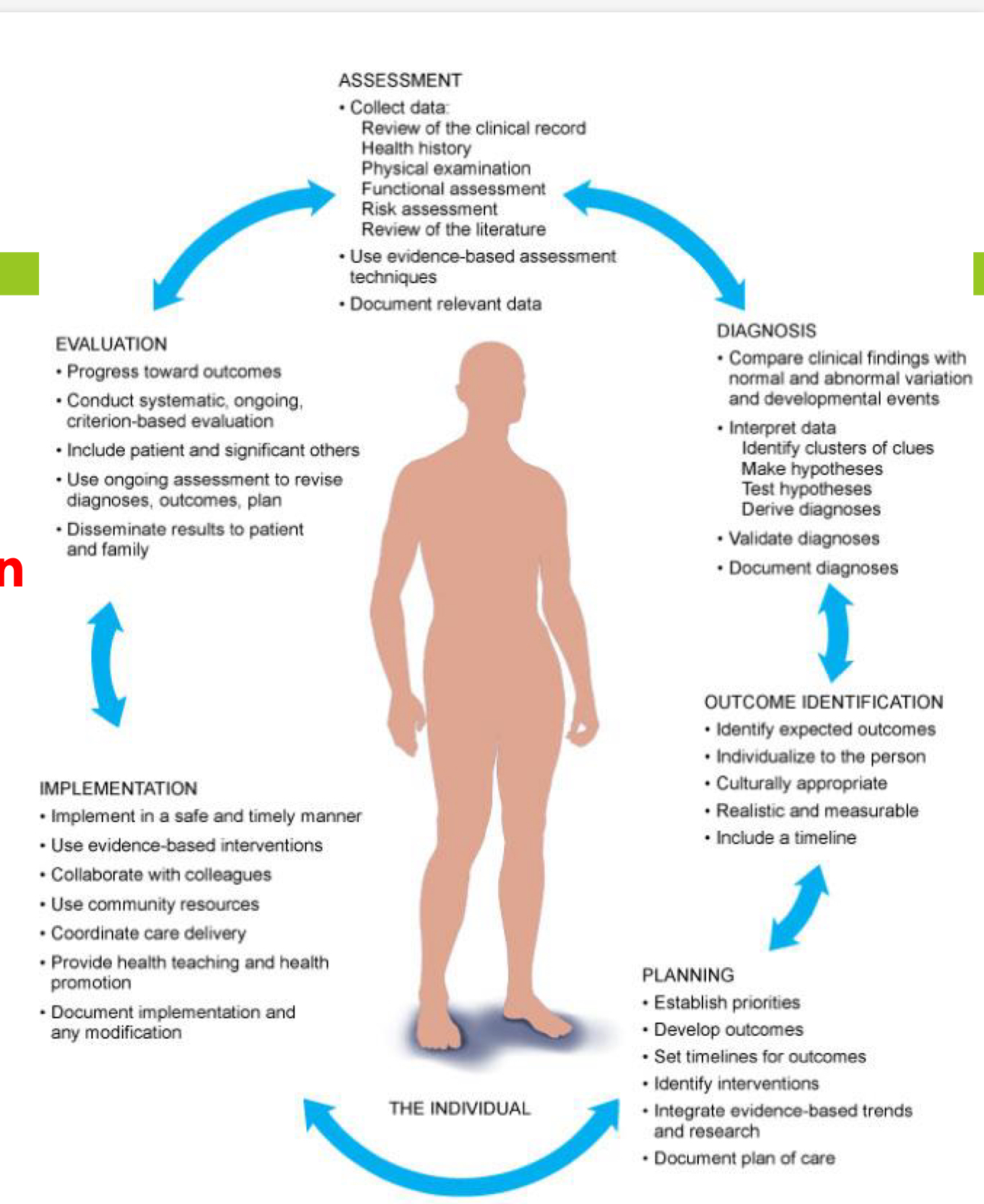
Data Collection: Collecting comprehensive data to inform nursing care, utilizing a systematic approach to ensure that no relevant information is missed.
Review of the Clinical Record: Thorough examination of previous medical records to gather background information and previous treatment responses.
Health History: Informed by patient reporting and clinical observations, including past medical history, family history, and lifestyle factors that may impact health.
Physical Examination: Conducting thorough assessments of all body systems to identify abnormalities or signs of disease.
Functional Assessment: Measuring the patient’s ability to perform activities of daily living (ADLs) such as bathing, dressing, and feeding, which can provide insight into their overall health status.
Risk Assessment: Identifying potential health risks based on patient factors such as age, gender, pre-existing conditions, and lifestyle choices.
Literature Review: Engaging with the latest research literature to support findings and inform best practices in patient care.
Documentation: Accurate record-keeping of all relevant data is vital to ensure continuity and safety of care, including any changes noted in patient status.
Diagnosis Process
Norm Comparison: Findings should be continuously compared against established norms to identify any deviations in health.
Ongoing Evaluation: Regular and systematic re-evaluation of findings to monitor the patient’s health over time.
Collaborative Interpretation: Working alongside patients and significant others to interpret data, ensuring a holistic understanding of the patient’s condition.
Validation of Diagnoses: Using gathered evidence and testing hypotheses to confirm diagnostic conclusions, maintaining a patient-centered focus.
Outcome Identification
Documenting Outcomes
Each patient should have expected outcomes identified individually, considering their unique situation and needs.
Planning Interventions: Interventions must be culturally appropriate and tailored to the patient’s specific background and preferences.
Realistic Expectations: Outcomes need to be measurable and realistic, with appropriate timelines for reassessment.
Implementation & Evaluation
Safe Implementation: Care plans should be executed safely, adhering to professional guidelines and protocols.
Collaboration: Working with other healthcare professionals and utilizing community resources to enhance patient outcomes.
Patient Education: Providing relevant and necessary patient education is essential for promoting ongoing health maintenance and informed decision-making.
Documentation of Implementation: Detailed records must be kept of the implementation of care plans and any modifications made based on the patient's response.
Assessment Data
Types of Data
Subjective Data: This includes information reported by the patient regarding their symptoms and feelings, which is crucial for understanding their perspective.
Objective Data: Observable and measurable data obtained during the physical examination, such as vital signs or laboratory test results.
Data Base: A comprehensive collection that combines both subjective and objective data along with relevant diagnostic tests to form a complete picture of the patient’s health.
Prioritizing Problems
Levels of Priority
First-level Priority: Life-threatening concerns that require immediate intervention (e.g., issues with Airway, Breathing, Circulation).
Second-level Priority: Urgent problems requiring immediate attention to avoid deterioration of health status.
Third-level Priority: Important health issues that can wait for resolution of more urgent problems.
Nurse Check Examples
Identification of knowledge deficits as a lower-priority problem but still requiring a team approach, especially in post-discharge instructions for patients with chronic conditions like diabetes.
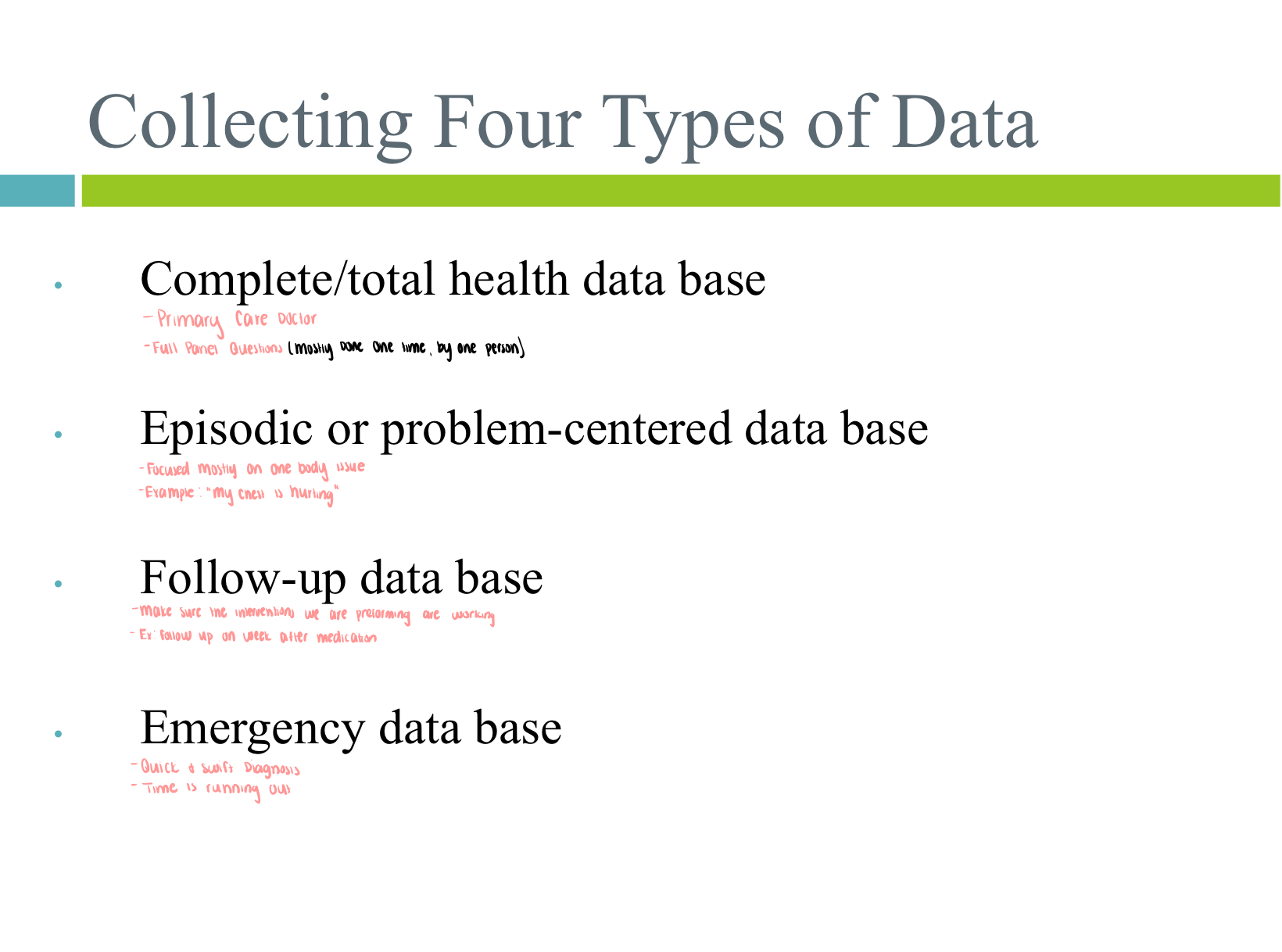
Establishing databases for patients across different care settings, recognizing that new patients (first visit) may require different initial assessments compared to follow-ups.
COLLECTING FOUR TYPES OF DATA:
Frequency of Assessments
Guidelines
The frequency of assessments will depend on the patient's current level of illness and stability, with careful monitoring in high-risk populations.
Influenced by facility protocols that dictate assessment schedules and standards of care.
Additional assessments may be warranted based on noticeable changes in the patient’s clinical condition or due to professional nursing judgment.
Nursing Diagnosis
Categories
Actual Diagnosis: Conditions such as ineffective breathing patterns or decreased cardiac output that are presenting at the time of assessment.
Risk Diagnosis: Assessing patients at risk for specific complications like falls or bleeding based on their current health status.
Wellness Diagnosis: Evaluating a patient's readiness for enhanced health management and their coping skills, focusing on preventative care and health promotion.
Assessing Techniques (Chapter 8)
Tools of Physical Assessment (1,2,3,4 IN ORDER)
1. Inspection: The first step involves visual assessment techniques to gather initial impressions of the patient’s condition.
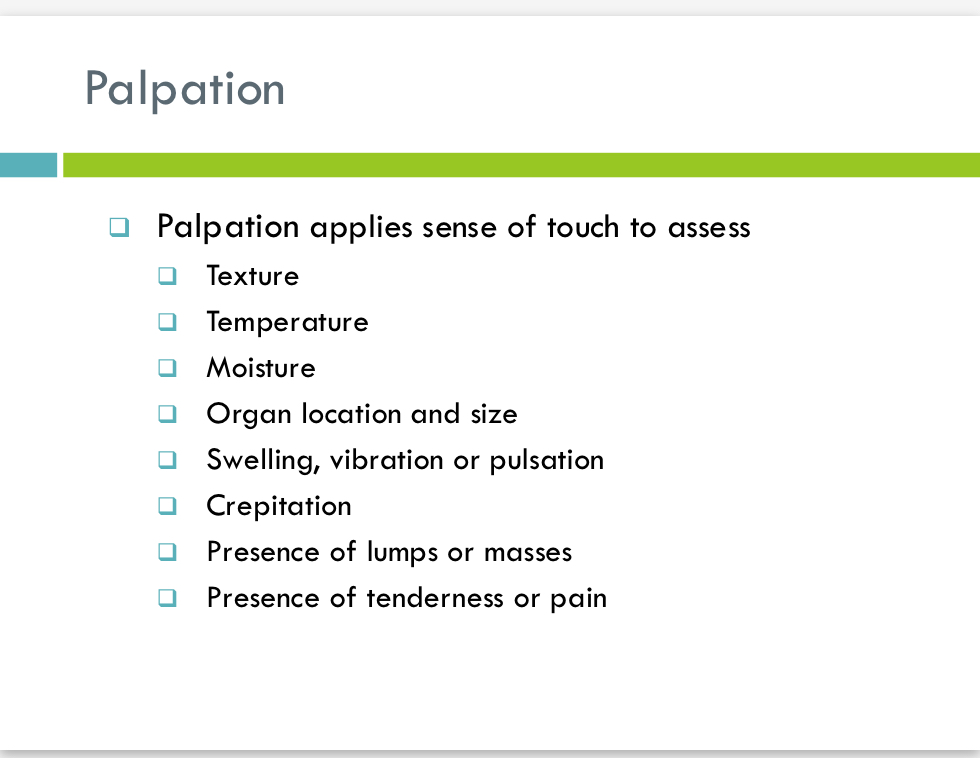
2. Palpation: Utilizing touch to assess characteristics such as texture, temperature, and tenderness in various body areas.
3. Percussion: Using striking techniques to produce sound waves that can provide information about underlying structures.
4. Auscultation: Employing a stethoscope to listen to internal sounds such as heartbeats, breath sounds, and bowel activity.
Physical Assessment Techniques
Specifics of Techniques:
Inspection: Ensure good lighting and adequate exposure for thorough examination.
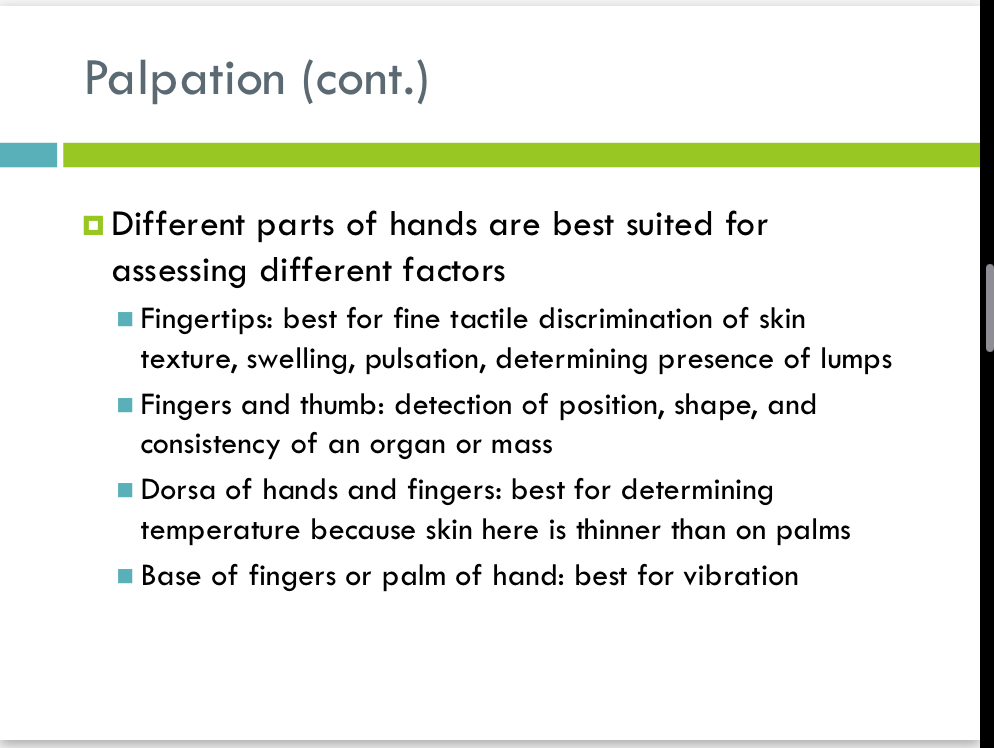
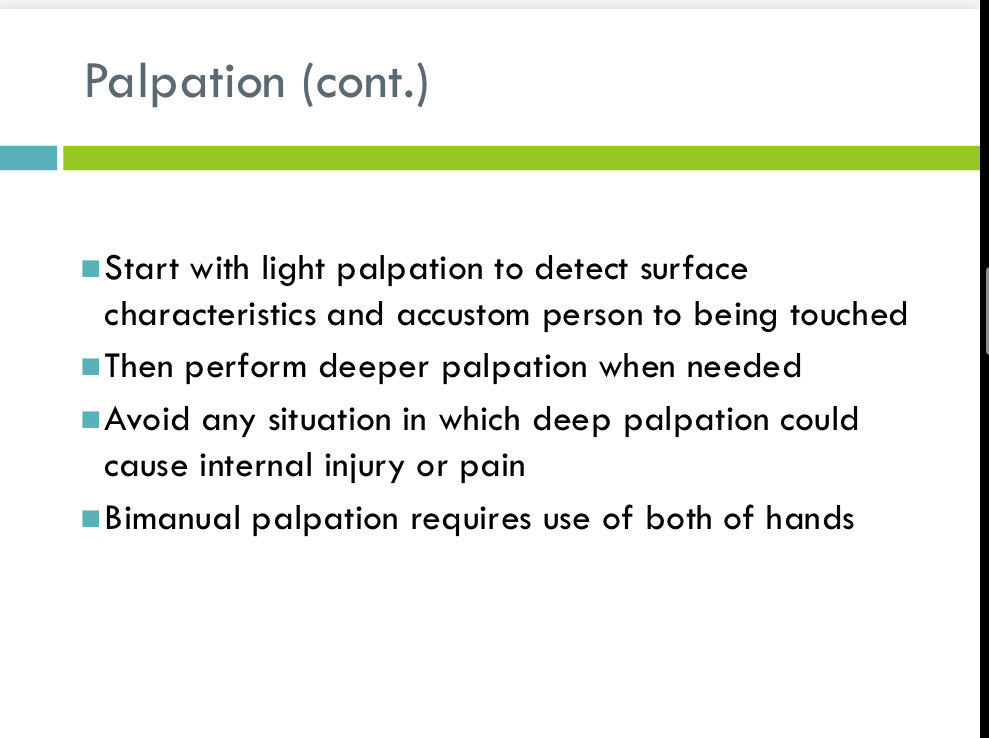
Palpation: Different parts of the hands can be used for specific assessments, beginning with light touch and progressively applying deeper pressure as appropriate.
Percussion: Can be performed using direct (where the fingers directly contact the skin) or indirect methods (where one hand strikes the other hand placed on the body) to assess organ size or density.
INCASE OF ABDOMINAL TENDERNESS
INSPECT
ASCULATE
PRECUSS
PALPATE
Palpation:
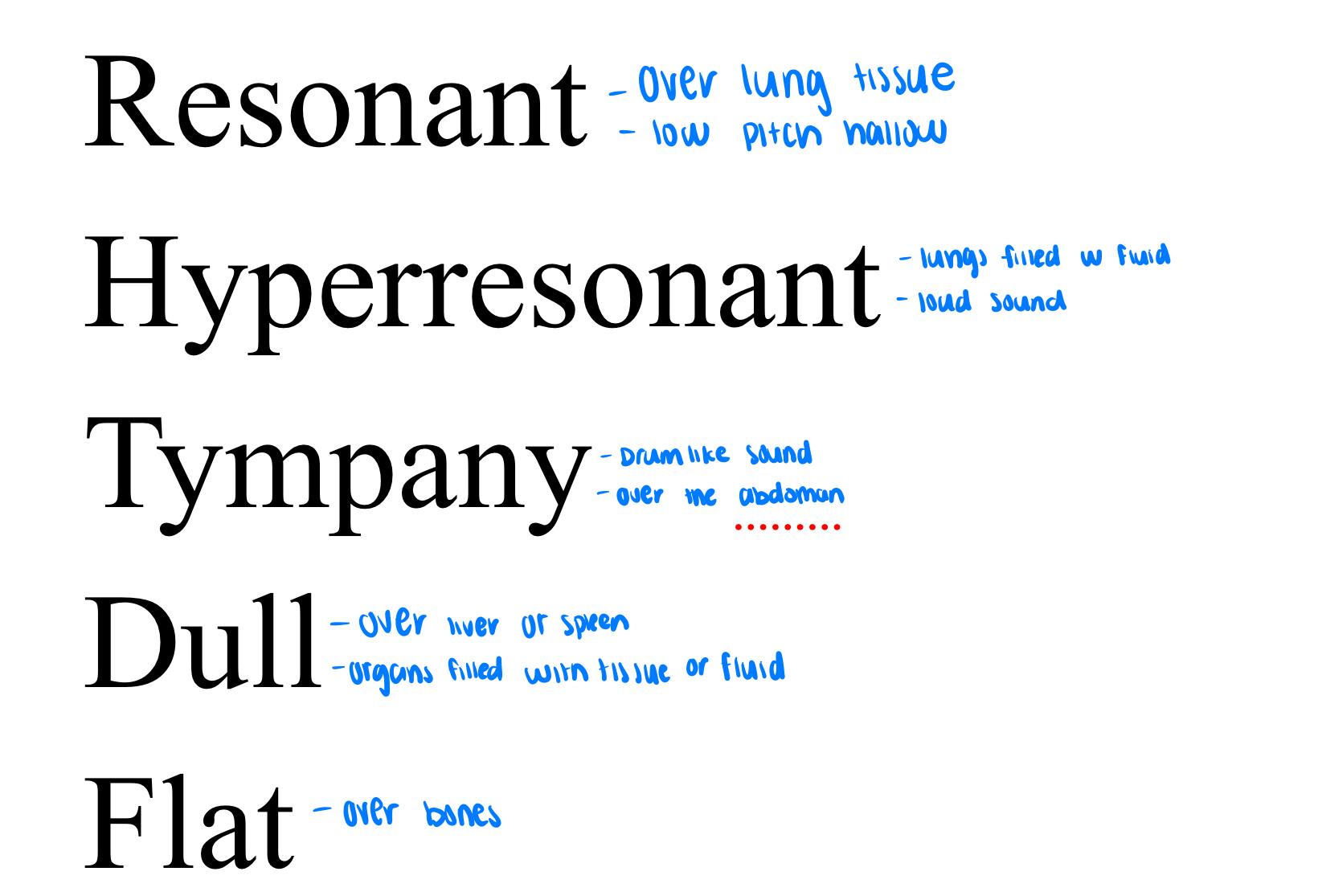
Percussion AND Percussion Sounds:
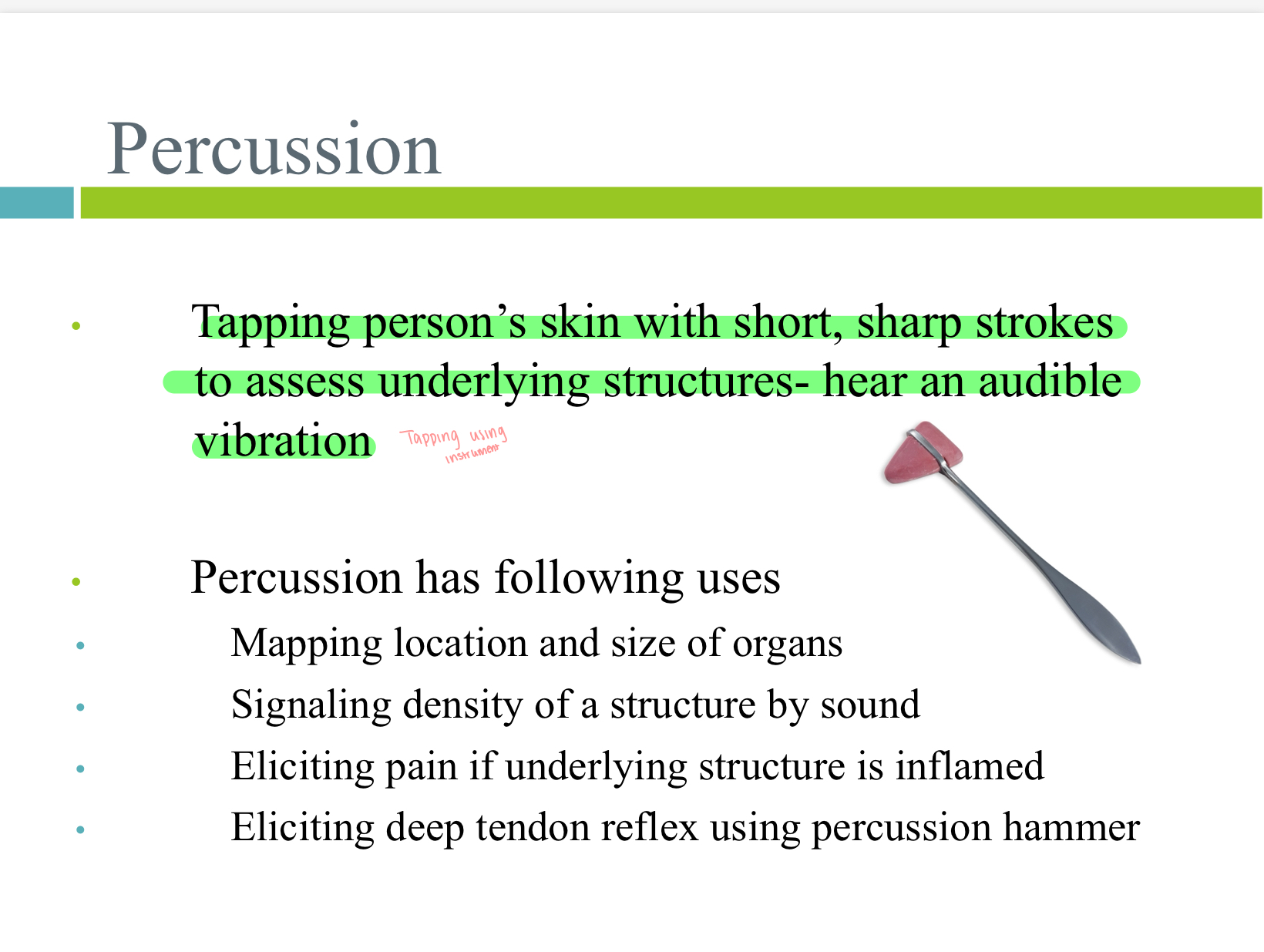
Size ,Density, Reflex ,Pain
Environmental Safety
Infection Control Measures
Handwashing is a fundamental practice to prevent the transmission of microorganisms, both for patient and healthcare worker safety.
Gloves should be worn when there is a possibility of exposure to body fluids.
Personal protective equipment (such as gowns, masks, and eyewear) is necessary in situations posing a high risk of infectious disease exposure.
Patient Centered Care
Approach in Examination
Tailoring the assessment process to align with the patient's comfort and preferences during physical examinations, which may reduce anxiety and improve cooperation.
Assessment methods should be adaptable based on the current condition of the patient—such as changing positions or techniques according to the patient's needs.
Conclusion
Important Terminology
Holistic care- A comprehensive approach that considers the physical, emotional, social, and spiritual needs of the patient, ensuring a thorough understanding of their overall health status.
Cultural competency-The ability to understand, communicate with, and effectively interact with people across cultures, recognizing and respecting their diverse backgrounds and values.
Evidence-based care- research that is implemented into patient care
Social determinants of health (SDoH)- what surrounds you socially effects you mentally and physically, influencing health outcomes and access to care.
Questions & Clarifications
Engaging in dialogue after the session for clarity or further inquiries to ensure understanding and support continued education in evidenced-based nursing practices.