APHG Unit 4 Slideshow Notes
Political geography: geography that deals with boundaries, divisions, and possessions of countries (states)
Nations: a group that is united by common cultural ethnic, religious, or historical identity who may or may not have their own
Nation-state: an ethnic group with sovereign territory
Self determination: right for an ethnicity to govern itself
can challenge existing sovereignty when a group claims to self determination and secedes from sovereign state
Sovereignty: the power of a government to exercise complete control over a defined area and to regulate its internal and external affairs
Quebec wants self determination but Canada’s sovereignty is keeping it from self determination
example quote:
“Historically, sovereignty has been associated with four main characteristics:
First, a sovereign state is one that enjoys supreme political authority and monopoly over the legitimate use of force within its territory.
Second, it is capable of regulating movements across its borders.
Third, it can make its foreign policy choices freely.
Finally, it is recognized by other governments as an independent entity entitled to freedom from external intervention.
These components of sovereignty were never absolute, but together they offered a predictable foundation for world order. What is significant today is that each of these components—internal authority, border control, policy autonomy, and non-intervention—is being challenged in unprecedented ways.”
~Richard N. Haass, American diplomat; President of Council on Foreign Relations
Stateless nation: an ethnic groups without sovereign territory
Kurds (in Turkey, Armenia, Iran, Iraq, and Syria)
Hmong (in Laos, China, Vietnam, Myanmar, Thailand)
Mapuche (Chile, Argentina)
Roma (a lot of Europe!)
Kashmiri (in India, Pakistan, China)
Palestinians (about 8 million Palestinians live in Israel, Jordan, Lebanon, Syria & other Arab states)
Basques- (Indigenous people on the border of Spain and France, about 2 million people in Basque region, but many more around the world)
Stateless individuals may have trouble:
getting protection
voting
traveling
attending school
working legally
owning property
getting married
receiving medical care
opening bank accounts
Multinational state: a state with 2 or more ethnicities in it’s territory
United States
Canada
Spain
United Kingdom
Korea
Centrifugal forces may lead to…
Failed states, uneven development, stateless nations, and ethnic nationalist movements.
Centripetal forces can lead to…
Ethnonationalism, more equitable infrastructure development, and increased cultural cohesion.
Disputed territories:
North and South Korea
China and Taiwan
Senkaku/Diaoyu Islands
Sahrawi Republic (Western Sahara)
Countries such as Israel and Palestine are still not fully recognized around the world making the exact number of countries in the world still unclear. Estimate of around 200.
Berlin conference is when mostly 14 countries seek and split control over african territories in 1880’s. It is an example of imperialism, superimposed boundaries, and geometric boundaries.
Rwanda genocide started when the Hutu and the Tutsi in Rwanda were separated by the Belgian colonizers. They favored the Tutsi but later shifted to the Hutu, so when independence was granted in 1962, the Hutus took power and discriminated agaisnt the Tutsi leading to violence and displacement to the neighboring Burundi. In 1994, Hutus lead a genocide against the Tutsi, nearly 800,000 people (mostly Tutsi) killed and nearly 2,000,000 fled Rwanda.
Development of states in history
Ancient states: Fertile crescent city-states (Mesopotamia)
Medieval states: European realms (Roman Empire)
Twentieth-century Europe: Boundaries matched to ethnicities (after fall of Roman Empire)
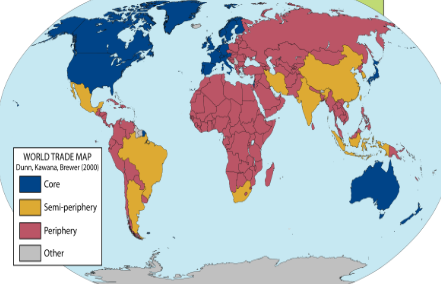
Core states around the world
Former Yugoslavia was ethnonationalism but disintegrated and then fragmented. Now Slovenia, Croatia, Bosnia and Herzegovina, Serbia, Montenegro, and Macedonia.
Devolution: the transfer of political power from central to subnational government
examples
Scottish parliament
United Kingdom
Spain
factors leading to devolution
Physical Geography
Ethnic Separatism
Ethnic Cleansing
Terrorism
Economic or Social Problems
Irredentism
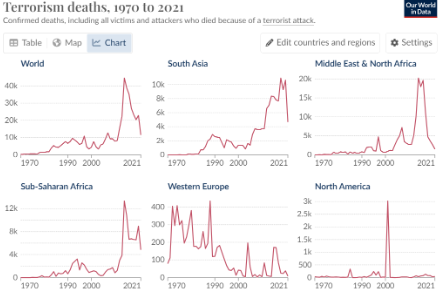
Terrorism: use of violence or threat of violence to achieve certain goals by creating a state of fear beyond the initial victims
During Cold War, terrorism was very hierarchical.
Terrorism is a very rare cause of death globally.
It affects countries mostly in Africa and around India.
Terrorism recently is only major in Afghanistan.
Most terrorist attacks target private citizens, the military, and the police.
Antiterrorism: defensive measures to reduce the vulnerability of individuals & property damage to terrorism
airport security
disaster preparedness
barricading federal buildings
public awareness campaigns
missile defense
irradiating (disinfecting) mail
Counterterrorism: offensive measures to prevent, deter & respond to terrorism
military retaliation
military strikes
use of drones
intelligence
freezing financial assets of terrorists
State sponsored terrorism: sponsored by a state against another state or their citizens
North Korea (Bombing of Korean Air Flight 858: In 1987)
Libya (Lockerbie Bombing: In 1988, a bomb exploded on Pan Am Flight 103 over Lockerbie, Scotland)
Cuba
Syria
Iran
State terror: terror used by a government against its own people
Iraq & Kurds
Cultural Revolution in China
Stalin’s Reign of Terror
Hitler’s SS
Transnational terrorism: terrorism by private individuals/groups that involves people from more than 1 state
2008 Mumbai attacks: 4-day (Nov 26-29) series of 12 coordinated shooting and bombing attacks by 10 Lashkar-e-Taiba militants who arrived by sea. Targeting high-profile locations like the Taj Mahal Palace Hotel, Oberoi Trident, and Nariman House and killed at least 166-175 people, including foreign nationals, and injured over 300
Domestic terrorism: terrorism by private individuals/groups & only involve people of one state
Oklahoma City bombing in 1995 by McVeigh & Nichols
Ku Klux Klan
Unabomber by Ted Kaczynski who engaged in a mail bombing campaign that spanned nearly 20 years ("UNiversity & Airline BOMber")
Fragmentation: the division of a state or territory into smaller, often isolated or conflicting parts due to ethnic, economic, or political forces (PHYSICAL)
Spain
Belgium
Canada
Nigeria
Disintegration: the breakdown of a state or unified entity into smaller, independent parts due to internal centrifugal forces like ethnic conflict and economic instability (POLITICAL)
Soviet Union
Yugoslavia
Sudan
The Soviet Union was a multinational state with 15 republics that are now independent states.
Majority population in Russia is ethnically Russian but there are diverse groups along it’s borders and in it’s center that have histories of self determination.
Ukraine’s eastern region is home to more ethnic Russians. Crimea was occupied by Russian forces in 2014.
The Caucasus region’s 3 nation states of Georgia, Armenia, and Azerbaijan also have non-majority ethnic populations that seek independence or changes to borders.
The 5 Central Asia states were once part of the Soviet Union and have experienced conflict without correlation to ethnic diversity.
Much of the world was in the colonial possession of European powers at the start of WWI.
China claims South China Sea territory based on historical nine-dash lines which conflicts with many other countries next to it.
Political power: power expressed geographically as control over people, land and resources
Territoriality: the connection of people, their culture, and their economic systems to the land, their claim and control over a specific geographic area, establish boundaries, and assert power
it is how we understand…
conflicts over resources
national borders
local governance
resource control
When multiple countries claim territoriality (or a connection) to the same land, political power is expressed.
The Bahamas is neocolonialized.
Neocolonialism: the use of political, economic, or cultural pressures to control or influece other countries, especially former dependencies (irridentism)
Bahamas
Africa
Irredentism: when a nation seeks control over a country state, most of the time, it is to annex or reclaim territory for ethnic or historic reasons
Nazi’s claims to Rhineland, Austria, and Sudetenland
Spain and Britain’s claims to Gibraltar
Pakistan, India, and China’s claims to Kashmir
Israeli and Palestinian’s claims over land between the Jordan River and the Mediterranean Sea, West Bank, East Jerusalem, and the Gaza Strip
Shatterbelt: a region caught between stronger colliding external cultural-political forces, under persistent stress, and often fragmented by aggressive rivals
Kashmir is a shatterbelt, both India and Pakistan claim it
war torn, violence
unstable politics
ethnic separatism can lead to ethnic conflict and terrorism
outside forces seek to take advantage of instability
Buffer state: a small neutral country in between two larger hostile countries and serving to prevent the outbreak of regional conflict
Nepal is a buffer state to China and India
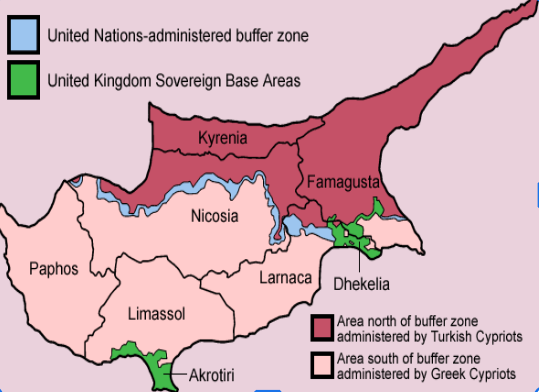
Demilitarized zone: a buffer area typically between two nations or territories where military forces, installations, and activities are prohibited by treaty or agreement
Nicosia in Cyprus
Choke points: a strategic strait or canal which is narrow and essential to pass through for the shipping of oil, food, and consumer products around the world
Suez canal
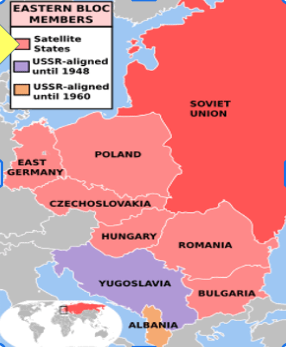
Soviet Union satellite states
Supranationalism: when states give up political power to a higher authority in pursuit of common objectives
Supra means above or transcending, nationalism means patriotism or pride in your country.
Requires political, economic, military, and/or cultural cooperation
League of Nations »»» United Nations
League of Nations:
created in 1919 after WWI
failed because US never joined, lack of enforcement power, and did not stop Japanese and Italian aggression
United Nations:
created in 1945 after WWII
goal is to encourage international security and cooperation
193 member states
Vatican City and Palestinian territories are non-member observer states and are not a part
can challenge state sovereignty
European Union (1993)
Eliminated some tariffs and promoted free flow of labor, capital, and goods
Established a common currency (the euro) (1999) *however, not all EU members use the euro
Regional supranational organizations around the world
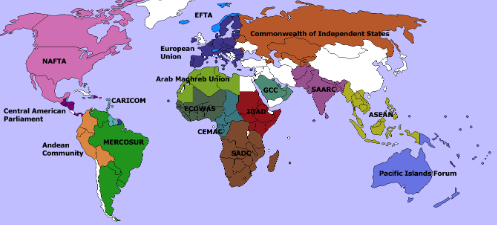
Establishing a boundary is a four step process:
Define the boundary through a treaty-like legal document which determines the exact placement (latitude and longitude) of the boundary.
Delimit the boundary by drawing on a map.
Demarcate the boundary by using steel posts, concrete pillars, fences, walls, or other visible means (if desired).
Administer the boundary by determining rules for how goods and people will cross the boundary.
Boundaries: the vertical plane between states that cut all the way from soil below to the airspace above
They often divide resources, for example: oil between Kuwait and Iraq
Relic boundary: a boundary that no longer functions but can still be detected on the cultural landscape. It no longer exists as an international boundary
Berlin Wall
Great Wall of China
Mason Dixon Line
Superimposed boundary: a boundary that has been imposed on an area by an outside or conquering power and also ignores the cultural organizations on the landscape
Berlin conference
India/Pakistan with Kashmir
Subsequent boundary: a boundary that is established after the settlement in that area occurred and developed with the evolution of the culture landscape and is adjusted as the cultural landscape changes
Yugoslavia to separate the states
Korea into North and South
Antecedent boundary: a political boundary that existed before the area was well populated and stays in place while people moved in to occupy the area, often following natural features like rivers or mountain ranges
border between Malaysia and Indonesia negotiated between English and Dutch settlers before large-scale inhabitation (but disregarding indigenous populations)
Andes Mountains border between Chile and Argentina
Geometric boundary: a political boundary that is formed by arcs or straight lines irrespective of the physical and cultural features of the land it passes through
many western states like Colorado and Wyoming
US and Canada border on the 49th parallel
many cities may have them
Consequent boundary: a boundary line that coincides with some cultural divide, such as religion or language. Sometimes called an ethnic boundary
Ontario and Quebec
India and Pakistan
Republic of Ireland and Northern Ireland
Physical boundary: a natural boundary that coincides with deserts, mountains, or bodies of water
U.S. and Mexico border near the Rio Grande river
Pyrenees mountains between France and Spain
Potomac river between D.C. and Virginia
Himalaya mountains between India and China
Enclaves: a territory whose geographical boundaries lie entirely within the boundaries of another territory, inside of another country
Vatican City in Italy
Exclaves: a territory legally or politically attached to another territory with which it is not physically attached, out/unattached to the country
Kaliningrad and Russia
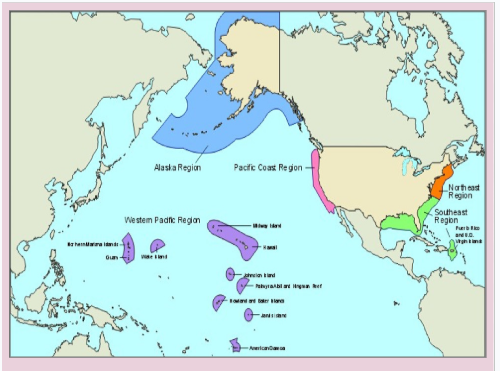
Pacific Region
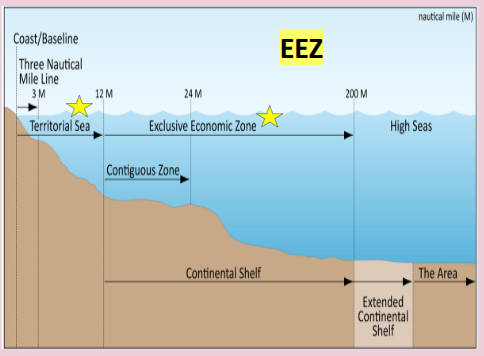
EEZ
3 nautical miles: coast/baseline
12 nautical miles: territorial sea
coastal states have full sovereignty
24 nautical miles: contiguous zone
nations can enforce customs, immigration, and sanitation laws
200 nautical miles: exclusive economic zone (EEZ)
nations have sovereign rights to manage, explore, and exploit natural resources
200+ nautical miles: high seas
waters beyond any national jurisdiction, open to all states
UN Law of the Sea
Maritime Zones: It defines specific areas with different rules, including:
Territoriality: Landward of the baseline, where the coastal state has full sovereignty. Extends 12 nautical miles (nm) from the baseline, with rights for "innocent passage"
Exclusive Economic Zone (EEZ): Extends up to 200 nm for resource exploration (fishing, oil)
High Seas: Beyond national jurisdiction, for all nations
Navigational Rights: Establishes freedom of navigation, innocent passage in territorial seas, and transit passage through international straits.
Borderland: a region on both sides of an international boundary, where the cultures, economies, and social practices of neighboring countries blend and overlap
Tex Mex between US and Mexico
Frontier: a geographic zone where no state have complete political control, acting instead as a buffer region between states
Compromise of 1850/Kansas-Nebraska Act
Median Line Principle: a method in international law for delimiting maritime boundaries between adjacent or opposite states, placing the border at a line equidistant from their nearest shorelines
Regime types
Democracy: citizens elect leaders
Autocracy: interest or ruler(s) dominant
Anocracy: somewhere between democracy and autocracy
Government organizations
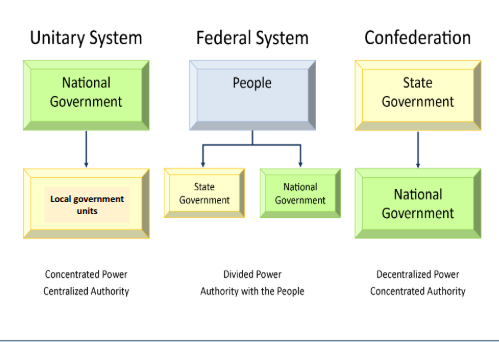
Unitary state: strong central government
Federal state: strong local/regional government
The regime type around the world is mostly democracy in the west and autocracy on the east, in the middle, there is a mix, and far east is mostly democratic.
Rise in democracy, slight rise in anocracy, and fall of autocracy.
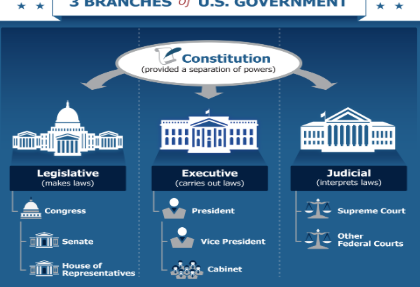
3 branches of US government
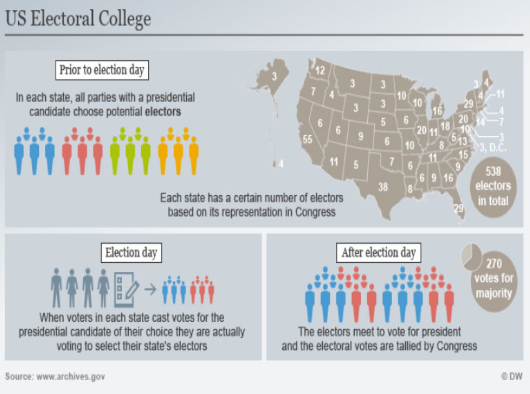
Electoral college
Virginia voting district
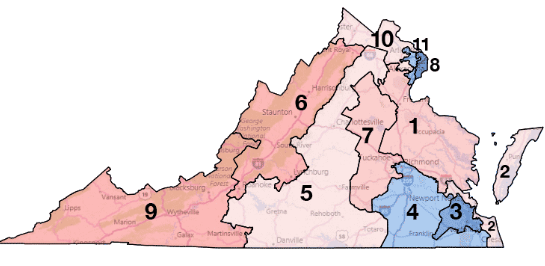
Nebraska has 3 voting districts, 1 big, 1 medium, and 1 small.
Texas has 38 voting districts.
San Francisco bay area in California has a lot of small voting districts.
Maryland congressional district 3 is very oddly shaped and very gerrymandered.