Gymnosperm lecture
I. Kingdom Plantae
A. Gymnosperms - first seed plants (higher plants)
next major plant group after the SVP’s
first to evolve seed and pollen
freed plants from needing water to carry spores, sperm and egg = internal fertilization
Gymnosperm characteristics
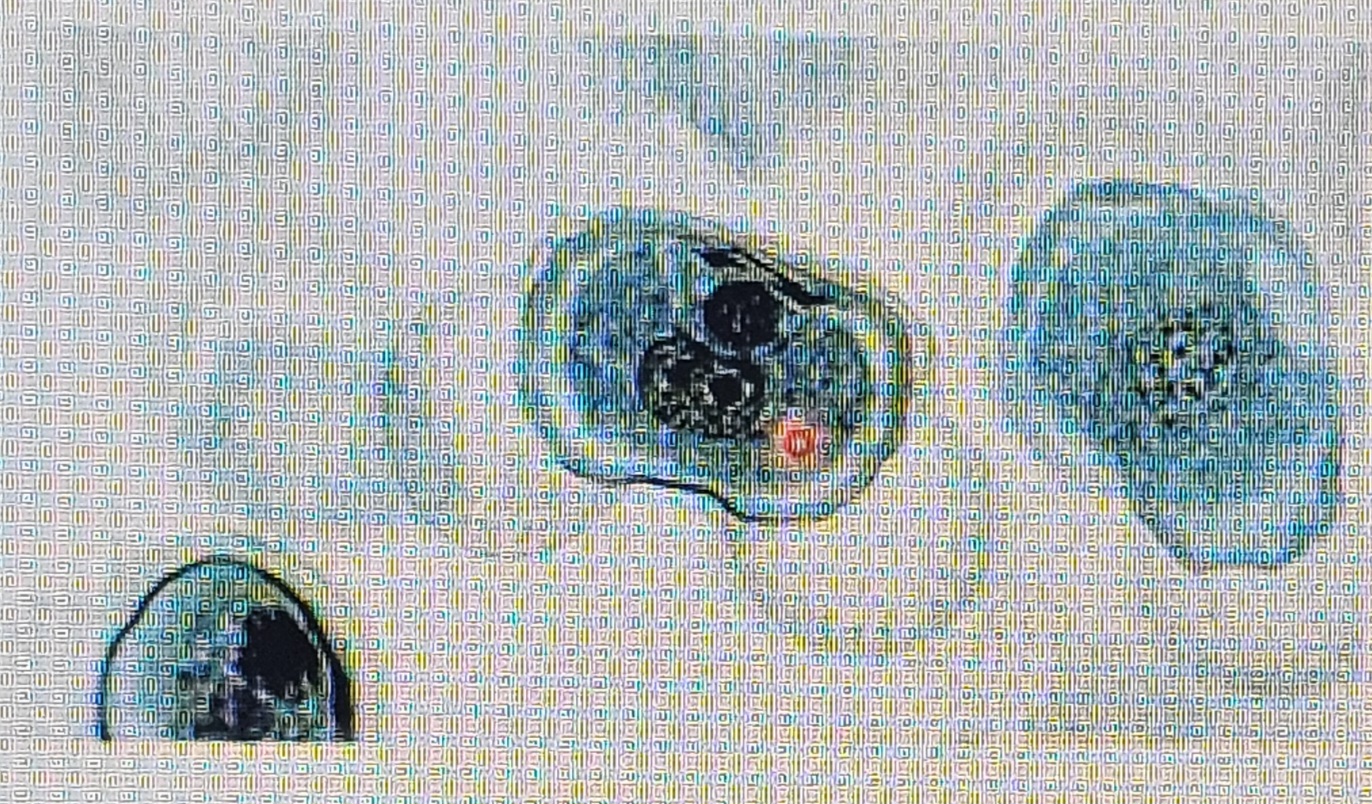
make pollen
has wings to carry them on the wind
make naked seeds
seeds on a cone, not on a fruit so they’re considered naked
internal fertilization
sperm is being carried by a pollen grain and pollen tube
B. How did gymnosperms arise
Theory: SVP’s evolved into progymnosperms which then evolved into gymnosperms upon the evolution of the seed
Ex: archaeopteris - progymnosperm
spores only - no seeds (wet environment)
heterospory as a synapomorphy
2 xylem and 2 phloem
1st bifacial cambium
softwood - tracheids only
C. Very first gymnosperm - now extinct
Ex: elksinia - oldest known seed plant
integuments are incomplete
Ex: seed fern medulossa
integuments are complete/fused
First gymnosperms had:
2nd xylem and phloem
megaphylls
seeds!
Debate: which extinct gymnosperm gave rise to living gymnosperms today
Gymnosperm phyla living today
phylum: coniferophyta
ex: redwoods, pines, firs, spruces, cedars
shrubs/trees
softwoods
tracheid’s only for water conduction
scale/needle like leaves
most are monoecious
male and female on the same plant
Juniper berries = fleshy cone scales
used for flavoring gin
Yew tree = makes the drug Taxol
anti cancer drug
now synthesized
phylum: cycadophyta
ex: cycads
largest cone in the world
pinnate leaves
dioecious (male and female plants are separate)
native to the tropics
resemble palms
but palms are flowering plants that produce fruit
phylum: ginkophyta
ex: ginkgo biloba
native to china
dioecious
no cone - seed coat is fleshy
female seeds have butyric acid (stinky)
that’s why you plant the male trees
cleft leaves (open line through the leaf)
go through sex conversion
some branches of male trees become female
this is due to the fact that they evolved from a monoecious ancestor
phylum: gnetophyta
ex: ephedra (mormon tea)
lives in arid environments and the desert
shrub - leaves reduced
xylem has vessels and fibers
double fertilization
dioecious
ex: welwitschia
large woody stem, close to the ground
has 2 large meristematic leaves that split into segments
dioecious
weevil pollinated
native to namibia/angola-southern africa region
Pine life cycle
have a sporic life cycle (alteration of generation)
pines are heterosporous
micro = male, mega = female
pollen (microgametophyte) formation
pollen is made in male cones called staminate strobilus
male cones develop by MITOSIS out of the branches
the scales of the male cone = modified leaves called microsporophylls
on each microsporophyll, there are two microsporangia (pollen sacs) attached to each microsporophyll
inside microsporangia - microgametophytes (pollen grains) form
all cone tissue is 2N because they form by mitosis from the tree (a 2N sporophyte)
inside microsporangia are 2N microsporocytes
microsporocytes go through meiosis to make 1N microspores
1N microspores go through mitosis to make a 4 celled microgametophyte (pollen grain)
microsporocytes (2N) → meiosis → microspores (1N) → mitosis → 4 celled microgametophyte (pollen grain)
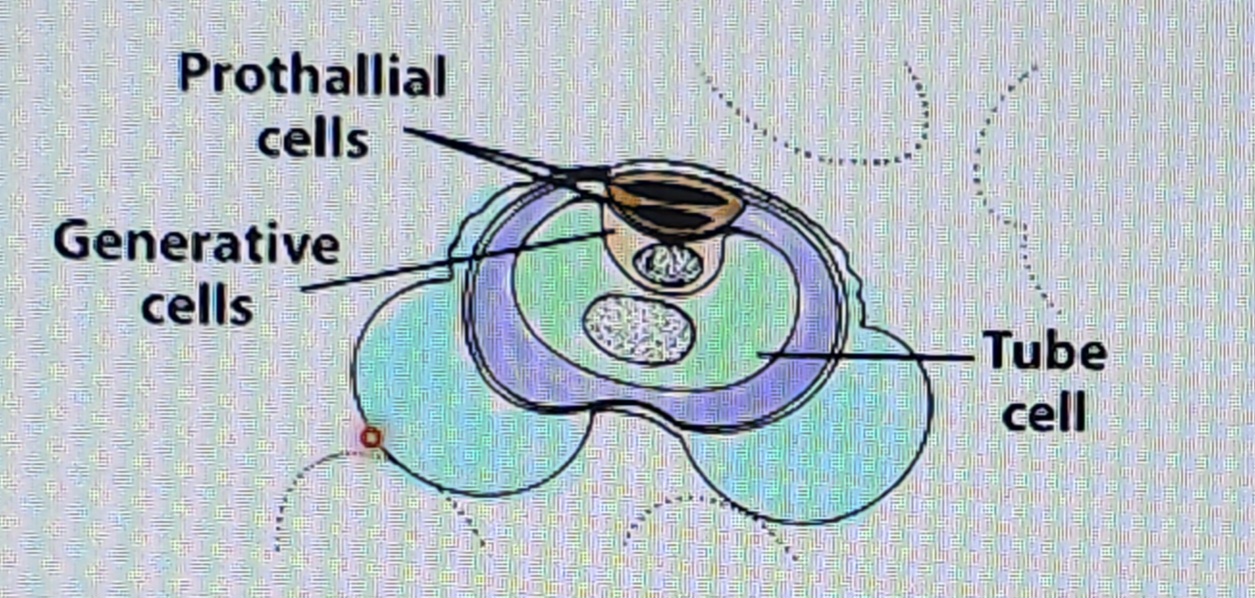
generative cell is inside of the tube cell, why?
prothallial cells degenerate
wings form
pollen grain is an immature microgametophyte because no sperm has formed yet
once pollen grain is made, they blow from the male cone to the female cone
pollen grain then germinates on the female cone
the tube cell becomes a pollen tube
generative cell stays near the pollen tube tip as it grows (inside the tube cell) because it becomes sperm, and the tube cell delivers the sperm
generative cell will divide to make 2 unflagellated sperm
pollen tube eliminates the need for swimming sperm
Huge evolutionary advances over SVP’s and Progymnosperms
allowed them to live away from water in arid environments
new derived traits that come with internal fertilization:
pollen grains
tube cells/pollen tube
generative cell
unflagellated sperm
pollen tube delivers the sperm to the female cone
Seed formation - female
young new cones are tiny and fleshy
takes 1-2 years to mature into woody cones
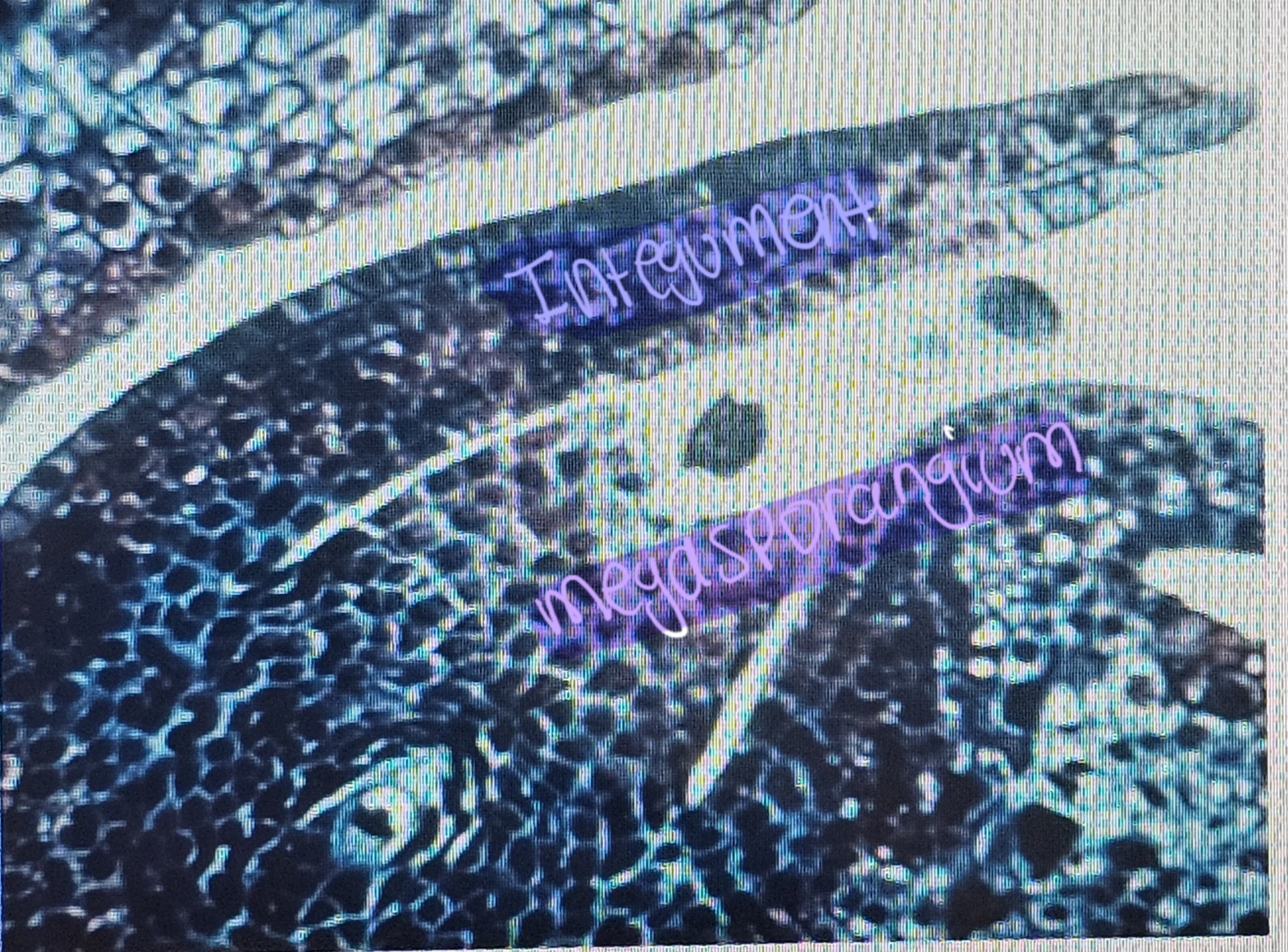
1 integument + 1 megasporangium = 1 ovule (immature seed, doesn’t have embryo)
ovuliferous scales
January every year:
soft fleshy cones form on tree by mitosis (2N)
cone scales are open to receive pollen
integuments open, opening is called micropyle
pollination begins = pollen grain lands on micropyle
when pollination is complete, ovule secretes a sugar droplet
integuments closed after pollination
pollen germinates out pollen tubes
pollen tubes release enzymes that start the formation of gametophyte
after, pollen tube growth stops and waits for the female gametophyte to develop
Megasporocyte (2N) → meiosis → 4 megaspores (1N)
3 megaspores degenerate due to internal fertilization
1 big spore to make a large gametophyte
remaining 1 megaspore → mitosis → female gametophyte with archegonia and eggs
stage is set for fertilization
eggs mature to release enzymes to cause the pollen tube to re-initiate growth
pollen tube digests its way through the megasporangium to the egg
fertilized egg develops into the zygote and embryo
zygote (2n) → mitosis → embryos (2n)
embryo grows into the female gametophyte
female gametophyte becomes food for the embryo
megasporangium dries and becomes papery
integuments harden into the seed coat, embryo matures
cones open and drop seeds
mature cones have woody scales
coat and megasporangium = 2N
female gametophyte = 1N
embryo = 2N
female cones are modified branches because they have modified leaves below them = bracts