Executive Function Development
Learning Objectives
Gain familiarity with theoretical discussions of executive functions.
Acquire knowledge of developmental changes in executive function skills during adolescence.
Understand brain structure and functional changes underlying executive function development in adolescence.
Recognize how executive function skills fit within the broader context of adolescence.
What are Executive Functions?
Executive functions allow us to interact with the world in a goal-directed manner
Application: Used in complex situations where routine behaviors or automatic responses are not sufficient
Conceptualization: Executive function has been viewed both as a unitary supervisory function and a collection of component skills.
Unitary Function Models
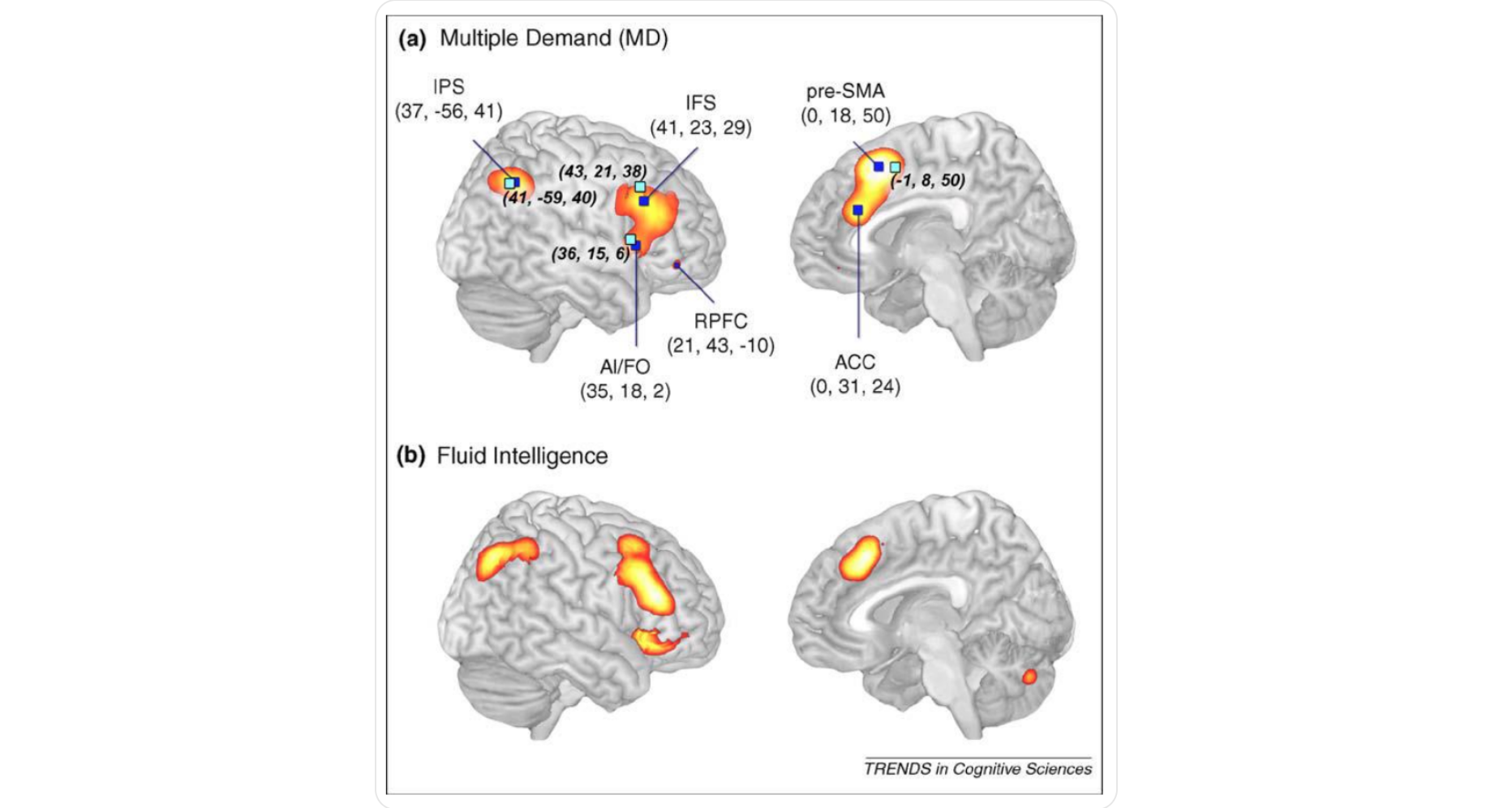
Common or “multiple-demand” (MD) network supporting the maintenance and elaboration of structured mental programs and sub-tasks (by Duncan, 2010)
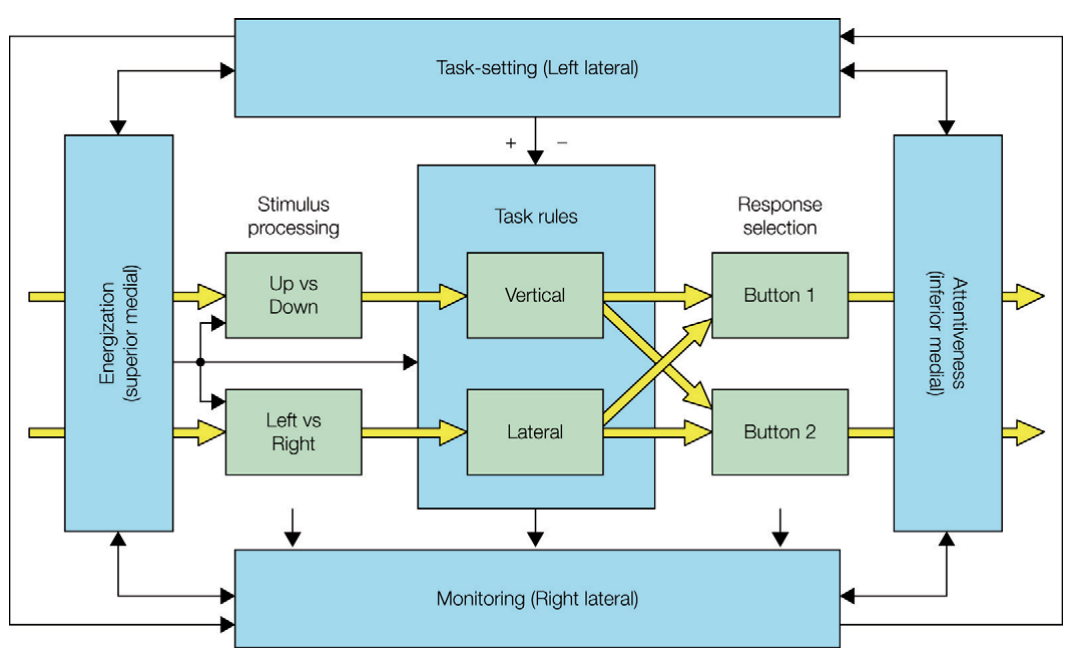
Supervisory Attention System (in task switching) — more from neuropsychology, lesion studies (by Shallice et al., 2008)
Lesion in left lateral PFC => issues with task-setting
Lesion in right lateral PFC => issues with monitoring
Collection of Subcomponents Models
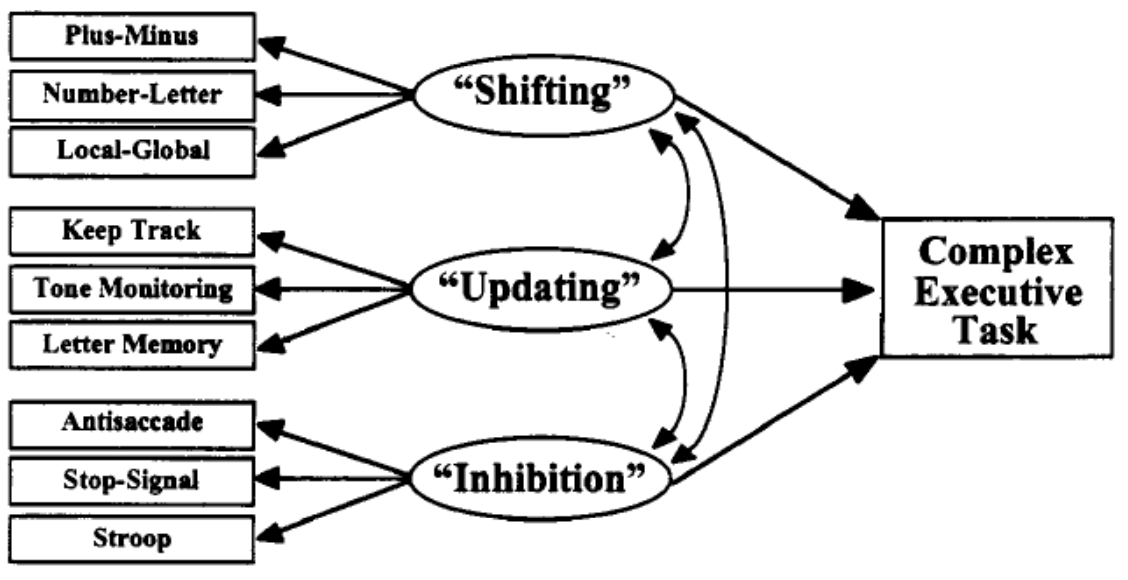
Model: unity and diversity of EF — three distinct, yet inter-related sub-components (by Miyake et al., 2000)
Inhibitory Control: Ability to suppress inappropriate pre-potent responses and ignore distractions.
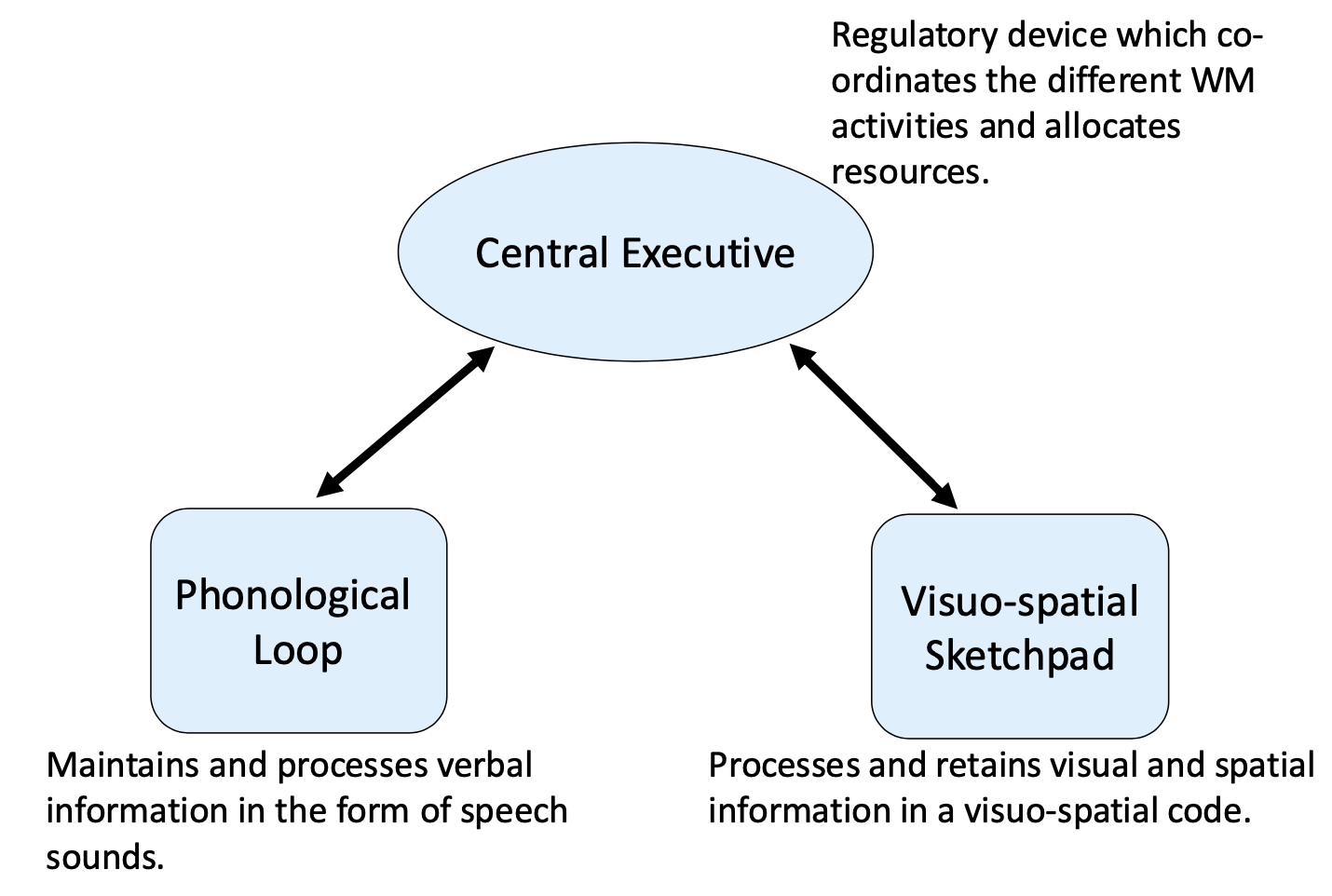
Working Memory or Updating: Ability to temporarily retain and manipulate information within a mental workspace.
Shifting or Switching: Ability to shift between different mental states or tasks, involving rule changes.
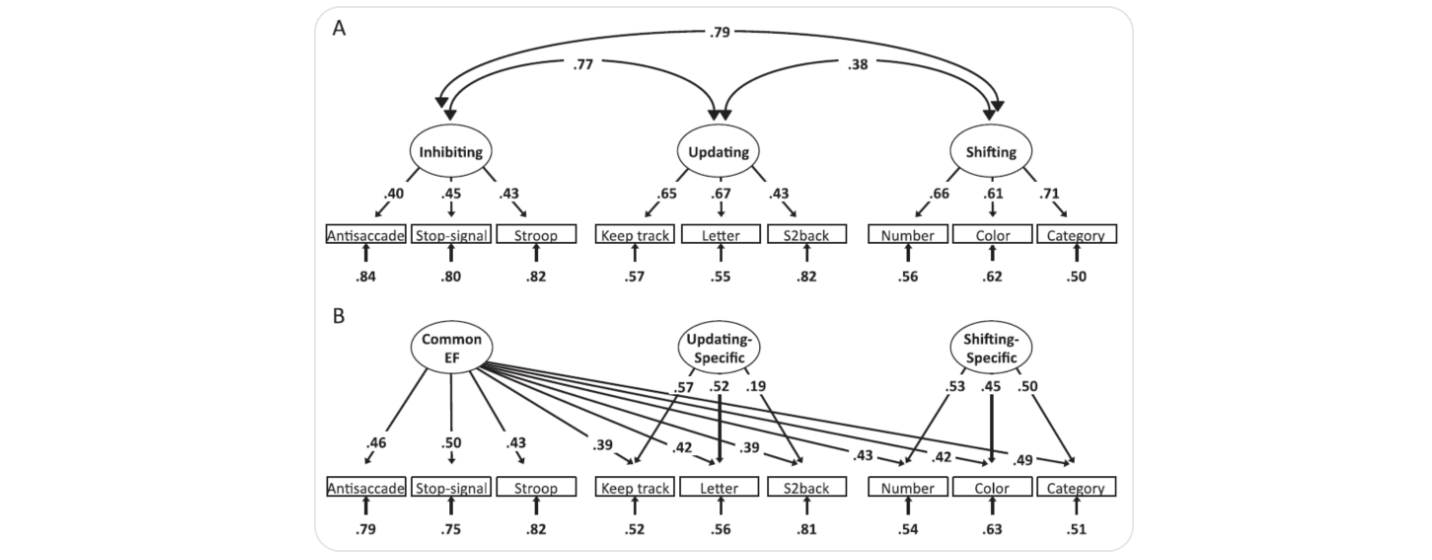
Another complicated model (common, adapted to different cultures)
The idea is that you can’t actually measure inhibition or working memory (pure executive skills) — you can make a task that includes a component of working memory, but it’s going to be a lot of other stuff as well (e.g., reading, recognizing colors, etc.)
You can use a bunch of different tasks and extract the common variance
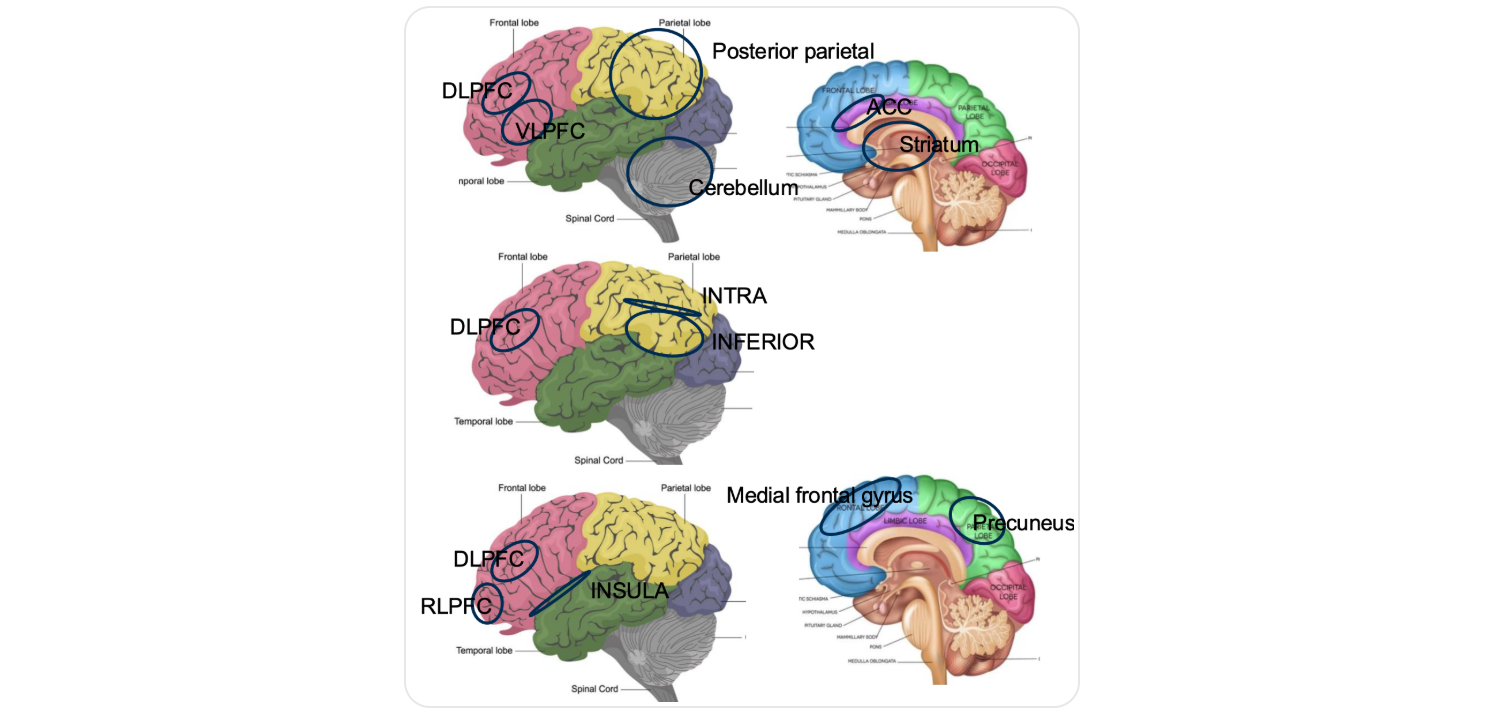
Neural correlates of EF in adults
Inhibition:
Dorsolateral prefrontal cortex (dlPFC)
Inferior frontal gyrus (or ventrolateral PFC)
Anterior cingulate cortex (ACC)
Posterior parietal cortex
Striatum and cerebellum
Working memory:
dlPFC (particularly the superior frontal sulcus)
Parietal cortex (intra and inferior parietal cortex)
Switching: fronto-parietal network
dlPFC
rlPFC
Medial frontal gyrus
Anterior insula
Precuneus (superior parietal lobule)
Summary of Executive Functions in Adulthood
Various theoretical frameworks exist outlining executive functions.
There are both common and specific elements of executive functions, seen both behaviorally and through brain activity.
Factors (doing a bunch of different tasks) may be more reliable than single task assessments.
General frontal-parietal networks support executive functions within the brain.
What is Adolescence
Definition of Start and End:
Start: Biologically defined by the onset of puberty—hormonal changes that lead to sexual and physical maturation.
End: Social and cultural markers of independence and societal responsibility.
Puberty can be partially dissociated from chronological age, indicating variability in onset and progression.
Historical Context of Adolescence
Adolescence is recognized in various human societies as an intermediary phase of development, and changes in timing, duration, environment, and goals have been observed
Also found in animals
Quotations:
Aristotle described physiological changes in males and females at puberty.
Shakespeare remarked on youth as a tumultuous stage filled with impulsivity and risk.
What’s going on in the brain?
Changes in these networks…
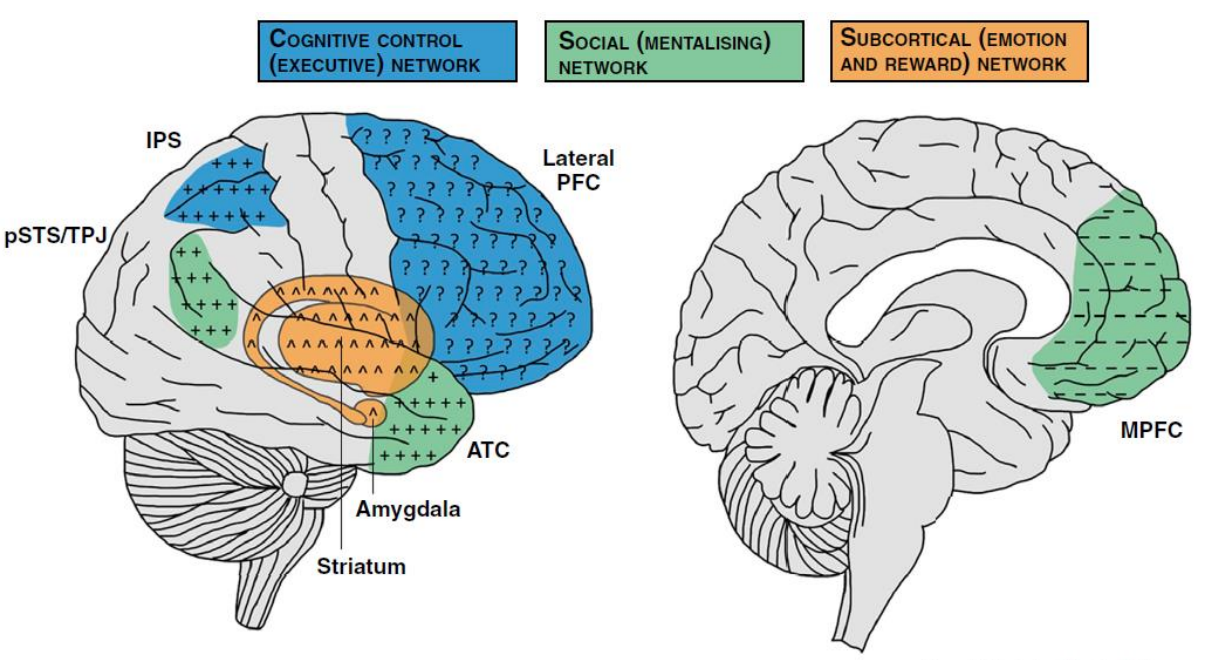
Changes in goals, thinking, socializing, etc…
High vulnerability to mental health issues — a lot of conditions start around adolescence (impulse-control disorders, substance-use disorders, anxiety disorders, mood disorders, schizophrenia)
Leading causes of death among adolescents: accidents, violence, suicide
Summary
Adolescence is a biologically driven process of development to reproductive maturity
There may be specific features of the adolescent developing brain which bring about adolescent-typical behaviors and possibly make it vulnerable too
The continued development of cognitive control during adolescence is proposed to be a key part of this
Structural development of the PFC
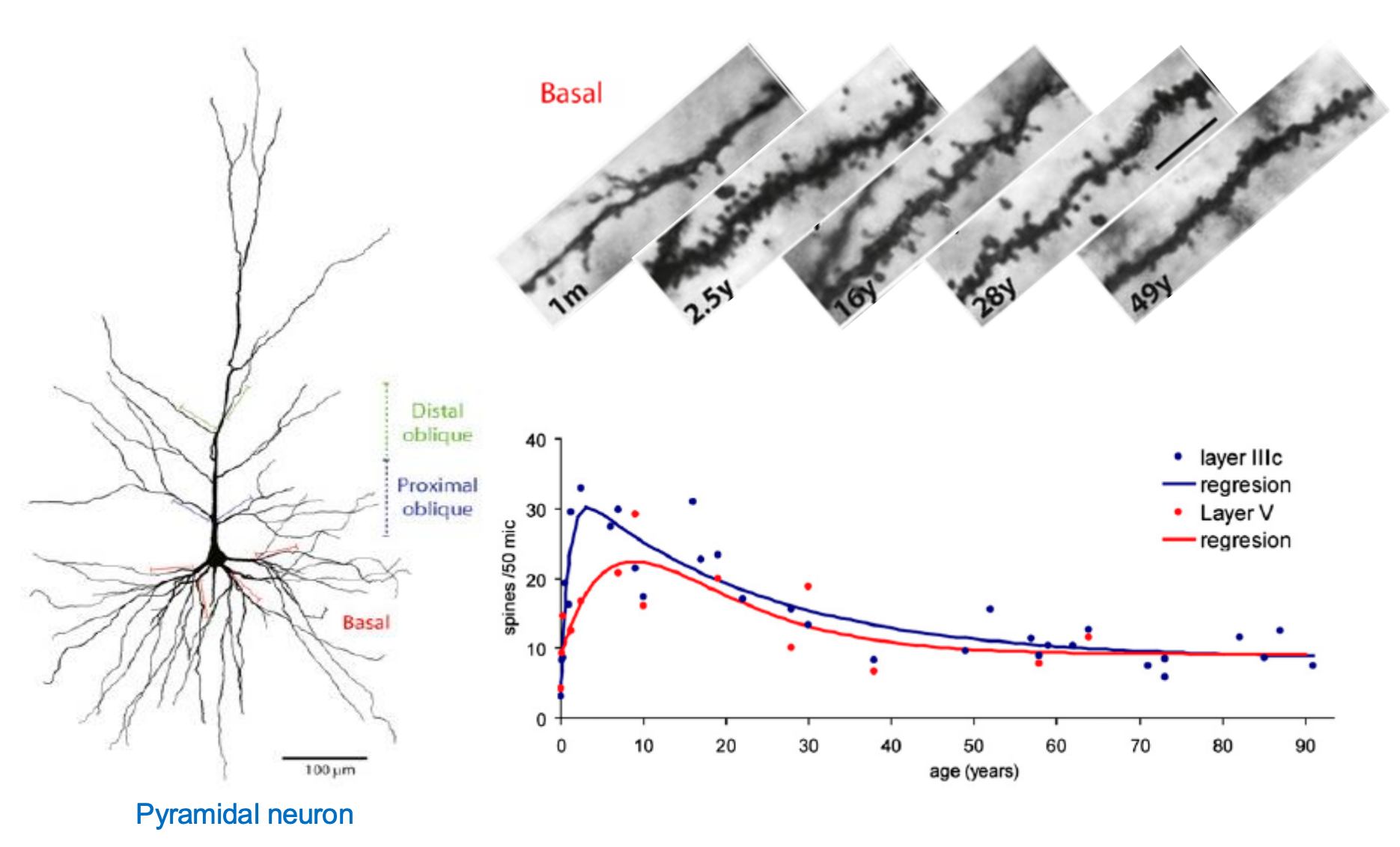
Different layers of the brain reach the peak of connectivity at different times, and then pruning back happens
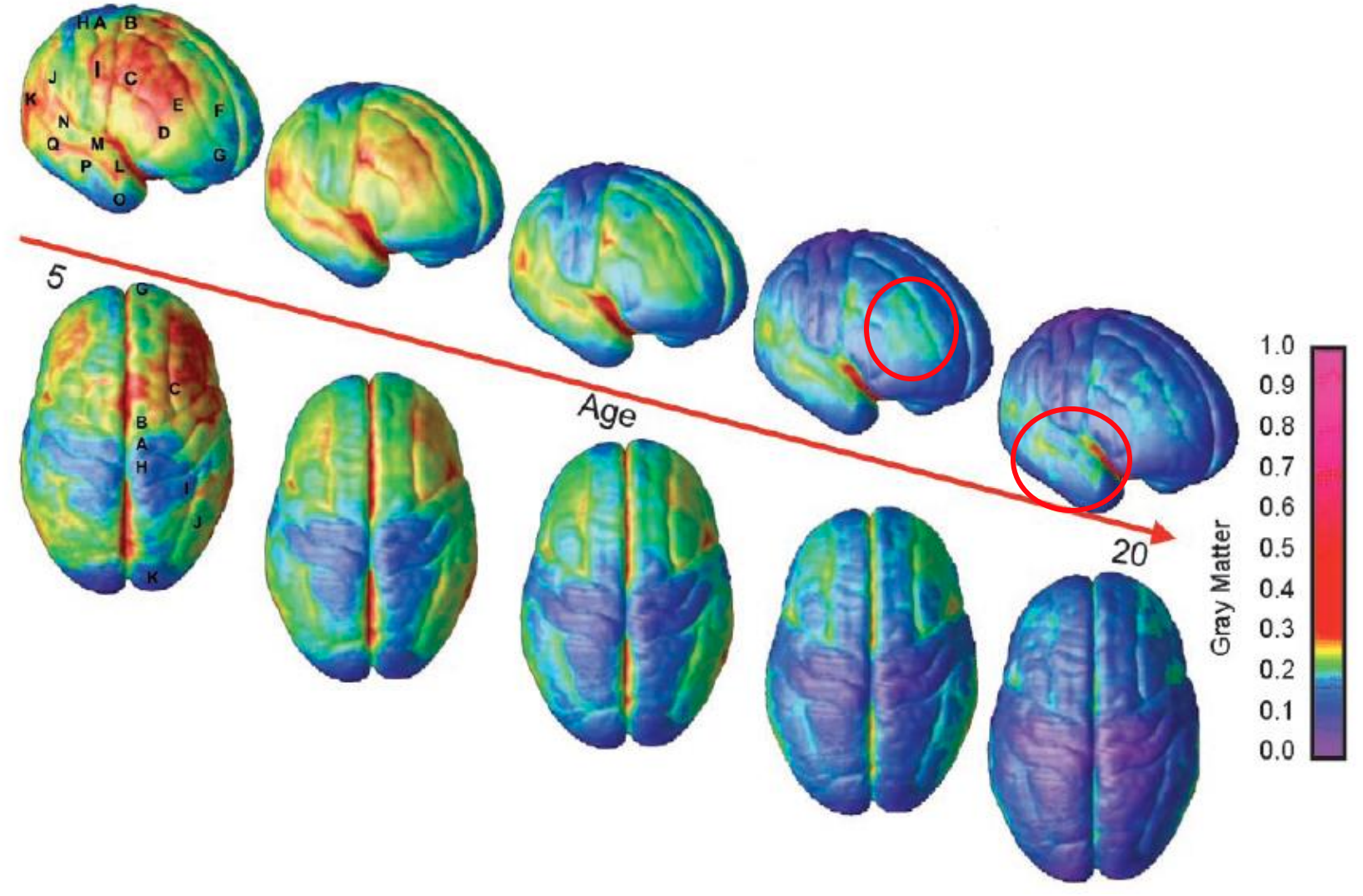
Temporal and frontal regions show later changes in cortical thickness
Average age of peak in cortical thickness:
Occipital lobe: 7-9 years
Parietal lobe: 8-11 years
Frontal lobe: 8-13 years
Temporal lobe: 11-15 years (Insula: 18 years old)
Grey matter changes between ages 4 and 21 — frontal and temporal cortex regions show the most prolonged reduction in grey matter volume
White matter tracts also show region specific developmental changes
Latest developing tracts are the longitudinal ones — still developing in late adolescence (inf. longitudinal, sup. longitudinal, inf. fronto-occipital, sup. fronto-occipital)
Fractional anisotropy: consistency of direction of water diffusion
Summary
Progressive changes
Synapse formation
Myelination
Regressive changes
Synapse elimination or “prunning”
Development of the prefrontal cortex protracted compared to other brain regions
Development of Executive Functions
Some studies with children have supported the 3 subcomponents model of EF from 7 years of age — consistent across age groups: 7, 11, 15, 21
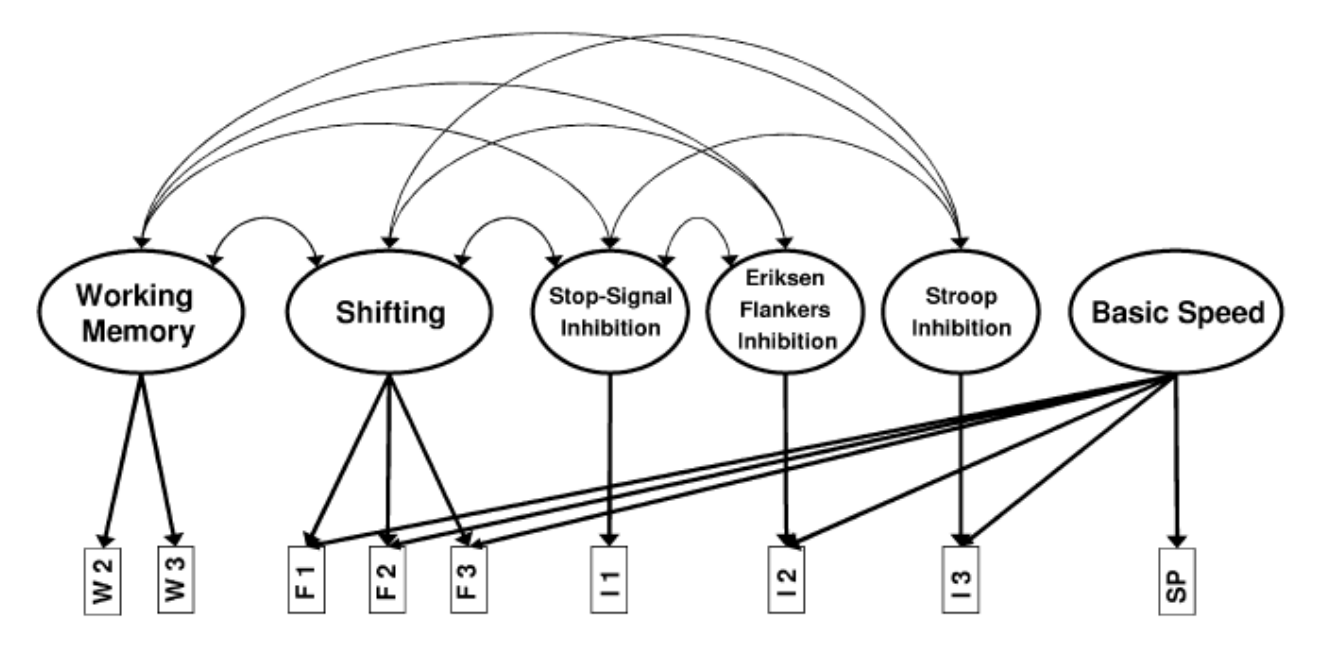
Task performance is more correlated with age (not as much in young kids)
Different developmental trajectories of the three subcomponents (only a cross-sectional study tho):
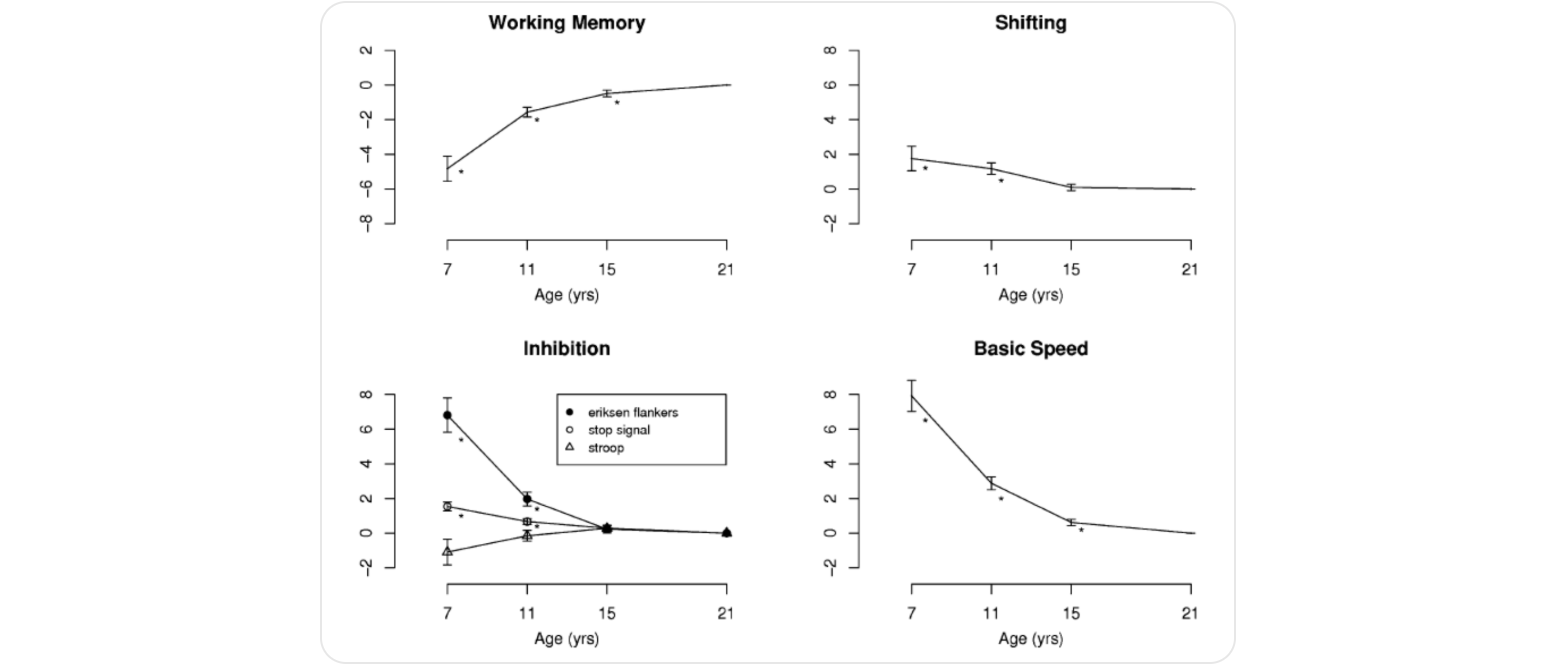
Specialization?
Longitudinal study:
6-10 years: 2-factor model best fits (with inhibition and switching combined)
11-14 years: period of transition. 2-/3-factor models best
15 years: 3-factor structure emerges clearly as preferable
Efficiency in executive control becomes increasingly specialized and independent!
Another study: if specialization is there, age should be more related to separate things than EF — didn’t really find this tho…
In other words: differentiation of EFs over development would lead to a decrease in loading to the common EF factor
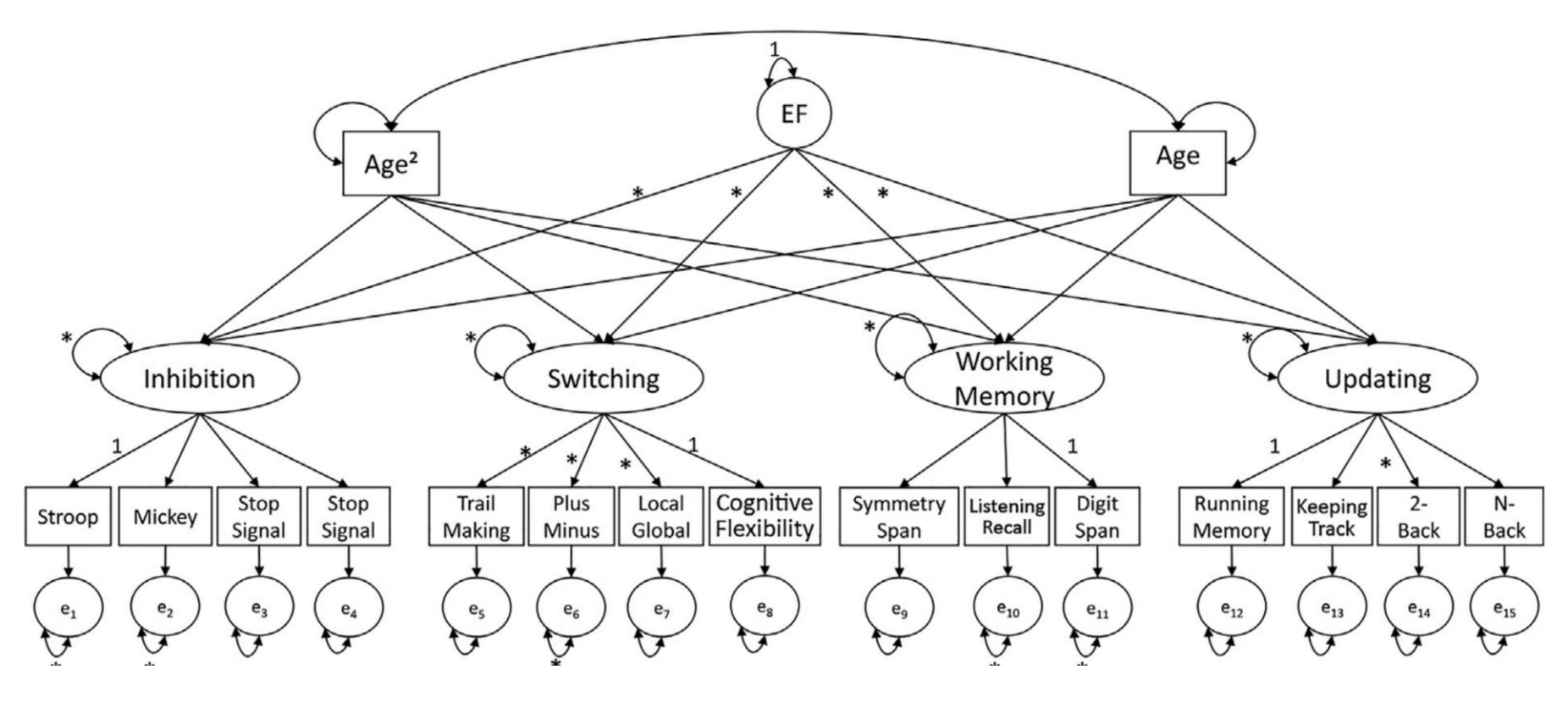
They didn’t really find what they were expecting
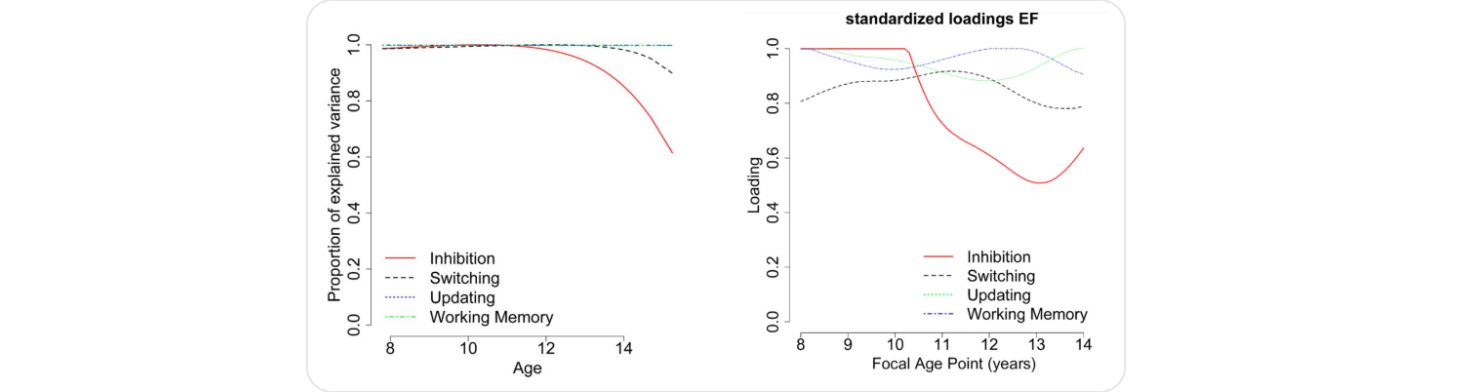
Left: Proportion of variance in each of the four EF factors explained by the common EF factor
Some differentiation of inhibition from age 11, and switching from age 13
Right: Loading of the 4 EFs onto the common EF
Stable for WM, updating, and switching, but inhibition loads a lot less from age 11
Meta-analysis of model fit studies across development
11 child/adolescent studies, 10 adult studies
Evidence for greater unidimensionality of executive function among child/adolescent samples (green) and unity-diversity models among adults (blue) — publication bias?
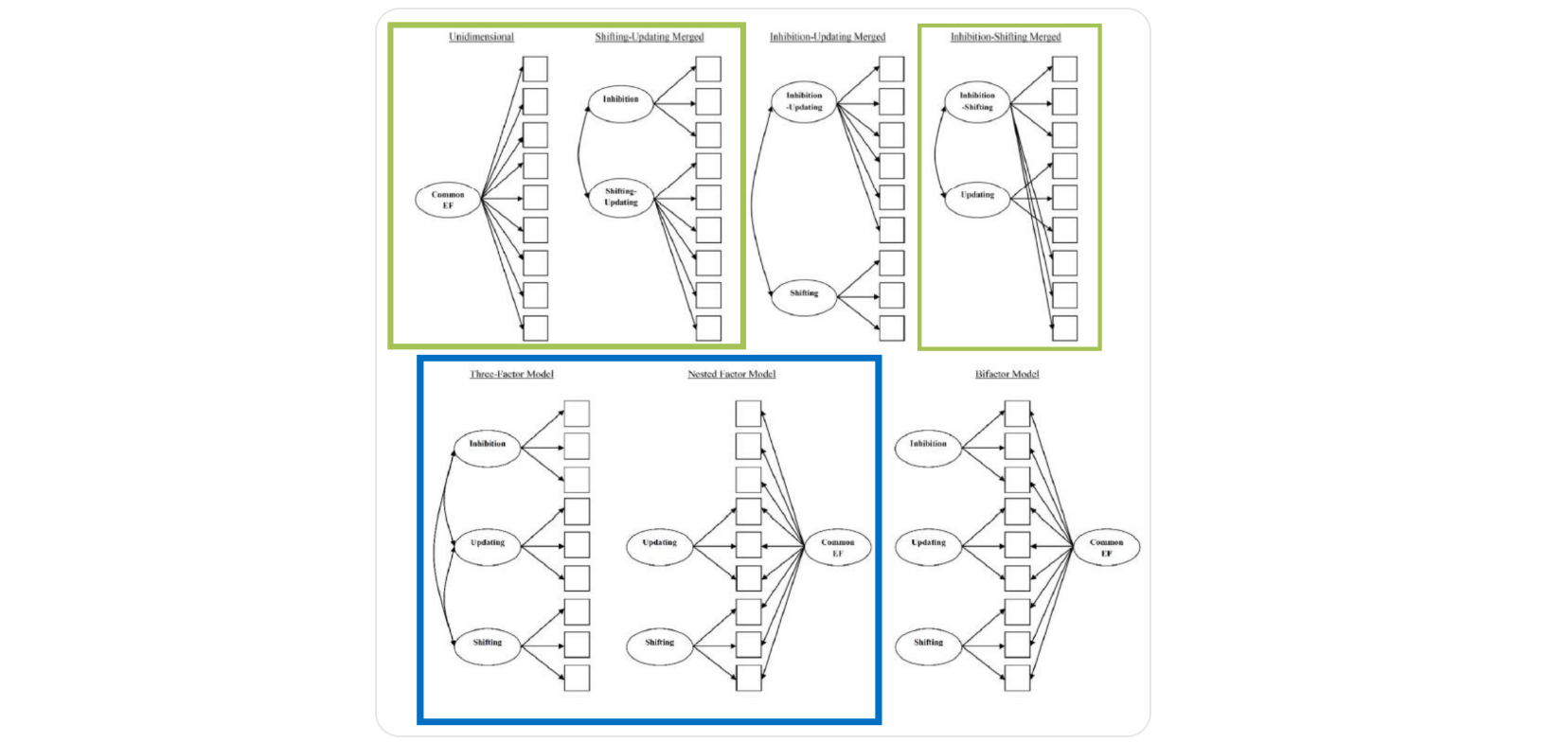
Does it matter? It matters if you want to target a specific problem
Development of Inhibition
Inhibitory control tends to develop quite early, then more through childhood, but at 14-15 the change becomes less
Still, not very reliable across all different tasks and situations, lab vs. real life issues, e.g., of a task: Marshmallow task
E.g., in adolescents there are lots of conflicting needs and wants and abilities, and inhibitory skills are developed (when tested in the lab), but in real life adolescents are not always great at inhibition — important to look at the whole context!
Anti-saccade task in school-aged children
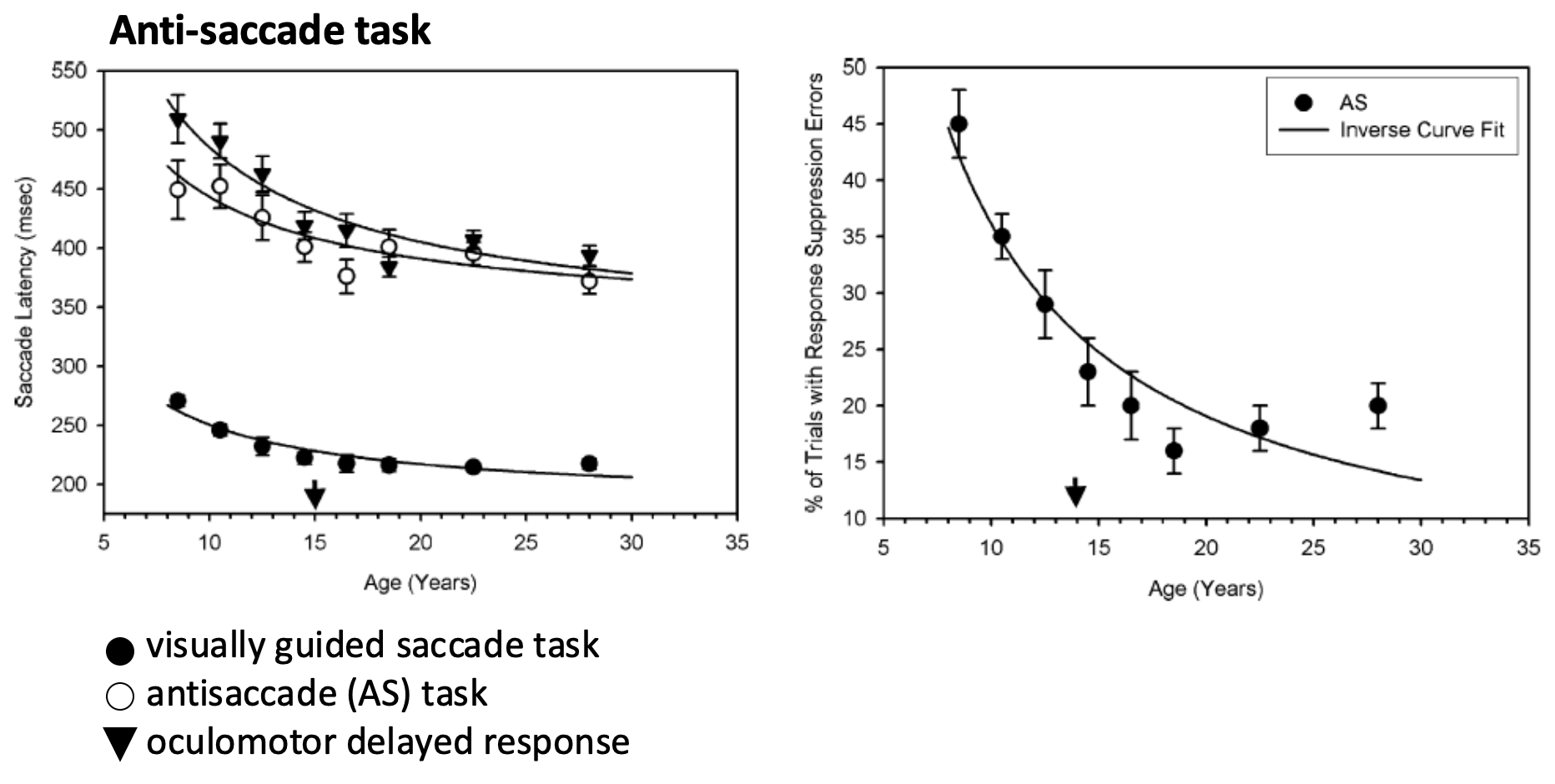
Long range connections still maturing — integration less reliable
Further quantitative improvement in inhibitory control abilities during middle childhood and adolescence
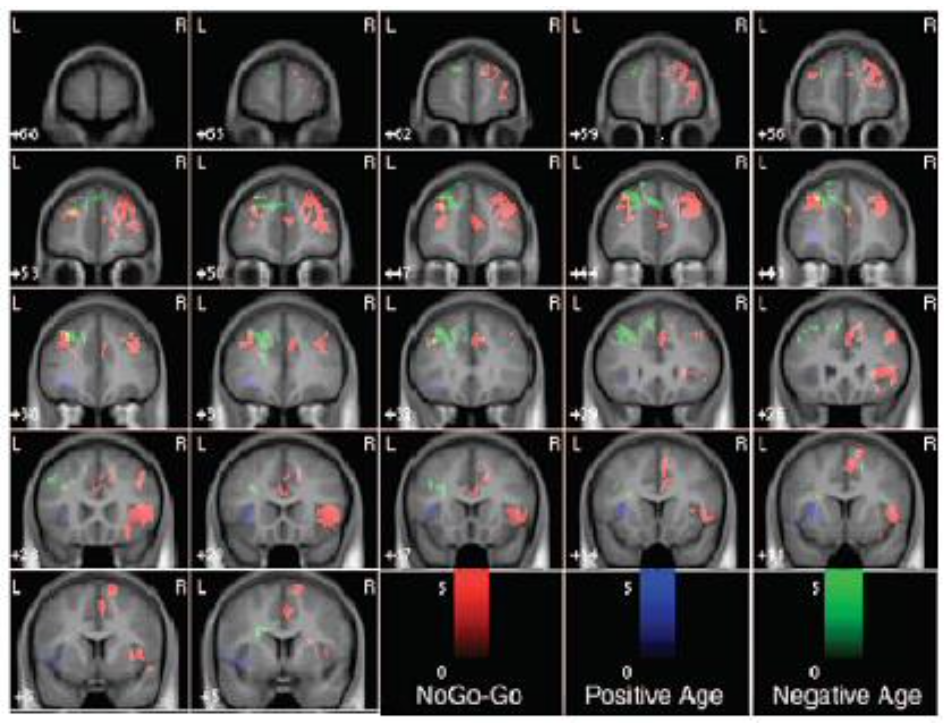
Go-NoGo task: increasing specialization?
20 subjects ages 8 to 20 years old (huge age span, little participants)
Difference in reaction time but not accuracy — same performance achieved via different means in terms of neural activity
With age: use less parts and less effort for the same accuracy
Blue = positive correlation with age, green = negative, etc. — very specific, honing in to less parts of the brain over time
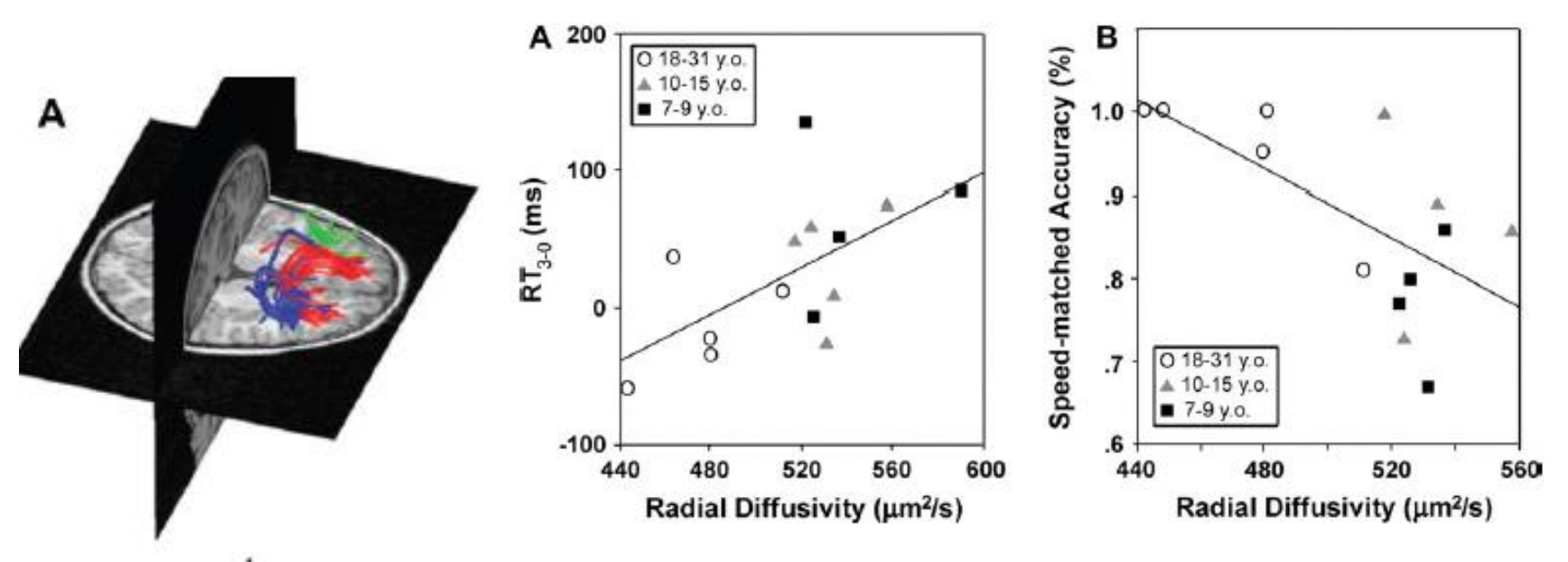
Go-NoGo task: structural connectivity
Fronto-striatal (striatum = motor action planning) tract’s radial diffusivity decreased with age and correlated with NoGo task performance
Diffusivity = lack of structure, less diffusivity = more structure, more myelination
Age effect only for cortico-spinal tracts
Less diffusivity with age, better myelination
Summary
Cognitive, behavioral and brain assessments generally show rapid early improvements in inhibition
Slower improvements through adolescence
Greater brain localization throughout childhood and adolescence (inferior PFC)
Changes in structural and functional connectivity associated with inhibitory performance
Development of Working Memory
Baddeley & Hitch (1974) model:
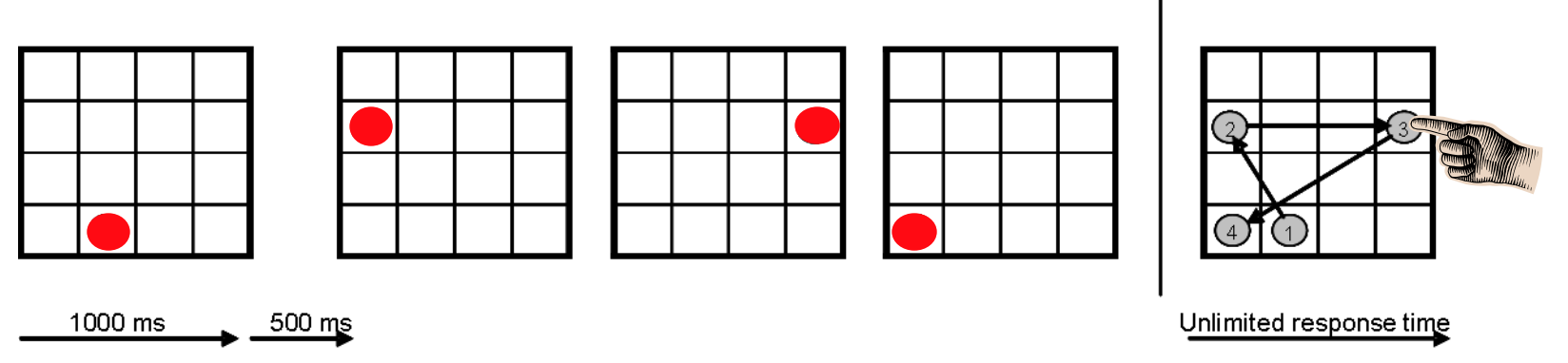
Behavioral visuo-spatial working memory test (Dot Matrix, AWMA):
Over development, increase in capacity to reliably remember more and more items in your memory
It has to do with accuracy as well: younger people may point to the general area of some items and not be able to precisely pinpoint the exact square — this gets better with age as well
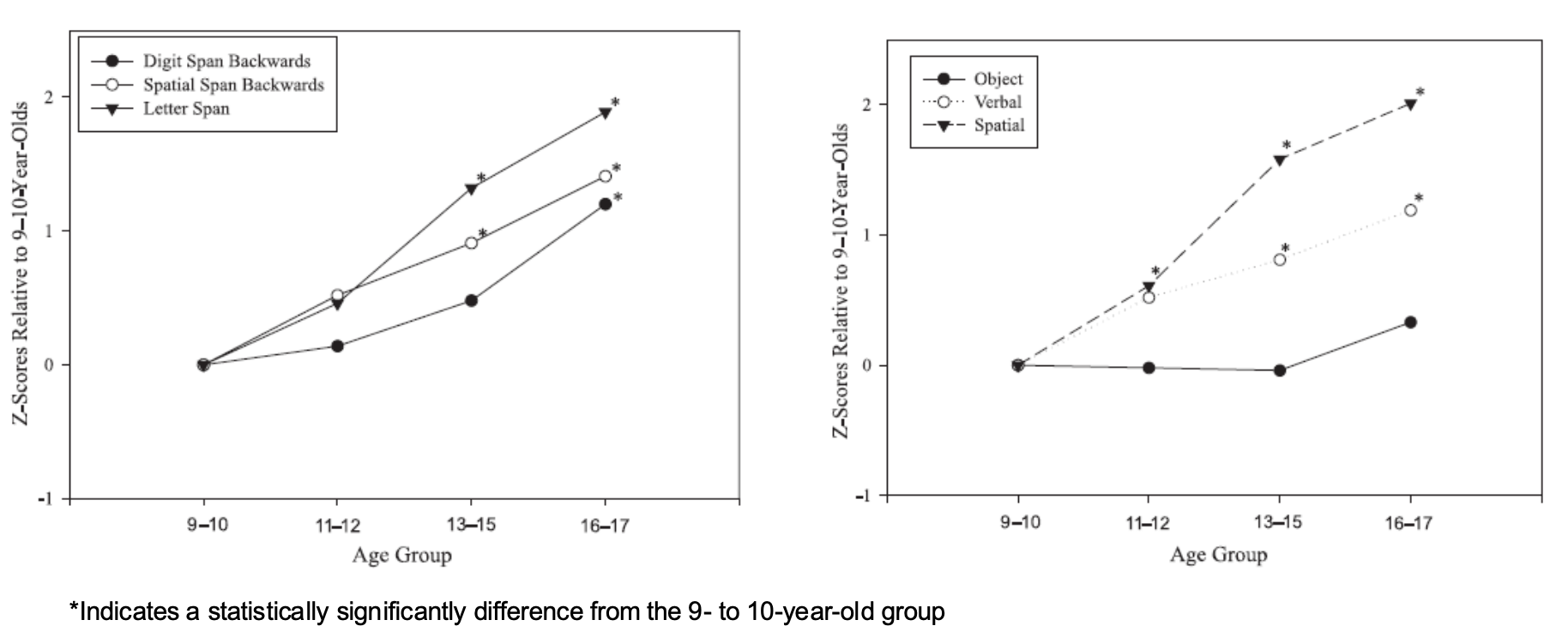
WM abilities improve continuously over childhood, with performance leveling off in mid-to-late adolescence
Main effect of WM in fronto-parietal network
Is it performance or age-related activation?
Areas showing a positive correlation between WM activity and age
Areas showing a correlation between WM activity and performance
In other words: there is more activity both when you’re better at a task and as you get older — hard to work out is it performance/age?
Meta-analysis of 10 studies, 10-17 year old adolescents, and 18-30 year old adults
N-back or delayed matching to sample task
They found a general pattern of increases and decreases of WM
Increase of localization/specialization in the parietal lobe — thought to be due to automatization, decrease in frontal — decrease in effortful control — just an idea
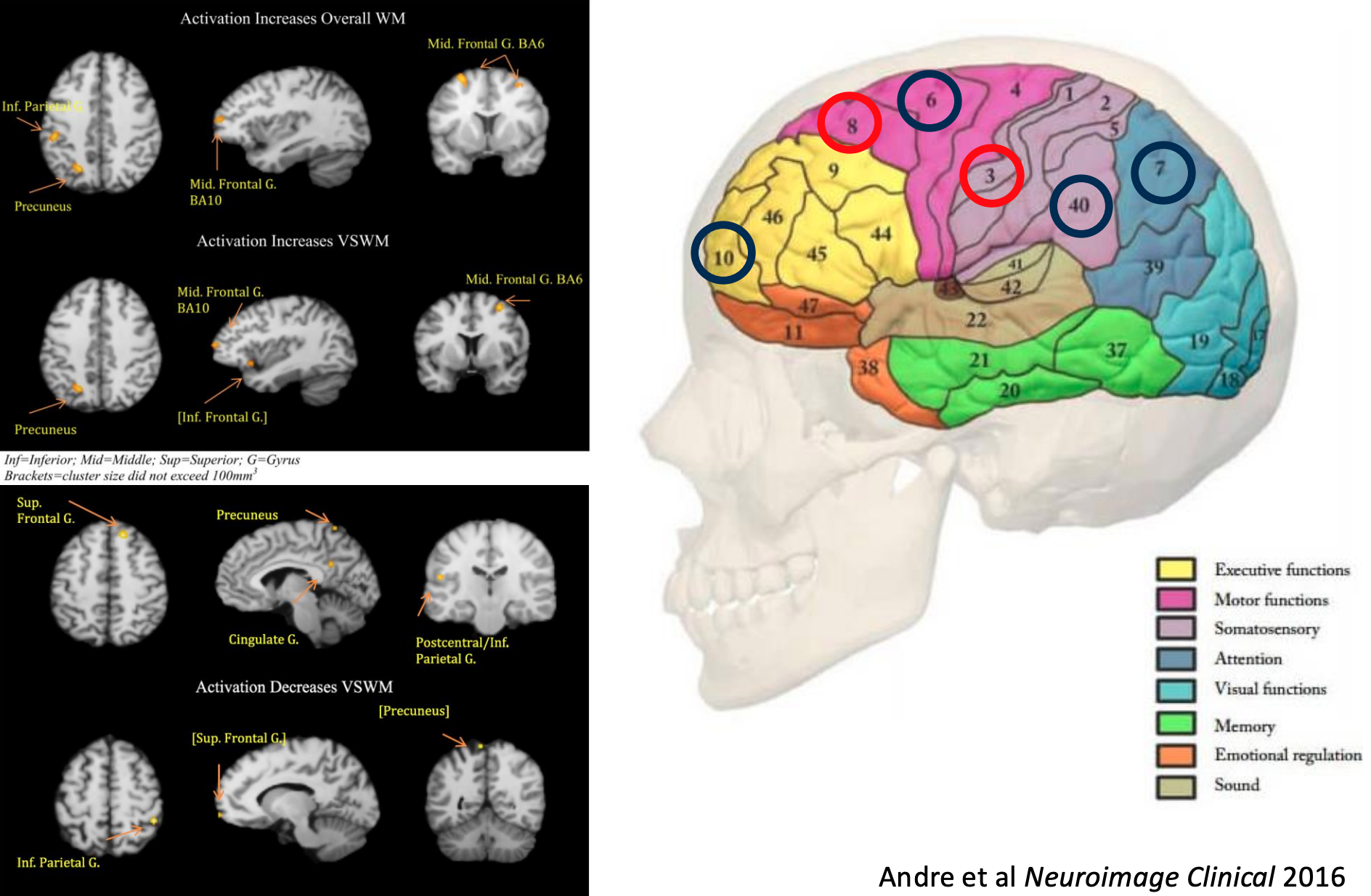
Not super important which areas these are, as in some studies some area increases in activation, in other studies it decreases — this is very task dependent
But the take home message: there are differences, not always clear why
Summary
Performance on complex WM tasks improves at least through adolescence
Unlike steep early inhibitory control improvements, WM developmental trajectory seems linear from preschool through adolescence and maybe beyond
Development of the WM circuitry, like that of inhibition, involves progressive and regressive changes, resulting in a localized pattern of activity within the fronto-parietal network, including dlPFC
Development of Shifting
Shifting refers to the ability to switch between mental states, rule sets, or tasks
Shifting tasks are often (but not always) distinguished from inhibition tasks in that rules changes in the latter are made explicit, whereas rule changes in shifting tasks must be figured out on feedback.
e.g., Wisconsin Card Sorting Task
Successful shifting typically also involves inhibition and WM skills
Shifting abilities, like other EF skills, continue to improve throughout childhood
Accuracy tends to reach adult levels in early to mid-adolescence
Switch cost in accuracy greater in 6-13-year-olds than adults
Shifting tasks are usually quite complicated:
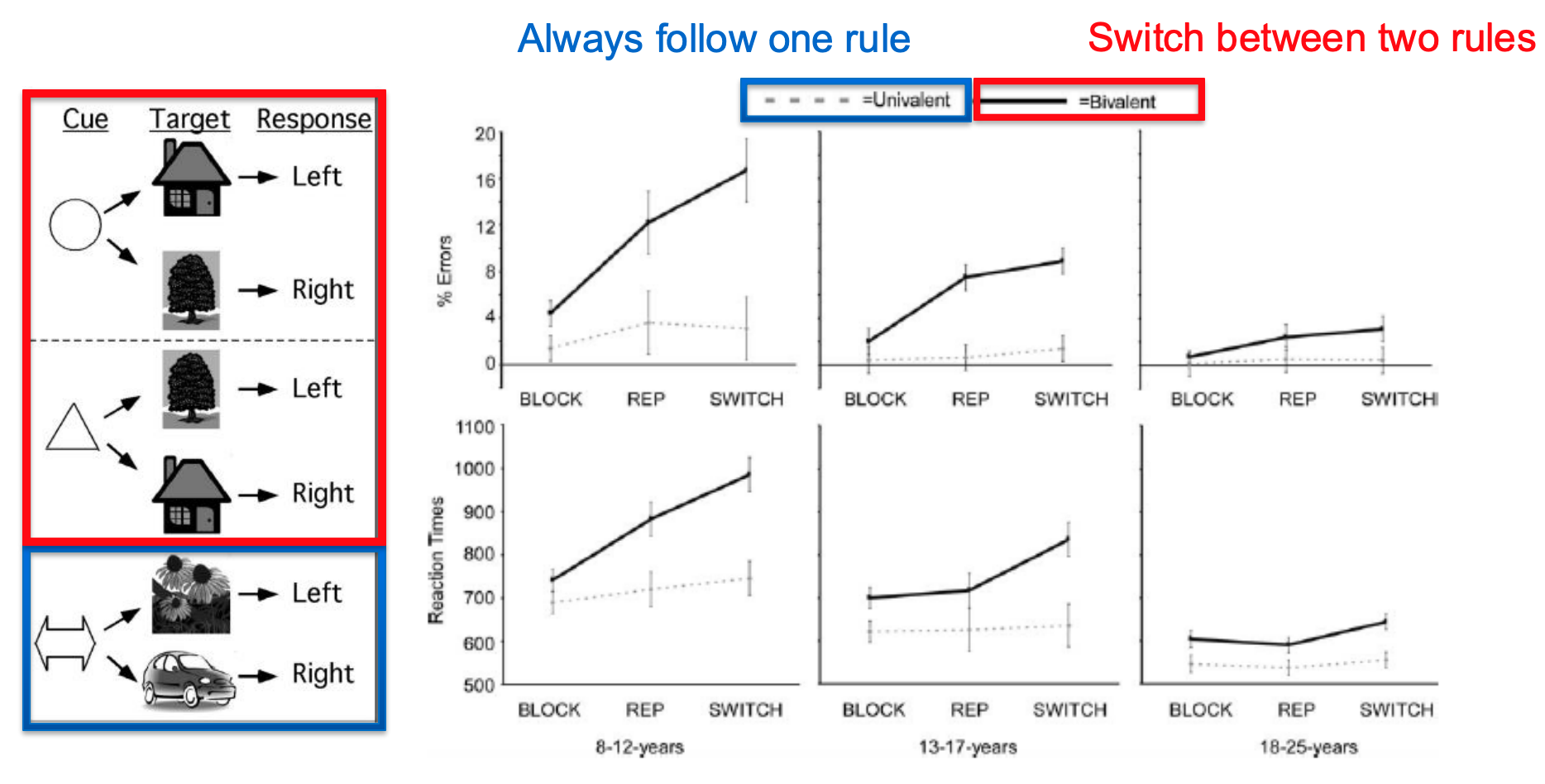
Worse performance for bivalent trials in mixed blocks, accentuated in younger participants
Switching cost = difference in how well you are performing when you are told to do one thing vs. when you are suddenly told to do something else
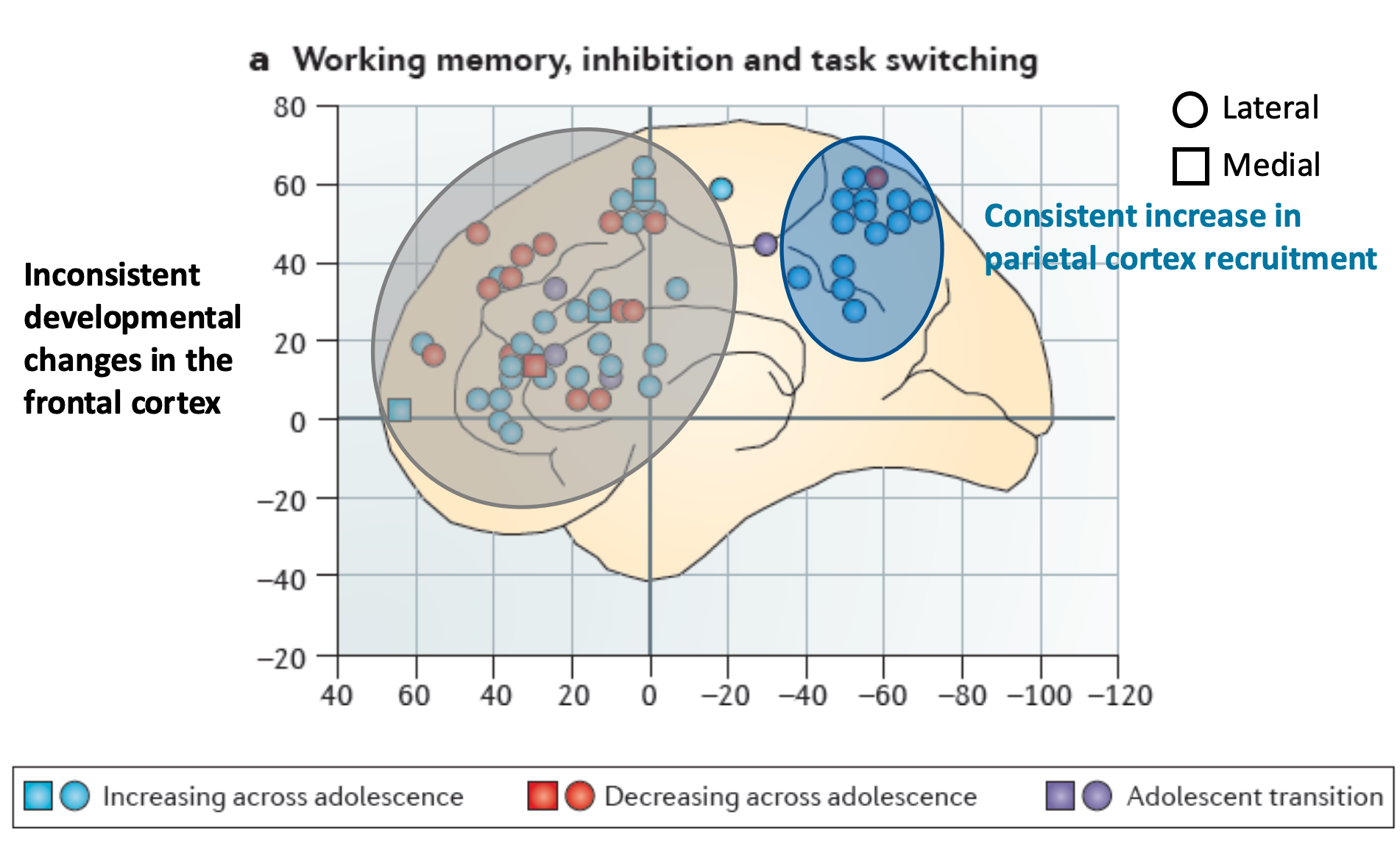
Neuroimaging study
2 regions of interest: L-vlPFC & L-SMA
Rule representation: vlPFC
Adults always recruit
Children and adolescents recruit only for switching trials
Switching: pre-SMA and SMA
Recruited similarly in adults and adolescents, but not children
Adolescents struggle with the new rule, good with inhibiting the old rule
Flexible rule use underpinned by different mechanisms, as evidenced by their different developmental trajectories
Summary
The ability to shift between task sets follows a protracted development through adolescence
Shifting is likely to build on inhibitory control (e.g., inhibition of previous response rule) and working memory (e.g., remembering the two rules to switch between)
Because of the greater need for multiple cognitive processes, mature shifting likely involves a network of activity in many PFC regions
More on EF Development…
Recent effort to make a meta-analysis, data on 10 thousand people (8-35y), 23 measures from 17 tasks
Fundamentally, they say that these skills have similar trajectories
Even though there might be specific differences, particularly for the task you use, it’s probably being driven by a general executive ability, allowing for the development of these skills
Acute development until 15, and then it slows down but continues to 20 years of age
All skills together:
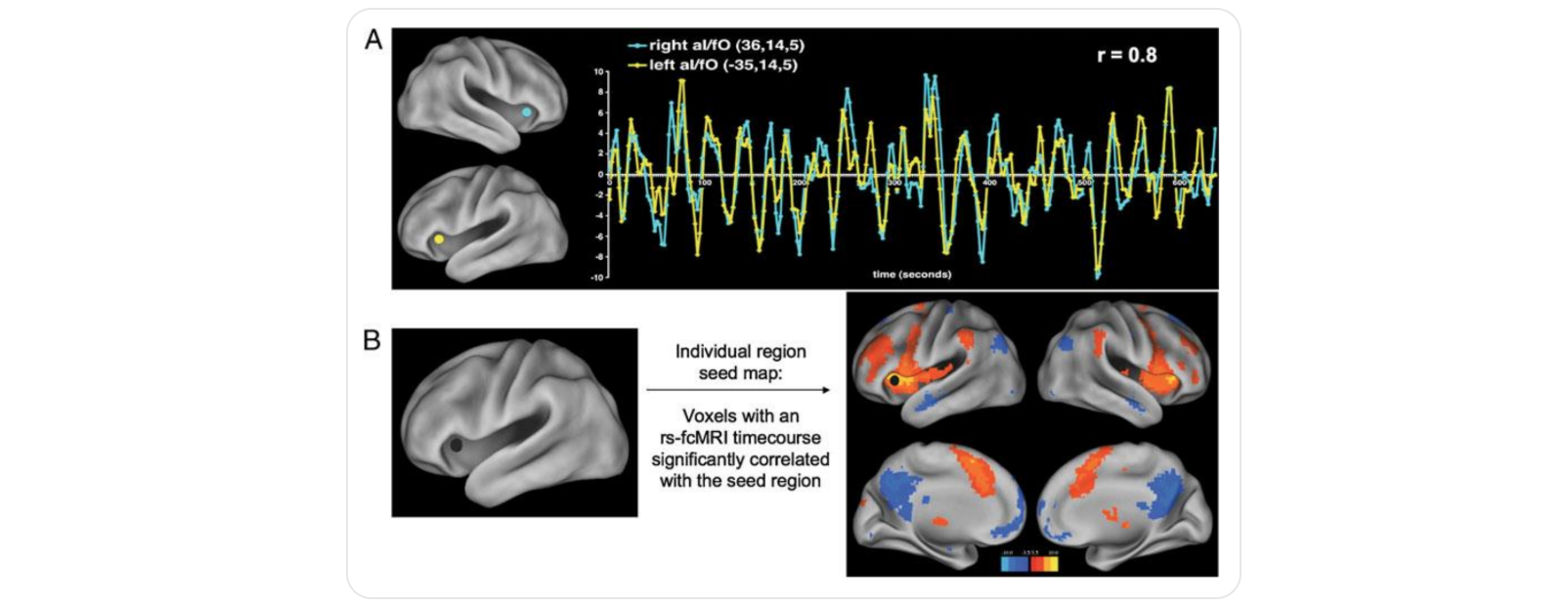
Research is trying to move away from the modular way of looking at the brain — there are parts of the brain that are in charge of some function… flawed
Resting state connectivity
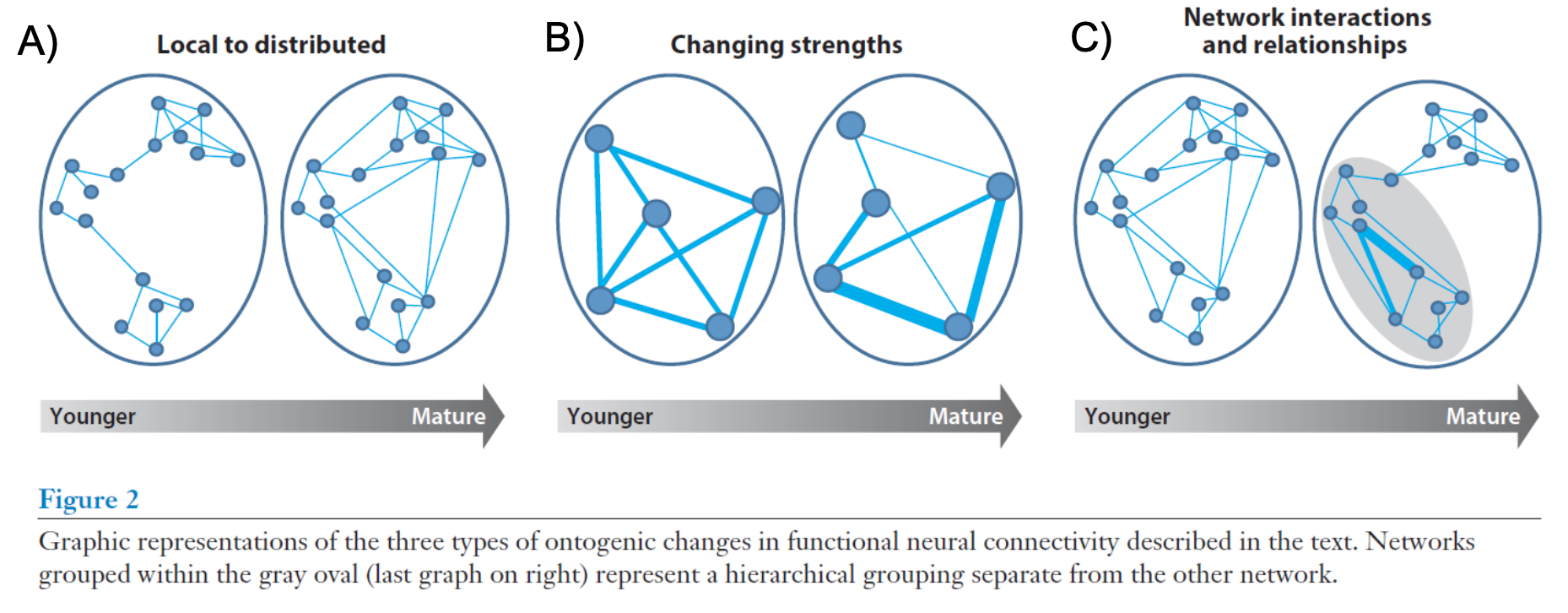
In terms of development…
Changing strength of networks, based on how frequently areas are used together, increase in hierarchical relationships (C), to make the function more efficient
But… movement confounds, and what happens during “resting state”?
Executive Functions in Context
EF always exist in context of the rest of the brain and of the environment and other people — isolating the “pure” skill in the lab technically means nothing
Other things developing at this time: social (mentalizing) network and subcortical (emotion and reward) network
75% of adult mental disorders has its onset before 24 years of age, mostly during adolescence
Leading causes of death in adolescence: accidents, violence, suicide
Mismatch between prefrontal and limbic system development in adolescence — simplified theory, probably a bit too simple, but still interesting:
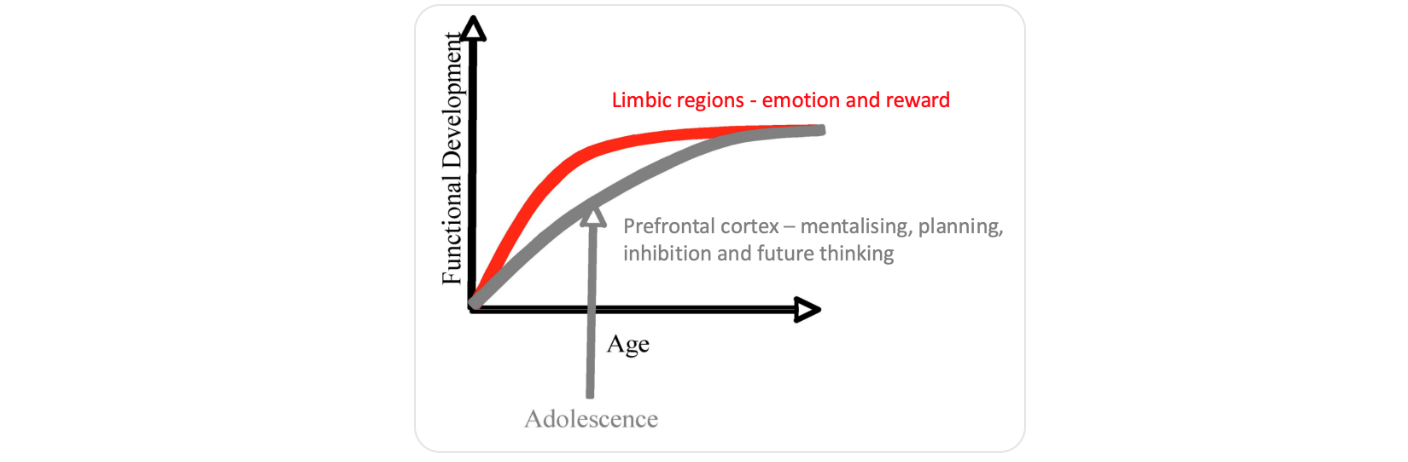
Cognitive control — developing until mid-late 20s!
“I tend to begin a new project without much planning on how I will do it”, “I often act without thinking”
Emotions and sensation seeking — peaks at 18-19, then goes down
Decision making in a social context
Slowing down vs. speeding up and risking a crash
Much more crashes when friends around
Recruited ventral striatum (VS) and orbitofrontal cortex (OFC) — reward prediction and valuation — adolescent recruit them in peer condition
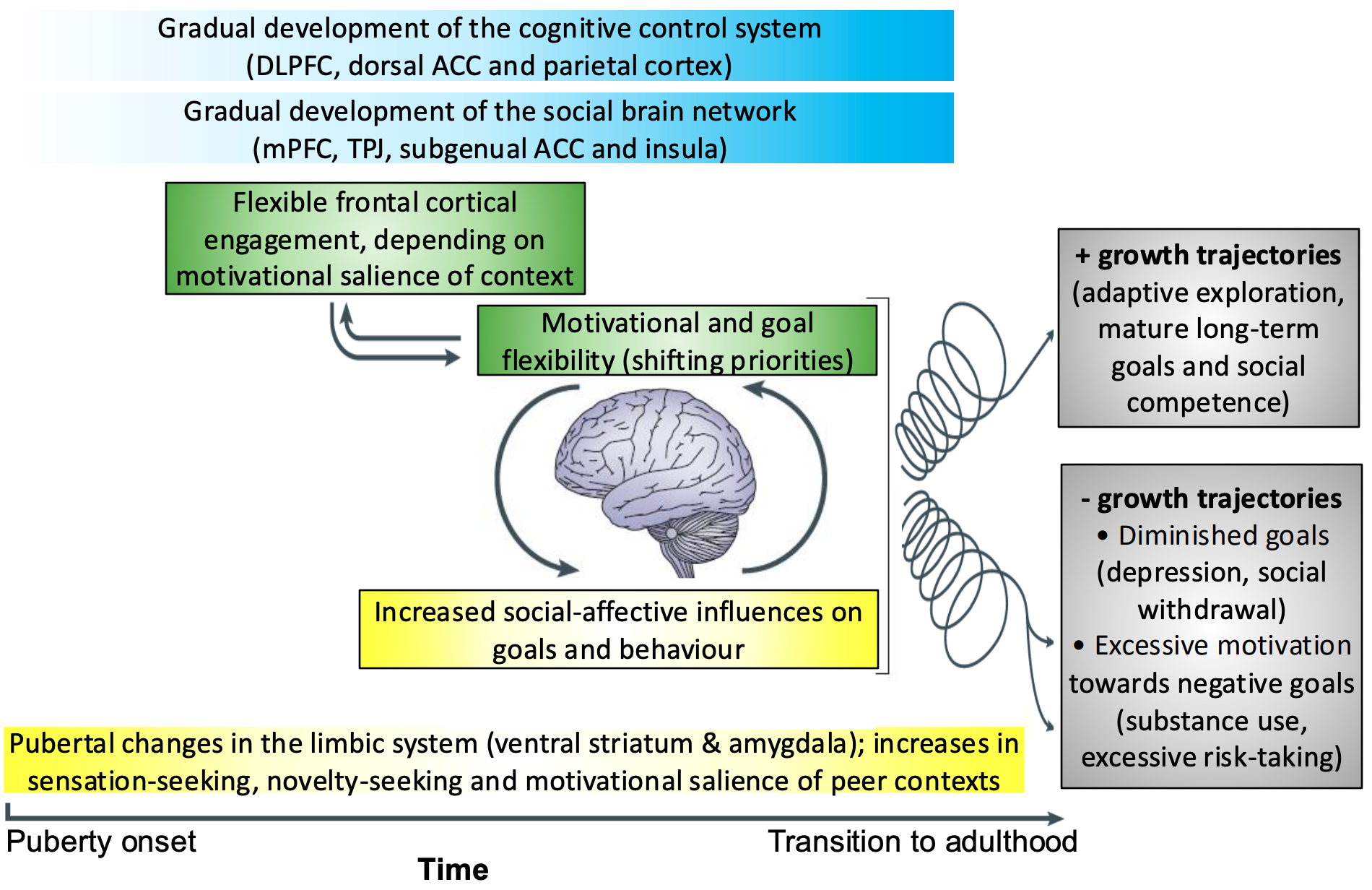
Adolescence — growth trajectories
Not a bad thing, operating in a flexible manner — if supported, will be great
Conclusions
Although a number of EF abilities are present early on, there is a continuing improvement in performance during childhood and adolescence.
The differing patterns of development of specific executive functions may reflect mediation by specific areas within the frontal lobes, each of which matures at a different rate.
Weaker long-range integrating circuits may lead to adolescents being more vulnerable to variability in performance under high attentional and decision-making demands, but also lead to more creative/adaptive responses
Limits
The integrative and organizational nature of frontal lobe functioning makes it inherently difficult to tease apart the cognitive functions mediated by this region of the brain.
The concepts of attention, executive functions, and different components of memory overlap, and each contributes to performance on various frontal functioning tasks (e.g., executive functions would not be able to emerge if memory systems could not operate to register, store, and make available diverse forms of knowledge and experience).
Difficult to obtain a pure test of frontal functions as they are defined in part by the involvement of simultaneous management of a variety of cognitive functions.