(MKT305) Chapter 3 - Marketing Strategy Planning
Production-Oriented vs. Marketing-Oriented Managers
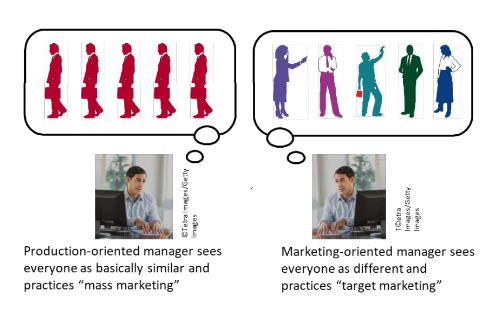
Production-Oriented: Sees everyone as similar; practices "mass marketing."
Marketing-Oriented: Sees everyone as different; practices "target marketing."
Marketing Strategy Planning Process
Context: External Market Environment: This sets the stage for planning. It’s about understanding the bigger picture around your business.
Elements:
Customers
Who are they?
What do they need and value?
How do they behave?
Company
What are your strengths and resources?
What are your goals?
Competitors
Who else is trying to win the same customers?
What are their strengths and weaknesses?
Process:
Segmentation and Targeting
Segmentation: Divide the market into groups (by age, income, behavior, etc.).
Targeting: Choose which group(s) to serve.
SWOT (Strengths, Weaknesses, Opportunities, Threats)
Strengths & Weaknesses: Internal to the company.
Opportunities & Threats: External market factors.
Differentiation and Positioning
Differentiation: What makes your product/service unique?
Positioning: How do you want to be perceived in the minds of customers?
The 4Ps
Product: What you offer to meet customer needs
Place: Where/how the product is delivered (distribution)
Promotion: How you communicate with customers (ads, PR, sales, etc.)
Price: What customers pay, and how pricing influences their choice
The Marketing Environment
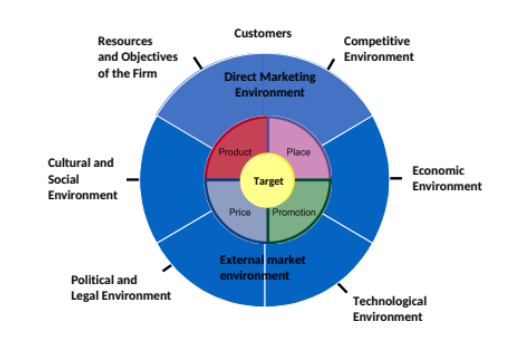
Direct Marketing Environment
Resources and Objectives of the Firm
Your company’s goals, mission, and available resources (financial, human, physical).
Example: A small firm might aim for niche markets because it lacks large-scale resources.
Competitive Environment: Other firms competing for the same customers.
Customers
External Marketing Environment
Cultural and Social Environment: Values, beliefs, attitudes, lifestyles, trends
Economic Environment
Inflation, unemployment, consumer income, interest rates
Affects how much people can and are willing to spend.
Technological Environment
Innovations and new tools that affect products, communication, distribution, and operations.
Example: AI and automation improving customer support or product recommendations.
Political and Legal Environment
Laws, regulations, government policies, international trade agreements
Example: GDPR in Europe affects how companies collect customer data.
Legal Foundations for Regulating Marketing
The Sherman Act (1890): Restraint of trade through monopolies is outlawed.
The FTC Act (1914): Creates the Federal Trade Commission, offers remedies to inappropriate business behavior.
Cease and Desist Order
Consent Decree
Restitution
The Robinson-Patman Act (1936): Price discrimination in B2B transactions is outlawed.
The Wheeler-Lea Act (1938): Makes deceptive/unfair acts (primarily advertising) unlawful.
Four Basic Types of Opportunities
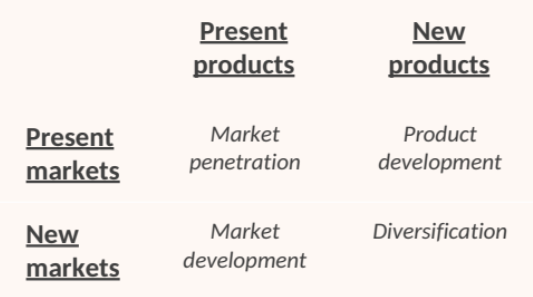
Market Penetration: Sell more of your existing products to your current markets.
Coca-Cola launching more ads to make people drink Coke more often.
Product Development: Create new products for your existing customers.
Apple offering AirPods to iPhone users.
Market Development: Sell your current products to new markets.
KFC opening in Vietnam after succeeding in the U.S.
Diversification: Create new products for new markets.
Amazon creating AWS (cloud computing) even though it's an online retail company.
Types of Opportunities (Detailed)
Market penetration: Increase sales of current products in current markets via a more aggressive marketing mix.
Market development: Increase sales by selling current products in new markets.
Product development: Offering new/improved products for current markets.
Diversification: Moving into totally different lines of business; unfamiliar products, markets, or levels.
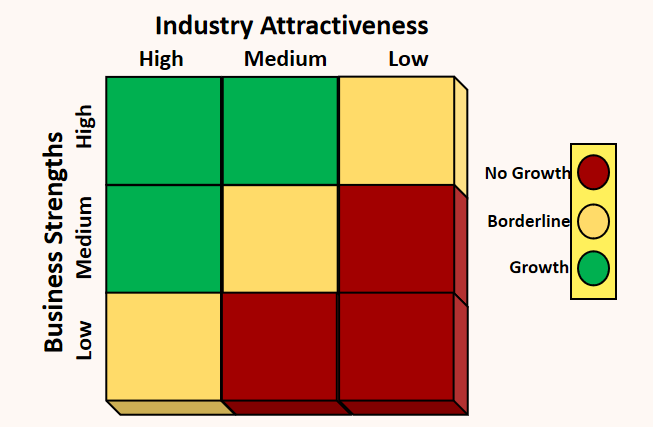
General Electric’s Strategic Planning Grid