Unit 9: Globalization (c. 1900 – Present)
Advances in Technology and Exchange (9.1)
Communication and Transportation Technology
New technologies reduced the significance of geographic distance, effectively shrinking the world and accelerating Globalization—the increasing interaction between people, companies, and governments on a worldwide scale.
- The Internet & The World Wide Web: Developed initially for defense (ARPANET) in the 1960s, the internet became public in the 1990s. It democratized information, facilitated e-commerce (Amazon, Alibaba), and enabled instant global communication.
- Cellular Technology: Mobile phones bypassed the need for landlines in developing nations, allowing rapid connectivity in Africa and South Asia.
- Social Media: Platforms (Facebook, Twitter/X, WeChat) changed how information spreads, fueling movements like the Arab Spring in the early 2010s but also allowing for misinformation and surveillance (e.g., China's "Great Firewall").
- Transportation: Commercial air travel and huge increase in shipping containers made the movement of people and goods cheaper and faster than ever before.
The Green Revolution
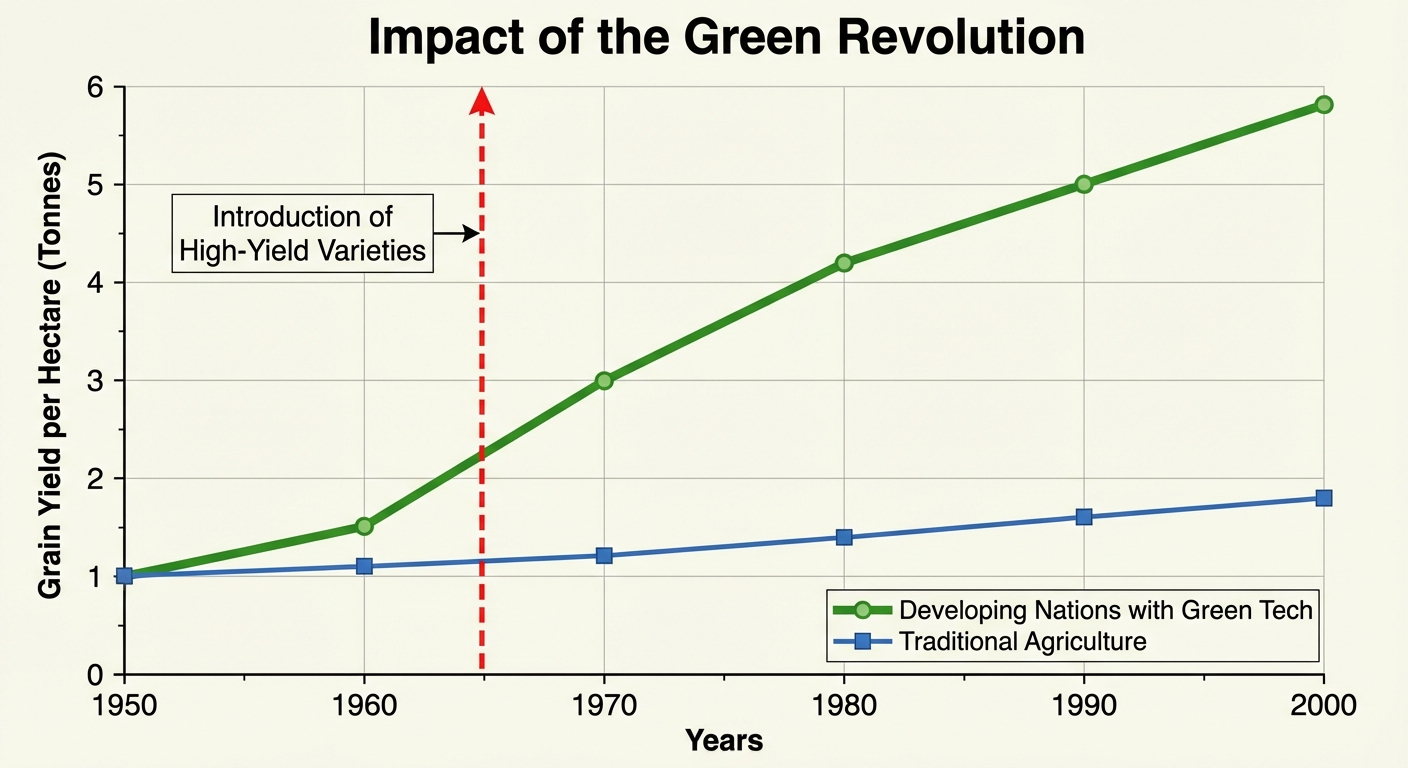
Occurring mid-century (1950s–60s) but having lasting impacts today, this was a response to global hunger concerns.
- Definition: The development of high-yield grain varieties (wheat, rice), synthetic fertilizers, and pesticides to increase agricultural production.
- Key Figure: Norman Borlaug (often credited with saving a billion lives).
- Impact:
- Positive: Massive population growth (especially in India, Mexico, and China) and averted famines.
- Negative: Environmental damage (chemical runoff), loss of biodiversity, and marginalization of small farmers who could not afford new machinery/chemicals.
Energy Technologies
- Nuclear Power: Offered a cleaner alternative to fossil fuels but raised concerns over safety (Chernobyl, Fukushima) and waste disposal.
- Renewable Energy: Solar and wind technologies became more viable in the 21st century as fossil fuel concerns (Climate Change) grew.
Global Health and Demographics (9.2)
Medical innovations have extended life expectancy, but the connected world also facilitates the rapid spread of pathogens. AP World History categorizes diseases into three specific types:
1. Diseases Associated with Poverty
Persist in low-income areas due to poor housing, contaminated water, and lack of healthcare access.
- Malaria: Parasitic disease spread by mosquitoes (tropical zones).
- Tuberculosis (TB): Bacterial infection of the lungs.
- Cholera: Bacterial disease from contaminated water.
2. Epidemic and Pandemic Diseases
New or re-emerging diseases that spread rapidly across borders due to global travel.
- 1918 Influenza: Killed 20-40 million people post-WWI.
- HIV/AIDS: A major crisis emerging in the 1980s. It destroys the immune system. Antiretroviral drugs exist but are expensive, causing a disproportionate death toll in Sub-Saharan Africa (25% of adults in some nations were infected at the peak).
- Ebola: Viral hemorrhagic fever in West Africa.
- COVID-19: Demonstrated the fragility of global supply chains and health systems in 2020.
3. Diseases Associated with Longevity
As life expectancy increased due to antibiotics and vaccines (like Polio and Smallpox), age-related and lifestyle diseases became prevalent in developed nations.
- Heart Disease: Linked to sedentary lifestyles and processed foods.
- Alzheimer’s Disease: A form of dementia affecting an aging global population.
Debates about the Environment (9.3)
The Anthropocene
Scientists argue we have entered a new epoch where human activity is the dominant influence on climate and the environment.
- Climate Change: Burning fossil fuels releases greenhouse gases (CO2), leading to global warming. Consequences include rising sea levels, extreme weather, and desertification.
- Resource Depletion: Competition for non-renewable resources (oil, fresh water) exacerbates conflicts.
- Deforestation: The clearing of forests for agriculture (palm oil, cattle) destroys carbon sinks.
International Responses
- Kyoto Protocol (1997): First major international agreement to reduce carbon emissions (US did not ratify).
- Paris Agreement (2015): Global accord to limit temperature rise to below 2°C.
- Greenpeace & Green Belt Movement: NGOs working to counter deforestation (Green Belt Movement founded by Wangari Maathai in Kenya planted millions of trees).
Economics in the Global Age (9.4)
Shifts in Economic Geography
- Knowledge Economies: Developed nations (US, Finland, Japan) shifted from manufacturing to design, engineering, and information.
- Manufacturing Economies: Production shifted to Asia and Latin America (Vietnam, Bangladesh, Mexico) due to lower labor costs.
Institutions of Global Trade
- World Trade Organization (WTO): Evolved from the GATT (General Agreement on Tariffs and Trade). It works to reduce trade barriers and tariffs. (153+ member states).
- Multinational Corporations (MNCs): Entities that operate in multiple countries. They often challenge state authority due to their wealth.
- Examples: Nestlé (Swiss), Nissan (Japanese), Mahindra & Mahindra (Indian).
Regional Trade Agreements
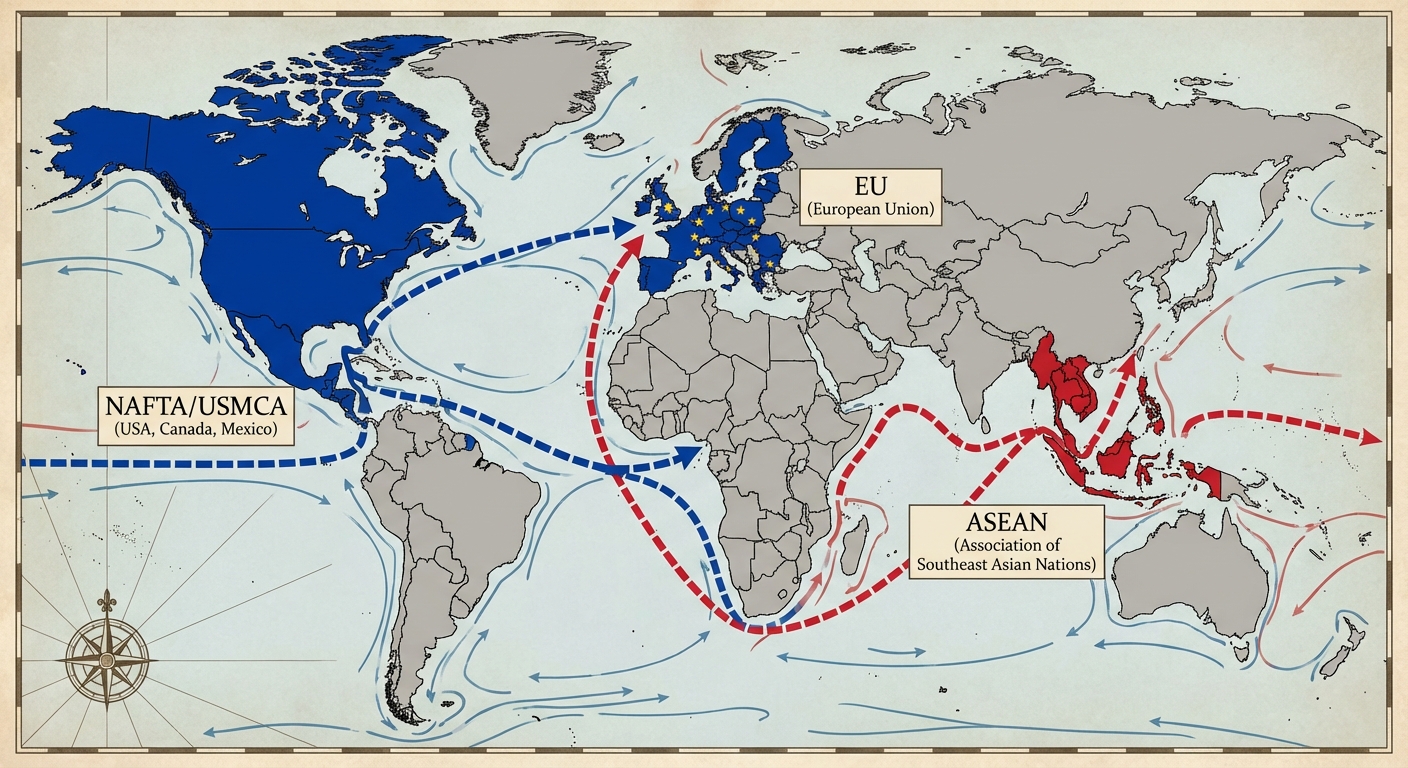
- EU (European Union): A single market with a common currency (Euro) and freedom of movement. Started as an economic alliance to prevent war; grew into a political union. However, economic disparity caused tension (e.g., German stability vs. Greek debt crisis).
- NAFTA (North American Free Trade Agreement): Removed tariffs between US, Canada, and Mexico to encourage trade (replaced by USMCA recently).
- ASEAN: Association of Southeast Asian Nations facilitating economic growth in the region.
Rise of Asian Economies
- China: Under Deng Xiaoping, China opened Special Economic Zones (SEZs) for foreign investment, combining Communist political control with capitalist economic practices. This transformed China into the "world's factory."
- India: Liberalized its economy in the 1990s. With a highly educated English-speaking population, it became a hub for technology and textiles ("The Silicon Valley of India" in Bangalore).
Calls for Reform and Responses (9.5)
Human Rights Discourse
- UN Universal Declaration of Human Rights (1948): Established basic rights for all humans (freedom of speech, religion, and from persecution).
- Women’s Rights: Gained traction globally. Included the right to vote (Suffrage), access to education, and reproductive rights. (Note the Convention on the Elimination of All Forms of Discrimination Against Women).
End of Apartheid in South Africa
- Apartheid: A system of institutionalized racial segregation.
- Resolution: Due to global boycotts and internal resistance led by Nelson Mandela, the system was dismantled. Mandela was elected the first black president in 1994.
Race and Class Movements
- Negritude Movement: Literary movement in French West Africa celebrating black heritage.
- Liberation Theology: A movement in Latin American Catholicism combining Christian theology with socialist concern for the poor.
Globalized Culture (9.6)
Consumer Culture
Global brands (Nike, Coca-Cola) and efficient delivery (Amazon) standardized consumption habits worldwide.
Americanization vs. Globalization
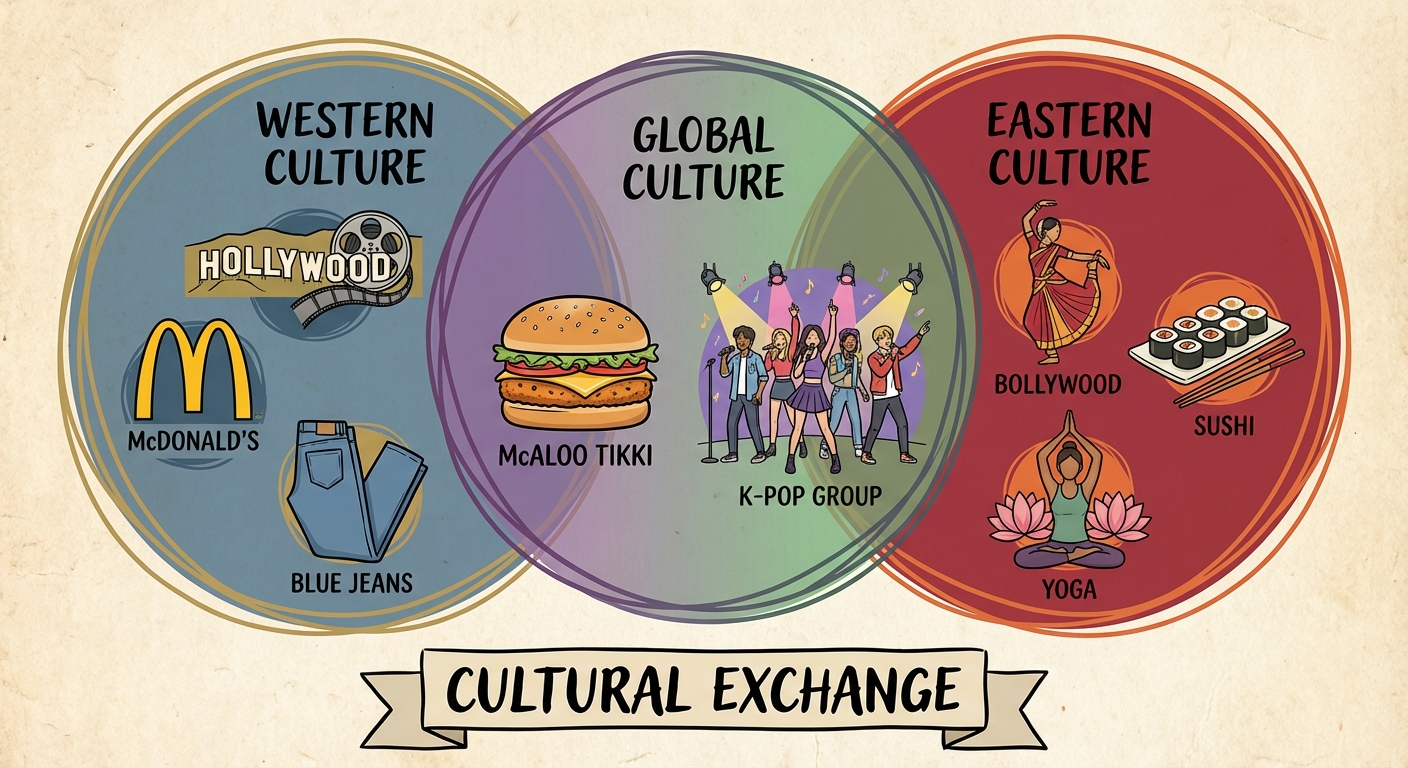
While American culture spread (movies, fast food), the exchange was not one-way:
- Bollywood: Indian film industry with massive global popularity.
- K-Pop: Korean pop music gained worldwide fandom in the 21st century.
- Reggae: Jamaican music rooted in Rastafarianism influenced global styles.
- Sports: The Olympics and the FIFA World Cup serve as events that simultaneously promote nationalism and international cooperation.
Resistance to Globalization (9.7)
Not everyone benefited from the connected world. Resistance came from those who felt left behind or felt their culture was threatened.
- Anti-IMF/World Bank Protests: The "Battle of Seattle" (1999) saw massive protests against the WTO, highlighting that free trade often hurt workers and the environment.
- Brexit (2016): The UK voted to leave the European Union, driven by concerns over sovereignty and immigration.
- Local Social Media: China created Weibo to replace Twitter/Facebook, allowing the government to control internal narratives and filter "Western" influence.
International Security and Geopolitics (9.8)
International Organizations
- United Nations (UN): Formed post-WWII to maintain peace. Utilizes Peacekeeping Forces to stabilize conflict zones.
- NGOs (Non-Governmental Organizations): operate independently of governments to solve specific issues.
- Red Cross / Doctors Without Borders: Provide medical aid in war zones.
- Amnesty International: Advocates for human rights/political prisoners.
Cold War Dissolution & Persistence of Conflict
While the Cold War ended in 1991 (collapse of the USSR), new conflicts emerged.
- Persian Gulf War (1990-1991): Saddam Hussein (Iraq) invaded Kuwait for oil. The UN (led by US) intervened to liberate Kuwait.
The Era of Terrorism
- Al-Qaeda: Rise of Islamic fundamentalist terrorism in response to Western intervention in the Middle East. Led by Osama bin Laden.
- September 11, 2001 (9/11): Al-Qaeda hijacked planes attacking the World Trade Center and Pentagon.
- War on Terror: US invaded Afghanistan (2001) to topple the Taliban (who harbored Bin Laden) and Iraq (2003) regarding suspected WMDs. While Saddam was removed, the region remained unstable with conflicts between Sunni, Shia, and Kurdish groups.
The "Alphabet Soup" of Diplomacy
- G7 (Group of Seven): Forum for the world's major industrialized democracies (US, UK, France, Germany, Italy, Japan, Canada). Russia was kicked out (formerly G8) after invading Crimea.
- G20: Expanded group including emerging economies (Brazil, India, China) to discuss financial stability.
Common Mistakes & Pitfalls
- "Westernization" vs. "Globalization": Do not use these interchangeably. While Western culture diffused widely, globalization also includes the spread of Eastern culture (Anime, Yoga, K-Pop) to the West.
- Green Revolution Misconceptions: Students often think the Green Revolution is about "Green Energy" (Solar/Wind). It is strictly about Agriculture (Grain, Fertilizers, GMOs).
- The Internet Timeline: Do not attribute the internet to the Cold War 1950s. While ARPANET started then, the global impact and public usage is a 1990s/2000s phenomenon.
- Diseases: Be careful not to mix up which diseases are associated with poverty (Malaria, TB) versus longevity (Heart Disease). The exam often asks to categorize them.
- Neoliberalism: Understand this term. In APWH, it refers to the late 20th-century trend of free-market policies, privatization, and lowered tariffs (Reagan/Thatcher era) leading to current globalization.