UNIT 5 - USE OF BIOLOGICAL RESOURCES
FOOD PRODUCTION
GREENHOUSE AND POLYTHENE TUNNELS
How greenhouses provide controlled condition for plants to grow?
Transparent walls - allow enough natural light for photosynthesis during summer.
During winter, artificial lighting used to increase light intensity - extend “lenth of daylight”
Temp inside greenhouse raised by ‘greenhouse effect'.
Infrared radiation from sun enter greenhouse - soil absorbs it & re-radiate at longer wavelenth.
Radiation cannot escape glass walls - greenhouse inside heats up.
It also heats to raise temp if outside too cold.
If heater that burn fossil fuels used - CO2 & H2O(g) produced -
CO2 used for photosynthesis
H2Og maintain moist atmosphere - reduce water loss of plants
hydroponics - plants grown with their roots in soil-free culture solution
solution provide - balance of mineral
Easier to protect plants from soil pathogens
AFFECT OF INCREASE IN CO2 & TEMP ON CROP YIELD IN GREENHOUSE;
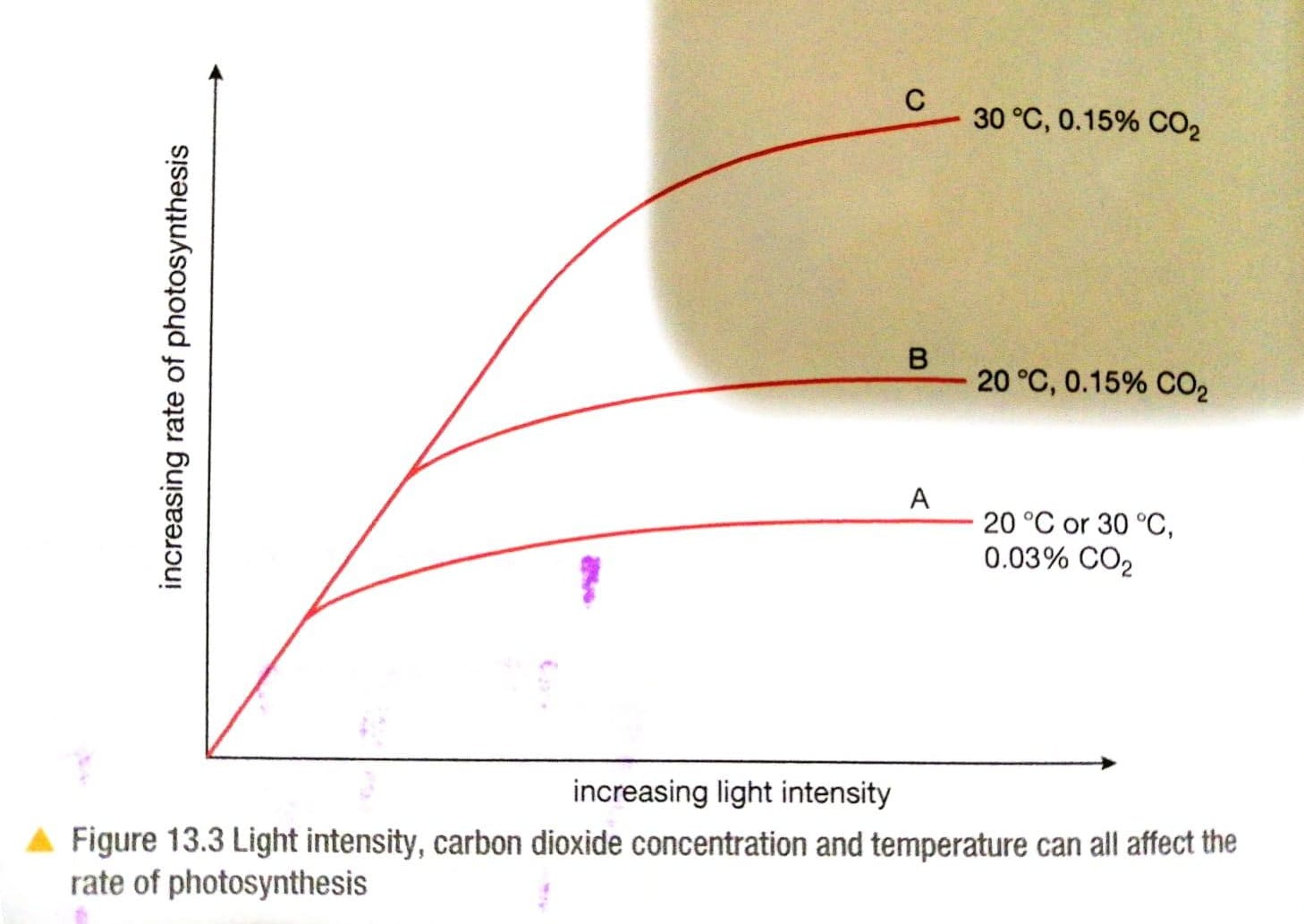
If light intensity is high - CO2 concentration is the limiting factor (A)
If CO2 levels increase - rate of photosynthesis increase - temp is limiting factor (B)
So, increasing temp will increase rate of reaction (C)
Why greenhouses shouldn’t maintain point C;
Different plant species - vary responses to changing levels of CO2 and temp
Balance income gained by crops and cost involved in lighting and heating greenhouse.
INVESTIGATING THE RATE OF REACTION OF ANAEROBIC RESPIRATION IN YEAST
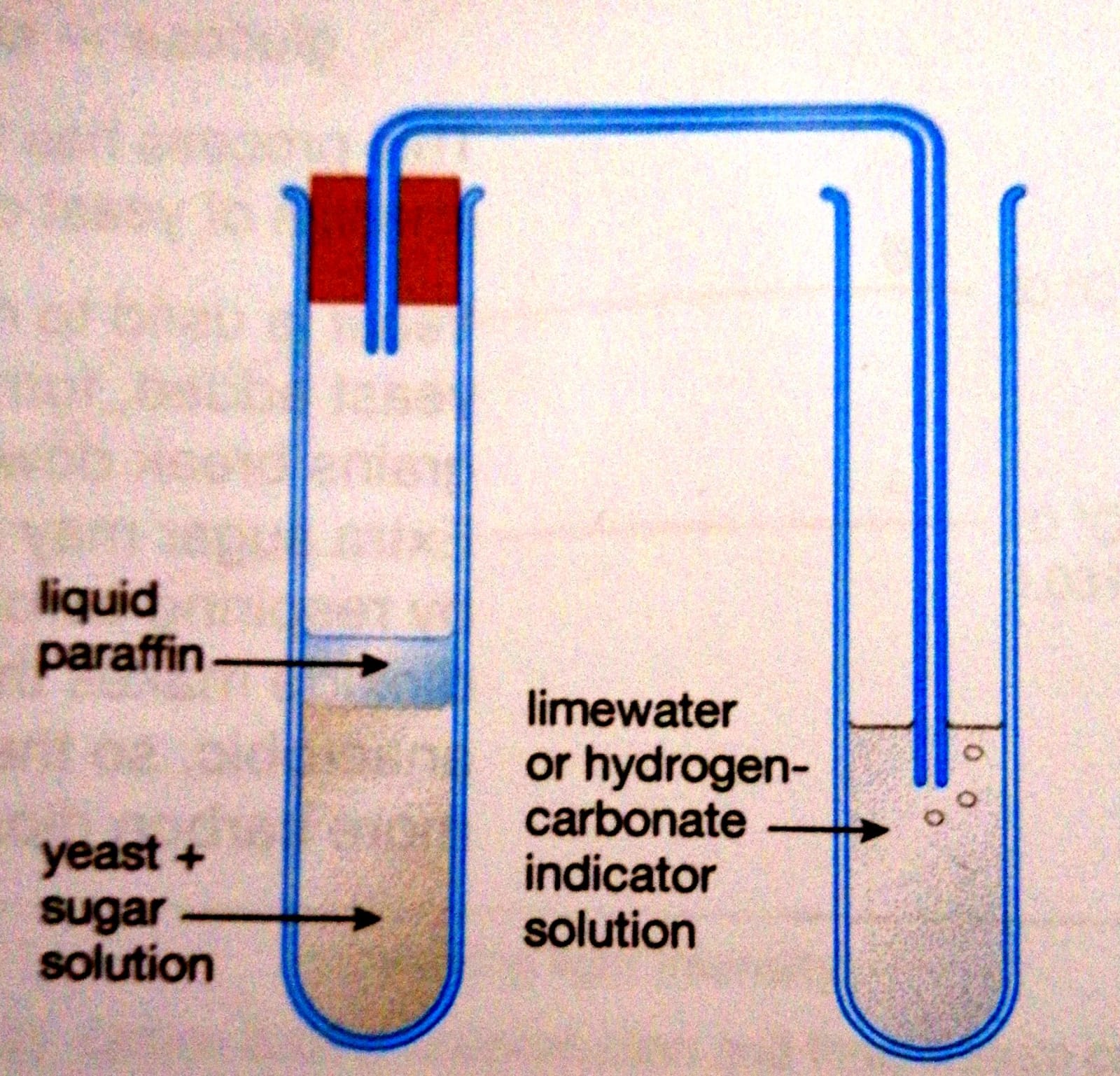
Small amount of water gently boiled in boiling tube - remove air dissolved in water
Water then cooled
Sugar (glucose/sucrose) added to water & dissolved
Little yeast added
Stir
Thin layer of paraffin added to surface using pipette - ensures no O2 in start of experiment
Set up control apparatus with boiled yeast
Leave both in warm place for 1-2hrs
Living yeast mixture produce bubbles
Gas pass through delivery tube into second tube of indicator
If hydrogencarbonate indicator used - orange to yellow show gas is CO2
Colour recorded and compared to control
GENETIC MODIFICATION
RECOMBINANT DNA
Production of recombinant DNA is the basis of genetic modification.
A section of DNA is cut out of the DNA of one species and inserted into the DNA of another. The new DNA is recombinant DNA.
The organism that receives the new gene is called “transgenic organism”.
There are 2 types of enzymes that help with genetic modification;-
Restriction enzyme - Cuts DNA molecules at specific points.
Ligases enzyme - Joins the cut end of DNA molecules.
HOW DNA IS TRANSFERRED INTO BACTERIUM
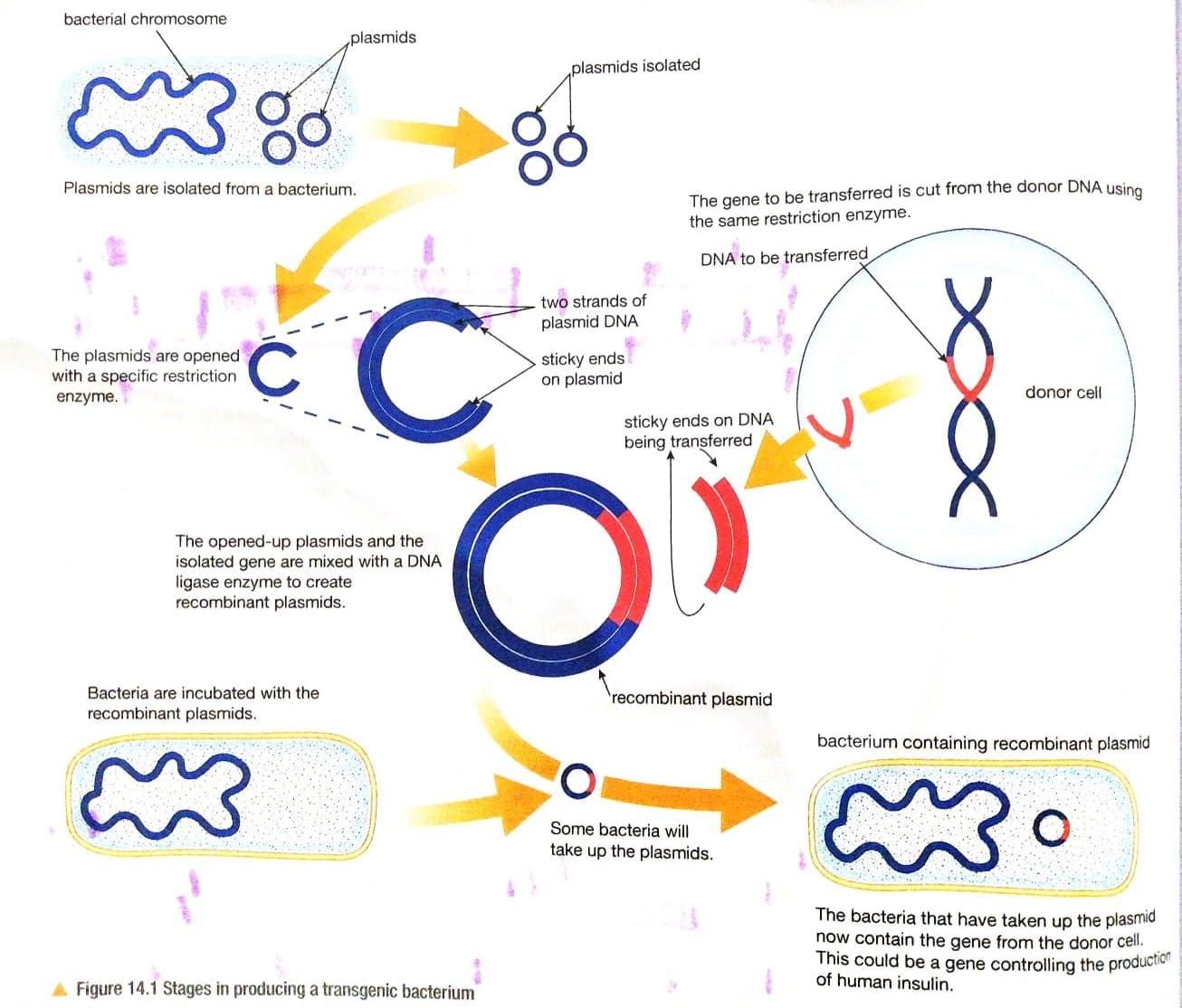
Insert gene into plasmid & transfer plasmid into bacterium
Plasmid is called “‘vector” bcoz it is the means of transferring gene.
PRODUCING A TRANSGENIC BACTERIUM
Some restrictive enzymes make staggered cuts in the DNA molecule producing “sticky ends”.
Sticky ends - easily joined with DNA in recombinant plasmid.
Other type is “blunt ends”.
MAKING HUMAN INSULIN
Insulin is a hormone made by the pancreas that acts to decrease glucose levels in the blood.
Human insulin can be made through the genetic modification of bacteria.
Bacteria grown in large vessels called bioreactors/fermenters.
Large amounts of human insulin can be harvested reducing the need to extract the hormone from animals.
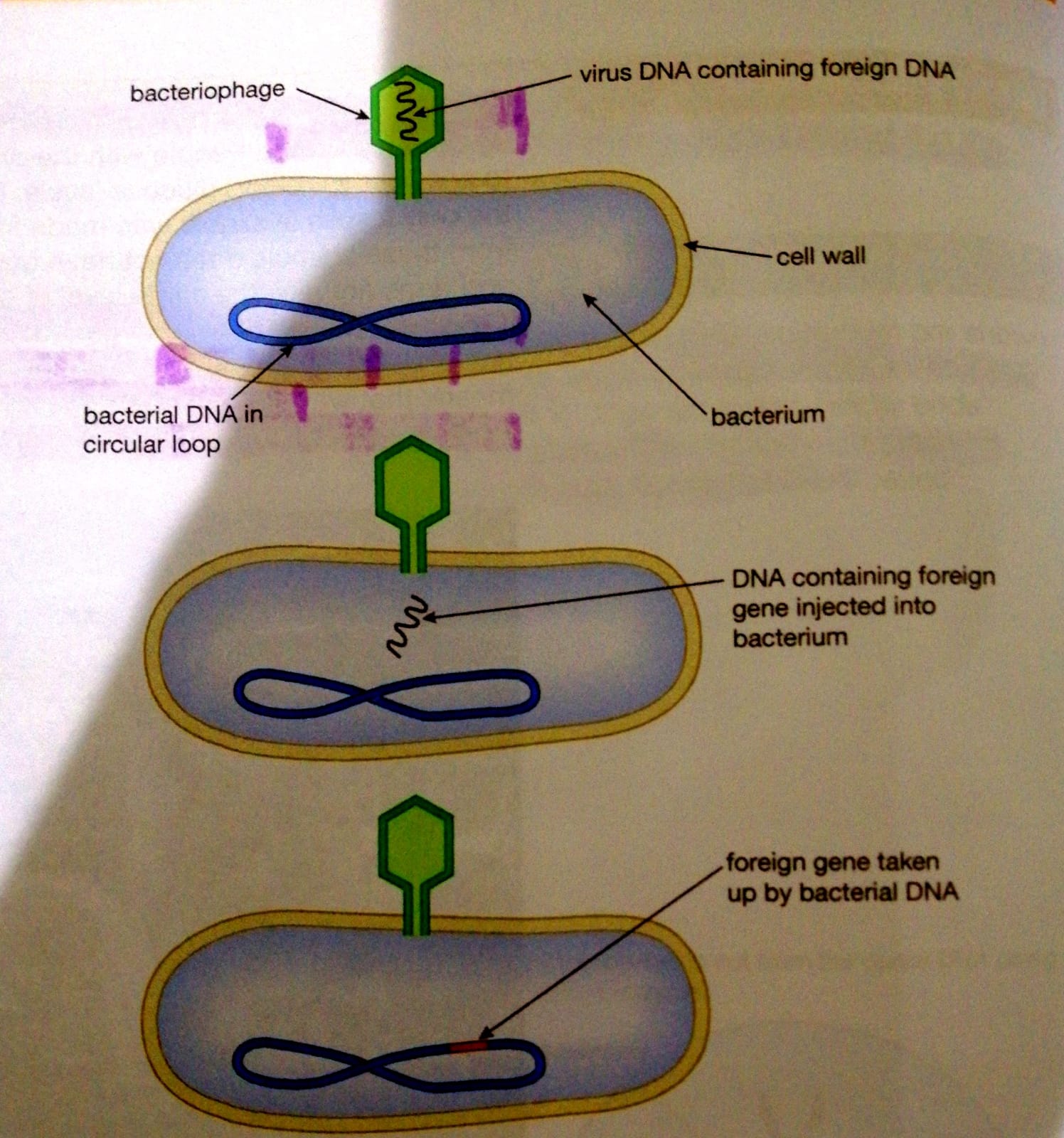
VIRUSES AS VECTORS
Viruses that are used to transfer genes are called bacteriophage.
It’s a virus that attacks bacterium by attaching to the cell wall and injecting its own DNA into it.
The DNA becomes incorporated into the gene of the host cell (bacteria).
Causing production of many virus particles.
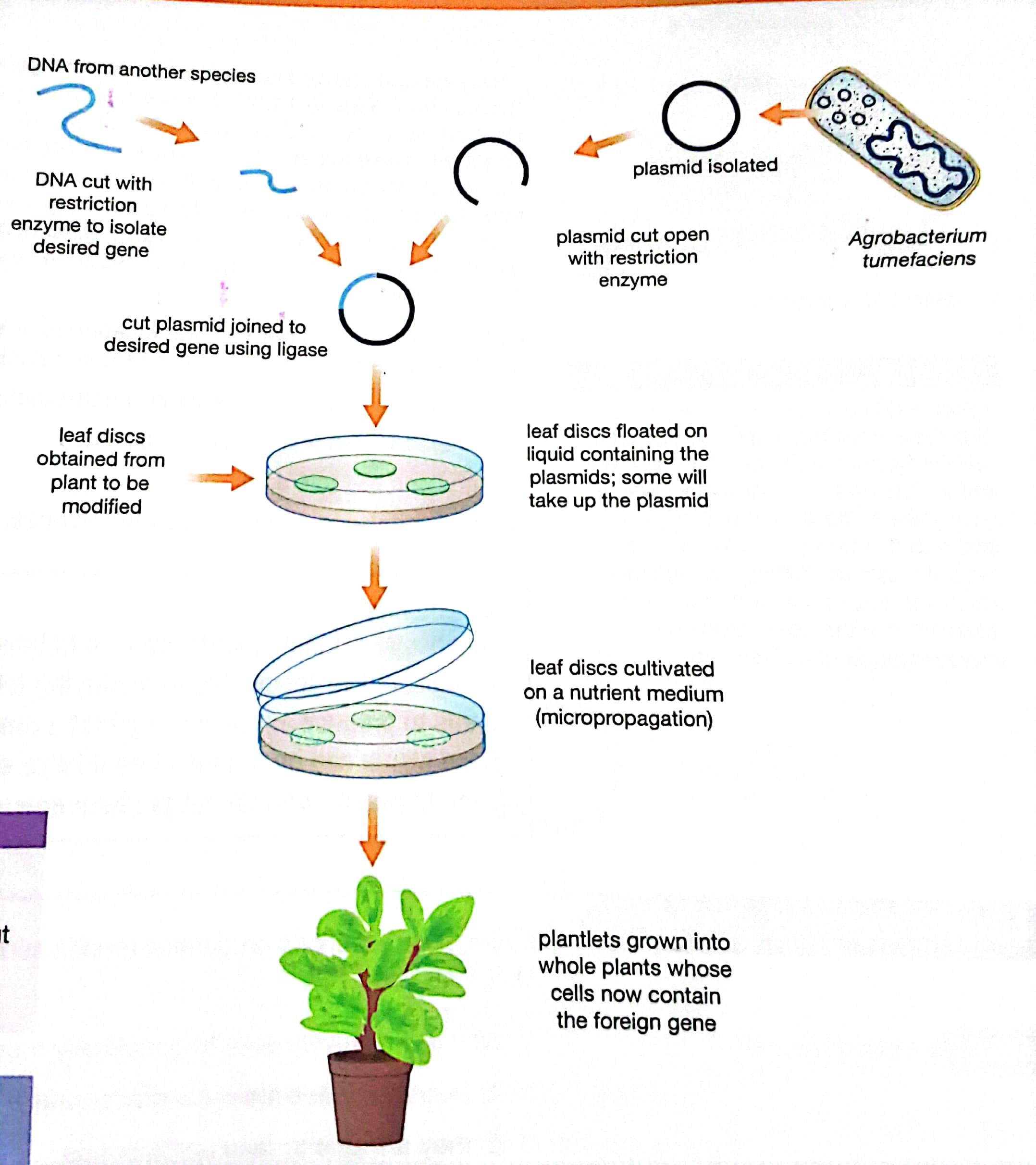
PRODUCING GENETICALLY MODIFIED PLANTS
Main stages to modify plants;
Introduce new gene/genes into plant cells.
Produce whole plant from few cells.
Soil bacterium called “Agrobacterium” inserts its plasmid into plants by default. Making plant modification possible.
This doesn’t work on all plants like cereal plants. So, “gene gun” was invented.
Tiny pellets of gold coated with DNA of gene to be transferred.
Fire into plant tissue - young tissue has a good uptake.