The future of rehabilitation
What do we mean by rehabilitation?
Rehabilitation in the CJS
Aims to reduce reoffending
Seeks to change behaviour, circumstances, or identity
Operates across prison and probation
Has never had a single, agreed meaning
Rehabilitation reflects how society understands crime, responsibility, and change
Conflicting definitions of rehabilitation
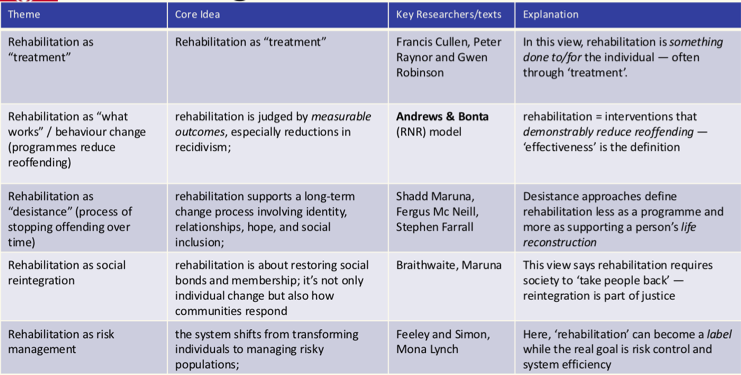
The evolution of rehabilitation — from optimism to control
Key phrases in the evolution of rehabilitaiton
Post-war optimism: treatment, reform, welfare support
1970s–1980s: ‘nothing works’ and decline of rehabilitation
1990s–2000s: risk management and public protection
Recent decades: desistance, strengths-based approaches
Rehabilitation today — prison and probation
In prison:
Programmes (e.g. behaviour change, offending behaviour courses)
Education and skills
Often constrained by overcrowding and security priorities
In probation:
Supervision and compliance
Risk assessment and management
Increasing focus on desistance and engagement
Why rehabilitation is changing again
Key drivers of change
Persistent reoffending rates
Recognition of trauma and mental health
Evidence from desistance research
Critiques of prison effectiveness
Technological and social change