3 how was england governed in 1445
The King
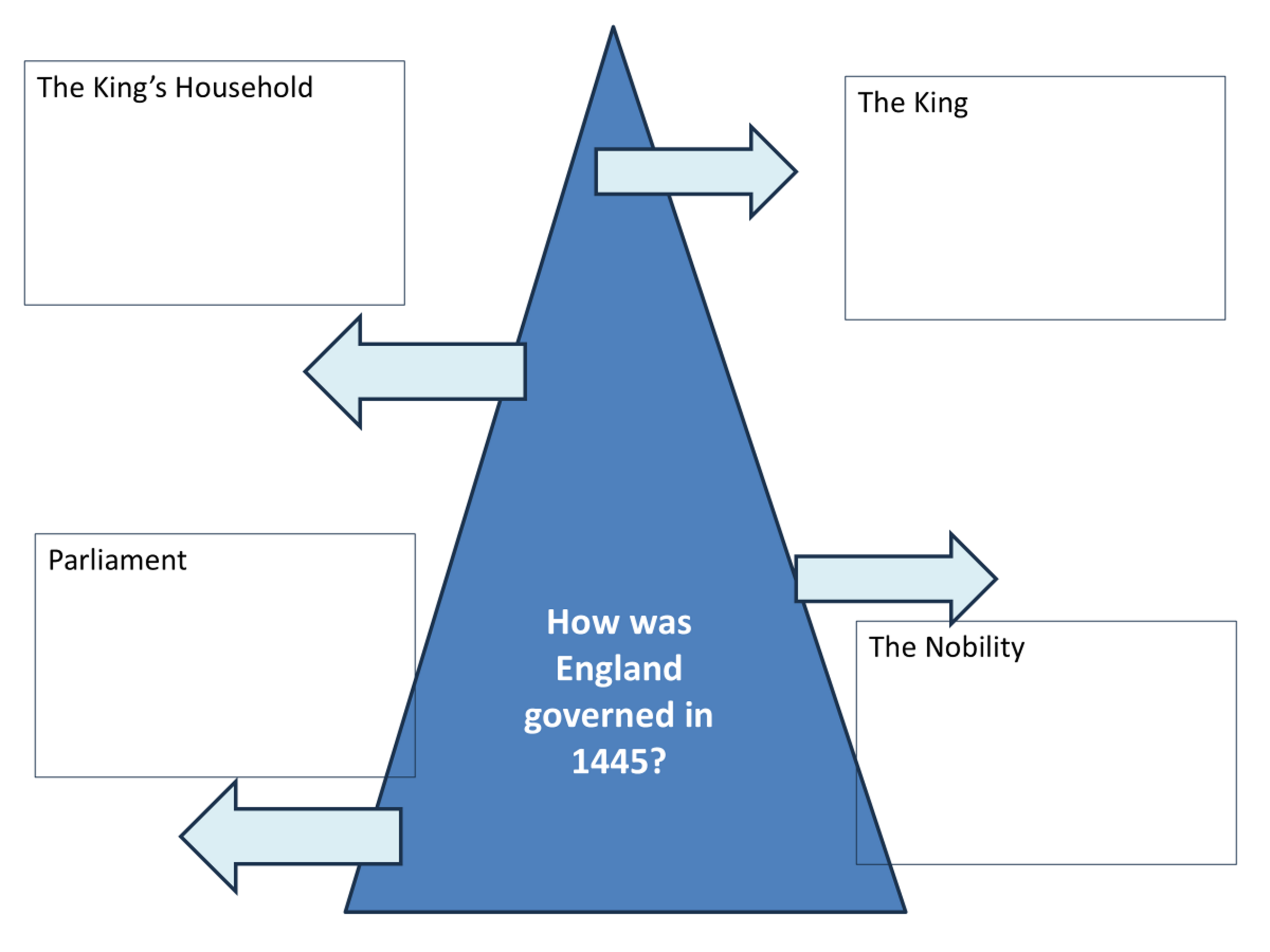
Powers of the king were limited as he couldn’t change the law or raise taxes without the agreement of parliament but did decide when parliament sat and had means of rewarding good service. King would talk about relations with other monarchs instead of foreign policies and he would decide what relations those were, making peace, going to war etc. But would also take the advice of nobility, who he expected sufficient military support from. He would also be expected to lead the army into wars. If you directly criticised the king, this was classed as treason and as the king was in charge of the justice system, the penalty was death, so people would redirect their criticism to the advisors instead of the king himself.
The Nobility
The nobility was vital in helping the king govern the country through enforcing law when an army or police were not present and for providing an army made up of tenants who rented land from the lord. The sheriff would have been a member of the gentry, along with Justices of Peace, and was responsible for running local courts. The Justices would hold quarterly sessions where they would resolve minor cases and take major cases to trial with the sheriff present. The Oyer and Terminer were used to determine guilt and punish in cases of major breakouts of rebellion. If the king could not control the nobility, they would begin to act outside the law as they knew that nobody could stop them which led to local feuds getting out of hand. The nobility functioned as kings advisors, which is a newly discovered concept. The more senior the nobleman the more likely the king was to listen and they were well positioned to report the people's concerns to the king.
The Kings House
Responsible for looking after the king, feeding and clothing him
The most senior person was the lord chamberlain who controlled access to the king
Having access to the king meant influence and problems would emerge if people felt left out or not able to access the king
The king would have to control the factions at court and ensure balance
Parliament
Parliament only met when the king instructed which wasn’t often
Brief sessions that focused on kings business, generally providing him with money
Made up of lords and commons
Lords were dukes, marquises, earls, viscounts and barons
Commons were representatives from shires and towns
Believed king should live of his own means and commons should only be asked to intervene in tax emergencies
Power was limited but king couldn’t do much without their consent
Legacy of henry v
Battle of agincourt: Winning despite being outnumbered and inferior, gaining back british territory
Brought peace and stability to england
Was a strong fighter with good control of his military
brought pride to england
Would be difficult for anyone to leave a better legacy
Further notes in book