Chapter 11: Long-Term Debt Financing
The Cost of Money
The Cost of Money The interest rate on a debt security is the cost of
that capital:
Interest rates influence the cost of all capital
Four primary factors influence the general level of interest rates:
Investment opportunities.
Time preferences for consumption.
Risk.
Inflation expectations.
Common Long-Term Debt Instruments
Term loans
Bonds:
Treasury
Corporate
Municipal
Corporate bond types:
Mortgage bonds.
Debentures.
Public sale versus private placement
Debt Contracts
Debt contracts have several different names:
Bond indenture.
Loan agreement.
Promissory note.
They usually contain:
General provisions:
Maturity (when the principal must be repaid).
Type of debt.
Interest rate and type.
Restrictive covenants
Trustee designation (bond issues only)
Call provisions:
Permit the borrower to redeem (pay back) the debt prior to maturity.
Typically a call premium is specified.
Bond Ratings
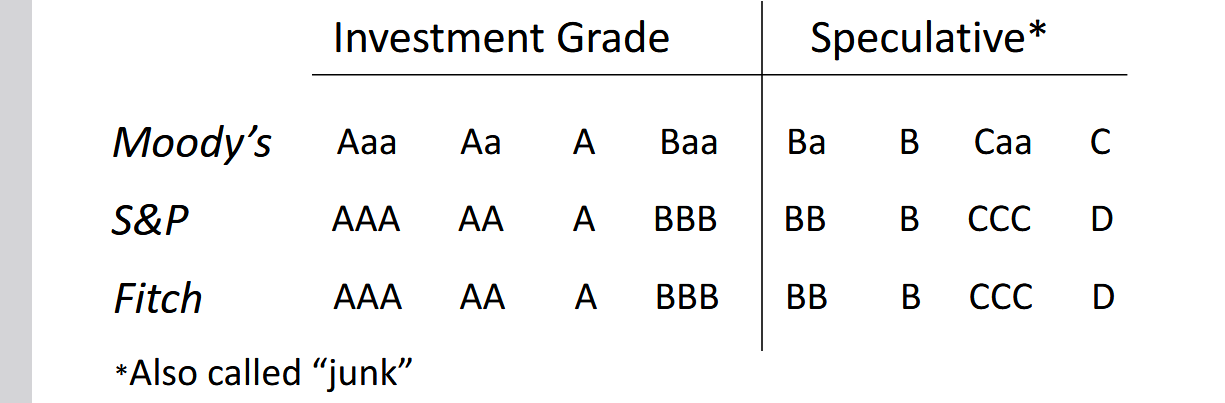
Rating agencies assign debt ratings that reflect the probability of default. Here are some typical bond ratings:
Bond Rating Concepts
Bond rating criteria:
Includes both objective and subjective factors:
Issuer’s financial condition.
Competitive situation.
Quality of management.
Importance of ratings:
To investors.
To issuing businesses.
Changes in ratings
Interest Rate Components
The interest rate (required rate of return) on any debt security can be thought of a base rate plus one or more components to compensate for inflation and risk.
Next is the model:
RRF = Real risk-free (base) rate.
IP = Inflation premium.
DRP = Default risk premium.
LP = Liquidity premium.
PRP = Price risk premium.
CRP = Call risk premium.
Rate = RRF + IP + DRP + LP + PRP + CRP
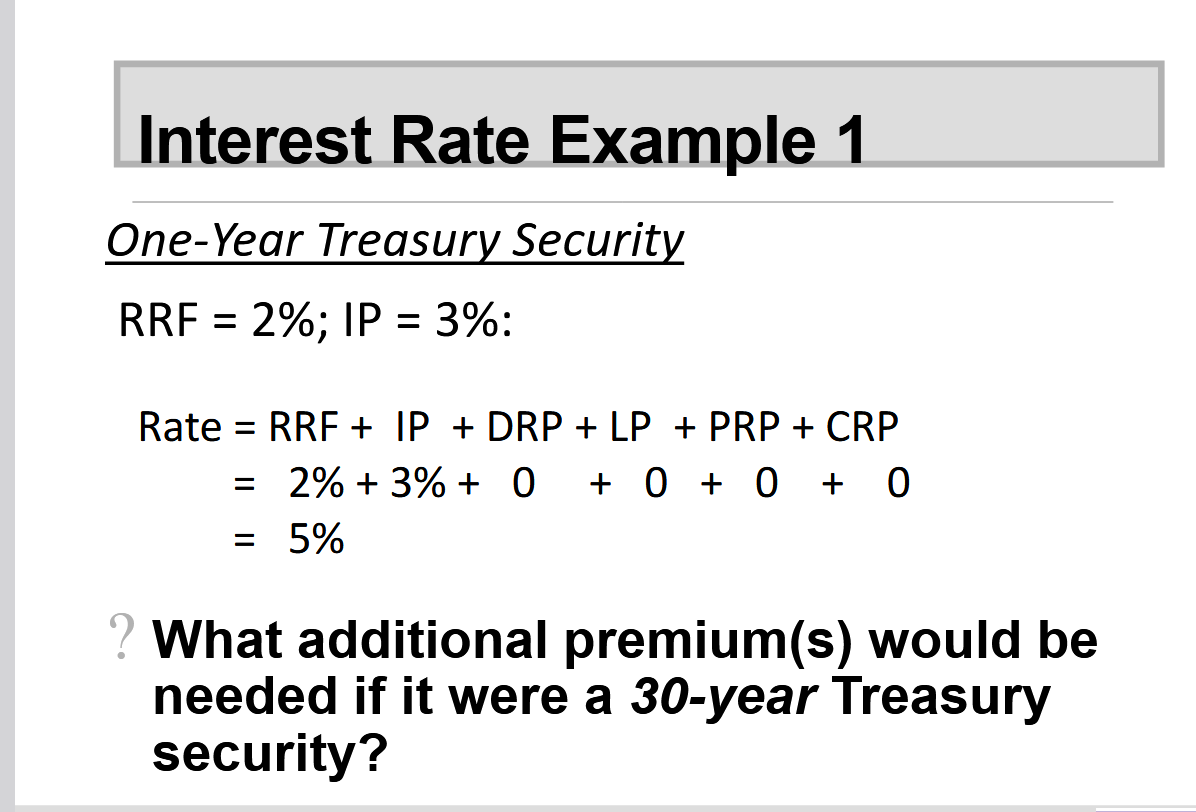
A price risk premium would be needed.
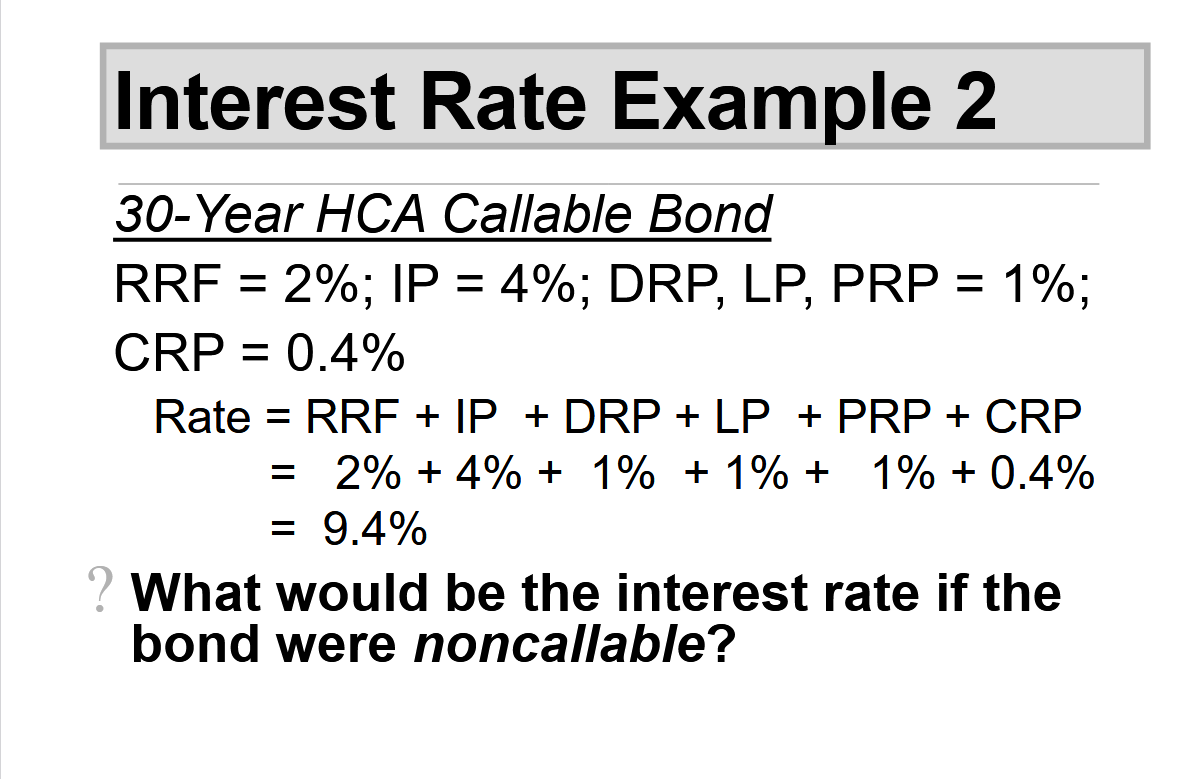
The 4.0% wouldn’t be counted.
Bond Definitions
Par value - Stated face value of the bond. Generally the amount borrowed and repaid at maturity. Often $1,000 or $5,000.
Coupon rate - Stated interest rate on the bond. Multiply by par value to get dollar coupon payment. Usually fixed
Maturity date - Date when the par value will be repaid to investors. Note that the effective maturity of a bond declines each year after issue.
New versus seasoned bonds - When a bond is issued, its coupon rate reflects current conditions. When conditions change, the values of outstanding bonds change.
Debt Valuation
Why should healthcare managers worry about debt valuation?:
Managers must understand how investors make resource allocation decisions.
Cost of financing is important to good capital investment decisions.
Debt valuation concepts can be applied to other investments.
General Valuation Model
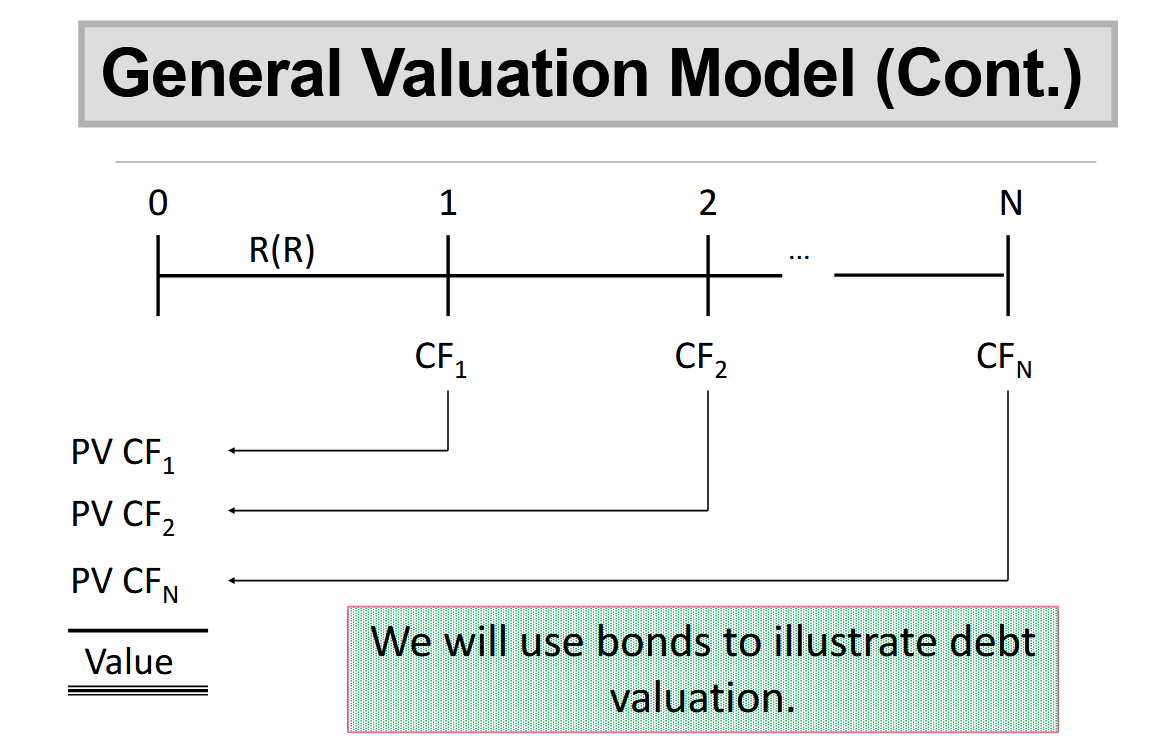
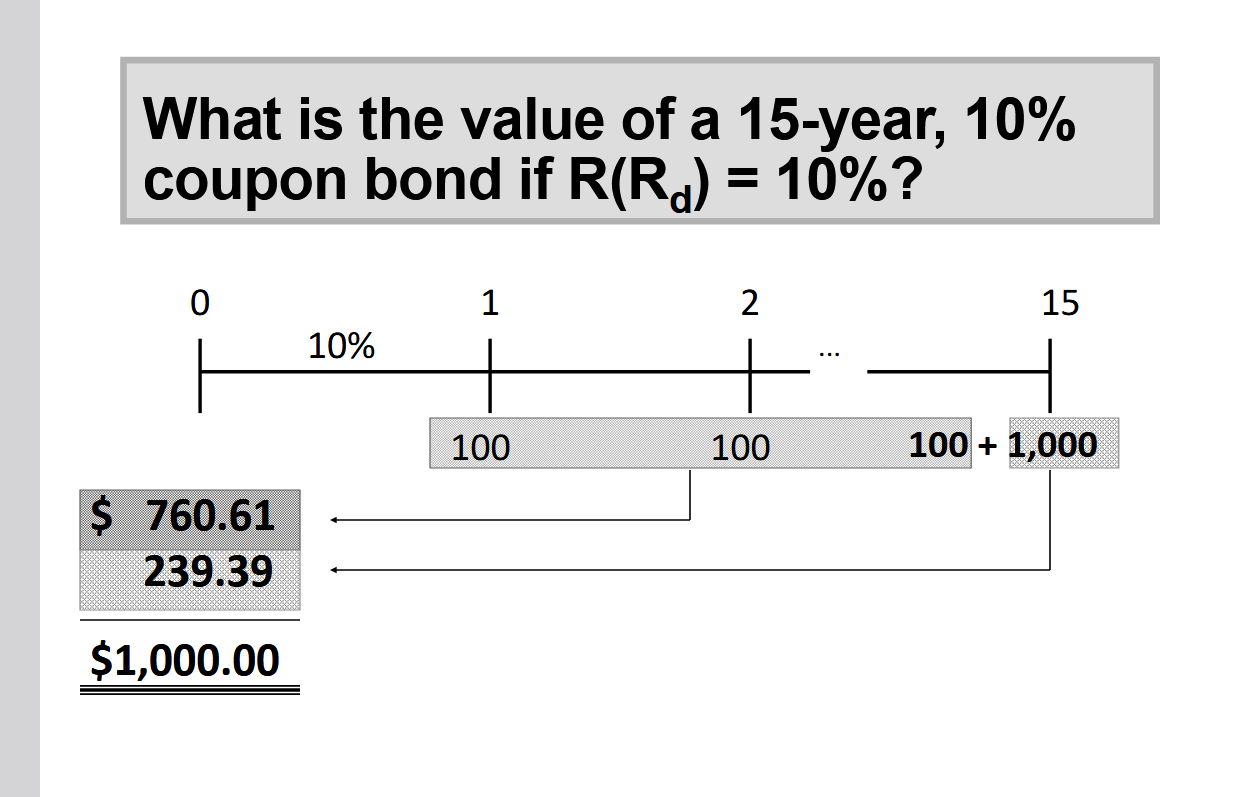
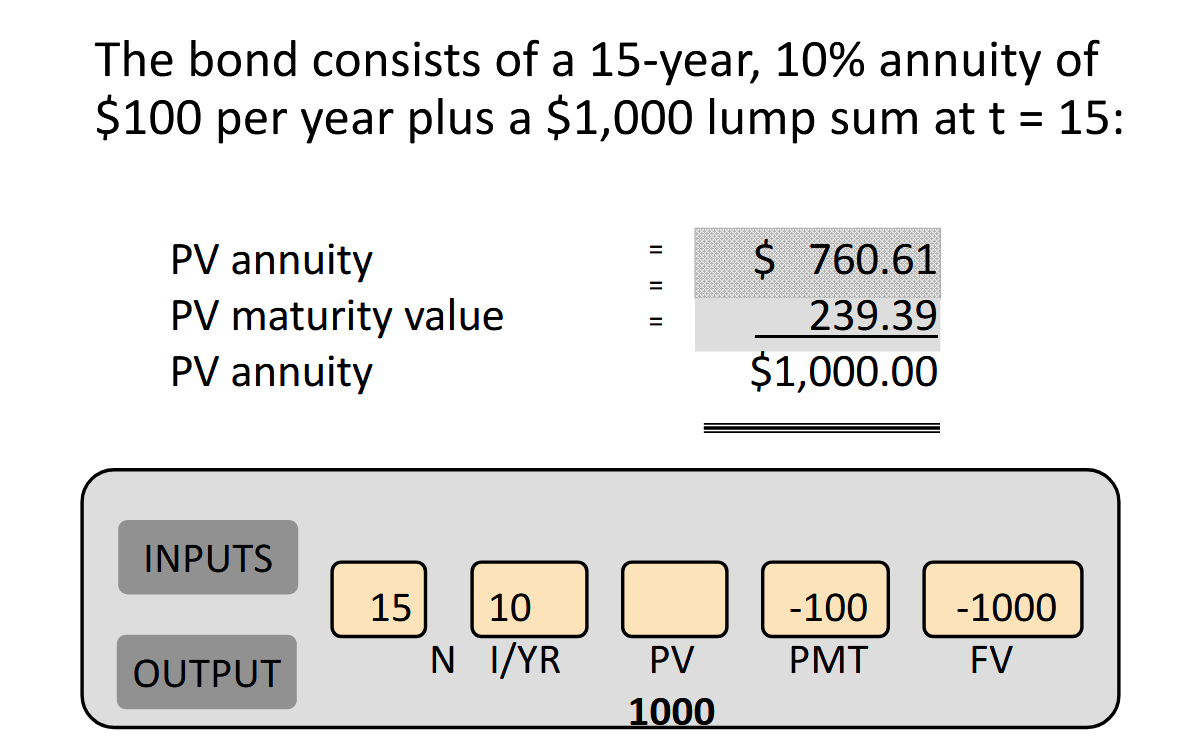
The financial value of any asset (investment) stems from the asset’s expected cash flows.
Thus, all assets are valued in the same way:
Estimate the expected cash flows.
Assess their riskiness.
Set the required rate of return.
Discount the cash flows and sum the present values.
Different Types of Bonds
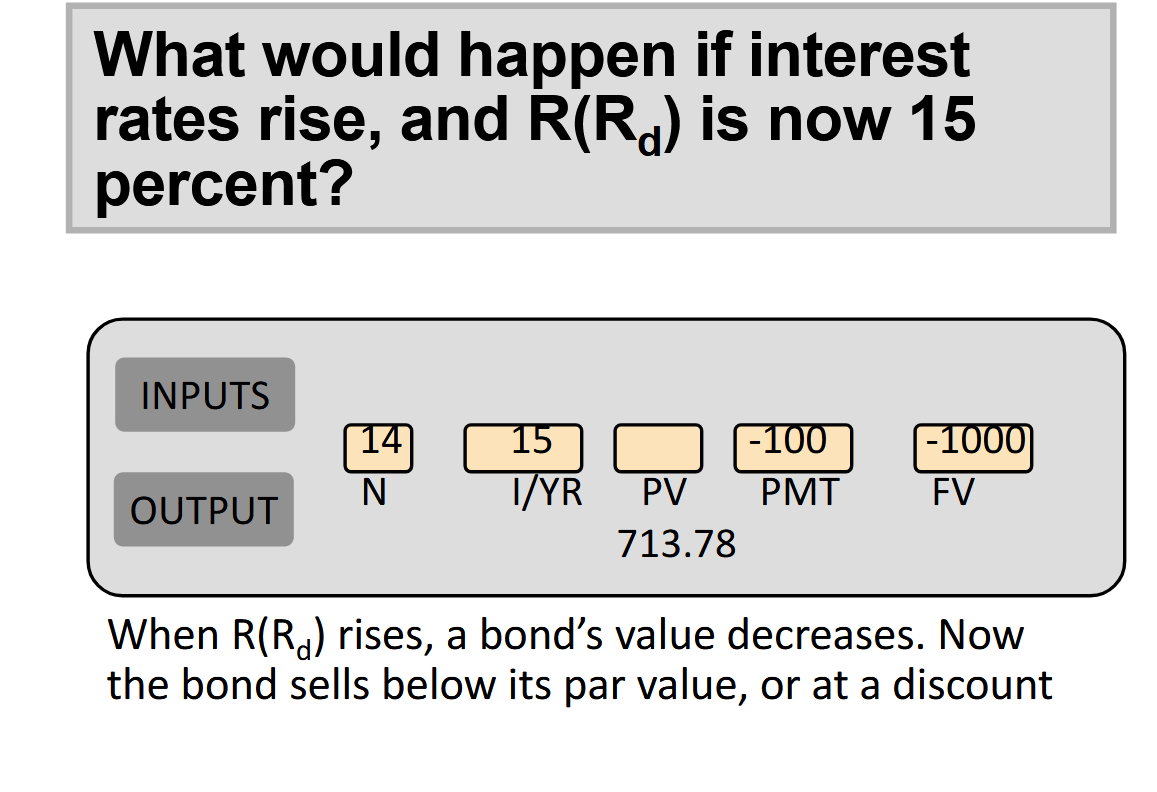
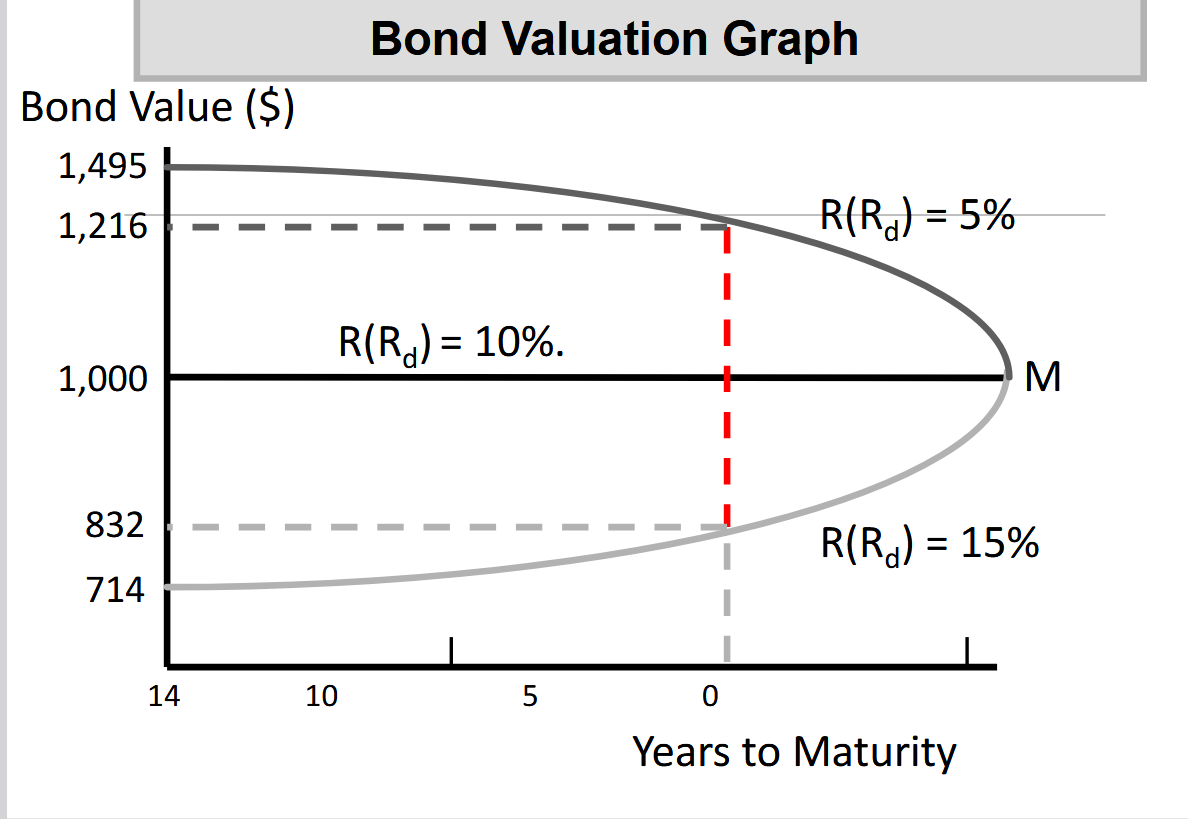
At maturity, a bond’s value must equal its par value (plus final interest payment).
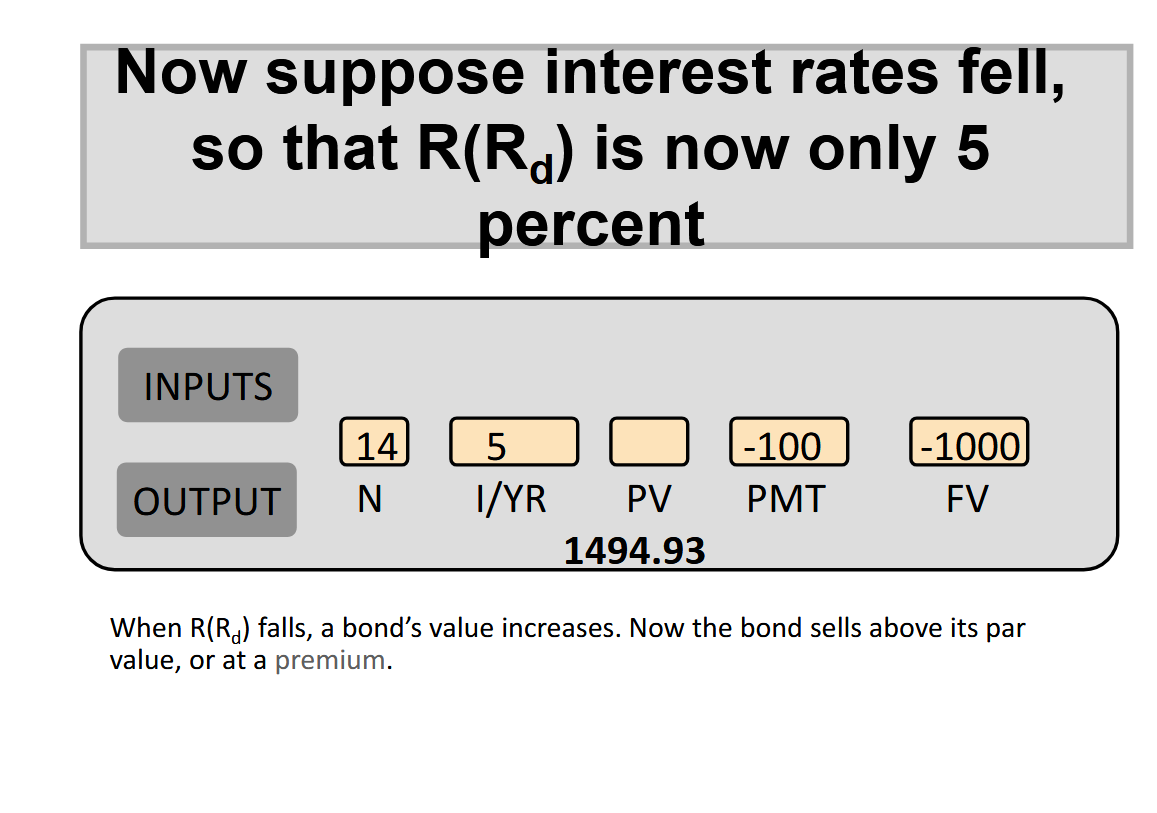
The value of a premium bond will decrease to par value at maturity
The value of a discount bond will increase to par value at maturity.
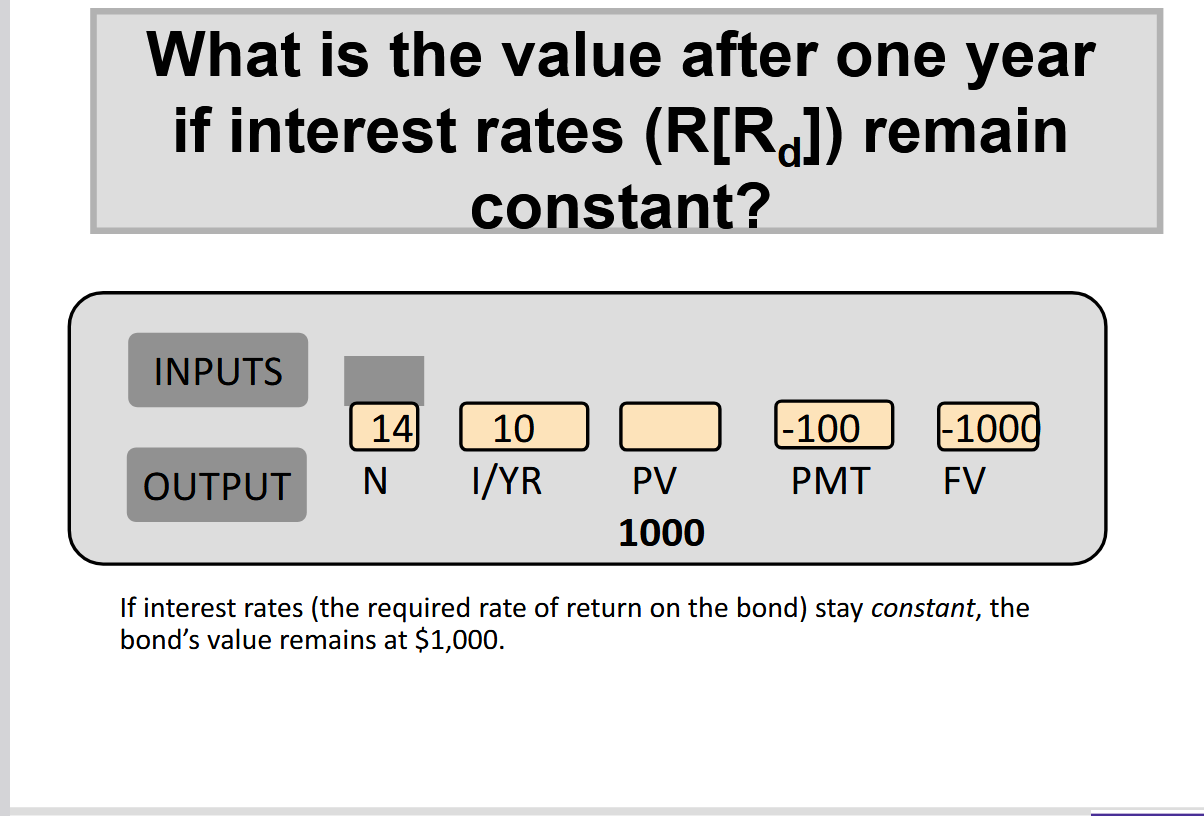
A par bond value will remain at par if interest rates remain constant.
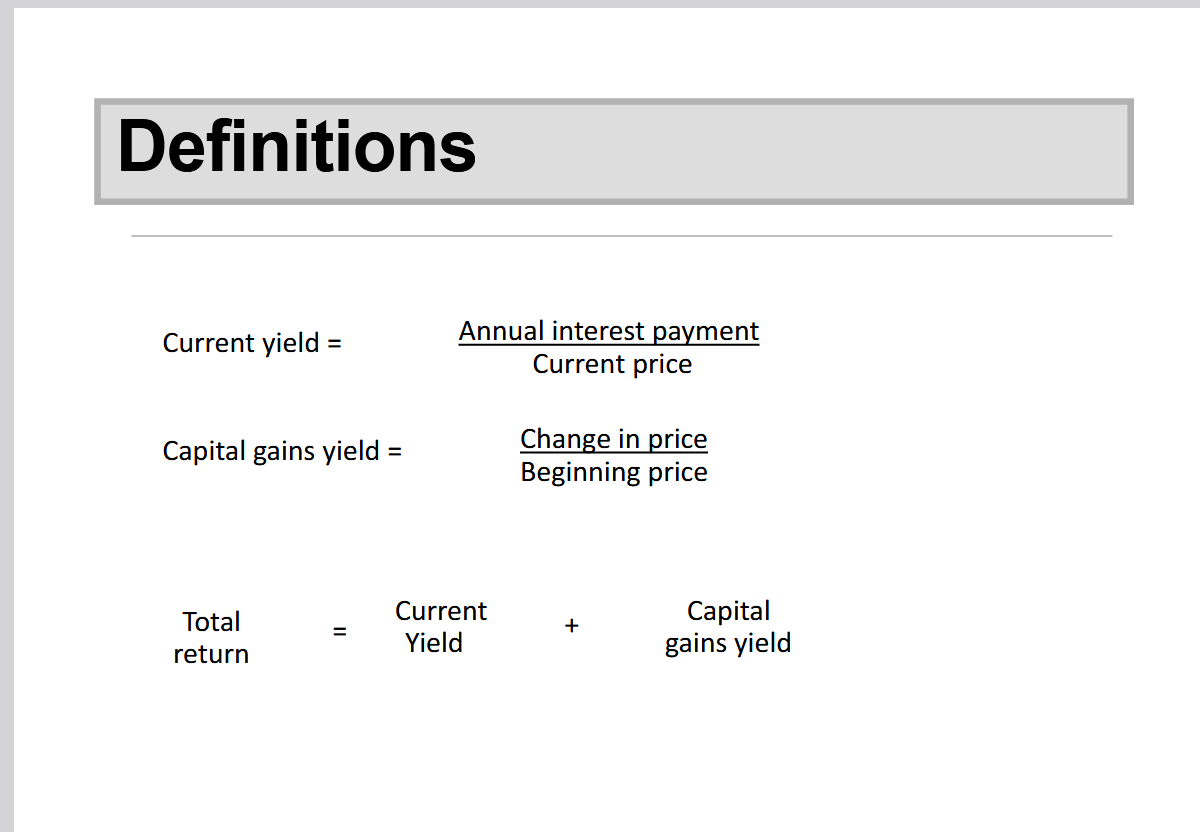
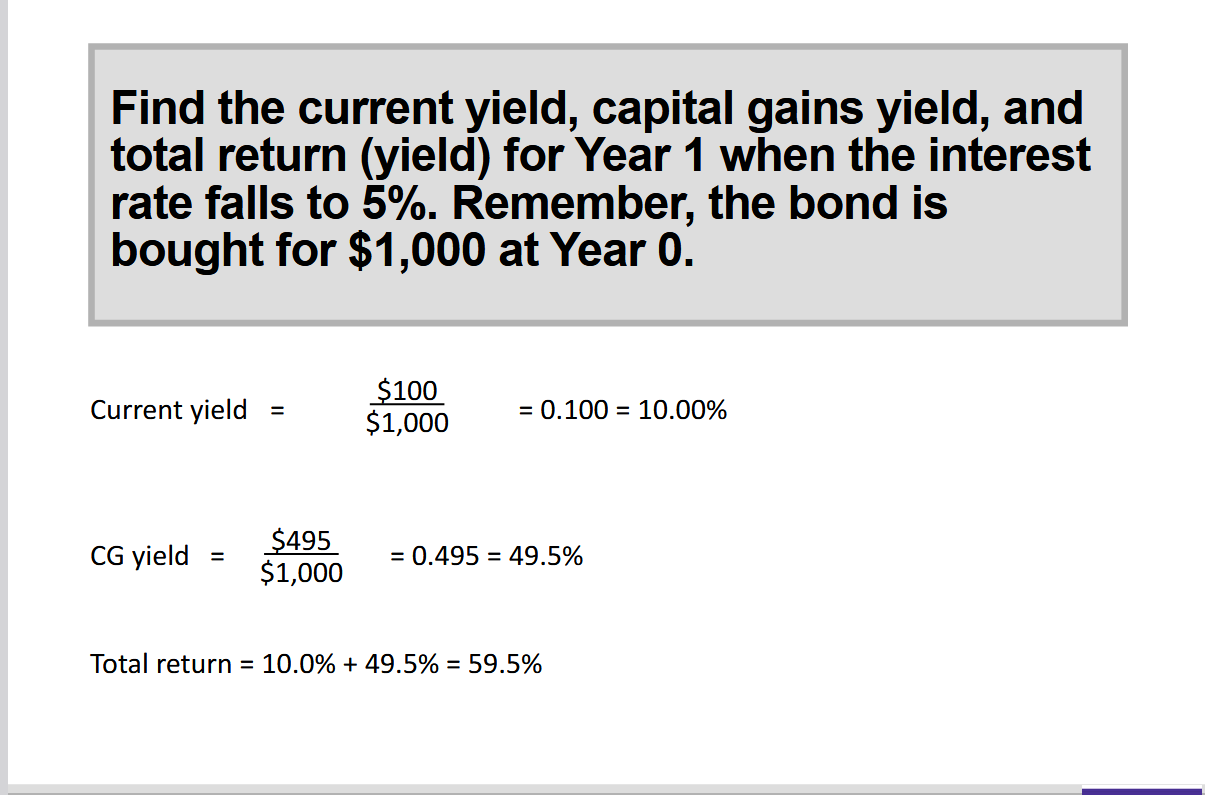
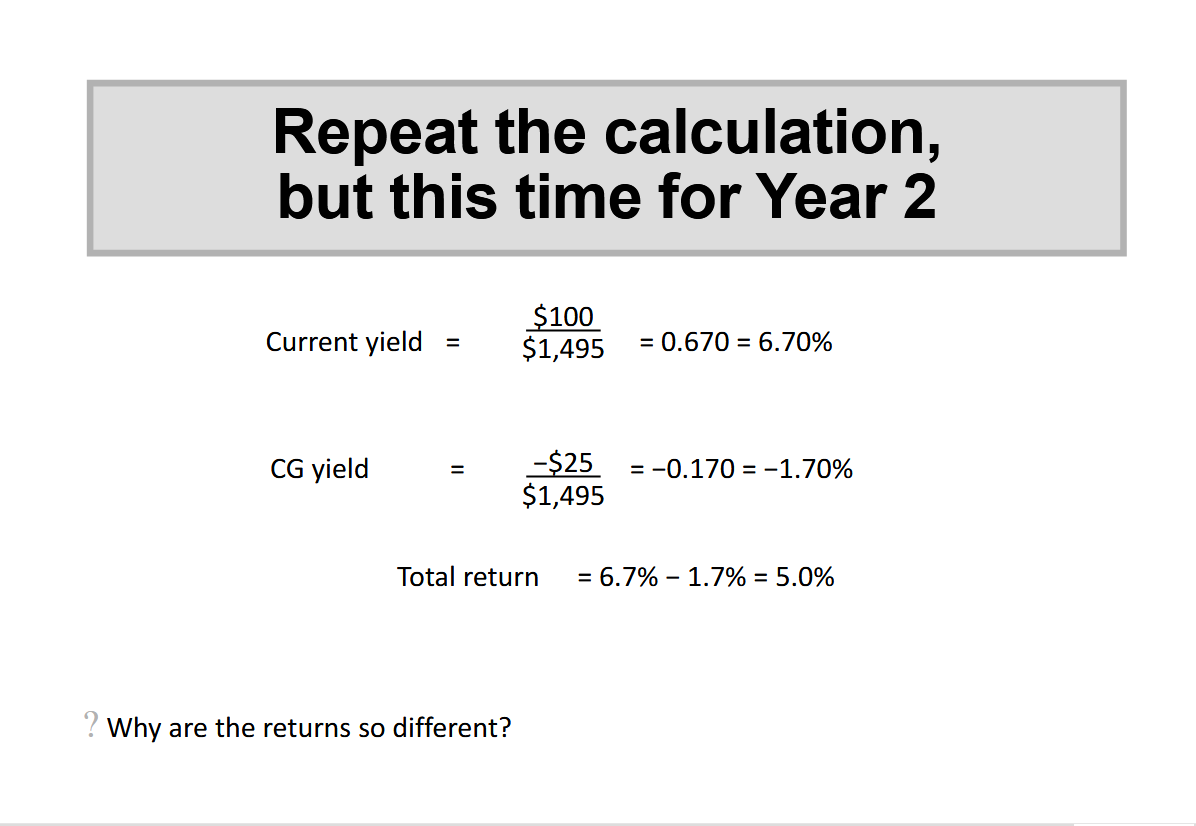
The return in each year consists of an interest payment (yield) and a price change (capital gains yield).
Yield to Maturity
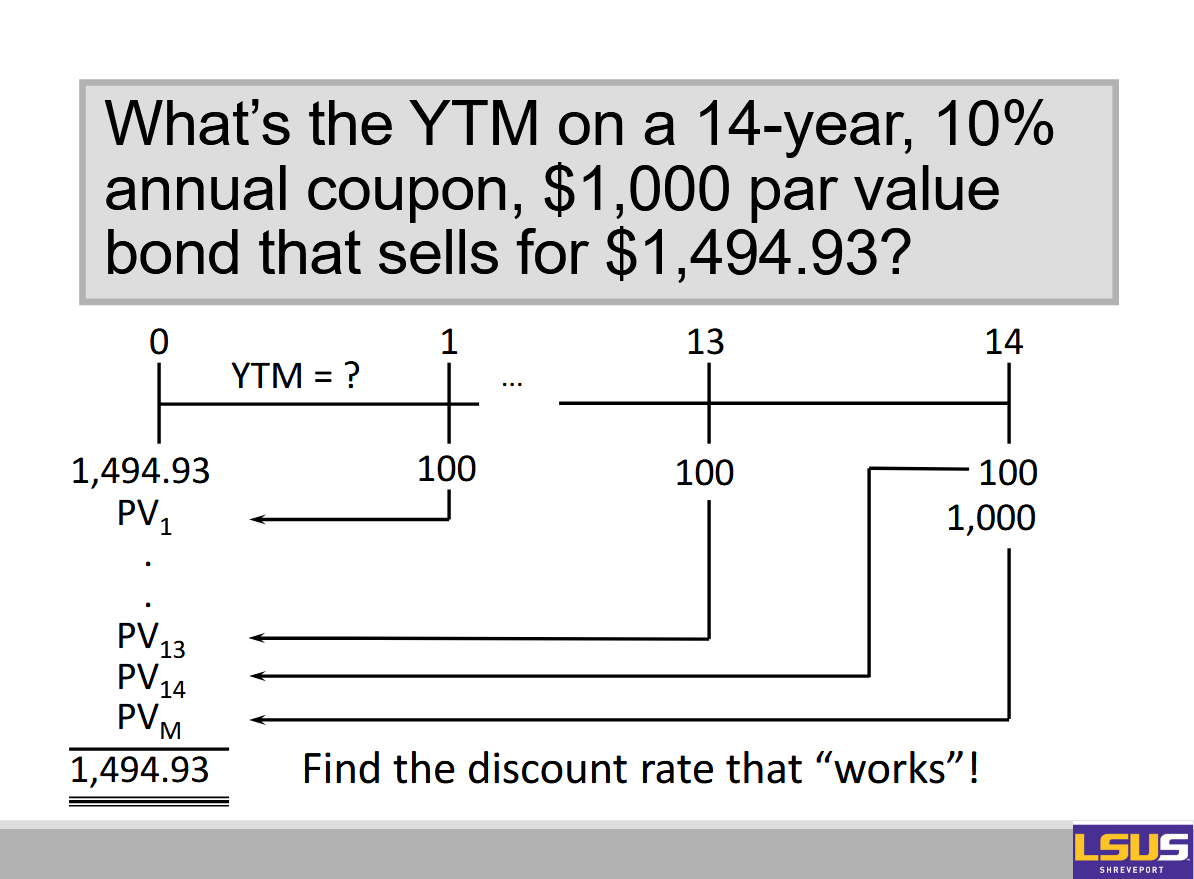
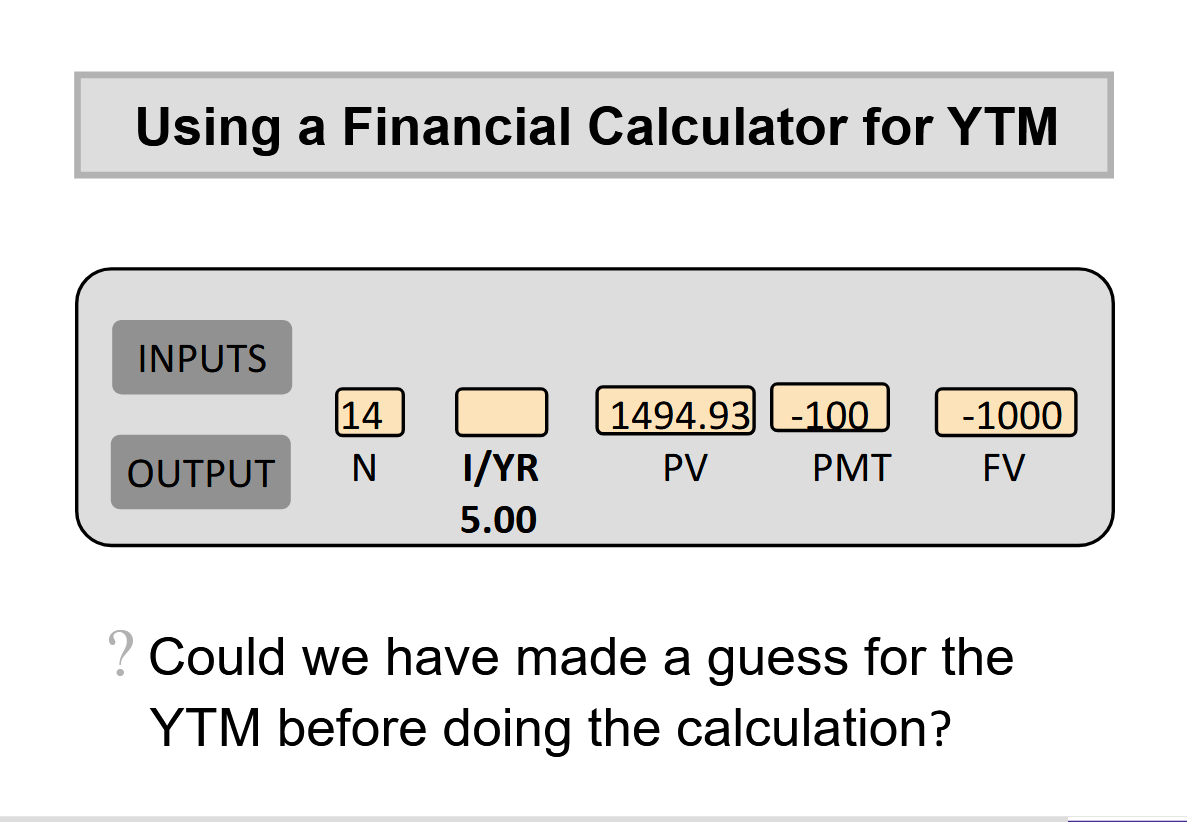
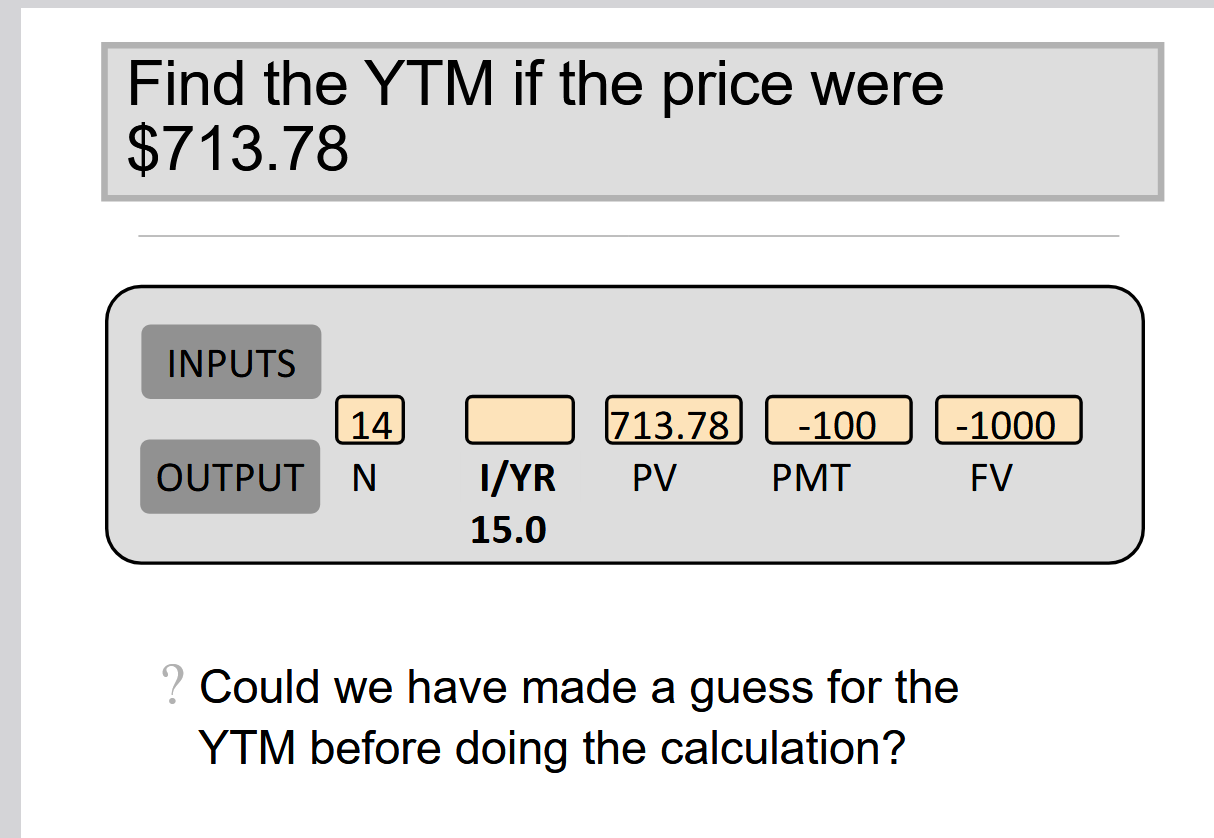
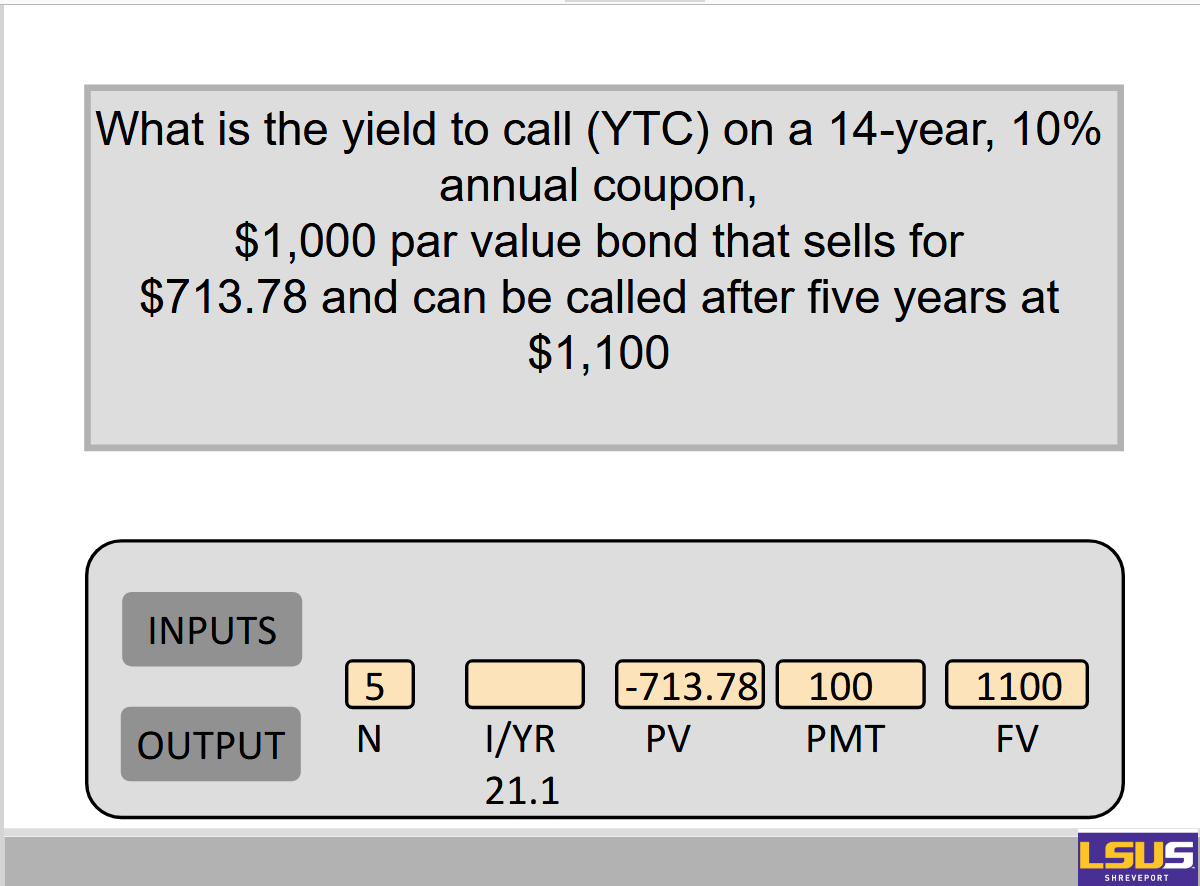
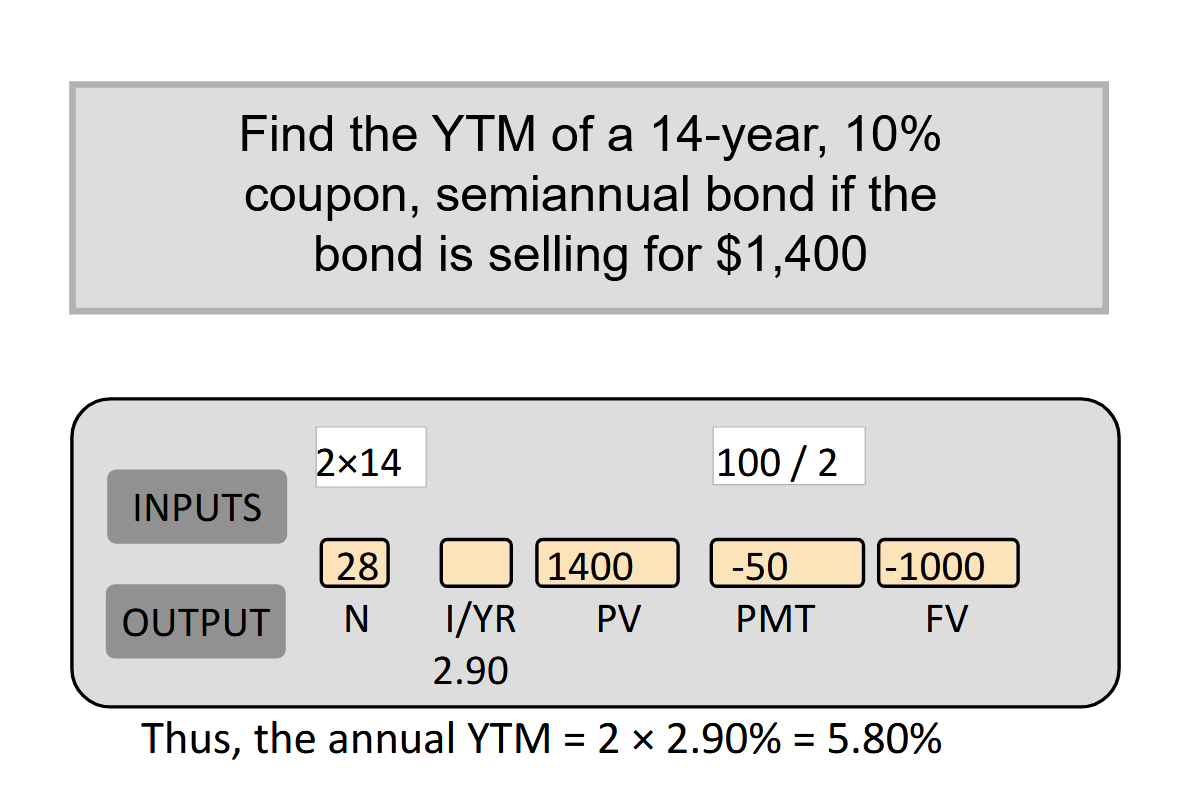
Yield to Maturity (YTM) - The expected rate of return assuming the bond is held to maturity and no default occurs.
Mathematically, it is the discount rate that forces the present value of the cash flows from the bond to equal the bond’s price.
Bonds Actually Have Semiannual Coupons
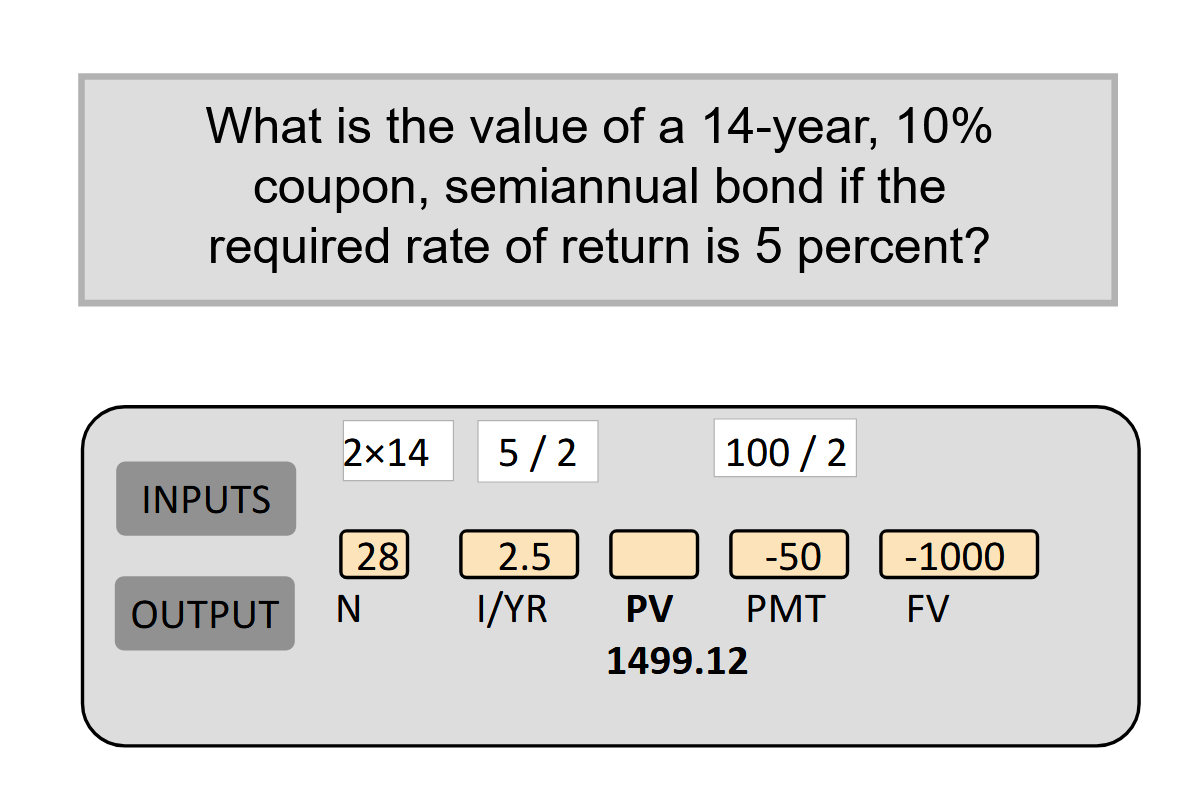
Twice as many interest payments as annual coupon payments.
But the interest payment is only half of the annual amount.
And the required rate of return is only half of the annual rate.
Otherwise, the valuation process is the same as for annual coupons.
Interest Rate Risk
Interest rates change constantly, which gives rise to two types of interest rate risk:
Price risk arises because bond values decline when interest rates rise.
Reinvestment rate risk arises because reinvested coupon (and principal) payments earn less when interest rates fall
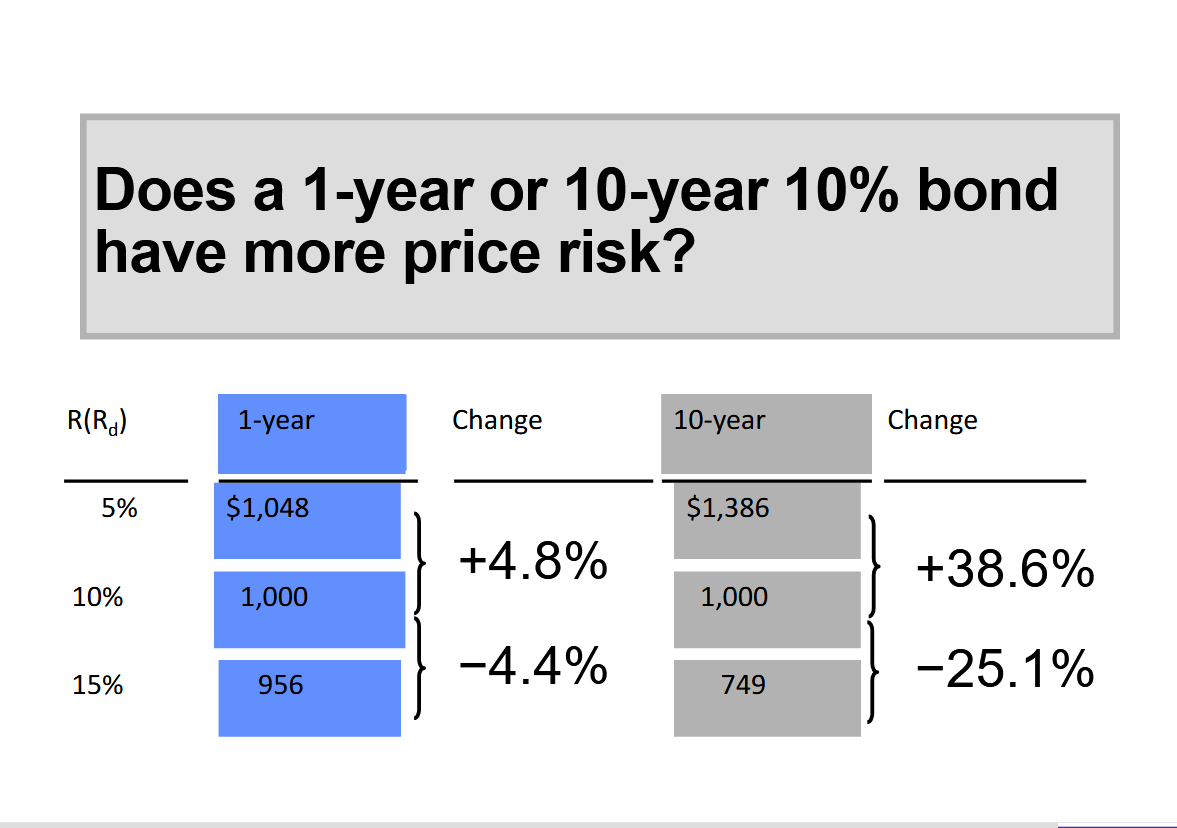
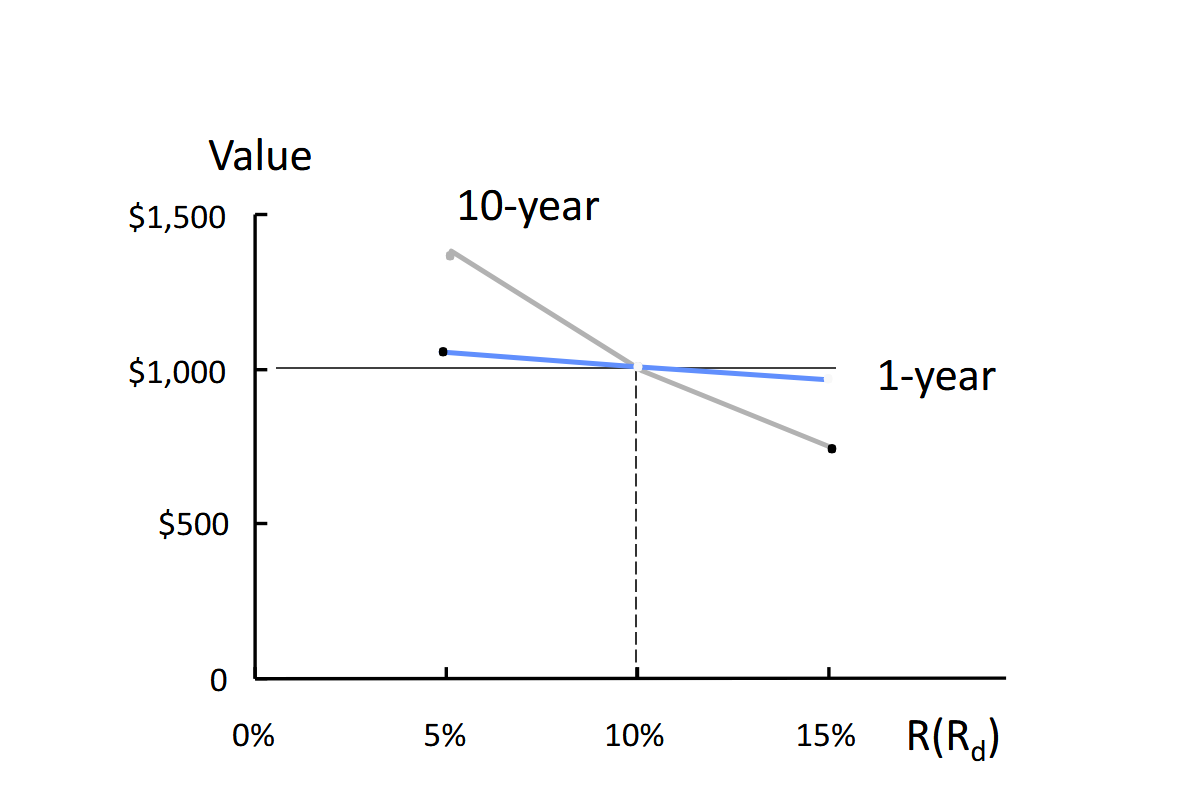
The 10-year bond. The 10-year bond's price changes are +38.6% when rates drop to 5% and –25.1% when rates rise to 15%.
Longer-term bonds have more price risk (interest rate risk) because their fixed cash flows are locked in for longer, making their prices more sensitive to interest rate changes.
Does a one-year or ten-year bond have more reinvestment rate risk?:
Reinvestment rate risk depends both on the bond’s maturity and on the investor’s holding period (investment horizon).
In general, the shorter the maturity relative to the investment horizon, the greater the reinvestment rate risk.
How can interest rate risk be minimized?:
Long-term bonds have high price risk but low reinvestment rate risk.
Short-term bonds have low price risk but high reinvestment rate risk.