Biological molecules
Definitions:
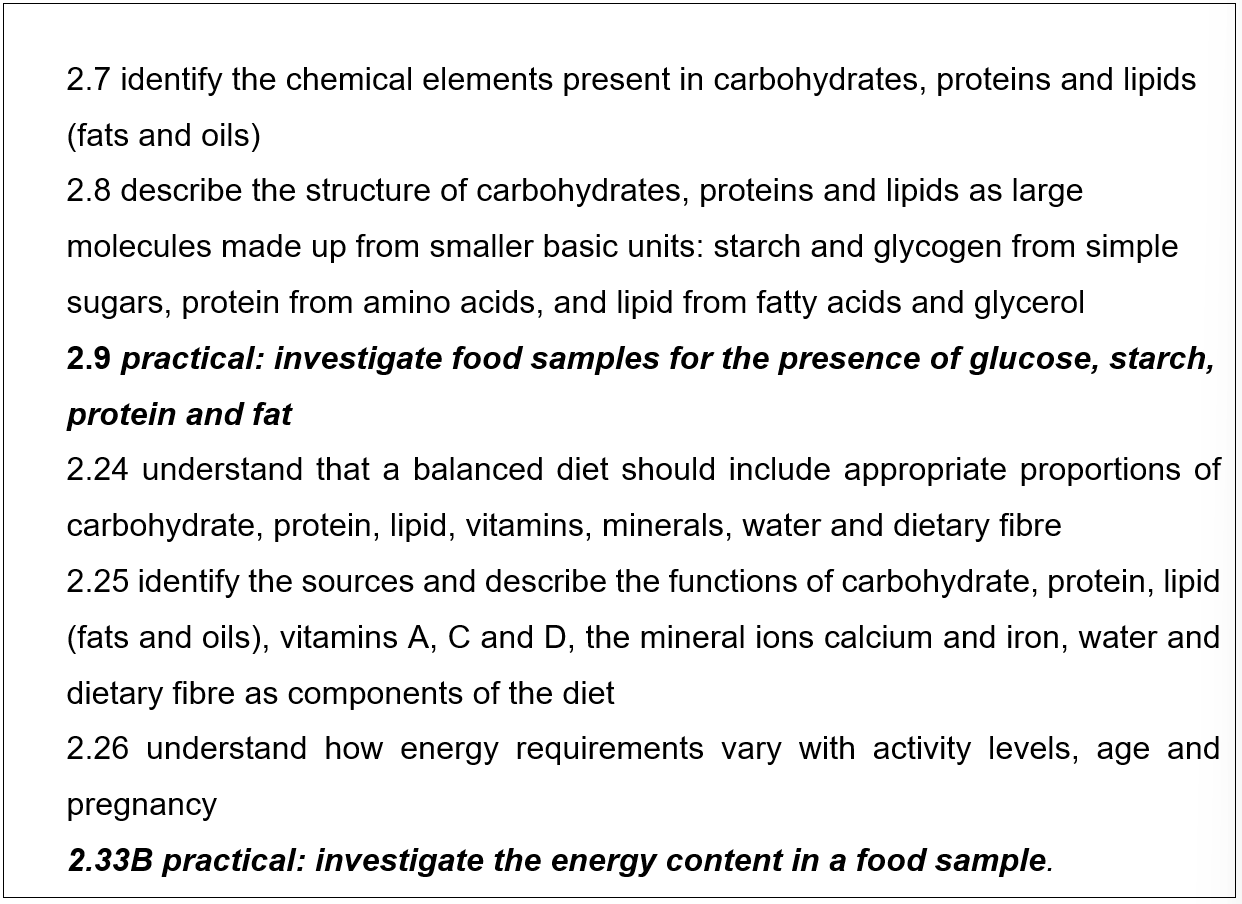
Polymer (many)
Molecule made up of smaller units called monomers
Examples:
Starch (polymer) is made up of lots of glucose (monomer) molecules → linear
Glycogen (polymer) is made up of glucose (monomer) molecules → branched
Monomer (one)
A single unit that makes up a polymer
Example: Glucose (simplest sugar) – C₆H₁₂O₆
Dimer (two)
Molecule made up of two monomers
Examples: Sucrose, Maltose
Monosaccharide
Simple sugar made of a single monomer
Example: Glucose
Taste: Sweet
Disaccharide
Simple sugar made of two monomers
Example: Sucrose
Taste: Sweet
Polysaccharide
Complex sugar made of many monomers joined together
Examples: Starch, Glycogen
Taste: Savoury
Amino acid
20 different types
Simple molecules that make up proteins
Can be:
Essential (must be obtained from diet)
Non-essential (made by the body)
Polypeptide
Chain of amino acids joined together
A type of polymer – another word for protein
Balanced Diet:
A balanced diet provides the right amounts of protein, carbohydrates, fats, vitamins, and minerals to satisfy the body’s needs.
Food needs vary based on body mass, age, size, and activity level.
Example: Manual workers need more energy-rich food than office workers.
Pregnant or breastfeeding women need more protein than average adults.
Why do pregnant women need more protein?
Protein is essential for growth of new cells, so pregnant women need it to support their baby's development.
It's also needed to produce high-quality breastmilk.
Energy Requirements:
Energy from food is measured in kilojoules (kJ)
The diet must provide enough energy to:
Maintain a constant body temperature
Support internal processes like respiration
Measuring the Energy Content of Different Biscuits:
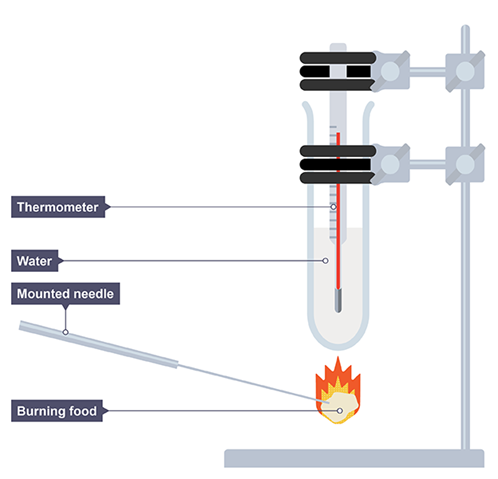
Apparatus:
Boiling tube
Stand, boss, and clamp
Tongs
Bunsen burner and heatproof mat
Three types of biscuits
Thermometer
10 cm³ measuring cylinder
Electronic balance
Method:
Pour 10 cm³ of tap water into a boiling tube using a measuring cylinder.
Set up the apparatus as shown by your teacher.
Record the initial temperature of the water.
Measure and record the mass of the biscuit.
Using tongs, light the biscuit and hold it under the boiling tube.
Tip: Hold the biscuit at an angle so unburnt parts feed the flame; keep rotating it.
After the biscuit burns out, record the final temperature of the water.
Variables in the Biscuit Energy Experiment:
Independent Variable (Changed):
Type of biscuit used
Dependent Variable (Measured):
Change in temperature of the water
Control Variables (Kept the Same):
Volume of water (10 cm³)
Height of the boiling tube from the flame
Results:
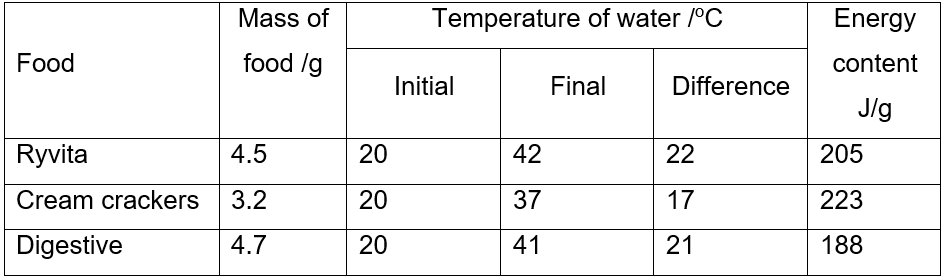
Energy Content Calculation (J/g):
Use the formula:

Evaluation:
Accuracy – Why this experiment is not very accurate:
Heat loss to surroundings – not all the energy from the biscuit heats the water
Flame distance from the water may vary
Meniscus not read correctly, causing incorrect temperature readings
Biscuit may not fully burn, leaving trapped energy inside
Reliability – Why it’s not reliable:
Only tested each biscuit once
To improve reliability: repeat the experiment and take a mean of the results
Validity – Why it’s not valid:
The method burns food to release energy
Our bodies don’t burn food – we use respiration
So, it doesn't truly represent the energy available to the body
Calorimeter:
A calorimeter is a more accurate method for calculating the energy content of food.
It uses an electrically powered ignition coil to ignite the food.
The food burns in an atmosphere of pure oxygen, ensuring complete combustion.
This setup minimizes heat loss to the surroundings and gives more precise results.
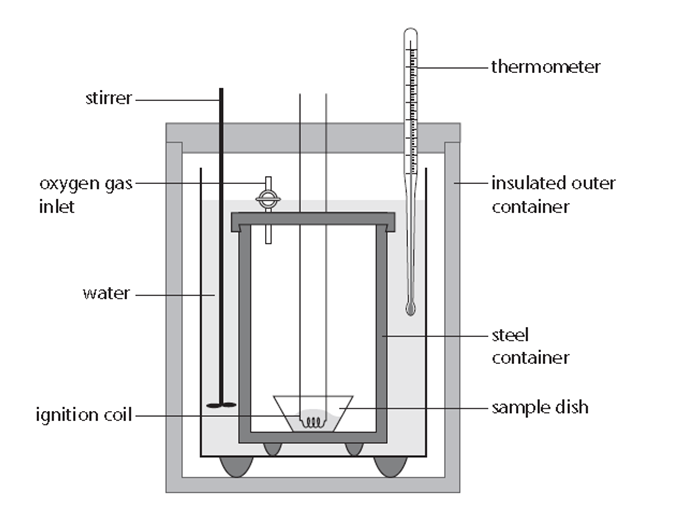
How a Calorimeter Improves the Experiment:
Less heat loss to surroundings – The insulated outer container helps retain heat, making results more accurate.
Thermometer inside the container – Not affected by room temperature, improving accuracy and consistency.
Fixed distance between food and water – Ensures a fair test, making the results more valid.
Stirrer – Distributes heat evenly through the water, giving a more accurate temperature reading.
What food is needed for:
Growth of cells and repair of tissue
Energy (released from respiration in the mitochondria)
Healthy immune system
The 7 components of a healthy diet:
Water
Carbohydrates
Vitamins
Minerals
Protein
Fibre
Fats
Carbohydrates:
Contain carbon, hydrogen, and oxygen.
Mainly used for energy released during respiration.
Two types: simple and complex.
Complex carbohydrates are polymers made from simple sugars (monomers and dimers).
Carbohydrate Types:
Monosaccharides – 1 unit
Example: Glucose – Sweet
Disaccharides – 2 units
Example: Sucrose
Polysaccharides – Many units
Example: Starch – Not sweet
Carbohydrate; Source & Functions:
Glucose
Source: Energy drinks, fruit, sweets
Function: Used in respiration to release energy (using oxygen)
Maltose
Source: Produced from the digestion of starch
Function: Broken down to produce glucose
Starch (chains of glucose, linear)
Source: Pasta, bread, potato, rice
Function: Stored in plants; broken down to maltose in digestion
Glycogen (chains of glucose, non-linear)
Source: Produced from excess glucose
Function: Storage in animal cells
Fibre:
Fibre is found in the bran of cereals and plant cell walls.
It passes through the digestive system undigested.
High fibre foods add bulk, aiding peristalsis (muscle movement of food).
Lack of fibre is linked to constipation and bowel cancer.
Sources: Cereals, brown bread, fruits, vegetables.
Proteins:
Proteins are made of carbon, hydrogen, oxygen, and nitrogen; some contain sulphur.
Proteins are made from amino acids, the basic building blocks.
There are 20 amino acids; proteins are polymers made from these in a specific order.
Monomer = amino acid
Polymer = protein (or polypeptide)
Some amino acids are made by the body, but others (essential amino acids) must come from the diet.
The most important sources of protein include:
Meats
Legumes (beans, lentils. chickpeas, peas)
Leguminous plants that make protein in their roots
Functions of Proteins:
Growth of cells and repair of tissues
Formation of hormones, antibodies (immune system), and enzymes
Excess proteins cannot be stored and are broken down for energy.
Lipids (Fats and Oils):
Lipids are compounds made of carbon, hydrogen, and oxygen, with less oxygen than carbohydrates.
A lipid molecule has two parts:
Glycerol
Three fatty acids
Saturated fats:
Contain mainly saturated fatty acids.
Solid at room temperature.
High intake linked to coronary heart disease (mostly from animal fats).
Unsaturated fats:
Contain mainly unsaturated fatty acids.
Liquid at room temperature (oils).
Considered healthier (mostly from plant fats).
Sources of Lipids:
Animal: Meat (lamb, beef), dairy products (butter, cream, cheese)
Plant: Vegetable oils (olive oil, sunflower oil), margarine
Functions of Lipids:
Store vitamins (A)
Provide energy through respiration
Form cell membranes
Offer protection by surrounding delicate organs
Provide insulation
Water:
A person can survive without food for weeks, but only a few days without water.
Many liquids and fruits/vegetables are high in water.
Functions:
Essential part of the cytoplasm in cells, as all chemical reactions require water to dissolve reactants.
Blood is 55% water, aiding flow and transporting food and waste.
Acts as a lubricant in joints, reducing friction and preventing damage.
Helps regulate body temperature by cooling the body through sweating.
Dissolves waste products (e.g., urea) for removal from the body in urine.
Vitamins:
Complex chemicals needed in very small quantities in the diet.
Used to maintain health and normal body function.
Fat Soluble:
Found in fatty foods and stored in the body (usually in the liver).
Examples: Vitamins D and A.
Water Soluble:
Found in the water of foods and cannot be stored by the body.
Examples: vitamin C
Vitamins: Source, Use & Deficiency
Vitamin D
Source: Eggs, oily fish
Use: Maintains strong bones (works with calcium)
Deficiency: Rickets
Vitamin C
Source: Citrus fruits (lemons, oranges), green vegetables
Use: Required for forming connective tissue
Deficiency: Scurvy
Vitamin A (Fat Soluble)
Source: Red or orange vegetables (carrots, peppers)
Use: Needed for a chemical required to see in low light
Deficiency: Night blindness
Minerals:
These are inorganic elements whihc are needed in very small amounts in the diet;
Iron
Source: Red meat, dark green vegetables
Use: Needed to make haemoglobin, the red pigment in red blood cells that carries oxygen
Deficiency: Anaemia
Calcium
Source: Dairy (cheese, milk), eggs
Use: Needed for hard teeth and bones, muscle contraction, and blood clotting
Deficiency: Osteoporosis
Food Tests:
Test for Starch (Use a Dimple Tile)
Reagent: Dilute iodine solution (orange)
Starting Colour: Orange
Colour Change: Orange → Blue-black
Positive Result: Blue-black
Safety Concern: Use caution with iodine as it can stain skin and clothing.
Safety: Goggles
Test for Glucose (Use Heat)
Reagent: Benedict's solution (blue)
Starting Colour: Blue
Colour Change: Blue → Red-orange precipitate
Positive Result: Green (some sugar), Red (lots of sugar)
Quantitative: Green (less glucose) to darker red (more glucose)
Safety Concern: Hot water bath; handle with care to avoid burns.
Safety: Goggles
Test for Lipids
Reagent: Ethanol (colourless)
Starting Colour: Colourless
Colour Change: No colour change, but forms a cloudy white emulsion
Positive Result: Cloudy
Safety Concern: Ethanol is flammable; avoid heat sources.
Safety: Goggles & No Naked Flames
Test for Protein (Purple Protein)
Reagent: Biuret solution (pale blue)
Starting Colour: Blue
Colour Change: Pale blue → Purple
Positive Result: Purple
Safety Concern: Handle solutions carefully to avoid skin irritation.
Safety: Goggles