Unit 1 Test
Bill of Rights
The First Amendment
Freedom Of Religion, speech, press
Right to assemble and petition the government
The Second Amendment
Right to Bear arms
The Third Amendment
Bans laws requiring quartering of troops in peacetime
The fourth Amendment
Bans “unreasonable searches and seizures”
Requires that search warrants be based on “probable cause” and identify the person, places, and things to be searched
The Fifth Amendment
Requires that charges for major crimes be brought by a grand jury
Protects individuals from “double jeopardy”—being tried more than once on the same charge•
Allows individuals not to testify against themselves•
Guarantees “due process” in criminal cases•
Bars the taking of private property for a public purpose “without just compensation”
The Sixth Amendment
Guarantees the right to a speedy and public trial•
Guarantees trial by impartial jury in the appropriate jurisdiction•
Requires that an accused person be informed of charges against him or her•
Guarantees a defendant’s right to face and examine witnesses for the prosecution•
Guarantees a defendant’s right to be represented by an attorney
The Seventh Amendment
Grants the right to trial by jury in civil cases
The Eighth Amendment
Bans excessive bail or fines•
Bans “cruel and unusual punishment”
The Ninth Amendment
Establishes the existence of individual rights beyond those specifically stated
The Tenth Amendment
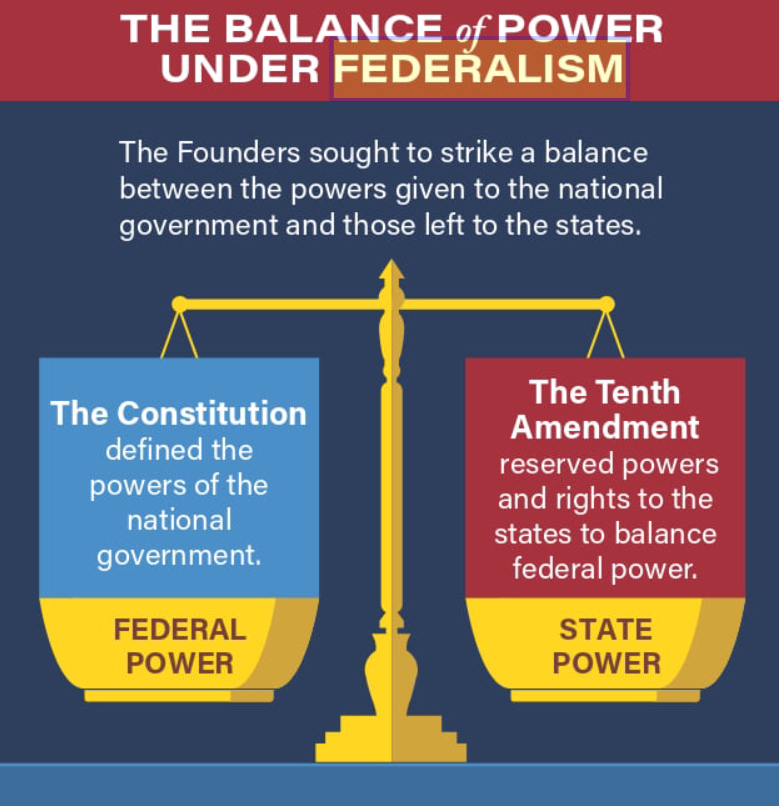
Reserves to the states or the people any powers not given to the federal government by the Constitution
Trials
Marbury v Madison: The case challenged the Judiciary Act of 1789, specifically the Supreme Court's power to issue writs of mandamus. Chief Justice John Marshall ruled that Congress violated the Constitution by granting this power. The decision established the power of federal courts to review and invalidate acts of Congress.
Gibbons v Ogden: The Court unanimously supported the national government, citing the commerce clause. The case involved New York's attempt to control navigation between New York and New Jersey. The commerce clause became a key tool for Congress to regulate the economy.
McCulloch v Maryland: The case focused on interpreting the necessary and proper clause of the Constitution. Thomas Jefferson and states' rights advocates argued for a narrow interpretation, while Chief Justice Marshall favored a broader interpretation. Marshall's ruling laid the foundation for the doctrine of implied powers.
What are the Two pieces that made James Madison’s compound Government?
The federal and state government
How did the Constitutional design of our Government provide double security for the people according to James Madison?
Madison defended the Constitution against critics who feared government abuse. In Federalist No. 51, he advocated for the separation of powers into three branches. By dividing the government and creating a federal system, Madison believed that the risk of power abuse could be minimized. This system, he argued, would provide a double security for the rights of the people.
Much of the political and Legal history of the U.S has involved a clash between
Terms
New Jersey Plan-William Paterson said that all the states should have one vote.
Virginia plan-Madison based the Virginia plan on European political ideology it gave more vote to more populous states.
Federalist # 10 (Madison’s core argument)- A representative democracy is prone to faction a large republic is better
National Powers-powers given to the federal government. Supreme law of the land over states, coin money and collect taxes and regulate the economy.
The Supremacy clause- The constitution and federal laws are the supreme law of the land,
Colonial classifications (royal colony example)
Salutary neglect- the unofficial British policy where parliamentary rules and laws were loosely or not enforced on the American colonies and trade.
Stamp act-taxed everyday items, all legal docs, cards and newspaper had to be specially stamped paper from the British gov. This was to pay for troops stationed in America.
Sugar act- made foreign sugar more expensive to protect British producers Americans saw t as a violation to their rights the British saw it as a way to make money
Nullification- to cancel any law that is unconstitutional
Delegated powers-powers expressly given to the federal government
Reserved powers-rights of the states to balance federal powers
Concurrent powers- powers that can be exercised by the state and federal government at the same time
Separation of powers-Powers are divided between government branches
Limited government-includes some checks and safeguards to make sure the gov serves the people rather then private interests
Social contract-People are willing to give up some of their freedoms in order to have security
Popular sovereignty- the idea that the people hold ultimate power in the government
Federalism-power is divided between national and state governments
Rule of law-All people are under the law not rulers, no one is above the law and the law is equal for everyone
Declaration of Independence- America declared they were a separate nation then Great Britain
Checks and balances- each branch gets certain powers to check, or limit, the power of other branches to prevent tyranny and a concentration of power in any one branch.
Executive-president-can veto legislation
Legislative-congress-can impeach and remove judges from office
Judicial-supreme court-can declare a legislative act unconstitutional