(13) 4.8a Theories of Emotion
Emotion
A response of the whole organism, involving
1.) Physiological Arousal
2.) Expressive Behaviors
3.) Conscious Experience
1. Bodily Arousal → Emotion
Suggests that emotions follow bodily arousal
Ex. our heart racing after a threat and then feel afriad
2. Bodily & Emotion happen at the same time
Ex. our heart races at the same time that we feel afraid
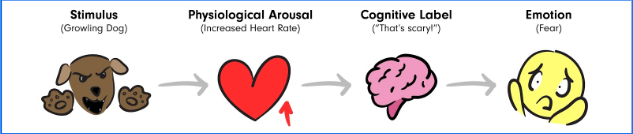
Bodily + Cognitive Label = Emotion
Emotion is the result of physiological arousal and a cognitive label; our interpretation of arousal determines the specific emotion we experience
Broaden-and Build Theory
Positive emotions help us think more openly and try new things, making us stronger
Facial Feedback Effect
Tendency of facial muscle to trigger feelings such as fear, anger, or happiness
Biofeedback Therapy
An individual learns how to change physiological activity for the purposes of improving health
Polygraphs
Measure several physiological indicators of emotion
Basic Emotions
Sadness, anger, fear, disgust, contempt, happiness, and surprise
Universal Emotions
Certain emotional expressions are recognized and experienced similarly across cultures
Display Rules
Different rules on displaying emotions depending on the situation