Cellular Respiration
In-Class Notes
Cellular Respiration
- A way to transform energy to a usable form for organisms
- The process in which an animal makes ATP
- Everything uses cellular respiration
Photosynthesis and cellular respiration
- photosynthesis= plants using the sun to make ATP
Plants need h2o and co2 and light/heat to make oxygen for us/animals, makes glucose (C₆H₁₂O₆) for animals
Plants in the ground can’t perform photosynthesis and get ATP from Calvin Cycle
Plants in the ground use cellular respiration
Cellular Respiration= Plants AND Animals make ATP
The products of photosynthesis are the reactants of cellular respiration and the products of cellular respiration are the reactants of photosynthesis
Autotroph: something that makes its food using inorganic molecules/substances, ex: plants
Heterotroph: eat autotrophs
Cellular respiration happens in 3 phases
- Glycolysis (2 ATP)
- To break down sugar
- Citric Acid Cycle (Krebs Cycle) 2 (ATP)
- \
- \
- Oxidative Phosphorylation (Electron transport) (32 ATP)
- Make ATP
Happens in cytoplasm, outside mitochondria
Step 1:
Breaking glucose apart (6C)> 2 pyruvates (3C)
C₆H₁₂O₆ is broken into 2 equal smaller parts (Pyruvic (acid))
Pyruvic acid has 3 carbons
In the end, 2 ATP is spent and four ATP is made
2ATP, 2 NADH, 2 Pyruvate
Step 2: Kreb cycle
- (step 0.5) becomes by taking 1C and an e- off
- (step 1) After becomes , it joins (4C) to form (6C) Acetyl CoA (2C) + oxaloacetate (4C)= citrate (6C)
- (step 2) rearranged to
- (step 3) becomes (5C) one carbon is released
- (step 4) becomes (4C)
- (step 5) to
- (step 6) becomes (4C) and FADH2 is made
- (step 7) becomes (4C)
- (step 8) becomes and the third molecule of NADH is produced
Gross production ATP: how much ATP you would've had
Net production ATP: how much ATP you have left
NAD+: like a uber eats/doordash person, a carrier. A type of chemical that carries electrons to be delivered/ a molecule that carries and delivers electrons
Protons: positive (+)
Electrons: negative (-)
Neutrons: neutral no charge (0)
Section 1 Vocabulary
Cellular Respiration: A process where cells make ATP by breaking down organic compounds
Pyruvic Acid: Produces a small amount of ATP and NADH
NADH: An electron carrier molecule
Anaerobic: When oxygen isn’t present
Aerobic Respiration: When oxygen is present, pyruvic acid is broken down and NADH is used to make a lot of ATP
Glycolysis: A biochemical pathway where one 6C molecule of C₆H₁₂O₆ is broken down into two 3C molecules
NAD+: An organic molecule that accepts electrons during redox reactions
Fermentation: When some cells convert pyruvic acid into compounds through other biochemical pathways that make NAD+
Lactic Acid fermentation: a process that plays a vital part in making dairy products
Alcoholic Fermentation: A process that converts pyruvic acid to ethyl alcohol
Kilocalorie: (kcal), 1 kilocalorie= 1,000 calories (cal)
Section 2 Vocabulary
Mitochondrial Matrix: The space inside the inner membrane of the mitochondria
Acetyl CoA: Contains 2 carbon atoms
Krebs Cycle: A long process of taking apart and putting together compounds
Oxaloacetic Acid: A 4-carbon compound
Citric Acid: A 6-carbon compound that is created by combining Acetyl CoA and Oxaloacetic Acid
FAD: A molecule similar to NAD+, that accepts electrons during redox reactions
FRQ’s
FRQ#1: the symbiotic relationship between heterotrophs and autotrophs. How do both cellular respiration and photosynthesis chemical reactions contribute to the growth and development of heterotrophs and autotrophs? a visual model that represents this relationship.
Input= reactant, output= product Symbiotic: give and get, everybody benefits
FRQ#2: Draw and label the mitochondria. Be sure to list the function of the various components of each part of the mitochondria.
Intermembrane Space: Small space to quickly accumulate protons
Matrix: Has appropriate enzymes and a suitable pH for the Krebs cycle
Outer Membrane: Contains transport proteins for shutting pyruvate into mitochondria
Inner Membrane: Contains ETC and ATP synthase for oxidative phosphorylation
Cristae: Highly folded so as to increase SA:V ratio
\\
<<Autotrophs make their food using inorganic molecules. Heterotrophs eat autotrophs to get energy. Heterotrophs and autotrophs benefit from each other because the autotrophs give heterotrophs the oxygen that they need and the heterotrophs give autotrophs the carbon dioxide that they need. Cellular respiration can be used in autotrophs and heterotrophs. Cellular respiration is used in plants that don’t have access to light energy. The reactants in photosynthesis (6CO₂+ 6H₂O + energy) are the products of cellular respiration and the reactants in cellular respiration (C₆H₁₂O₆ + 6O₂) are the products in photosynthesis. They both require and generate ATP that the mitochondria provide.<<
Include: Matrix, Intermembrane space, outer membrane space, cristae, inner membrane
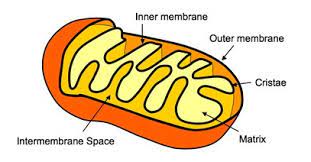
FRQ#3: Using the word bank provided, complete the following paragraph.
Include: Matrix, Intermembrane space, outer membrane space, cristae, inner membrane
MCQ’s
- MCQ #1: What is the goal of cellular respiration? (1 point)
- To create ATP
- MCQ#2: Which is NOT a product of cellular respiration?
- \
- \
- MCQ#3: Which is a reactant of cellular respiration?
- Oxygen and glucose
- MCQ#4: What is a product of cellular respiration?
- Carbon dioxide, water, and ATP
- MCQ#5: What is unique to photosynthesis?
- Plants
- MCQ#6: What only happens in cellular respiration?
- Carbon dioxide and water are products
- MCQ#7: What do they both have in common?
- Plants
MEMORIZE
Photosynthesis
6CO₂+ 6H₂O + energy→ C₆H₁₂O₆ +6O₂
Aerobic respiration
C₆H₁₂O₆ + 6O₂ →6CO₂ + 6 H₂O (sweat) + energy (ATP)
\n
Notes
In lactic acid fermentation. an enzyme converts pyruvic acid into another 3-carbon compound (lactic acid)
The fermentation requires the transfer of an H atom from NADH and a free proton (H+) to pyruvic acid, NADH is oxidized to form NAD+, NAD+ is used in glycolysis where it is made into NADH
Alcoholic fermentation is a 2 step process
- 1 CO2 molecule is removed from pyruvic acid making it a 2C compound
- 2H atoms are added to the 2C compound to make ethyl alcohol