PENTOSE PHOSPHATE PATHWAY
Definition
The pentose phosphate pathway is a metabolic pathway that runs alongside glycolysis.
it doesn’t make or produce ATP
occurs in all cells
the products are important for producing reducing power for anabolic processes
What does it produce
Pentoses = 5 carbon sugars
Produce ribose‑5‑phosphate (for nucleotide and DNA/RNA synthesis)
Pentoses are responsible for making some biomolecules
RNA, DNA, ATP, ADP, AMP and Coenzymes
Produce NADPH (for reductive biosynthesis and protection against oxidative damage)
Location:
it occurs in the cytosol
active in the adipose tissue
as there are anabolic processes happening there
NADPH PRODUCTION AND USAGE
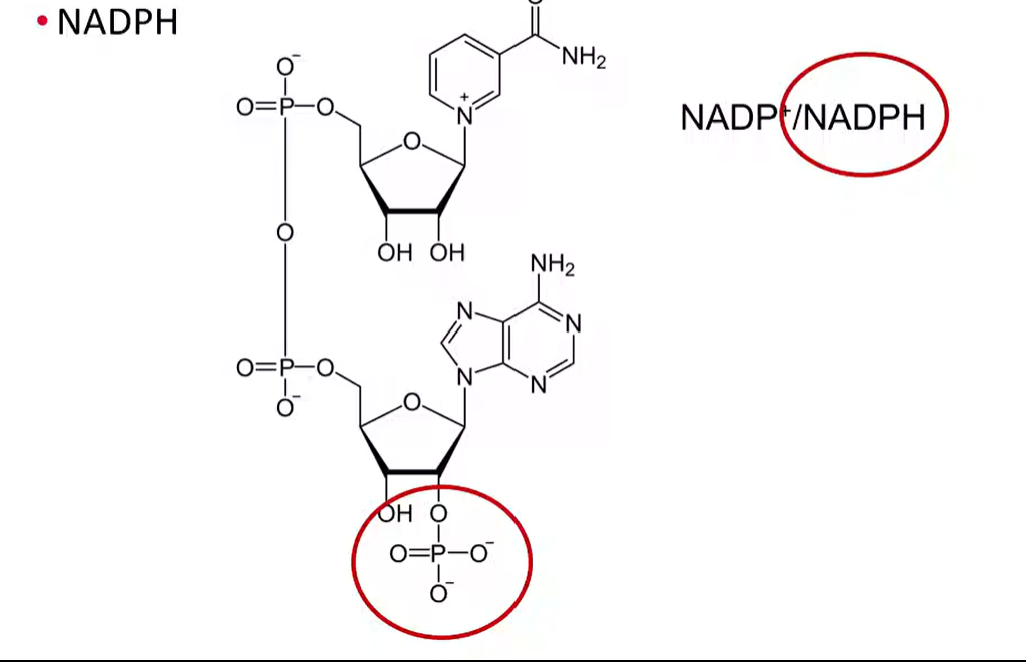
Structure:
It has a phosphate attached to it
it can be reduced and oxidised between 2 forms
NADP+
NADPH (anabolic process)
THIS IS NOT NADH
which is produced in the Krebs cycle and in glycolysis
used in catabolic processes
Importance of NADPH:
Critical for biosynthetic reactions, including fatty acid synthesis and detoxification processes in macrophages.
Used in the synthesis of:
cholesterol
nucleotides
neuro-transmitters
macrophages
reducing agent in detoxification
fatty acids
Synthesis of Pentoses (5 carbon sugars)
it is in the form of ribose 5 phosphate
These are important in:
ATP
CoA
RNA
FAD
NADH
DNA
Two Stages:
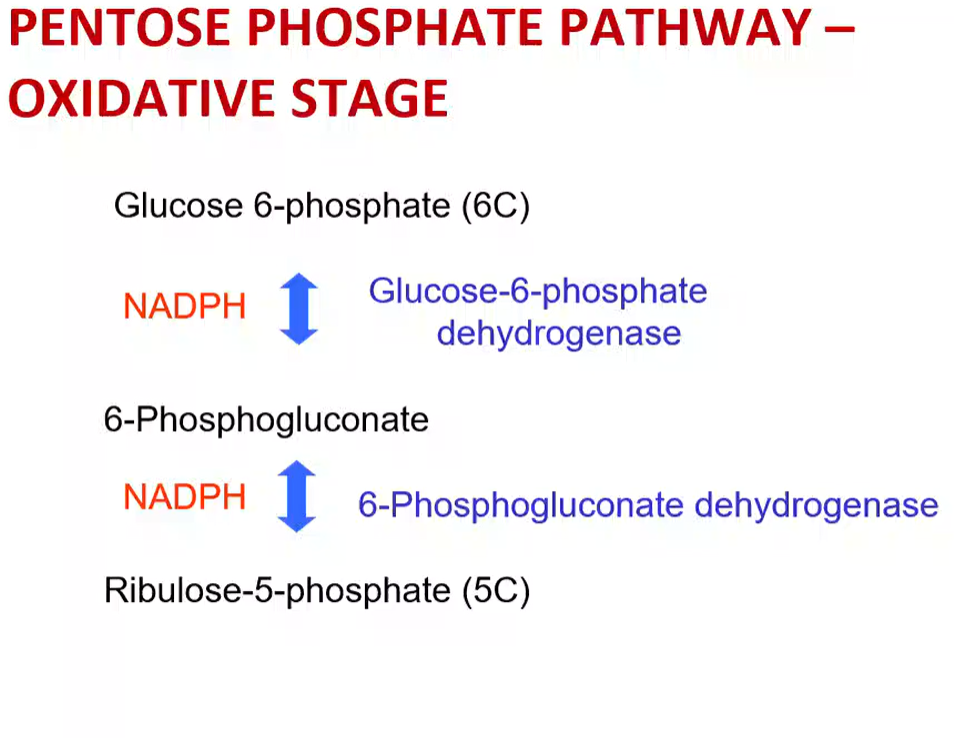
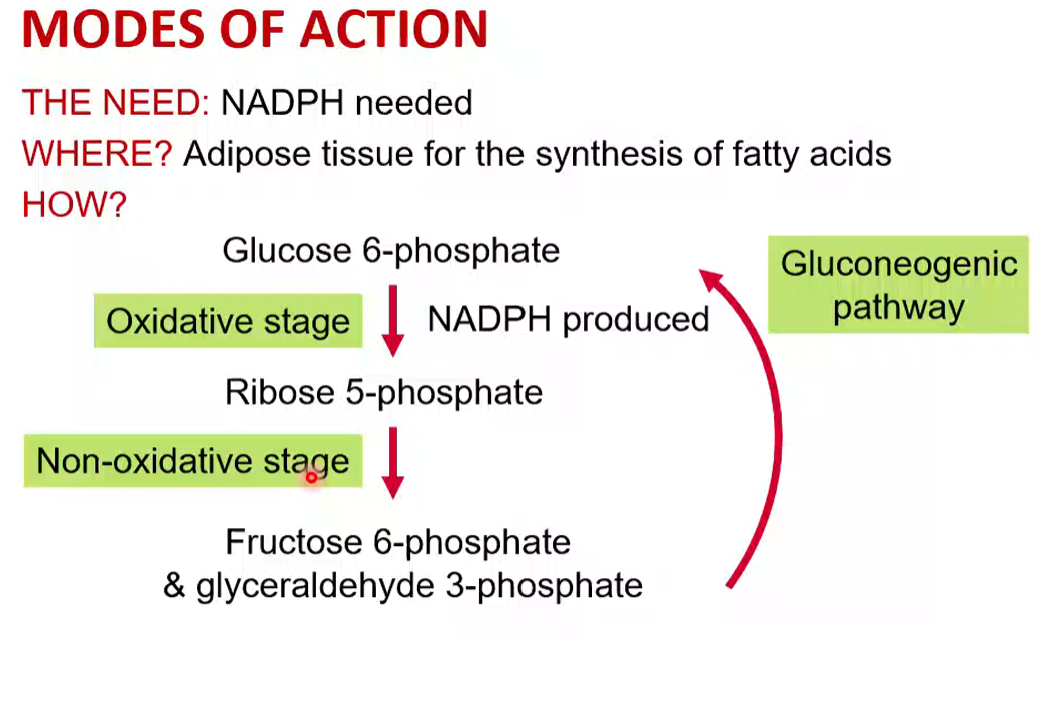
Oxidative Stage:
Converts Glucose 6-phosphate into Ribulose 5-phosphate
P
roducing NADPH x2
releasing CO₂
Non-Oxidative Stage:
This is when we rearrange the carbon skeletons of these molecules
1st ribulose-5-phosphate is converted into ribose-5-phosphate
important for biomolecules

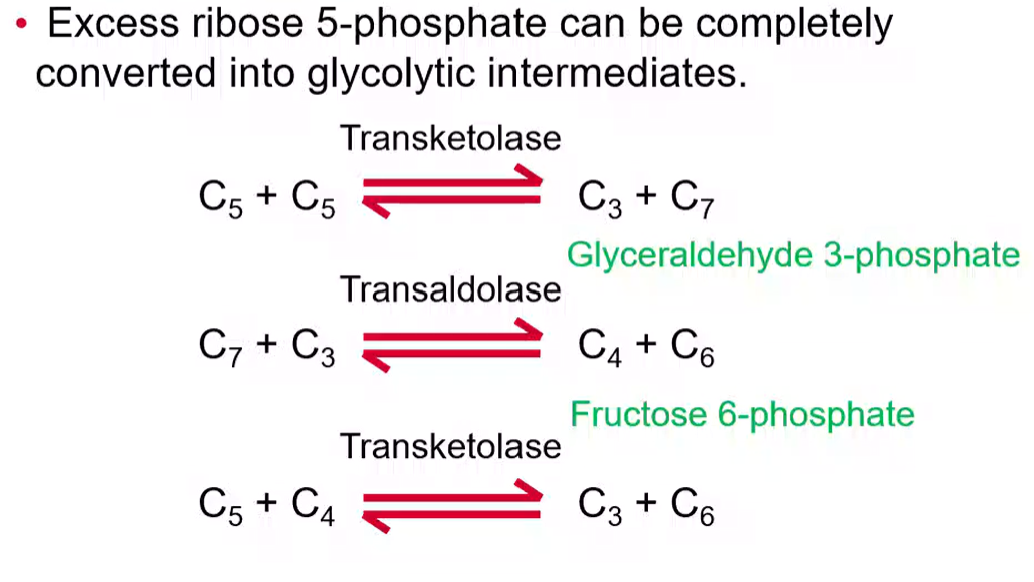
if there is an excess of ribose-5-phospate as we have enough biomolecules
then the ribose-5-phosphate can be converted into metabolites or intermediates of glycolysis
that is through enzymes
transketolases
these will move 2 carbons from one molecule to another
transaldolases
these transfer 3 carbons from one molecule to another
Summery
Interconversion of ribose-5-phosphate and glycolytic intermediates
via transketolase and transaldolase
allows excess ribose-5-phosphate to be utilized in glucose degradation pathways.
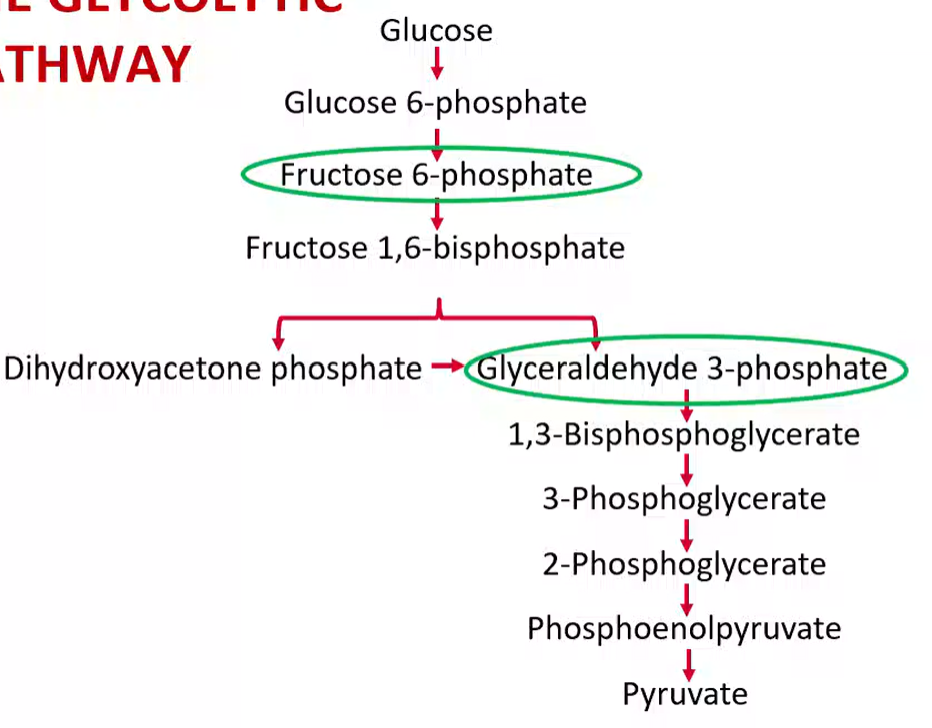
This shows that some of the products of transketolase and transaldolase can be used in glycolysis
fructose 6-phoshate
glyceraldehyde 3-phopshate
CONTROL OF THE PENTOSE PHOSPHATE PATHWAY
The PPP is regulated by the enzyme glucose-6-phosphate dehydrogenase.
this makes sense as it is the first enzyme in the pathway
in the oxidative stage
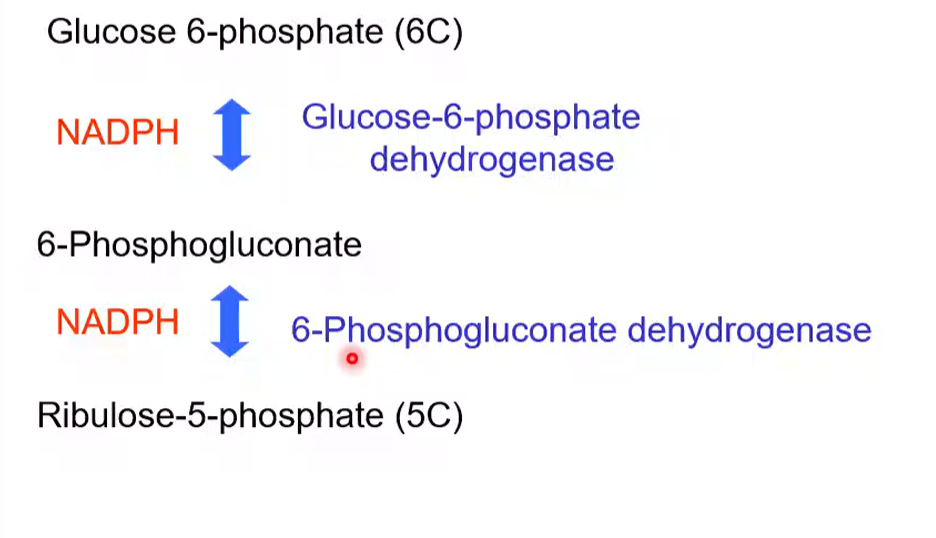
Glucose 6-phosphate Dehydrogenase (G6PD):
its a homodimer which is a protein made up of 2 identical subunits that bind together
allosterically regulated
by NADPH (its product)
it is a ihibitor
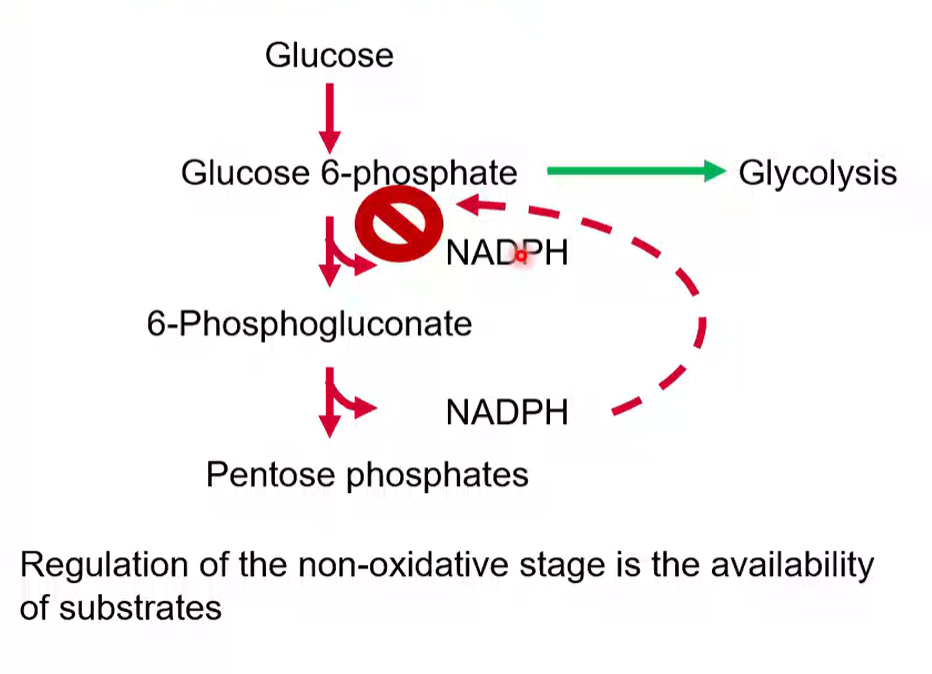
THE NON_OXIDATIVE STAGE IS BASED ON THE AVAILABILITY OF SUBSTRATE
Examples of how the Oxidative and non oxidative stage are regulated
- for this w want to know why these processes are behaving in the way that they are
BALANCED NEED FOR NADPH AND PENTOSES
oxidative stage as NDPH is being produced
and then ribose 5 -phosphate need to be converted into biomolecules
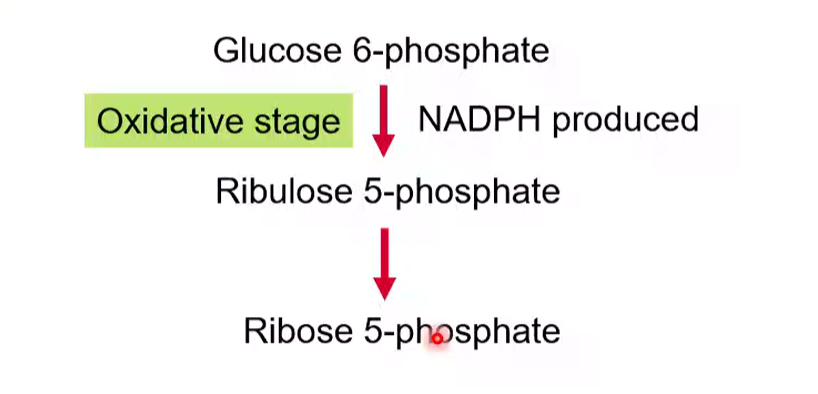
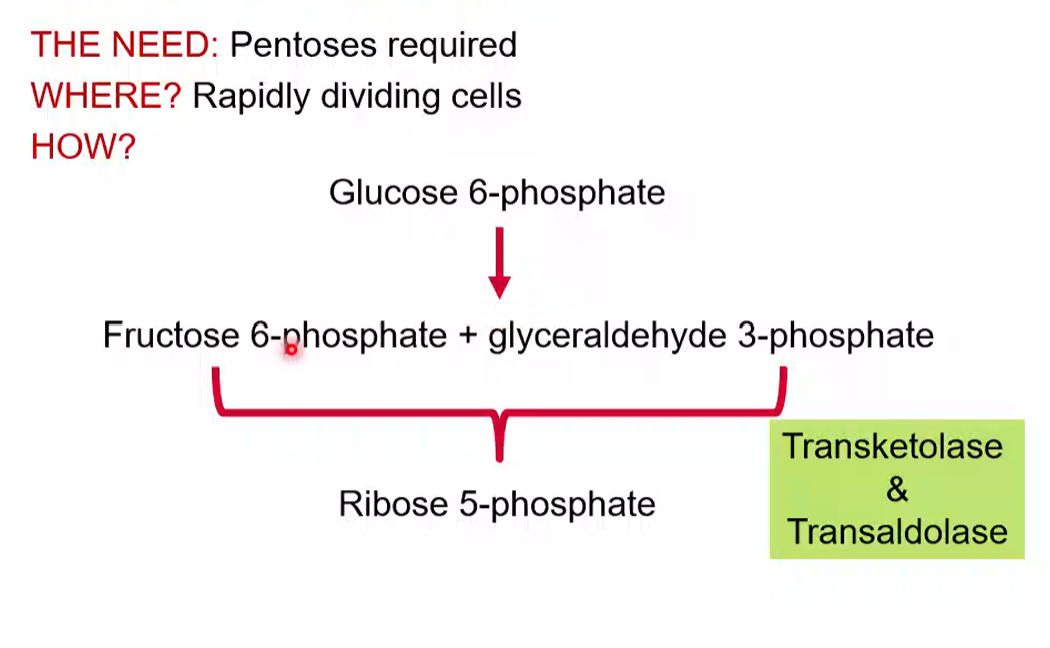
LOTS OF PENTOSES
there are cells that are rapidly dividing
so we need a lot of nucleotides
to make DNA
glucose 6-phosphate from glycolysis form the glycolytic intermediates
which can be rearranged into a lot of 5 carbon pentoses
made into DNA
NEED A LOT OF NADPH
in adipose tissue
NADPH is needed for anabolic processes and synthesis of fatty acids
the NADPH is produced in the oxidative stage
which ends in ribose 5-phosphate
we can rearrange ribose 5-phosphate through the non-oxidative stage
to produce intermediates which can make more glucose-6-phosphate
CLINICAL IMPACT OF PPP DEFICIENCY
Glucose-6-phosphate Dehydrogenase Deficiency:
- Common genetic disorder affecting sugar metabolism; associated with hemolytic anemia due to oxidative stress.
- Individuals may show sensitivity to certain drugs, such as primaquine (used for malaria).
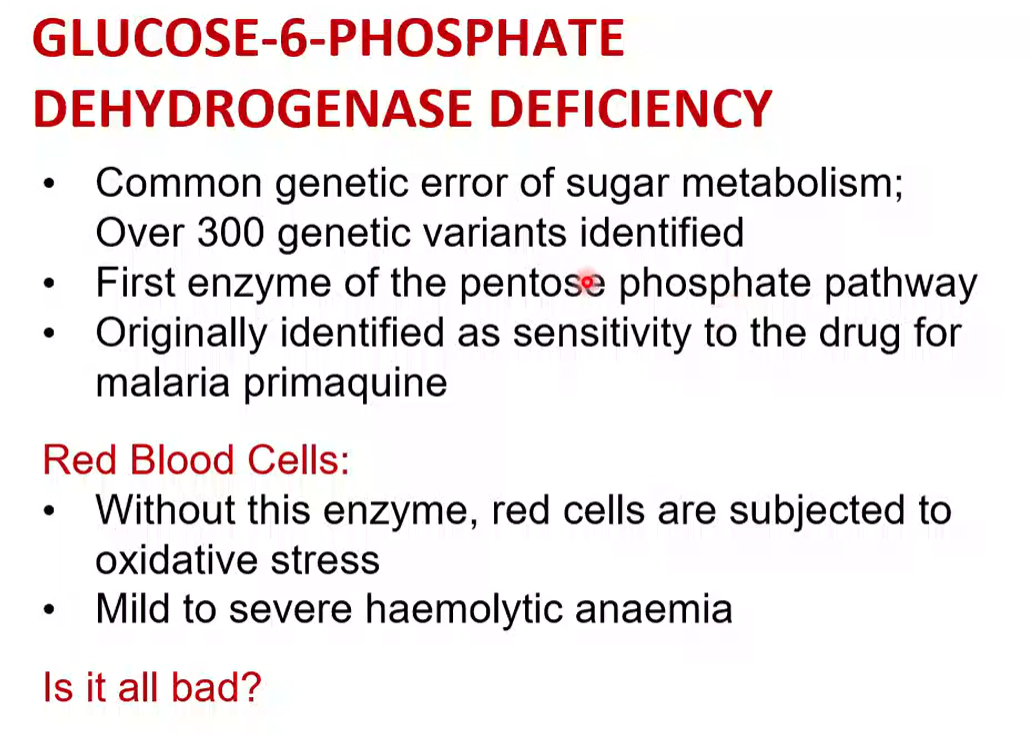
there are so many ppl who have this as deficiency in the enzyme can help ppl with malaria
SUMMARY
Understand how gluconeogenesis and the pentose phosphate pathway generate glucose and NADPH, respectively.
Recognize the importance of regulation in metabolic pathways for maintaining homeostasis.