W2/L2 Culture
Definition of Culture:
Culture encompasses a wide range of elements that shape the way a society functions and its members' behaviours.
There are various definitions of culture, each emphasiSing different aspects of this complex concept.
Culture is defined as "the values, ethics, rituals, traditions, material objects, and services produced or valued by the members of a society." (Solomon)
- This definition highlights the multifaceted nature of culture, including both tangible and intangible aspects.
Culture is described as "the set of shared beliefs, attitudes, and behaviours associated with a large and distinct group of people." (Sethna and Blythe)
- This definition emphasises the collective nature of culture and how it unifies a specific community.
Culture is defined as "the sum total of learned ideas, beliefs, values, knowledge, and customs that regulate the behaviors of a particular society." (Szmigin and Piacentini)
- This definition underscores the educational and regulatory role of culture in guiding individuals' actions within a society.
Key Insights:
- Culture is learned: People acquire cultural norms, values, and behaviors through socialization, upbringing, and exposure to their society or group.
- Deeply ingrained: Culture often becomes so deeply ingrained in individuals that they perceive their society's rules as natural laws.
- Cultural influence on behavior: Culture is a significant driver of human behavior and influences almost every aspect of our lives, including our consumption behavior.
Implications:
- Culture is a dynamic and ever-evolving concept that shapes the way people think, act, and interact within their communities.
- Understanding culture is crucial in fields such as marketing, sociology, and anthropology, as it plays a fundamental role in shaping consumer preferences, societal norms, and group dynamics.
Key Takeaways for Active Recall:
1. Culture is a multifaceted concept encompassing values, ethics, rituals, traditions, material objects, and services.
2. It involves shared beliefs, attitudes, and behaviors of a specific group of people.
3. Culture is learned and deeply ingrained, often perceived as natural laws.
4. It significantly influences human behavior, including consumption behavior.
5. Understanding culture is essential for various fields, as it shapes societal norms and consumer preferences.
Remember that culture is not a static concept; it evolves over time and varies across different societies and groups.
Culture is dynamic
Cultures are dynamic and open systems that continuously evolve by integrating old and new ideas.
Marketers must avoid having a fixed view of any culture because of its ever-changing nature.
Cultural systems encompass three functional areas: Ecology, Social Structure, and Ideology.
Functional Areas of Cultural Systems:
Ecology:
Concerns how resources are acquired and distributed within a culture.
Reflects the economic aspects of a society, including production, distribution, and consumption of goods and services.
Social Structure:
Focuses on how people maintain order in their social lives.
Examples include relationship structures (monogamous or polygamous), family arrangements (nuclear or extended families), and societal roles.
Ideology:
Encompasses the mental characteristics of a group of people and their relationship with their environment and social groups.
Includes beliefs, values, attitudes, and worldviews that shape the culture's identity and behavior.
Cultural Evolution:
Cultural systems are in a state of continuous evolution.
This evolution is influenced to a significant extent by the advertising and fashion industries.
These industries link functional products with symbolic qualities such as sexiness, sophistication, or coolness.
When products are associated with these qualities, consumers adopt them to express their own identity.
Implications for Marketers:
Marketers need to recognise that cultures are not fixed entities; they evolve over time.
Successful marketing involves understanding and adapting to the evolving cultural dynamics.
Products become powerful symbols of identity when linked to desirable qualities.
Marketers can tap into these symbolic qualities to appeal to consumers' desires and self-expression.
Key Takeaways for Active Recall:
Cultures are open and continuously evolving systems.
Cultural systems encompass three functional areas: Ecology, Social Structure, and Ideology.
Ecology deals with resource acquisition and distribution.
Social Structure pertains to maintaining order in social life.
Ideology encompasses mental characteristics and beliefs.
Cultural evolution is influenced by industries like advertising and fashion.
Products gain power as symbols of identity when linked to desirable qualities.
Marketers must adapt to evolving cultural dynamics for successful campaigns.
Understanding cultural evolution and the interplay of functional areas is crucial for marketers aiming to resonate with consumers' evolving preferences and identities.
The culture production process
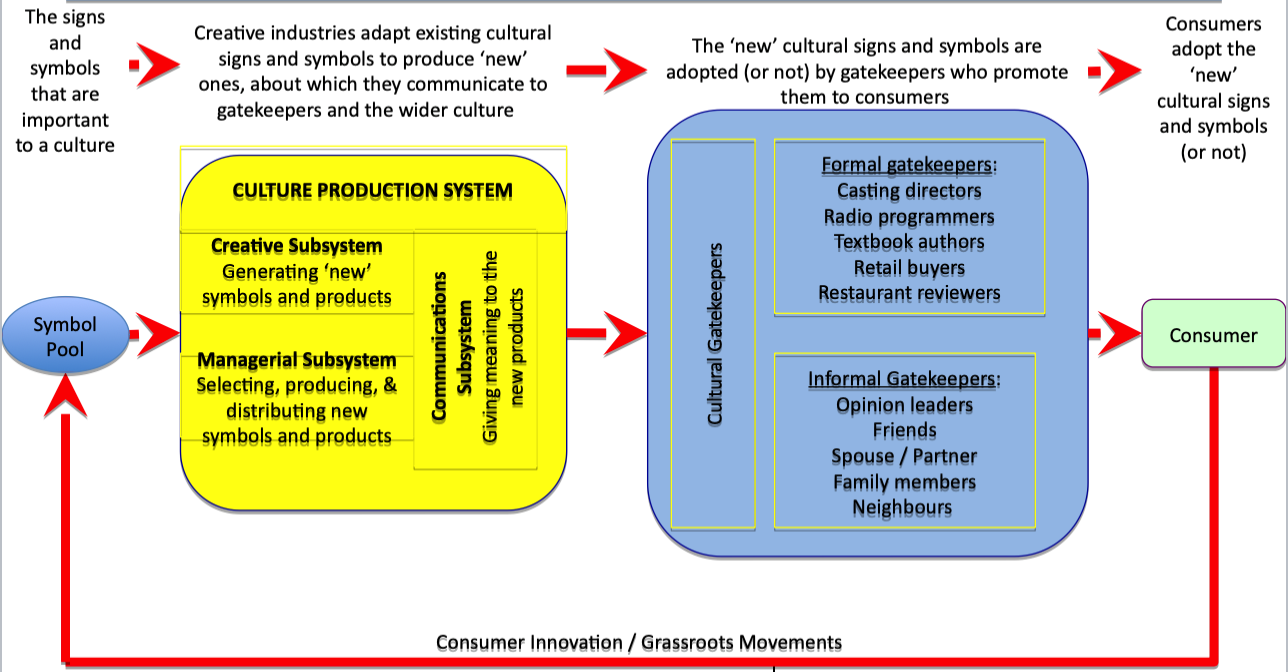
Culture is learned and acquired from an early age through various means.
The base elements of culture are instilled in individuals through a combination of formal, informal, and technical learning processes.
Formal Learning:
Involves structured teaching and guidance by adults and older siblings.
Adults and mentors play a significant role in imparting cultural norms, values, and behavioral expectations to children.
This formal learning helps children understand how to behave within their cultural context.
Informal Learning:
Primarily based on imitation and observation.
Children learn by emulating the behaviors and actions of those around them, including family members, friends, and even media influences like TV characters.
Informal learning is often subconscious and occurs through daily interactions.
Technical Learning:
Occurs within an educational environment, typically in schools.
Teachers provide structured instruction to children about what, how, and why certain cultural norms and practices exist.
Technical learning aims to provide a deeper understanding of the cultural elements and their significance.
Implications:
Culture is not innate; it is acquired through a combination of learning processes.
Informal learning through imitation and observation is a fundamental aspect of cultural acquisition.
Formal and technical learning also contribute to a child's understanding of cultural norms, values, and behaviors.
Key Takeaways for Active Recall:
Culture is learned from an early age.
Cultural learning involves formal, informal, and technical processes.
Formal learning includes guidance from adults and older siblings.
Informal learning is based on imitation and observation of others.
Technical learning occurs in educational environments, providing a deeper understanding of cultural elements.
Understanding how culture is acquired through these learning processes is essential for comprehending how individuals develop their cultural identities and behaviors.
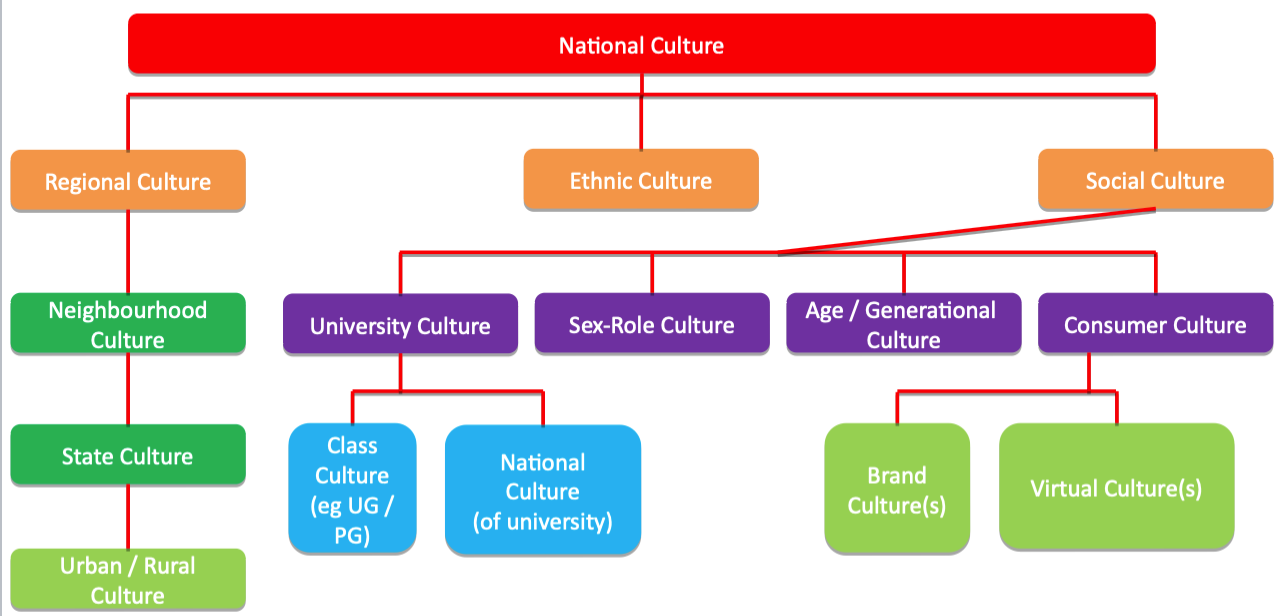
Culture is Hierarchical
Reality Engineering (making culture)
Reality engineering is a phenomenon in which elements of popular culture are co-opted by marketers and transformed into tools for promotional strategies.
This process has a significant impact on how individuals perceive and interact with the world around them.
The Culture Production System:
Consider how much of our perception and knowledge is influenced by the fictitious elements of popular culture.
Popular culture plays a pivotal role in shaping our understanding of reality and influencing our behaviors.
Product Placement in Television (ITV):
ITV in the UK offers a service where brands can be seamlessly integrated into their most engaging programs.
This integration allows advertisers to target large audiences effectively.
ITV has incorporated over 4,500 hours of product placement into their programming since 2011.
Product Placement in Movies:
In the realm of movies, product placement is a prominent strategy.
In 2017, the movie "The Fate of the Furious" garnered an astounding $135 million in product placement and featured over 100 different brands on screen.
This movie generated an impressive $1.23 billion at the global box office, showcasing the power of product placement in influencing consumer behavior.
Cultural Influence of Global Media:
Popular global media has a profound effect on cultures worldwide, favoring the brands it promotes.
It shapes cultural norms, preferences, and behaviors, often blurring the line between reality and fiction.
Implications:
Reality engineering is a strategic approach that marketers use to embed their brands within popular culture.
Popular culture, including television and movies, serves as a powerful medium for promoting brands and influencing consumer behavior.
The impact of global media on cultures is significant, as it molds societies in favor of the brands it endorses.
Key Takeaways for Active Recall:
Reality engineering involves marketers appropriating elements of popular culture for promotional purposes.
Popular culture, including television and movies, significantly influences our perception of reality and behaviors.
Product placement is a prevalent strategy in both television and movies, generating substantial revenue for brands.
Global media plays a crucial role in shaping cultural norms and favoring endorsed brands.
Understanding the concept of reality engineering and the influence of popular culture on our cultures is essential in the fields of marketing, media studies, and sociology. It highlights the power of media in shaping consumer preferences and behavior.
Culture and behaviour
Culture significantly influences our social structure, shaping values and norms that guide our behaviors.
Values provide general principles for distinguishing between good and bad goals.
Norms, derived from values, set rules for what is considered right or wrong and what is acceptable or unacceptable in a society.
Types of Norms:
Enacted Norms:
These norms are explicitly decided upon and formally established.
Examples include traffic rules where a green light signifies "go."
Crescive Norms:
Crescive norms are deeply ingrained in a culture and are usually learned through interaction with other members of that culture.
They can be challenging to discern when navigating social situations in different countries.
Crescive Norms Include:
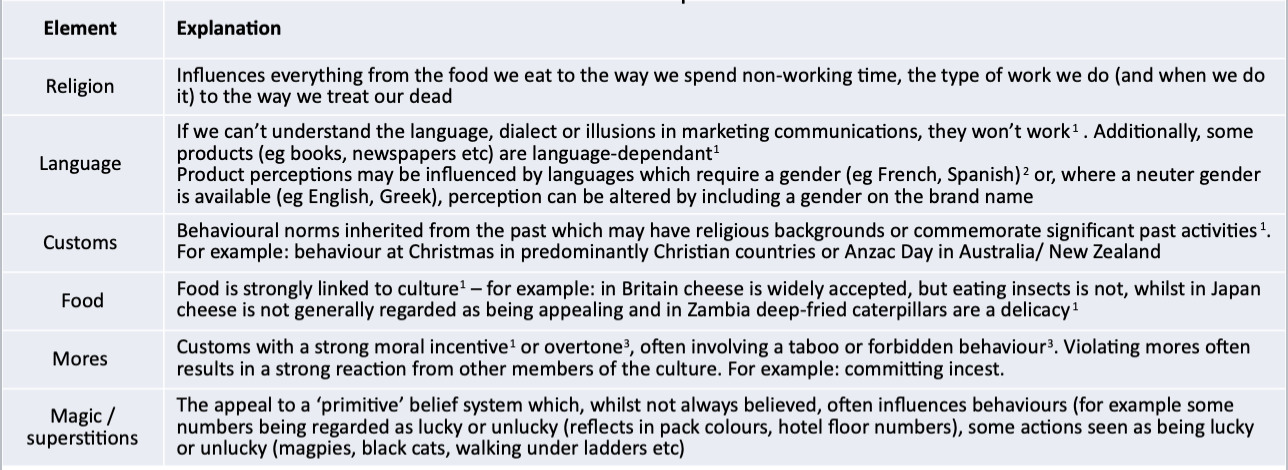
Customs:
Customs are norms handed down from the past, regulating basic behaviors.
Examples include who is responsible for housework and whether to offer guests refreshments.
Mores:
Mores are customs with a strong moral overtone and often involve taboos.
Examples include prohibitions against incest or cannibalism.
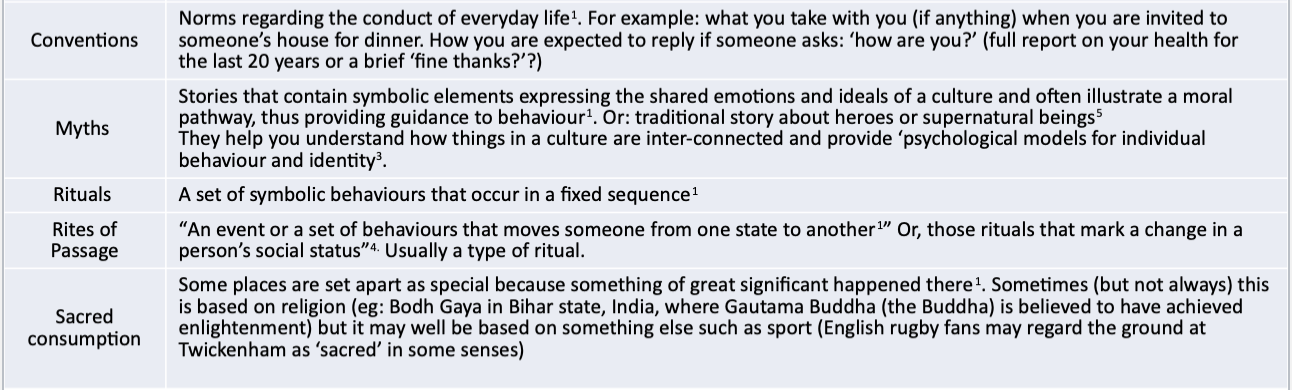
Conventions:
Conventions pertain to norms governing everyday life conduct.
Examples include appropriate attire for social events, home furnishing, and dinner party etiquette.
Implications:
Culture plays a crucial role in shaping our values and, consequently, our norms.
Understanding enacted and crescive norms is essential for navigating social situations within different cultures.
Crescive norms, including customs, mores, and conventions, guide our behavior in various social contexts.
Key Takeaways for Active Recall:
Culture influences social structure, values, and norms.
Values provide general principles for distinguishing between good and bad goals.
Norms are rules governing what is right or wrong, acceptable, or unacceptable.
Enacted norms are explicitly established, while crescive norms are learned through cultural interaction.
Crescive norms include customs, mores, and conventions, each regulating different aspects of behavior.
Understanding the role of culture in shaping values and norms is essential for cross-cultural communication and adaptation. It helps individuals navigate diverse cultural contexts and fosters effective social interactions.
Sethna and Blythe argue our culture sits inside our social environment, which is made up of both macro and micro elements. So if you’re thinking about behavioural influences: yes, of course, culture is important, but so is any subculture that you may belong to, so is your social class and so are your social interactions
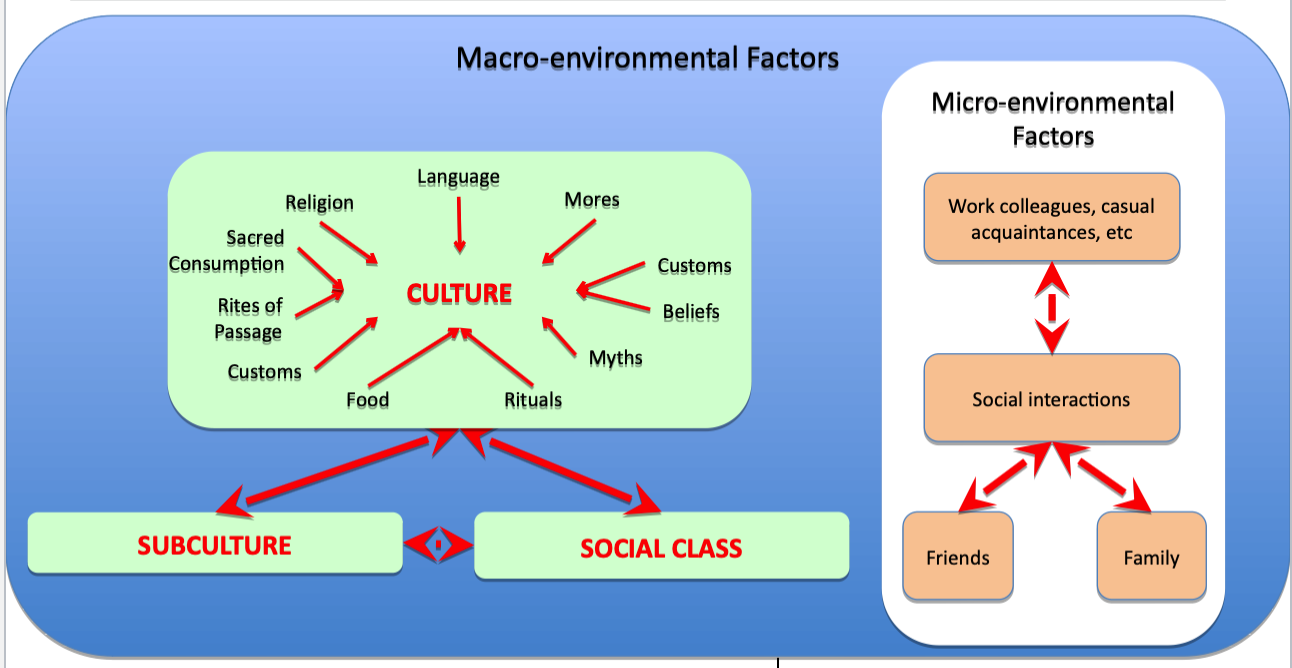
Elements of culture
Dimensions of culture (measuring culture itself)
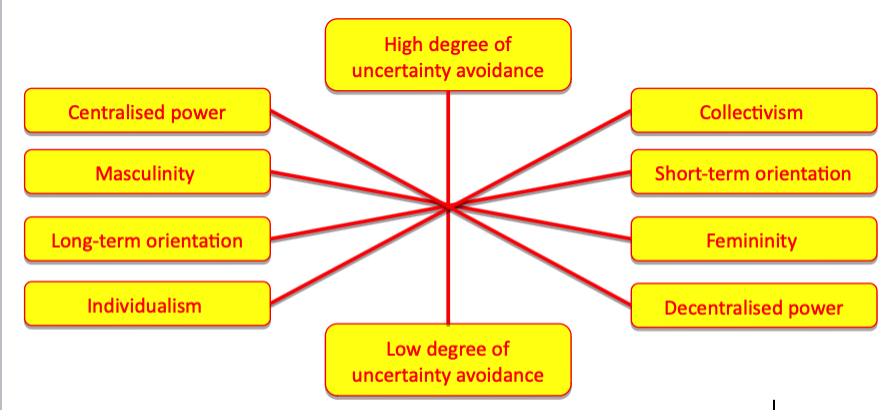
Geert Hofstede (1980) identified five national characteristics that can be used to map a nation's culture.
These cultural dimensions represent a sliding scale between contrasting values and traits, offering insights into cultural differences.
Hofstede's Five Cultural Dimensions:
Individualism/Collectivism:
This dimension reflects how much a culture values individual freedoms and independence versus collective group identity and interdependence.
Individualistic cultures prioritize personal achievements and autonomy, while collectivist cultures emphasize group harmony and cooperation.
Uncertainty Avoidance:
Uncertainty avoidance measures the extent to which a culture follows rules and customs to mitigate risk and uncertainty.
Cultures high in uncertainty avoidance tend to have strict adherence to established norms and regulations, while low uncertainty avoidance cultures are more flexible and adaptable.
Power Distance:
Power distance measures the degree to which power is centralized within a culture.
In cultures with high power distance, there is a significant hierarchical structure, and authority figures hold substantial power. In contrast, low power distance cultures tend to have more egalitarian power distribution.
Masculinity/Femininity:
This dimension assesses how much a culture values traditionally "masculine" attributes like assertiveness and achievement compared to "feminine" attributes like nurturing and concern for others.
Masculine cultures prioritize competition and success, while feminine cultures emphasize cooperation and caring for the less fortunate.
Long-Term/Short-Term Orientation:
Long-term orientation measures a culture's focus on planning for the future versus living in the present.
Cultures with a long-term orientation prioritize virtues like persistence, thrift, and adaptability, whereas short-term oriented cultures emphasize immediate gratification and tradition.
Critiques of Hofstede's Model:
Hofstede's model has faced criticism for several reasons:
The research was conducted in the late 1960s, and cultural dynamics may have changed since then.
The study primarily involved employees from IBM, which had a strong corporate culture that could have influenced the results.
The model may oversimplify the complexities of cultural diversity and variations within countries.
Implications:
Hofstede's cultural dimensions provide a framework for understanding cultural differences and their impact on behavior and communication.
Recognizing these dimensions can aid in cross-cultural interactions, business negotiations, and international cooperation.
Key Takeaways for Active Recall:
Hofstede identified five cultural dimensions to map a nation's culture.
These dimensions include individualism/collectivism, uncertainty avoidance, power distance, masculinity/femininity, and long-term/short-term orientation.
Each dimension represents a contrast between cultural values and traits.
Hofstede's model has been criticized for its research context and potential oversimplification.
Understanding cultural dimensions is valuable for cross-cultural interactions and international business.
While Hofstede's model has limitations, it remains a useful tool for gaining insights into cultural differences and facilitating effective communication and collaboration across diverse cultures.