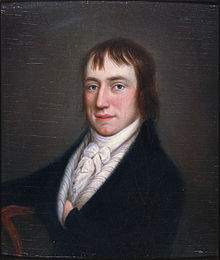
William Wordsworth
Authorial Context: William Wordsworth (1770–1850)
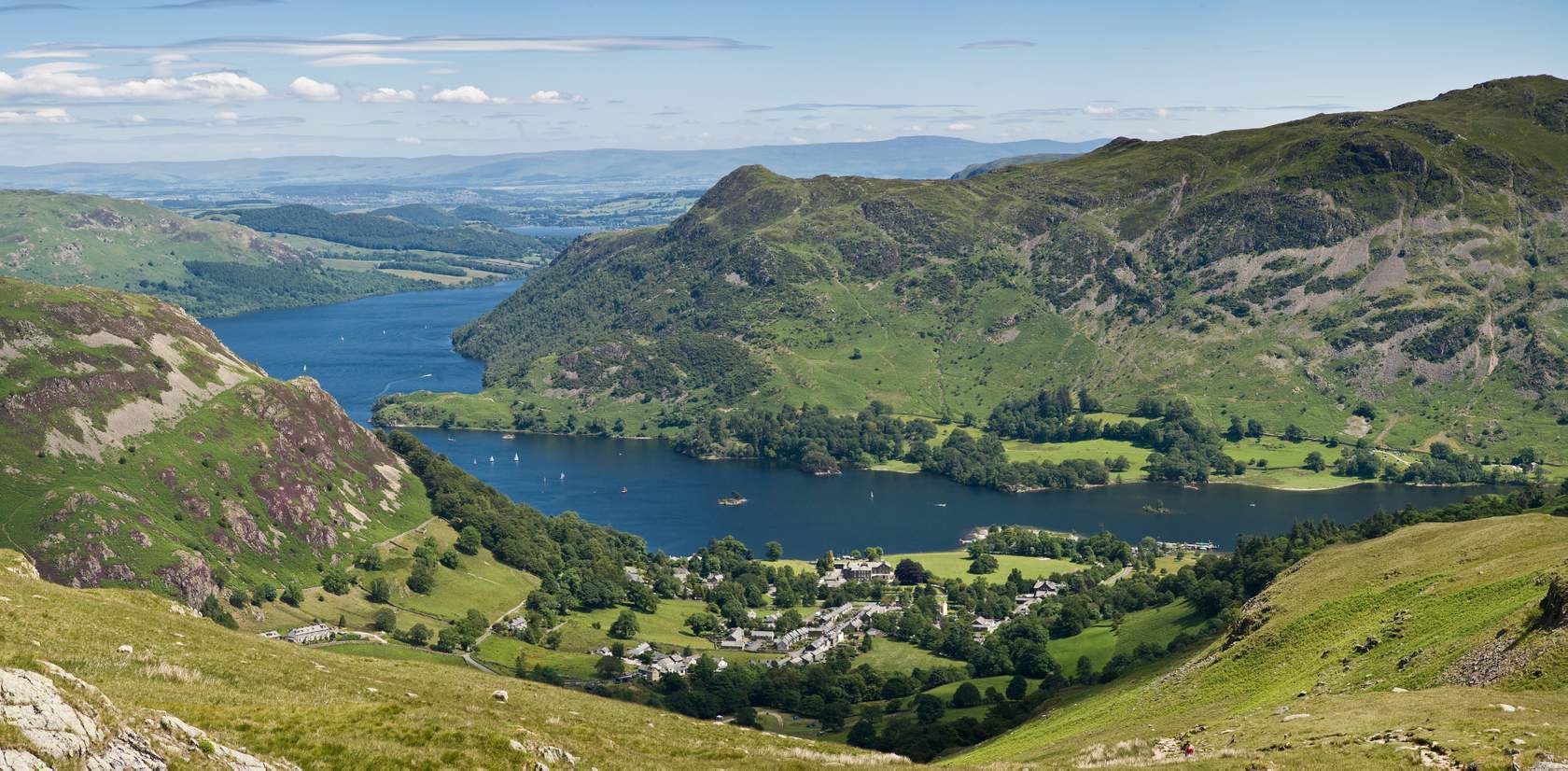
The poet William Wordsworth was born in the "Lake District" of northwestern England. As a boy, he read and memorized classic plays and poems while enjoying the quiet beauty of the English countryside.
Wordsworth began attending St. John's College in 1787, but he would return to the Lake District, his poetic inspiration, to live and write in his later years.
Soon after graduating, the young poet moved to France for a year, soaking up the ideals of the French Revolution. He believed the revolution would have a positive impact on society.
But the revolution was not the only thing Wordsworth fell in love with in France: he also met a French woman, Annette, with whom Wordsworth had a daughter named Caroline. The couple could not marry before a nearly-penniless Wordsworth had to return to England. (The escalating revolution meant that Wordsworth could not return to France for many years. When he did visit, it was to settle things with Annette before marrying his wife, Mary.)
Back in England, Wordsworth moved in with Dorothy, his sister, who encouraged and aided his poetry.
Wordsworth also made a friendship with Samuel Taylor Coleridge, which would heavily impact his writing career. The two were inseparable for several years, sharing ideas, philosophies, and even lines. Together, they published a formative book for Romantic poetry: Lyrical Ballads, with a Few Other Poems (1798). The book contained poems from both of them.
Shortly after, Wordsworth began working on The Prelude, an autobiographical work about the life of a poet that he would continue to tweak for decades.
Wordsworth continued to write throughout the 1800s but never quite as potently as during his collaboration with Coleridge. His later life was marred by tragedies like the deaths of his brother and three of his children. A few years before his death, Wordsworth accepted the title of Poet Laureate. The Romantic poet died and was buried in the Lake District, his true Muse.
Wordsworth's Legacy
William Wordsworth became increasingly popular over his lifetime, and this popularity only grew after his death. He is now known as one of the "Lake Poets" (alongside Samuel Taylor Coleridge and Robert Southey).
Wordsworth broke with poetic convention by writing in "common language" that anyone could understand, not just highly-educated readers. His writing clearly expressed the Romantic understanding of the poet, as well as the Romantic perspective on nature.
Excerpt from The Prelude (1805)
Poem Context
Wordsworth wrote and revised The Prelude from age 28 until his death when his wife published it for him. This excerpt comes from an 1805 version of the poem.
The autobiographical poem contains 13–14 books in which Wordsworth discusses his life and writing process. In the first lines of the first book, provided below, he describes how nature aids him as he writes.
Oh, there is blessing in this gentle breeze,
That blows from the green fields and from the clouds
And from the sky; it beats against my cheek,
And seems half conscious of the joy it gives.
O welcome messenger! O welcome friend! [5]
A captive greets thee, coming from a house
Of bondage, from yon city's walls set free,
A prison where he hath been long immured.
Now I am free, enfranchised and at large,
May fix my habitation where I will. [10]
What dwelling shall receive me, in what vale
Shall be my harbour, underneath what grove
Shall I take up my home, and what sweet stream
Shall with its murmurs lull me to my rest?
The earth is all before me—with a heart [15]
Joyous, nor scared at its own liberty,
I look about, and should the guide I chuse
Be nothing better than a wandering cloud
I cannot miss my way. I breathe again—
Trances of thought and mountings of the mind [20]
Come fast upon me. It is shaken off,
As by miraculous gift 'tis shaken off,
That burthen of my own unnatural self,
The heavy weight of many a weary day
Not mine, and such as were not made for me. [25]
Long months of peace—if such bold word accord
With any promises of human life—
Long months of ease and undisturbed delight
Are mine in prospect. Whither shall I turn,
By road or pathway, or through open field, [30]
Or shall a twig or any floating thing
Upon the river point me out my course?...
Nay more, if I may trust myself, this hour
Hath brought a gift that consecrates my joy; [40]
For I, methought, while the sweet breath of heaven
Was blowing on my body, felt within
A corresponding mild creative breeze,
A vital breeze which travelled gently on
O'er things which it had made, and is become [45]
A tempest, a redundant energy,
Vexing its own creation. 'Tis a power
That does not come unrecognised, a storm
Which, breaking up a long-continued frost,
Brings with it vernal promises, the hope [50]
Of active days, of dignity and thought,
Of prowess in an honorable field,
Pure passions, virtue, knowledge, and delight,
The holy life of music and of verse.Thus far, O friend, did I, not used to make [55]
A present joy the matter of my song,
Pour out that day my soul in measured strains,
Even in the very words which I have here
Recorded. To the open fields I told
A prophesy; poetic numbers came [60]
Spontaneously, and clothed in priestly robe
My spirit, thus singled out, as it might seem,
For holy services. Great hopes were mine:
My own voice cheared me, and, far more, the mind's
Internal echo of the imperfect sound— [65]
To both I listened, drawing from them both
A chearful confidence in things to come.
The Prelude: Book First, lines 1–32; 39–67
Poetry Analysis
Wordsworth tenderly describes his relationship with nature. He describes the country air as a "welcome friend" (line 5) who soothes and accompanies him. He places complete trust in nature's guidance: "should the guide I chuse / Be nothing better than a wandering cloud / I cannot miss my way" (17–19). But nature is more than a personal companion: it is Wordsworth's Muse. He describes the way the "creative breeze" comes over him (43), causing him to "spontaneously" speak poetic prophecies over the landscape (59–61).
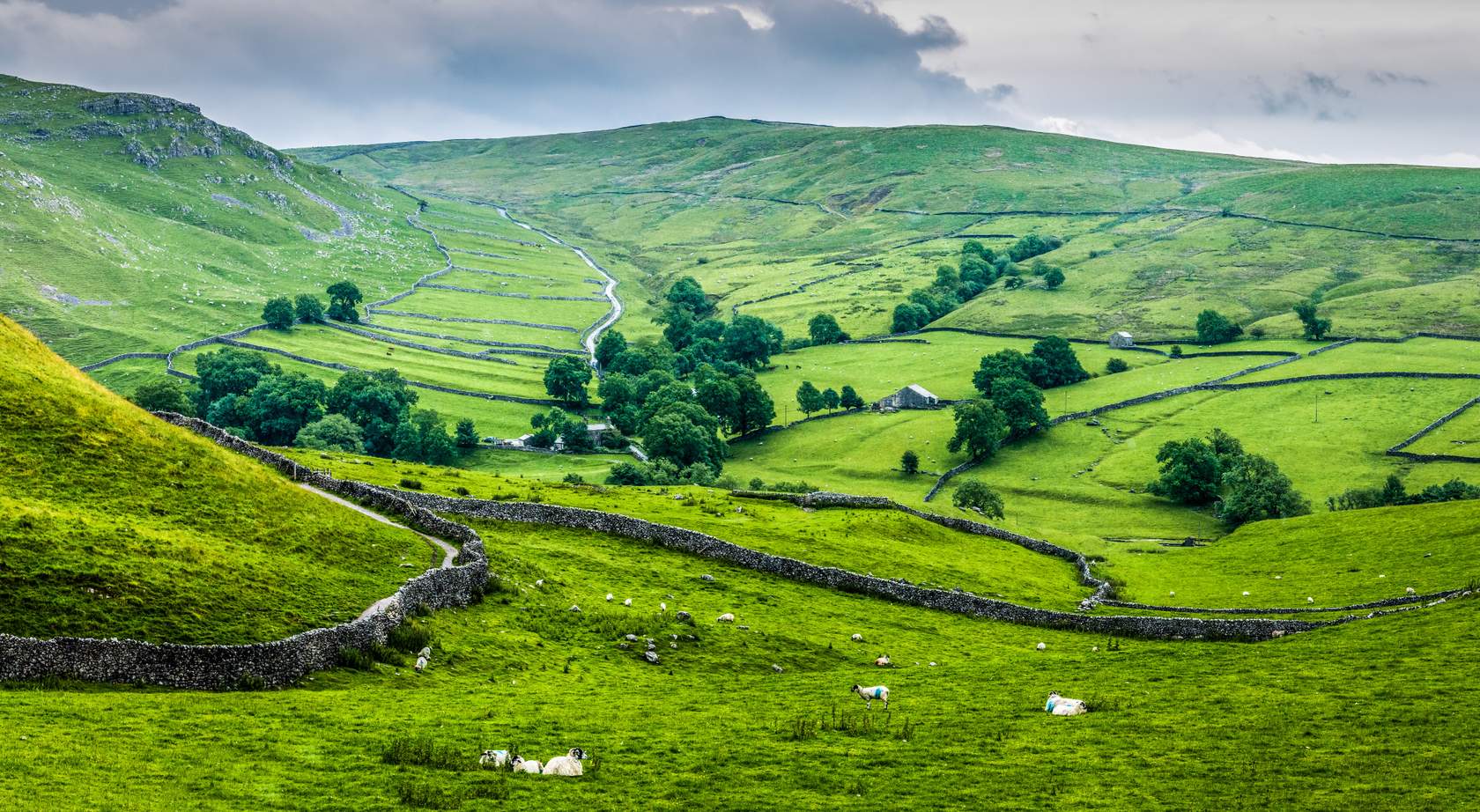
Of course, this is a very Romantic perspective on the creative process. Wordsworth is a solitary poet, letting the forces of nature affect him as he walks alone through the field.
Wordsworth also mentions the Romantic "spontaneity" of his creative expression. The joy and peace he receives from his time and nature "pour out" (57) into poetic verse without too much crafting or manipulation.