Organic Lecture 2/7
Basic Reactions Overview
Focus on various types of reactions that require symmetry adaptation.
Symmetry adaptation means both interacting species must be aligned properly.
More conjugation, smaller HOMO/LUMO gap, longer wavelength
Beer Lambert Law: A= ecl (A is absorbance, e is molar absorptivity/ m^-1cm^-1, c is concentration in M, l is path length in cm.
Symmetry Adaptation
Key idea: the interacting lobes of the species must match in orientation.
Example: species needing to rotate to interact effectively.
Pericyclic Reaction Properties
Little, if any, solvent effect
No nucleophiles/electrophiles
not generally catalyzed by Lewis acids
Highly stereospecific
Often photochemically initiated
Concerted process: all electrons moving at once
Role of Light in Reactions
Introducing light into the system changes the Highest Occupied Molecular Orbital (HOMO).
Transition from side three (initial state) to side four (new state) upon light exposure.
Only one form is produced, no mixture occurs.
Heat and Reaction Outcomes
Starting with E/E and light= cis product, starting with E/E only heat= trans product
Starting with E/Z and light= trans product, starting with E/Z only heat= cis product
Woodward-Hoffmann rules allow for understanding the reaction mechanisms based on symmetry considerations.
Electron Motion and Rotational Symmetry
When dealing with pi electrons, rotation is critical to maintain symmetry.
The term "conrotatory" describes synchronized rotation of paired lobes (like thumbs rotating together).
Types of Rotational Motion
Conrotatory Motion: Both groups rotate in the same direction, leading to either a cis or trans product.
Disrotatory Motion: Groups rotate in opposite directions.
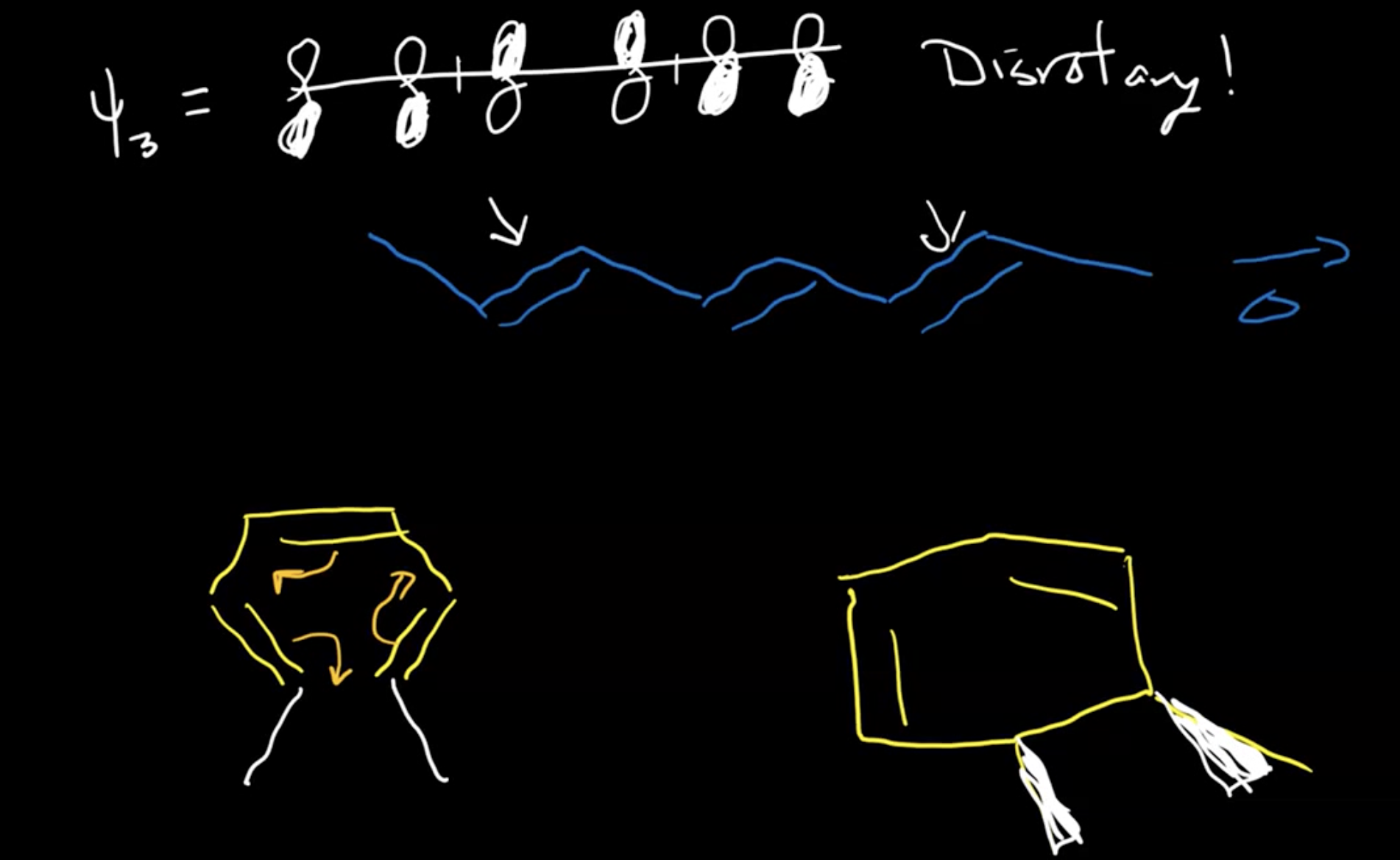
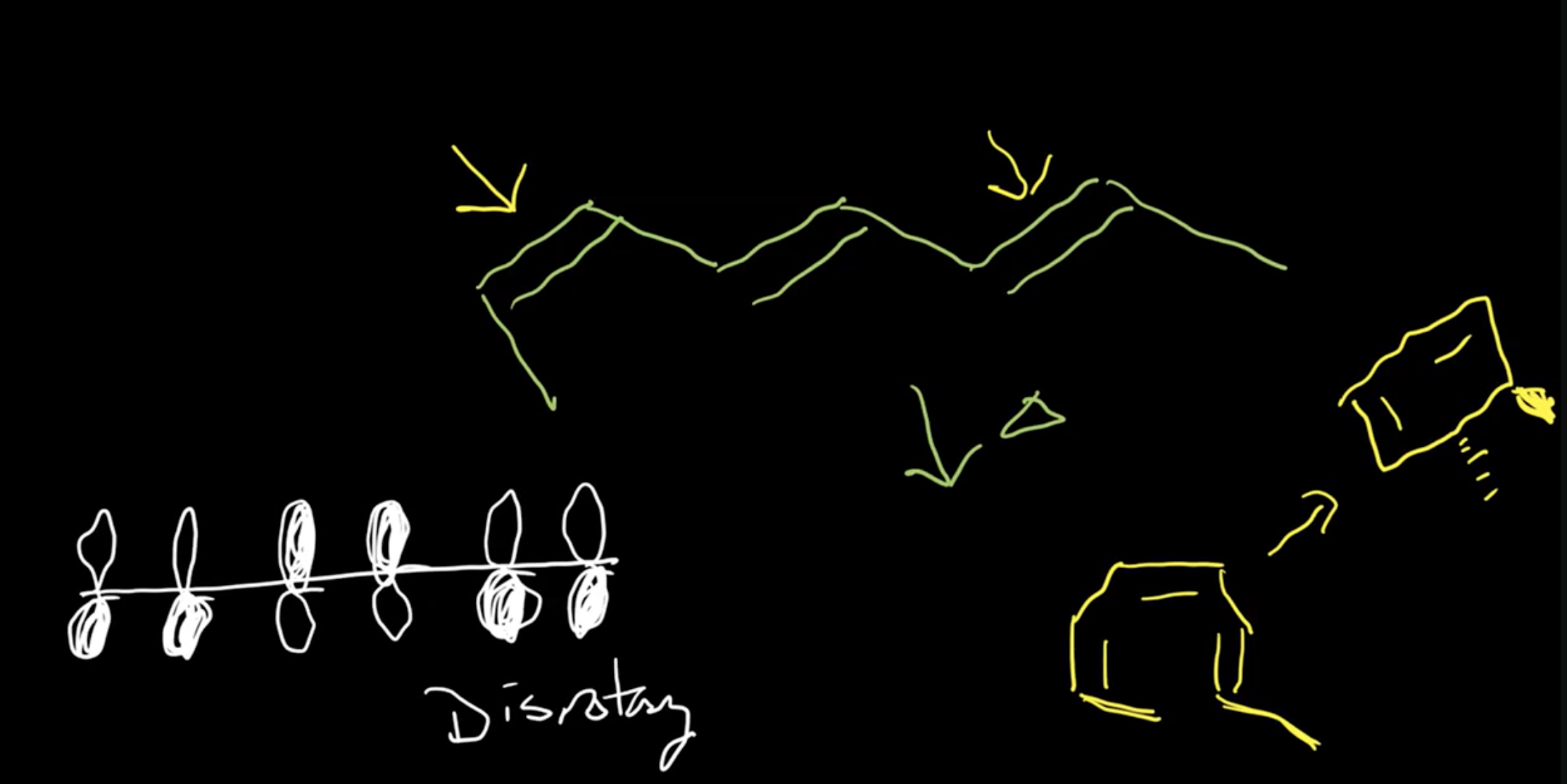
Examples of Conrotatory and Disrotatory Motion
Starting with E configuration and performing motion:
Conrotatory yields a cis product.
Disrotatory yields a trans product.
With Z configuration, the same rules apply:
Conrotatory motion leads to trans product.
Cycloaddition Reactions
A 4n + 2 cycloaddition leads to a six-membered ring formation.
A 2n + 2 cycloaddition would produce a four-membered ring.
The configuration of the products (cis/trans) depends on the starting materials and motion applied in reactions. Diene must be able to adopt s-cis conformation
Diene= two double bonds, dienophile= something that wants to react with diene, reacts faster if electron-withdrawing groups are on it.
Diene reacts faster if something on it will donate electron density, like oxygen, methyl group by hyperconjugation, etc. Diene wants something to donate, dienophile wants an electron-withdrawing group.
Diels-Alder is stereospecific: if they start trans, they end trans; if they start cis, they end cis. Groups end up 1,2 or 1,4 to each other, never 1,3.
Endo product is favored in cycloaddition