Lipid Metabolism 2
Cholesterol - structure and function
The steroid with 4 linked hydrocarbon rings
Hydrocarbon Tail and hydroxyl group at opposite ends
highly hydrophobic and insoluble in water
Function
modulates membrane fluidity
some nerve cells have 25% in PM
Precursor to steroid hormones and bile salts
some organs in the body need cholesterol
Cholesterol - Synthesis
Synthesized mainly in The liver from Acetyl CoA
Requires ATP and NADH
lots of Acetyl CoA needed to build a larger carbon group
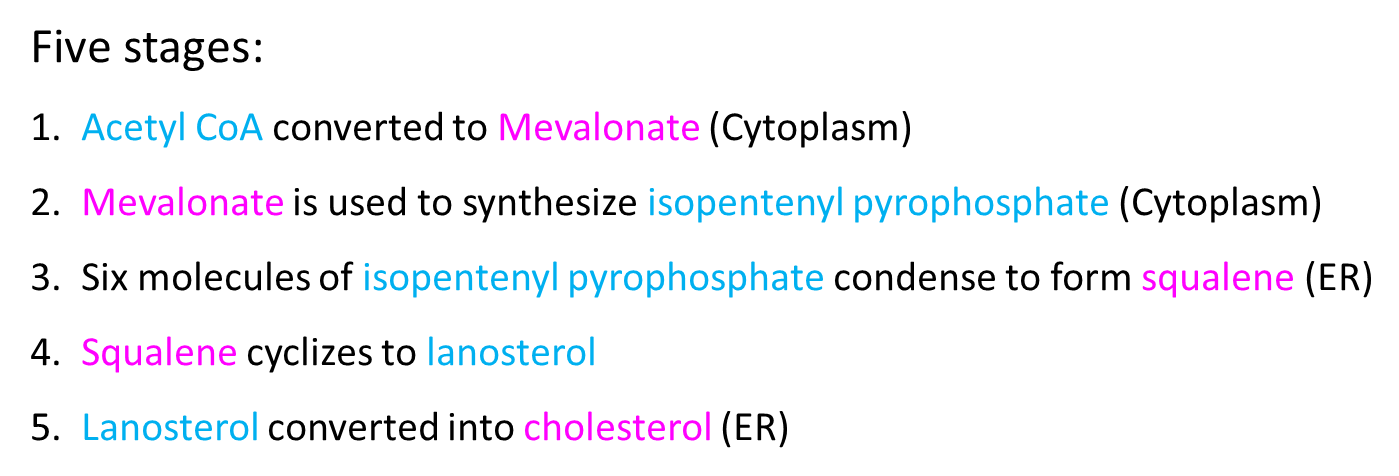 1. Acetyl CoA converted to Mevalonate (cytoplasm)
committed step in cholesterol synthesis
2 Acetyl CoA or Ketones = Acetoacetyl CoA + Acetyl CoA + (HMG-CoA synthase the enzyme)
Mevalonate is used to synthesize Isopentenyl pyrophosphate (in the cytoplasm)
3 ATP requiring steps and 1 Decarboxylation
step 3. 6 molecules of isopentenyl pyrophosphate condense to form squalene (ER)
a-b. two additional isomeric forms of IP are in equilibrium
 19 steps are required to get to the final stage of cholesterol
Lanosterol converted into cholesterol (ER)
lanosterol is converted into cholesterol in a complex process, 19 19-step pathway
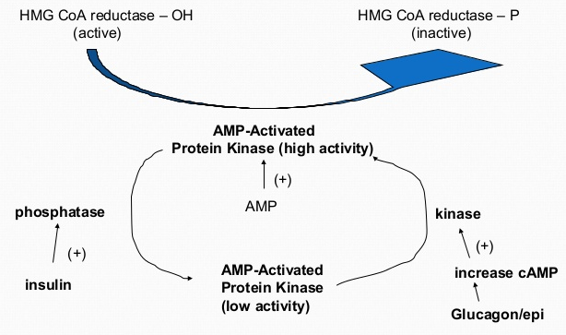
SYNTHESIS AND REGULATION
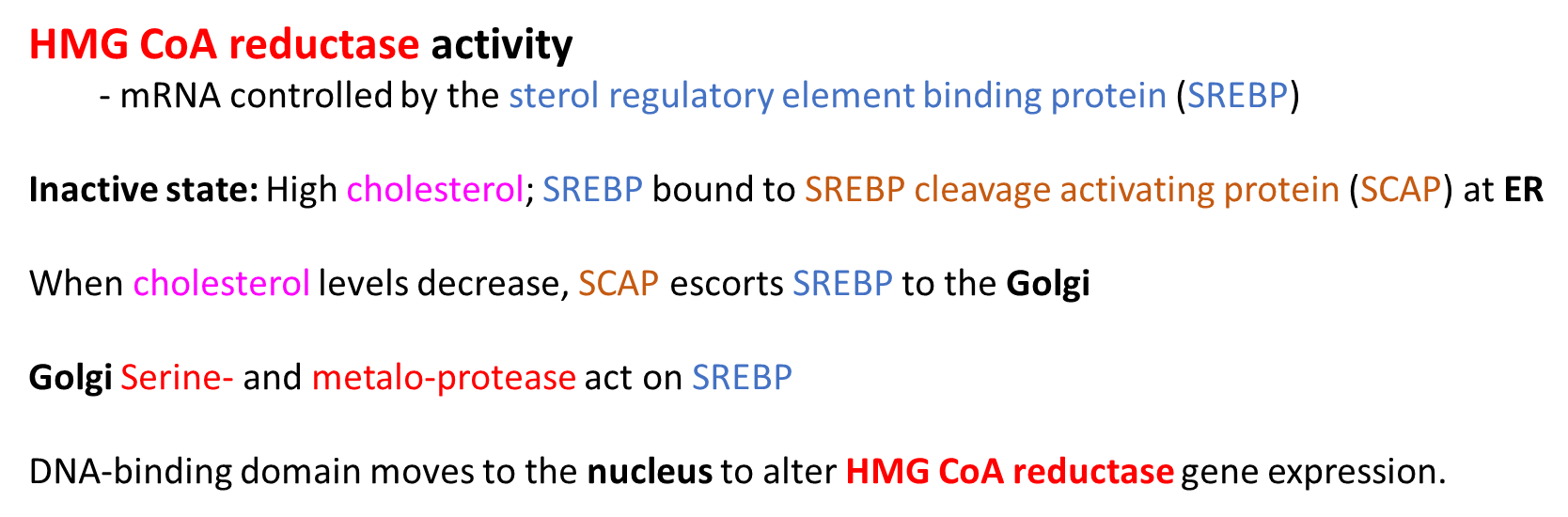
MG CoA is important in making cholesterol.
ubiquitin will tire the HMG for degradation with high cholesterol
DIETARY ORIGINS
Sources
meats
diary
hard cheese
Cakes
food with palm oil and coconut oil
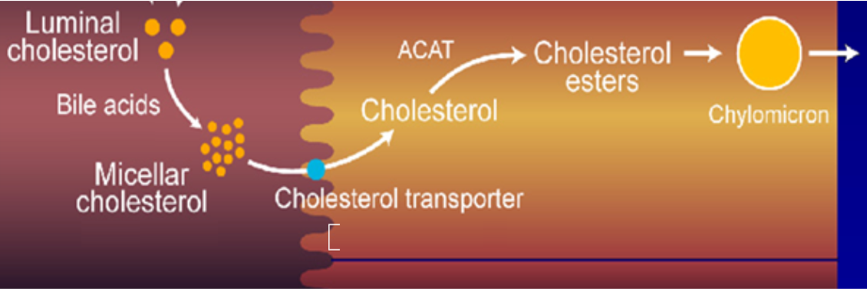 uptake
absorbed from the intestine by sterol transporters
cholesterol is esterified by Acyl-CoA: Cholesterol acyltransferase 9(ACAT2)
incorporated into chylomicrons - lipoprotein
chylomicrons
ACYL CoA attached to co-enzyme A
cholesterol esters = chylomicrons
Lipoproteins
soluble protein-lipid particles
proteins component used to target specific tissue
Low-density lipoprotein
helps to target specific tissues
Chylomicrons
Dietary lipids and cholesterol
low-density protein
supplies cholesterol to tissues
High-density lipoprotein
removes free cholesterol tissue
transports cholesterol to the liver
The liver eliminates cholesterol from the body
as bile salts or unchanged
HDL gets rid of cholesterol
Cholesterol Transport
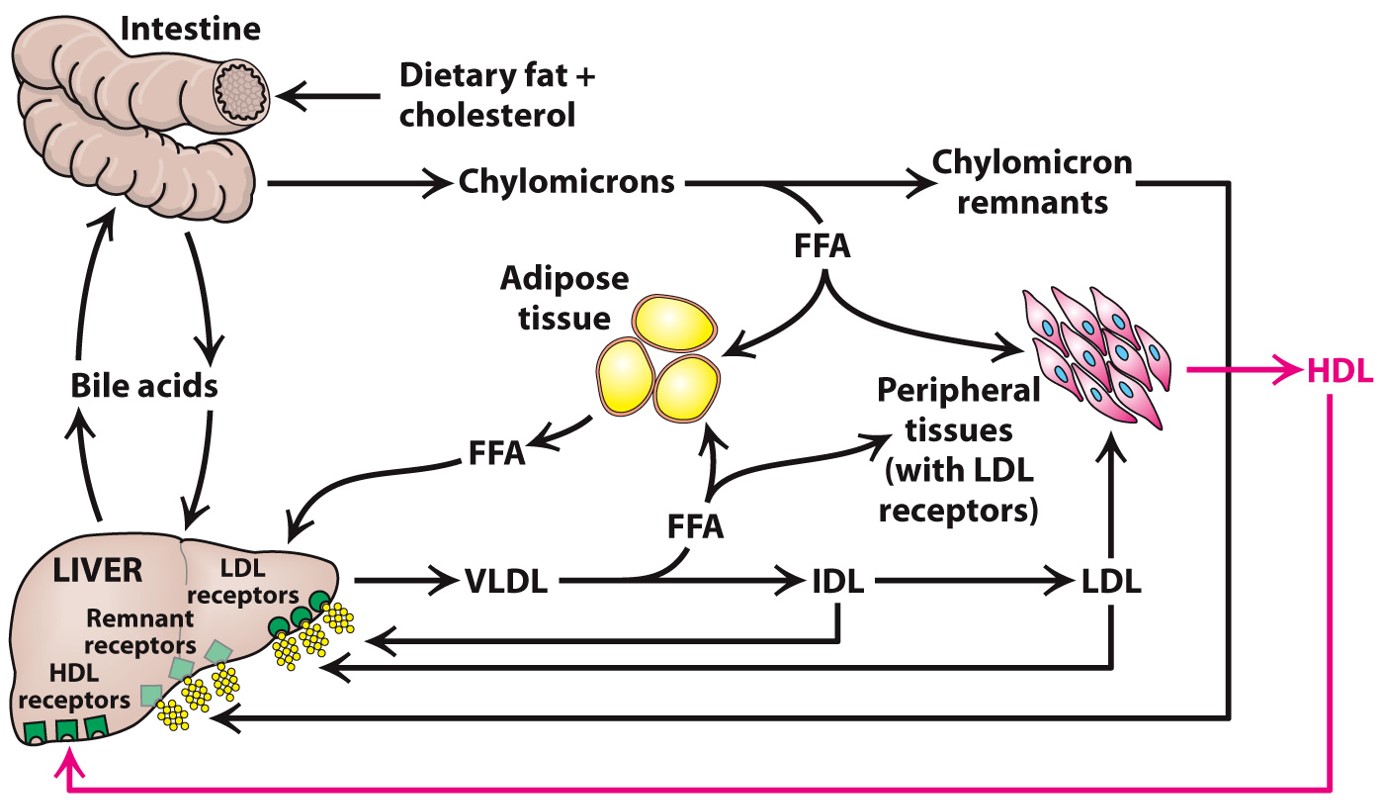
chylomicrons produced in the GUT (small intestine)
Cholesterol UPtake
LDL = low-density lipoprotein
supplies cholesterol tissues
Receptor-mediated endocytosis
LDL receptor Binding
internalization
LDL hydrolysis
METABOLIC FATE
Steroid hormones
vitamin D
Bile Salts (Liver - gall bladder)
gall bladder has Hydrophilic (Polar) for the water and hydrophobic (non-polar) parts to help break down fats in the digestive system
DISEASES
Familial Hypercholesterolemia
Absence of LDL receptor
Decrease in cholesterol
Cholesterol Collects in various tissues
LDL becomes oxidized and ingested by macrophages
high cholesterol in macrophages acts as a detergent and forms a Foam structure
Foam cells become trapped in blood vessels leading to cardiovascular disease
regulations - HMG-CoA reductase; expression, degradation, phosphorylation
DIGESTION OF LIPIDS
Fatty Acids are the main lipid constituent of the diet
the primary role of energy metabolism:
beta-oxidation
energy storage
a) Luminal phase
lipases secreted near the tongue and stomach. they act as soon as food enters the mouth to break down.
emulsification
Bile salts used to form micelles- allow lipase access
pancreatic lipases complete hydrolysis in the duodenum and jejunum
Free fatty acids and MAO absorption at duodenum and jejunum
tri glycerol to Diglycerol to mono glycerol
DISEASE
pancreatic lipase deficiency
Autosomal recessive
oily/greasy stools identified in infancy
difficulty gaining weight
possible use in Future medicines
inhibition of lipases
weight loss/ reduced obesity
B) Mucosal phase
fatty acids = Acyl CoA derivatives
fatty acids +CoA = ATPtoAMP +PPi = Fatty acids to triacylglycerol
NPC1 like intercellular cholesterol transporter 1
in membrane protein
endocytosis of cholesterol and fatty acids from the gut
C) Secretion and Transport
in the gut, triacylglycerols accumulate in chylomicrons (a type of lipoproteins)
chylomicrons exocytosed into blood via the lymphatic system
Blood lipases hydrolyze chylomicrons into fatty acids
fatty acids are taken up by tissues

Lipoprotein | % protein | % Triacylglycerol | % cholesterol/CE |
Chylomicron | 1-2 | 85-90 | 4-8 |
VLDL | 5-10 | 50-65 | 15-25 |
IDL | 10-20 | 20-30 | 40-45 |
LDL | 20-25 | 7-15 | 45-50 |
HDL | 40-55 | 3-10 | 15-20 |
Apolipoproteins
1 Act like a postcode
2 regulate lipase activity
enzymes interact with the lipoproteins
FFA gets cleaved away from the chylomicrons
certain Lipoproteins will carry some apolipoproteins.
APOLIPOPROTEINS
Associate with lipoprotein lipases
ANGIOPROTEIN-LIKE PROTEINS(similar to angiogenesis hormones)
angptl4, angptl3 and angptl8
ANGPTL4 - converts active lipoprotein lipase dimer to inactive monomer
Lipoprotein lipase control in different tissues. brown adipose tissue breaks down more fats for heat.
during exercise, the muscle tissue is fed with fat
during fasting the heart is more reliant on the fat stored.
DISEASE
Chylomicron retention disease
mutation in genes
autosomal recessive
chylomicrons trapped within enterocytes
developed during early childhood
weight gain and slow growth
frequent diarrhoea
Low blood cholesterol
may lead to an enlarged liver