BIO 150 CHAPTER 12 [THE CELL CYCLE]
CANCER AND THE CELL CYCLE
a disease of uncontrolled cell division
cells start dividing when they shouldnt
in a multi cellular organism there has to be a controlled rate of cell division
BACTERIAL CELL DIVISION
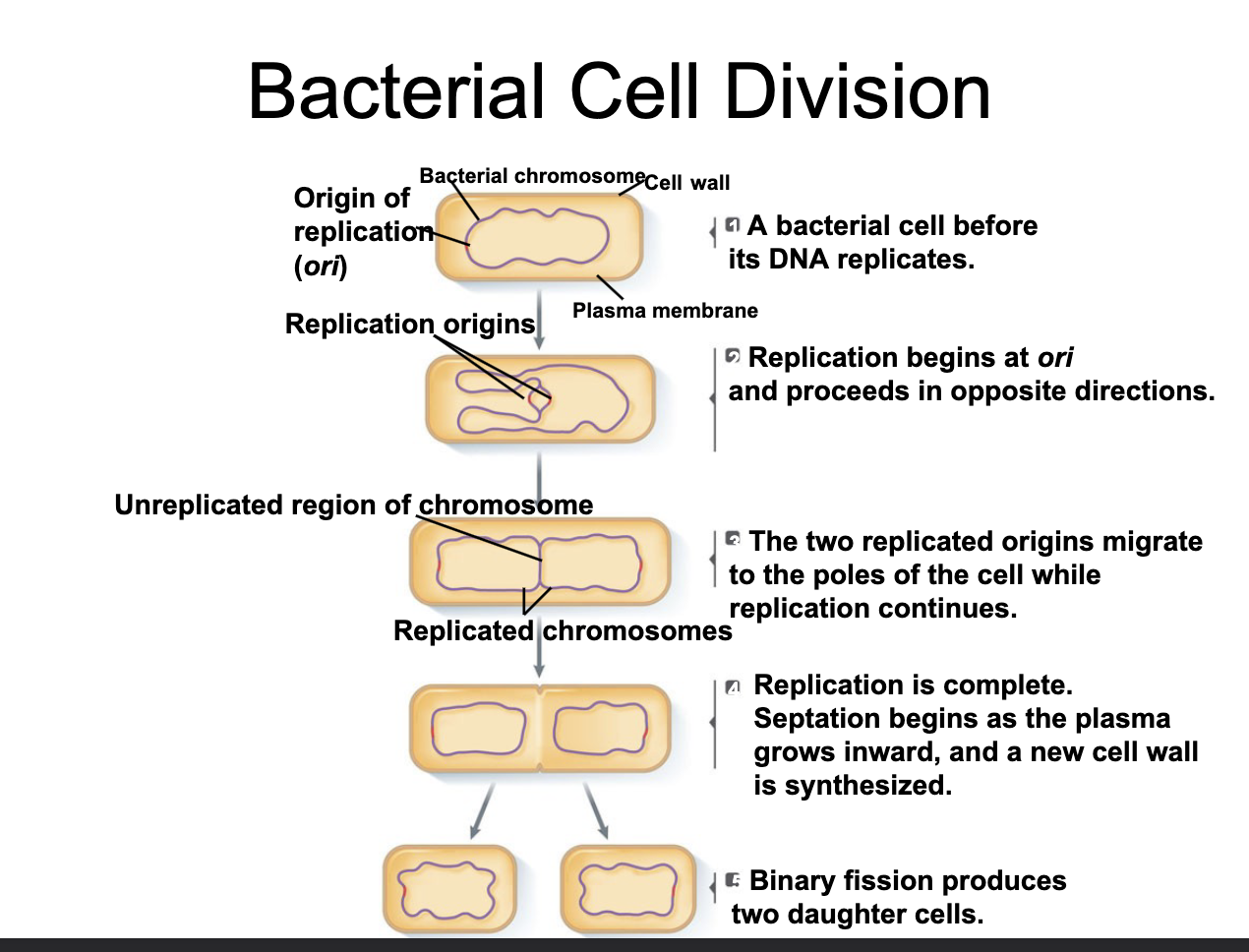
dna is will replicate
binary fission is the process to building new cells
EUKARYOTIC CHROMOSOMES
every species has a different number of chromosomes
humans have 46 chromosomes in 23 nearly identical pairs
additional or less chromosomes is fatal
CHROMOSOMES
composed of CHROMATIN- complex of DNA and protein
DNA of a single chromosome is one long continuous double stranded fiber
typical human chromosome 140 million nucleotides long
in the nondividng nucleus
HETEROCHROMATIN - not expressed
EUCHROMATIN - expressed
STRUCTURE
NUCLEOSOME
complex of DNA and 8 HISTONE proteins
nucleosomes wrapped into higher order coils
during mitosis, chromatin coils arranged around scaffold of protein to achieve maximum compaction
Karyotype
array of chromosomes from an individual organism
humans are DIPLOID(2n)
2 complete sets of chromosomes
46 total chromosomes
Haploid(sex cells)- 1 set of chromosomes - 23 in humans
Pairs of chromosomes are - HOMOLOGOUS
each one is a homologue
REPLICATION
Prior to replication, each chromosome composed of a single DNA molecule
After replication, each chromosome composed of 2 identical DNA molecukes
Visible as 2 strands held togheter as chromsome becomes more condensed
One chromosome composed 2 sister chromatins
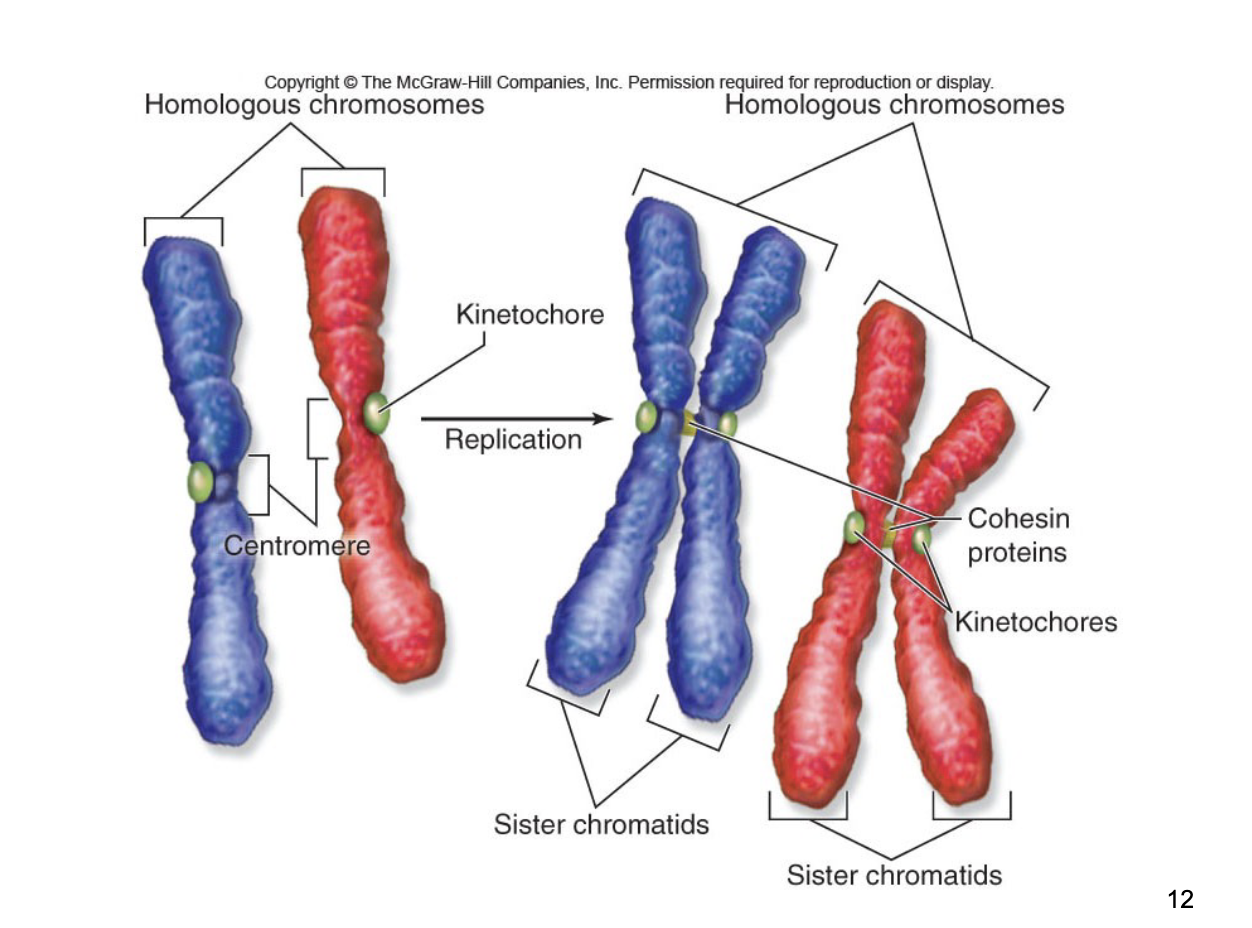
Need to know what Centromere is.
Eukaryotic Cell Cycle
interphase( G1 - Gap phase 1, S - Synthesis, G2 - Gap phase 2, Mitosis,
G1 (gap phase 1) - primary growth phase, longest phase
S (synthesis) - replication of DNA
G2 (gap phase 2) - organelles replicate, microtubules organize)
M (mitosis) - subdivided into multiple phases
C (cytokinesis) - separation of 2 new cells
Know the phases by pictures for lab and lecture exam
Interphase (G2)
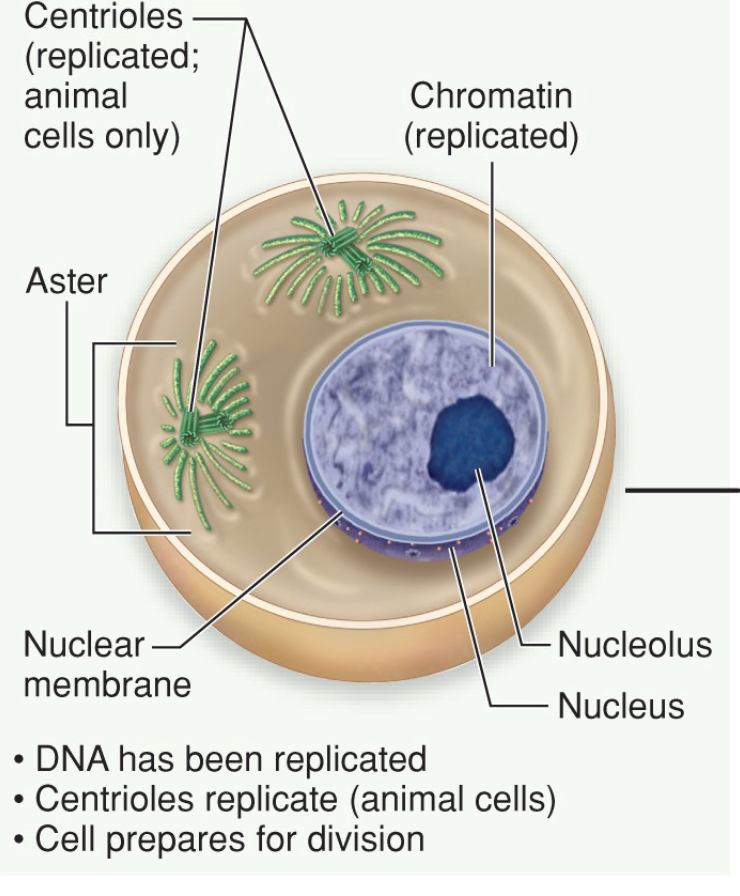
Prophase
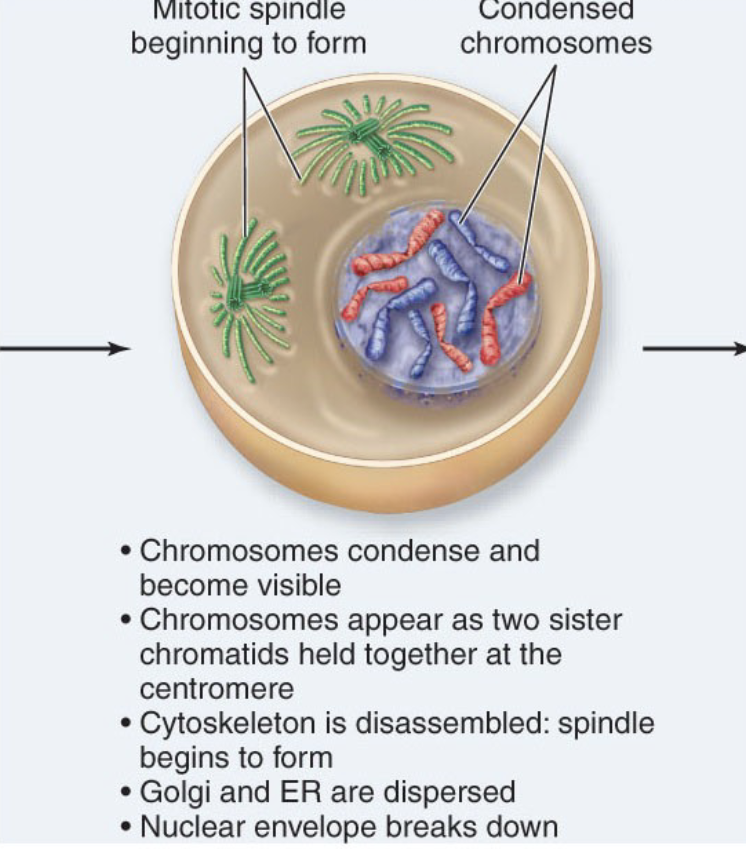
Prometaphase
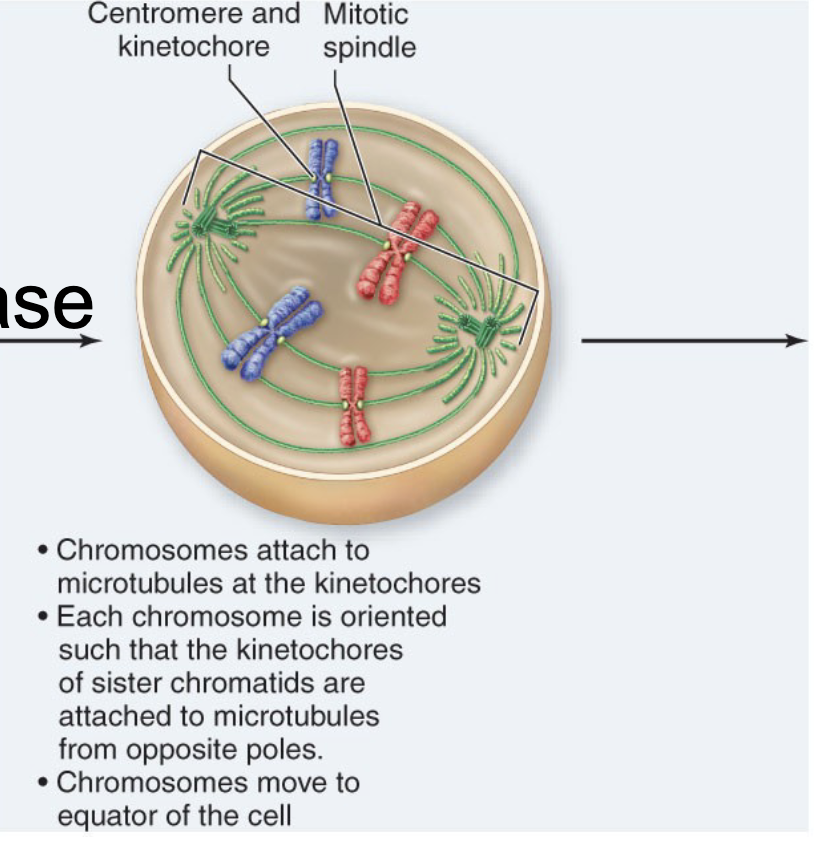
Metaphase
Alignment of chromosomes along metaphase plate
Not an actual structure
Future axis of cell division
Anaphase
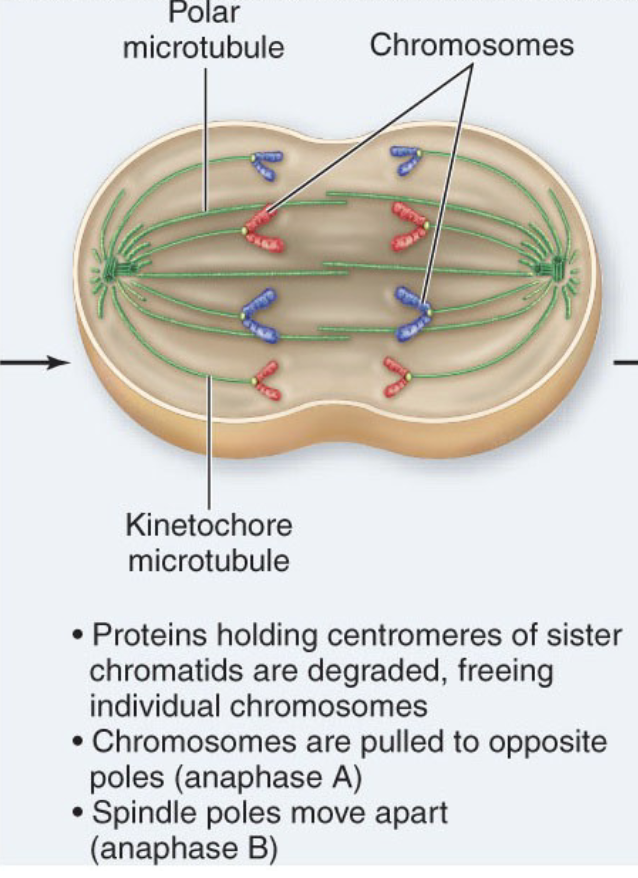
Telophase
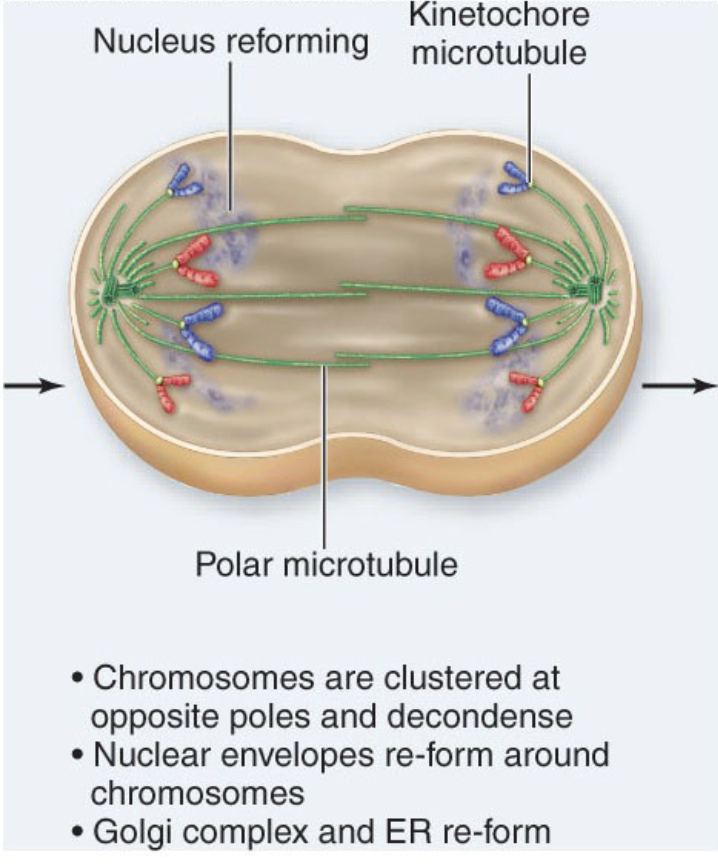
Cytokinesis
cleavage of the cell into equal halves
animal cells - construction of actin filaments produces a cleavage furrow
plant cells - cell plate forms between the nuclei
Control of the Cell Cycle
Current view integrates 2 concepts
Cell cycle has two irreversible points
replication of genetic material
separation of the sister chromatids
Cell cycle can be pu for accuracy and can be halted if there are errors
Allows cell to respond to interna and external signals
Checkpoints
G1/S checkoint
Cell “decides” to divide
Primary point for external signal influence
G2/M checkpoint
cell makes a commitment to mitosis
assesses success of DNA replication
Late metaphase (spindle) checkpoint
cell ensures that all chromosomes are attached to the spindle
Cyclin-dependent kinases (Cdks
enzymes that phosphorylate proteins
primary mechanism of cell cycle control
Cdks partner with different cyclins at different pointts in the cell cycle
Activity of Cdk is also controlled by the pattern of phosphorylation
- Phosphorylation at one site (red) inactivates Cdk
- Phosphorylation at another site (green) activates Cdk
Cancer
unrestrained, uncontrolled growth of cells
failure of cell cycle control
two kinds of gene can disturb the cell cycle when they are mutated
Tumor-supressor genes (break pedal)
Proto-onco genes (gas pedal)
Tumor-suppressor genes
p53 plays a key role in G, checkpoint
p53 protein monitors integrity of DNA
If DNA damaged, cell division halted and repair enzymes stimulated
If DNA damaged is irreparable, p53 directs cell to kill itself
Prevent the development of cells containing mutations
p53 is absent or damaged in many cancerous cells
Both copies of a tumor-suppressor gene must lose function for the cancerous phenotype to develop
First tumor-suppressor identified was the