Cell Communication -017
Overview
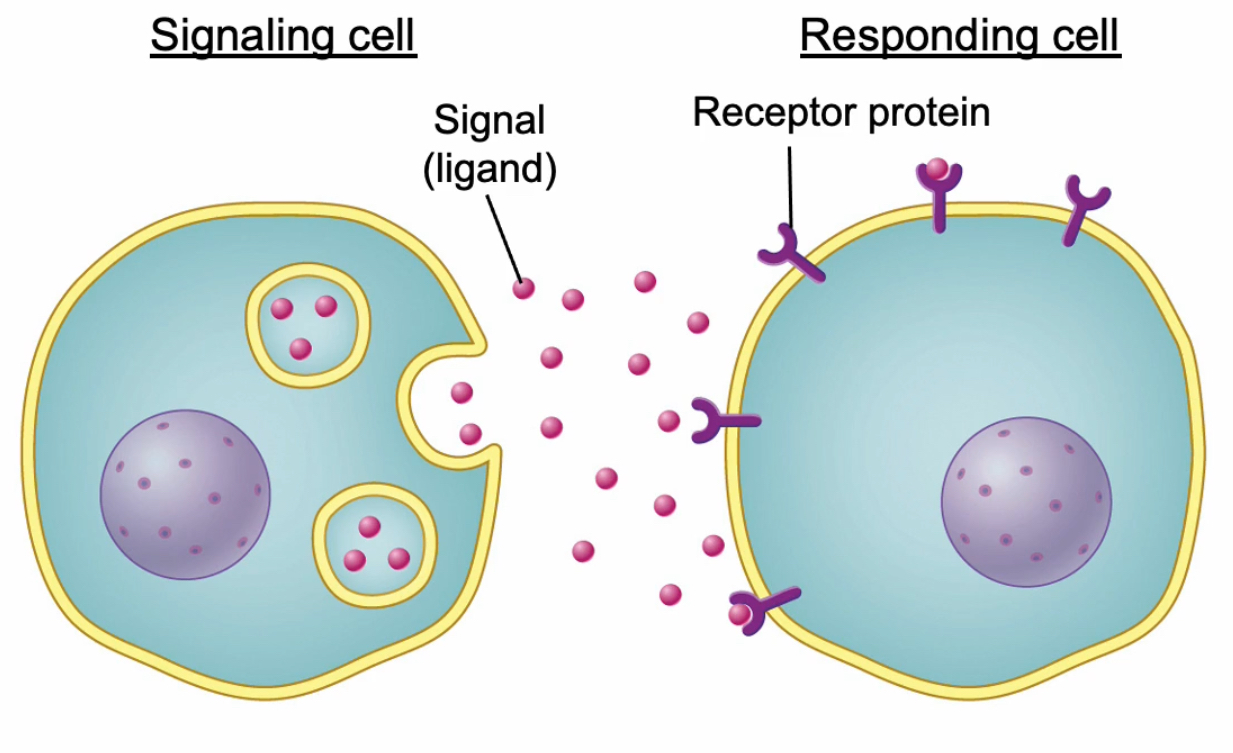
Cell communication requires a signal(ligand) and a receptor that binds to that signal
Change in behavior means:
Expressing certain genes
Carrying out certain reactions
Cell communication is especially critical for multicellular organisms
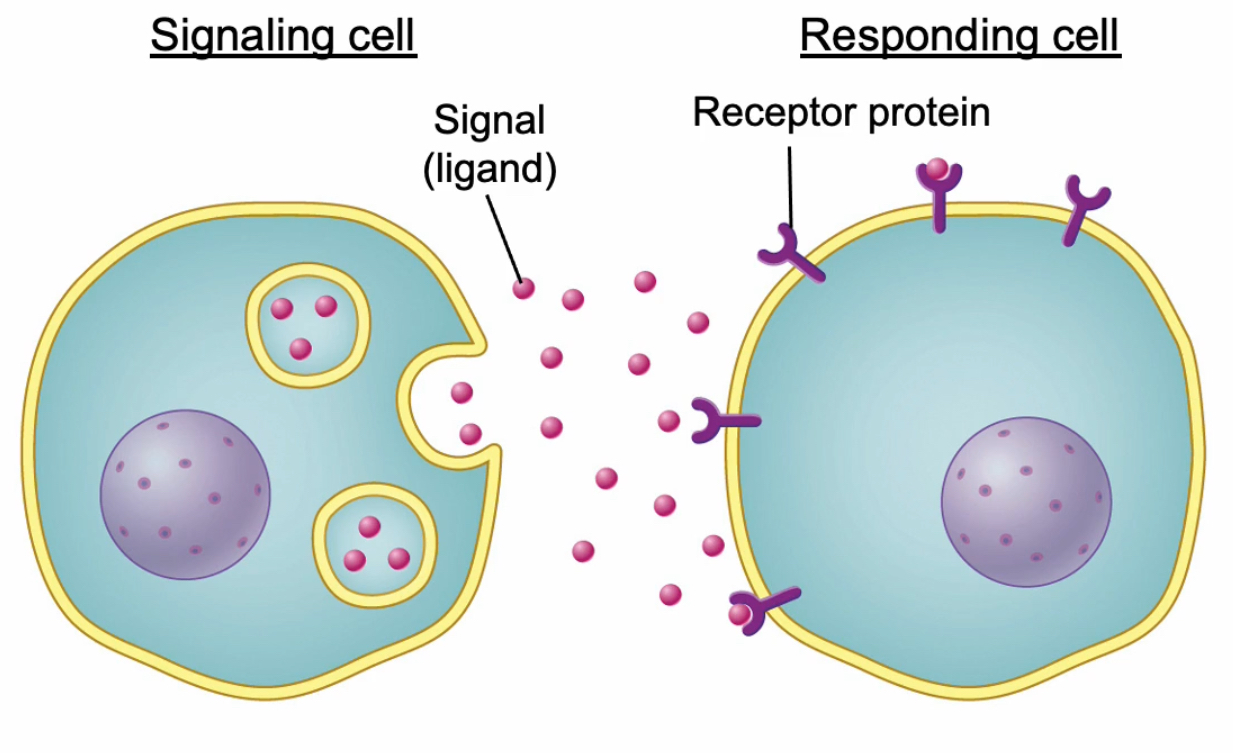
Neutrophil Chase
Neutrophil is a white blood cell(Immune cell)
It consists of red blood cells and bacteria
The bacteria bounces around in the liquid they are secreting chemicals; meaning they are signaling to the Neutrophil
Then the bacteria gets sent to the lysosome of the Neutrophil to get broken down and recycled
Fight-or-Flight signaling
One signal, different responses in different cells
Coordinated action among many different organs
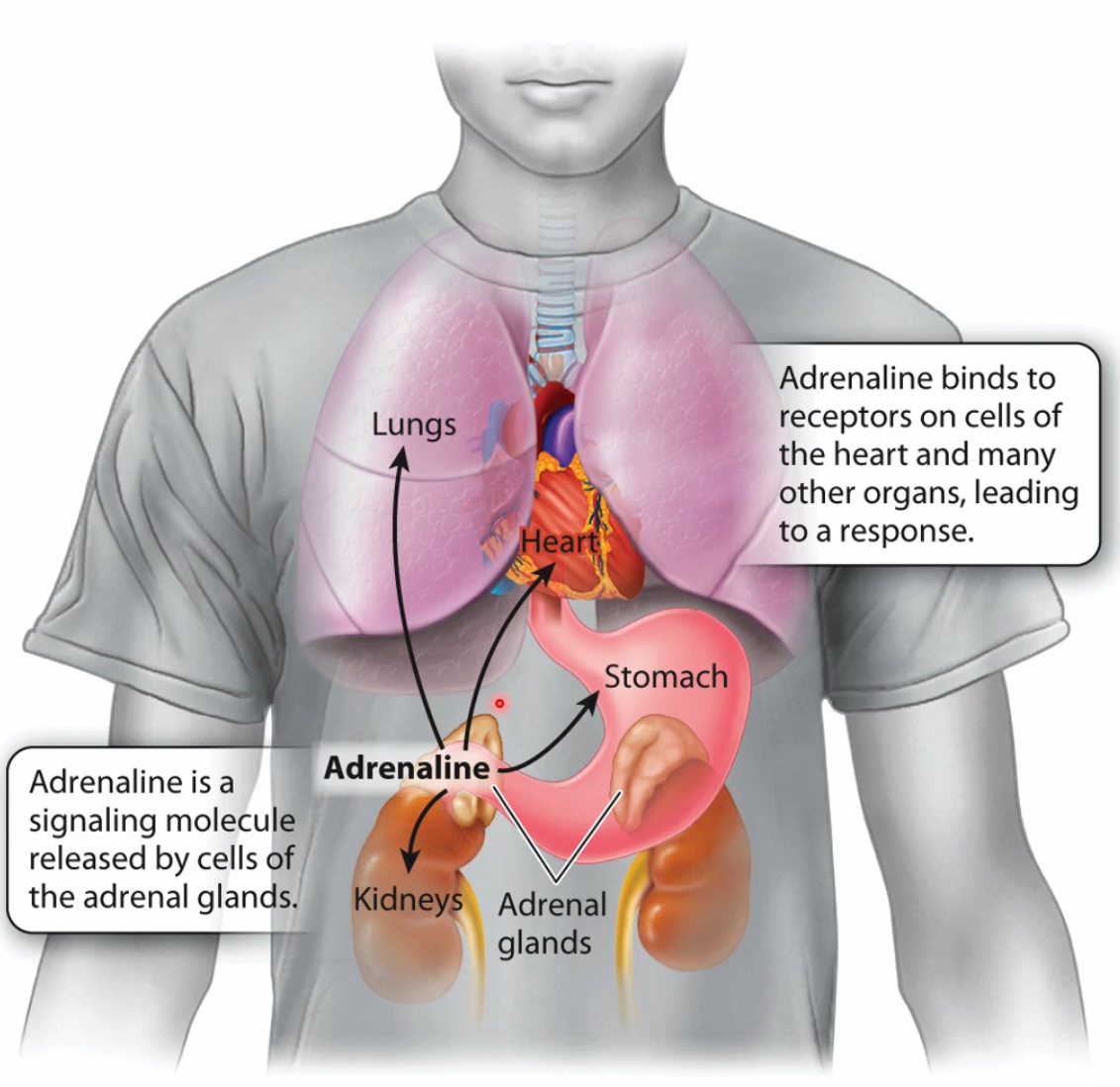
Adrenaline is produced in the adrenal gland and that gets released into the bloodstream to reach other organs(all have adrenaline receptors)
This signaling allows for the appropriate coordinated action
Unit 3 Model to focus on mutations associated with cancer
Eukaryotic cells typically only divide in response to a growth signal
Mutations in receptor kinase pathways associated with cancer(abnormal, unregulated cell division)
Cellular response: Cell division
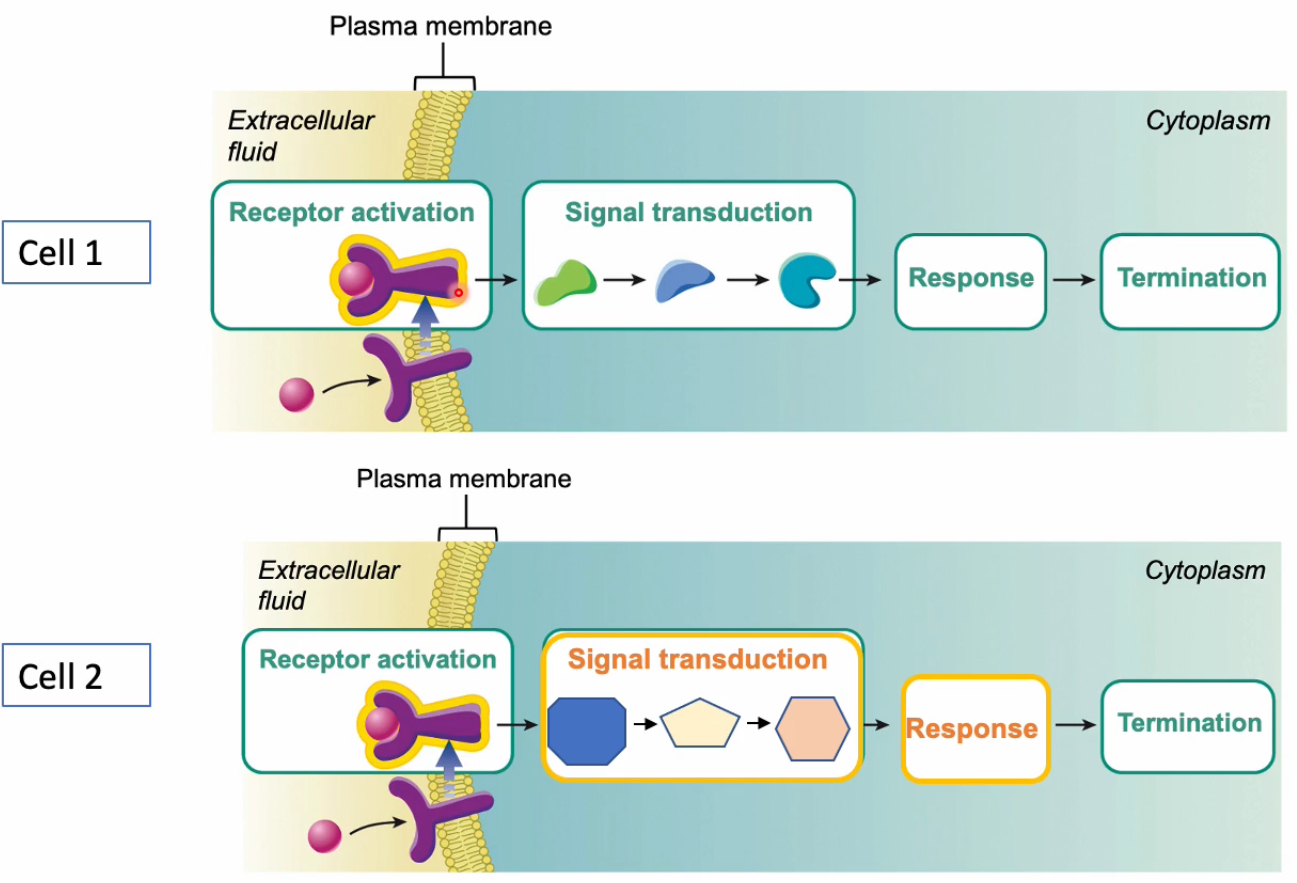
Key stages in cell signaling
Physical interactions and changes in protein shape are key elements of cell communication
Different signals in the signal transduction can lead to different responses in the termination
Arrows can mean different things in these models
Use context and knowledge of how pathways work to infer the meaning
Possible meanings
Chemical reactions occuring
Molecule movements
Steps occurring in a specific sequence
One molecule interacting with activating with another molecule
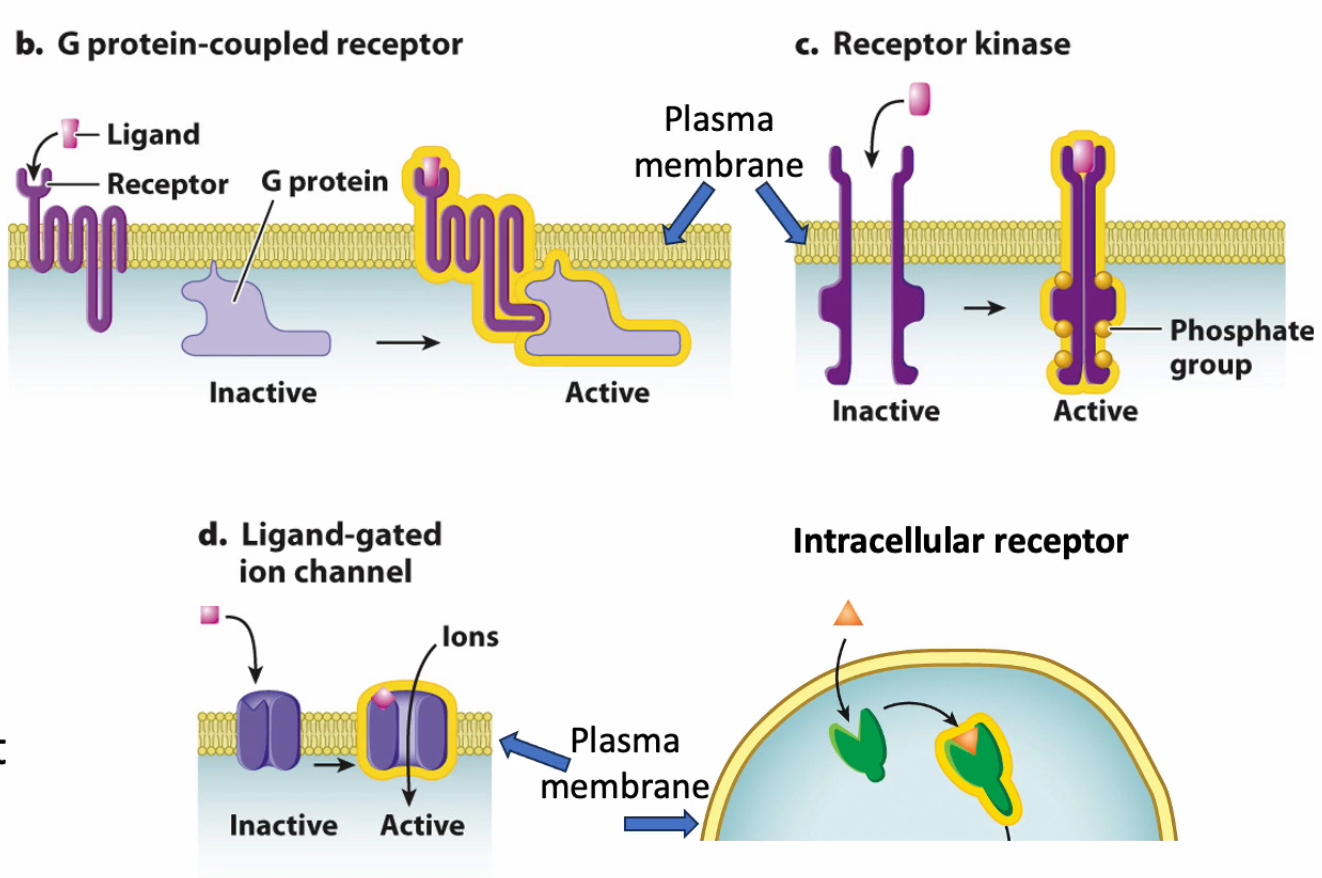
Receptors come in many shapes and sizes
What do they have in common
Receptors all bind to specific ligands
Ligand binding mediated manily using intermolecular forces
Receptors all change shape after binding the ligand
Receptor activation
Change in shape is a part of relaying the signal
Summary
Cells change their behavior based on signals(ligand) in the environment
Cell communication requires a ligand and a receptor
Receptors bind to specific ligands using primarily weak intermolecular forces
Common element in signaling pathways: receptors and signal transduction proteins change shape in response to a signal
Different structure results in a different function
Mechanisms of signal transduction and termination
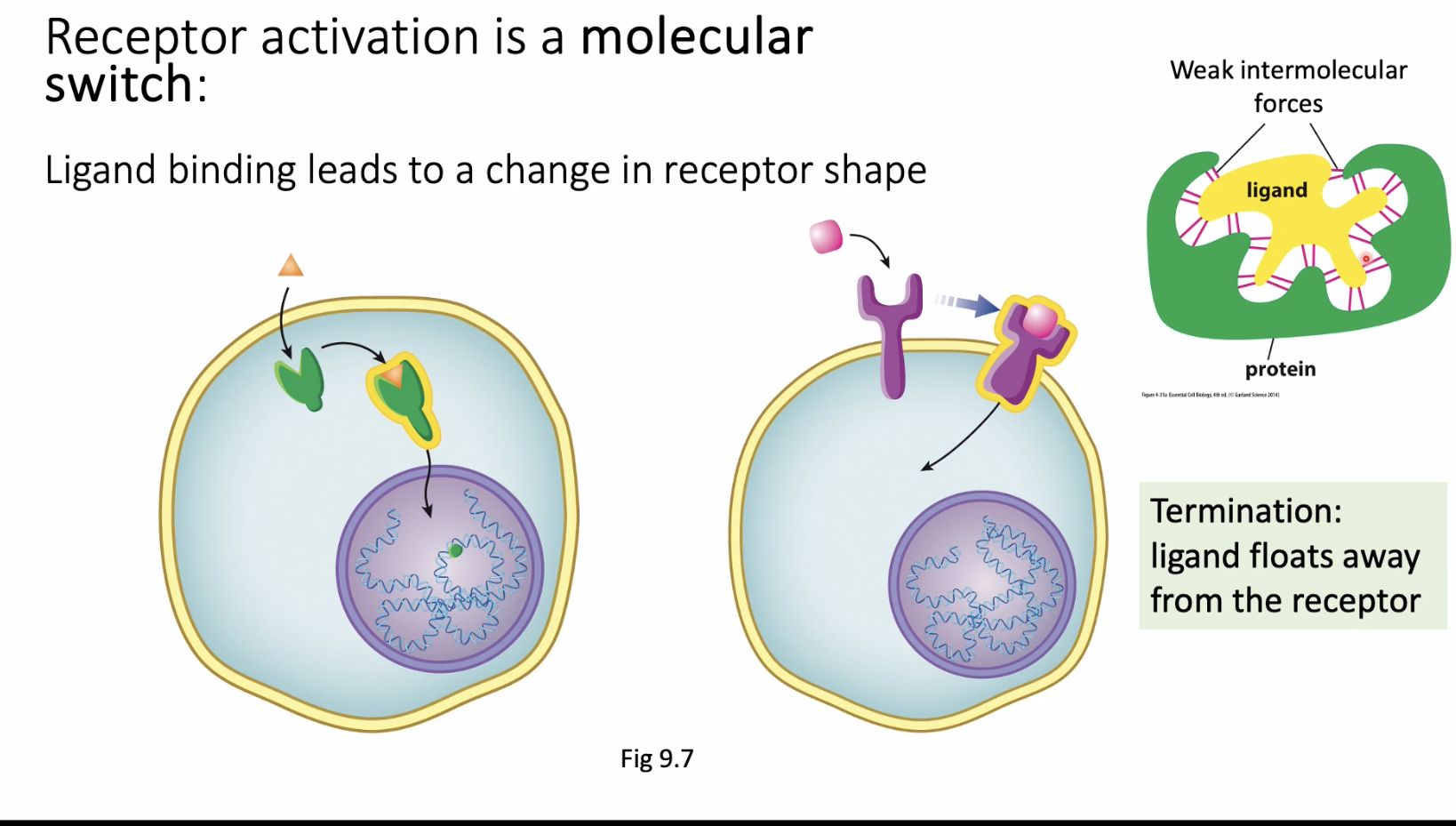
Receptor activation is a molecule switch:
Ligand binding leads to a change in receptor shape
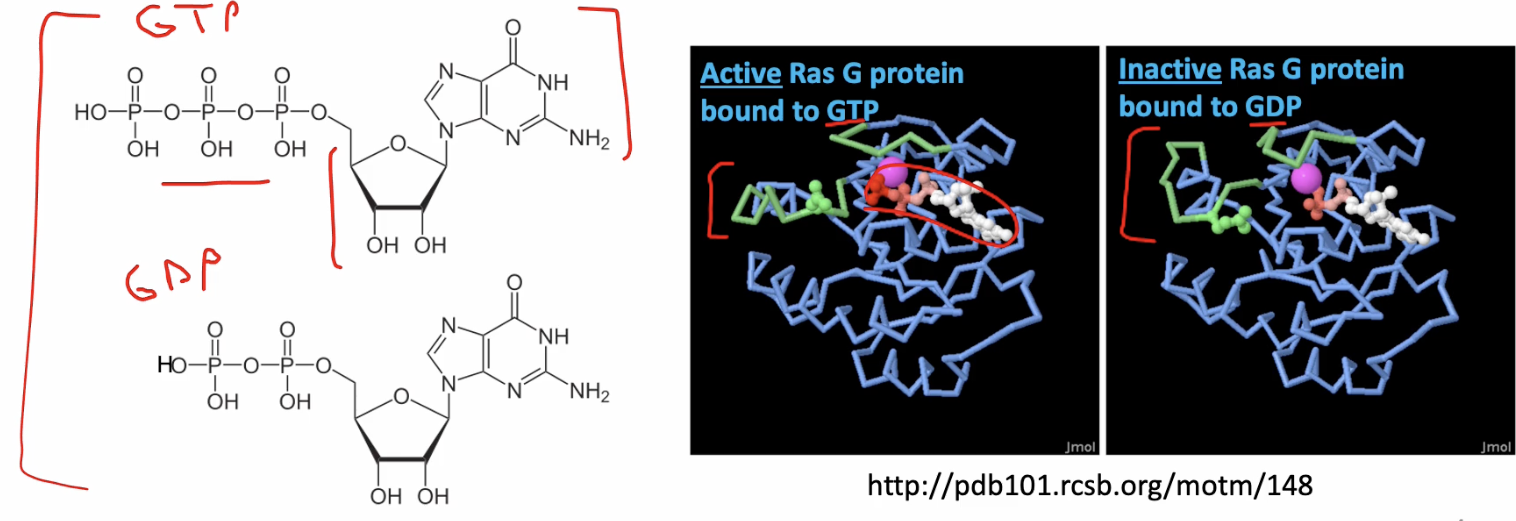
G proteins are regulated by binding to GDP or GTP
GDP or GTP binds using weak intermolecular foreces to G proteins
Change in protein structure that changes protein function
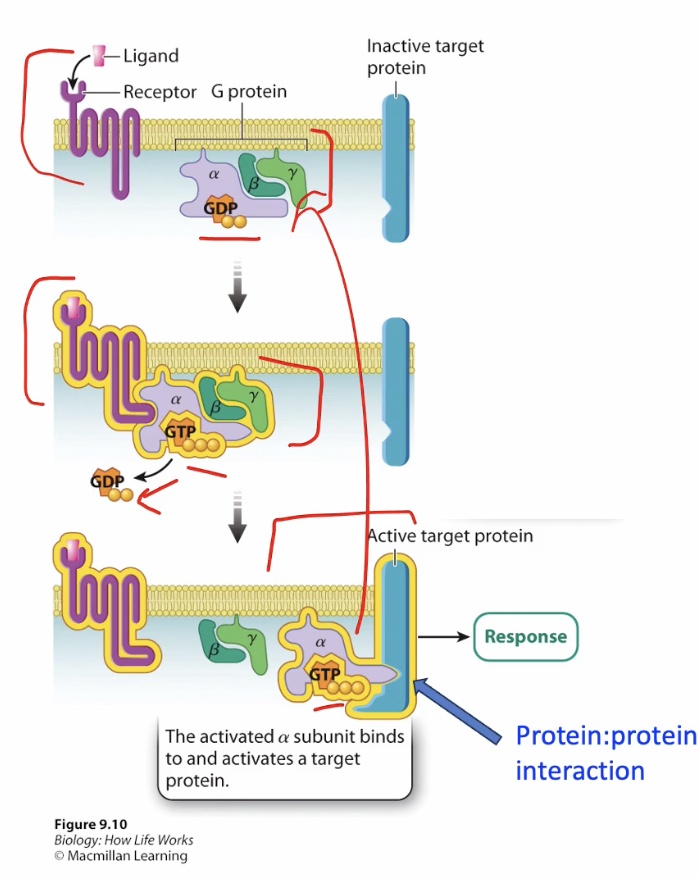
Some receptors use G proteins to pass along the message
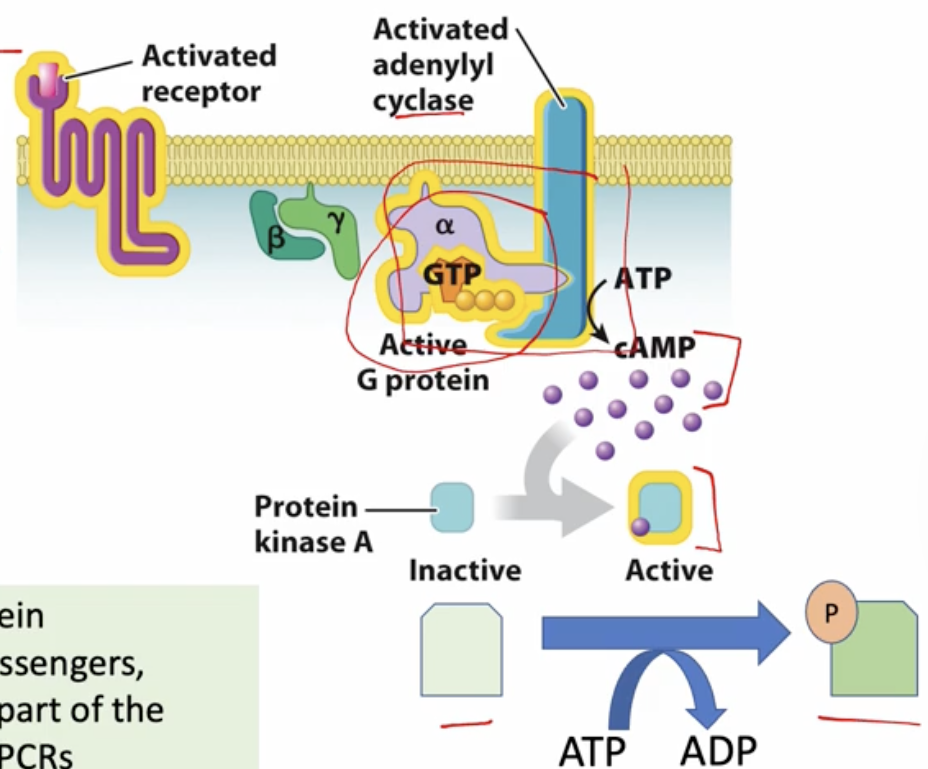
Activation of G protein: Exchange of GDP for GTP
Termination of G proteins: GTP hydrolyzed to DGP + Pi
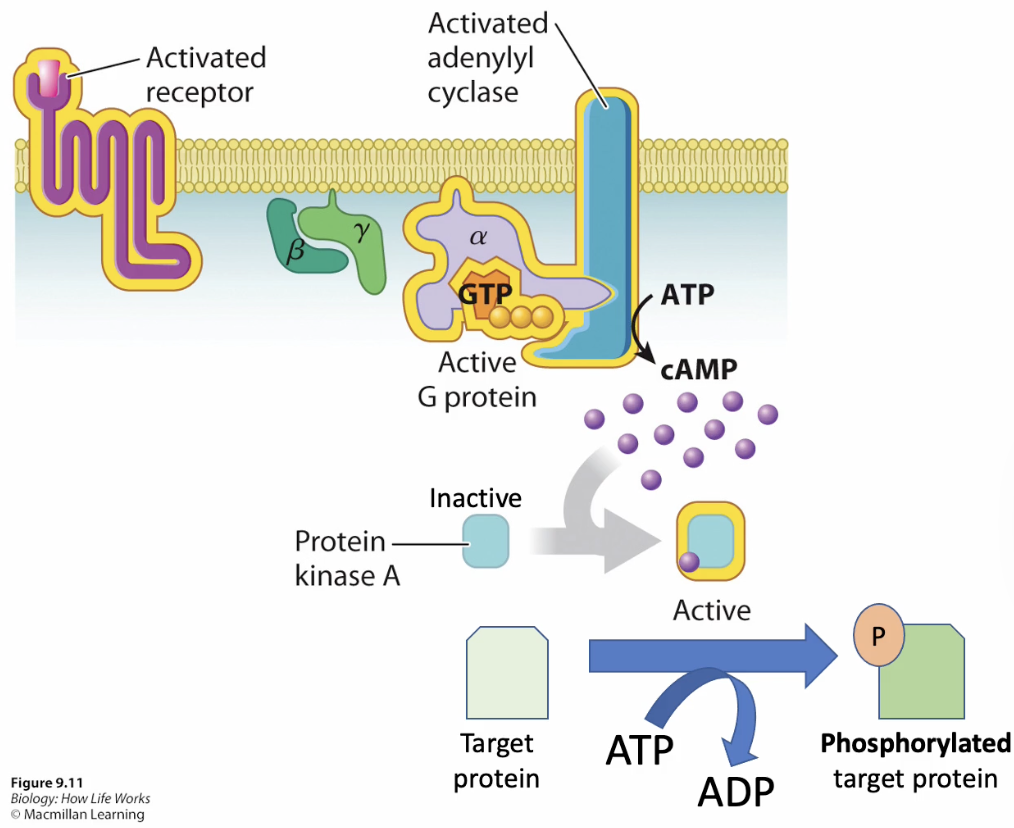
Some G proteins activate the enzyme adenylyl cyclase(AC)
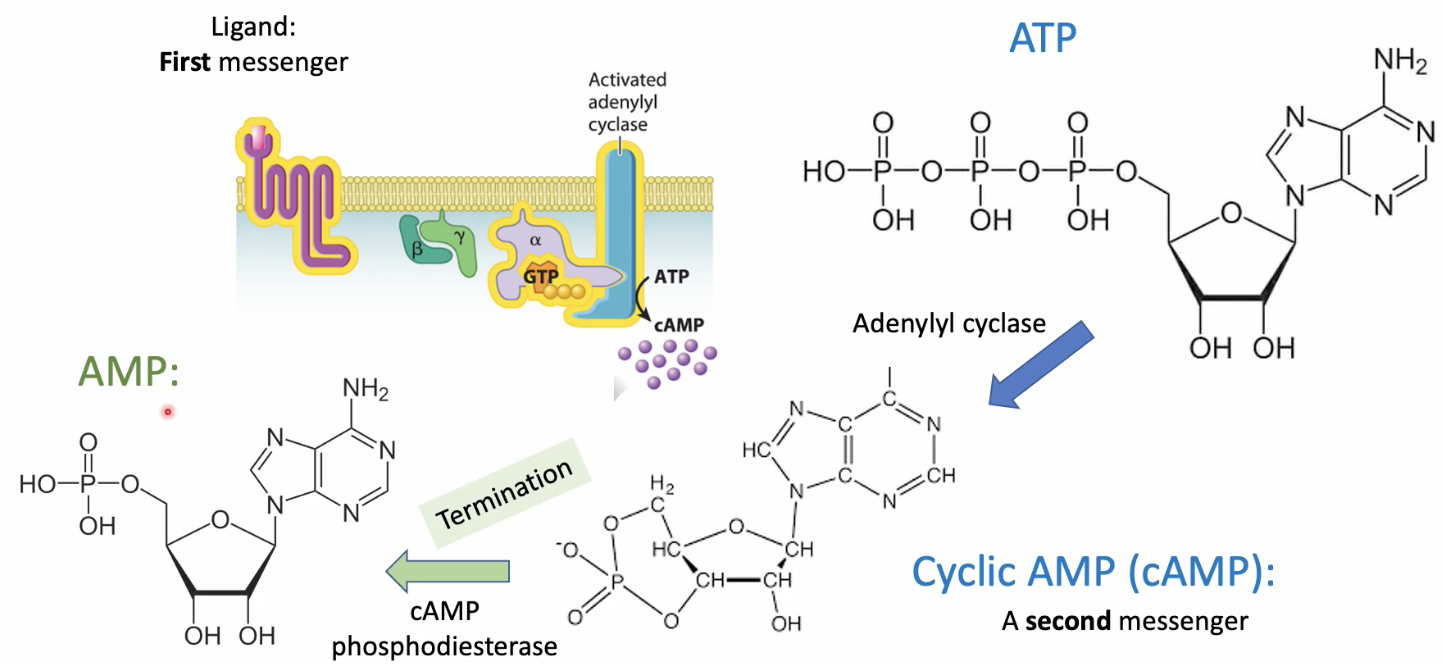
Adding or removing phosphates
Charged phosphates affect interactions among amino acids within the protein and with other molecules
Depending on the change in shape, phosphorylation can activate or inactivate
Change protein structure
Change protein function
Termination: reversal of activating reaction
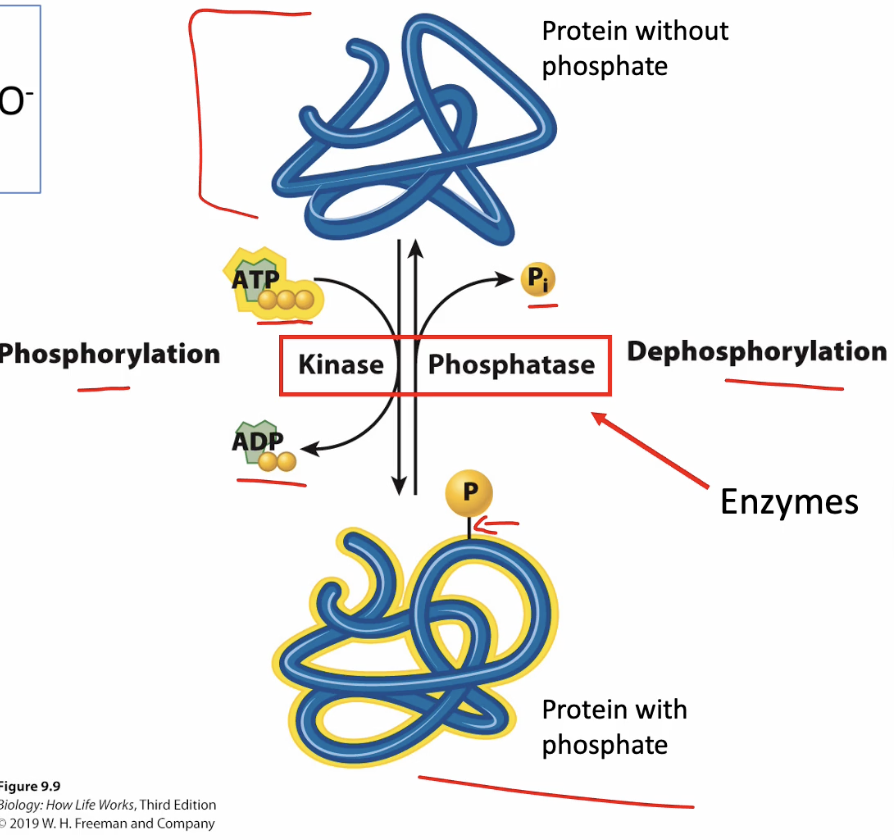
Activating kinases phosphorylate other molecules
ATP is always the source of phosphates for kinase reactions
Termination: cAMP floats away from Phosphatase removes phosphates
Summary
Several common mechanisms of cell signaling(‘molecular switches’ that can be quickly activated or deactivated)
All signal transduction involves change in shape that result in changes in function to pass on the signal and generate a cellular response
Look for the physical change(change in shape) associated with each step
Key signaling features of intercellular and cell surface receptors
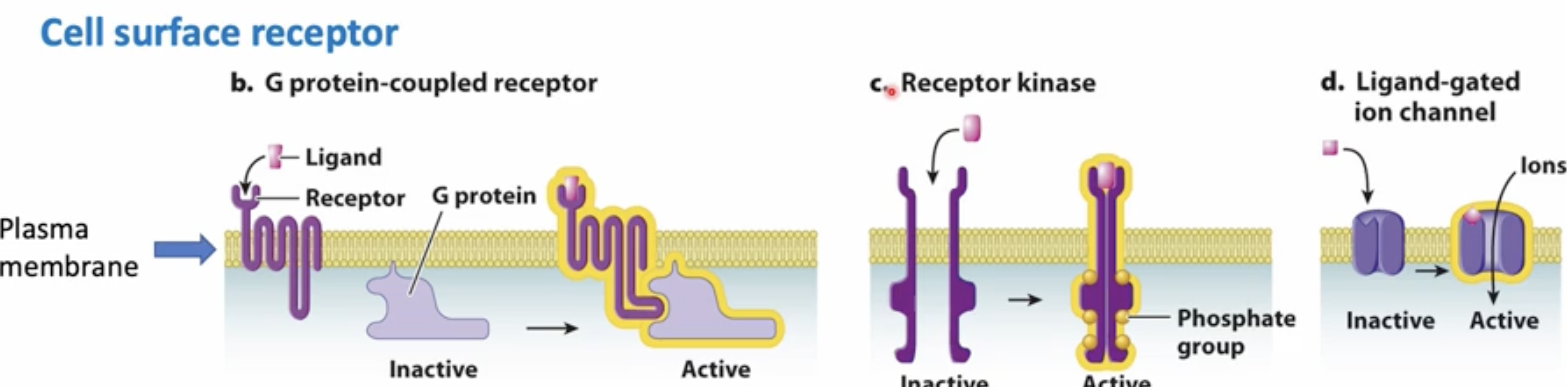
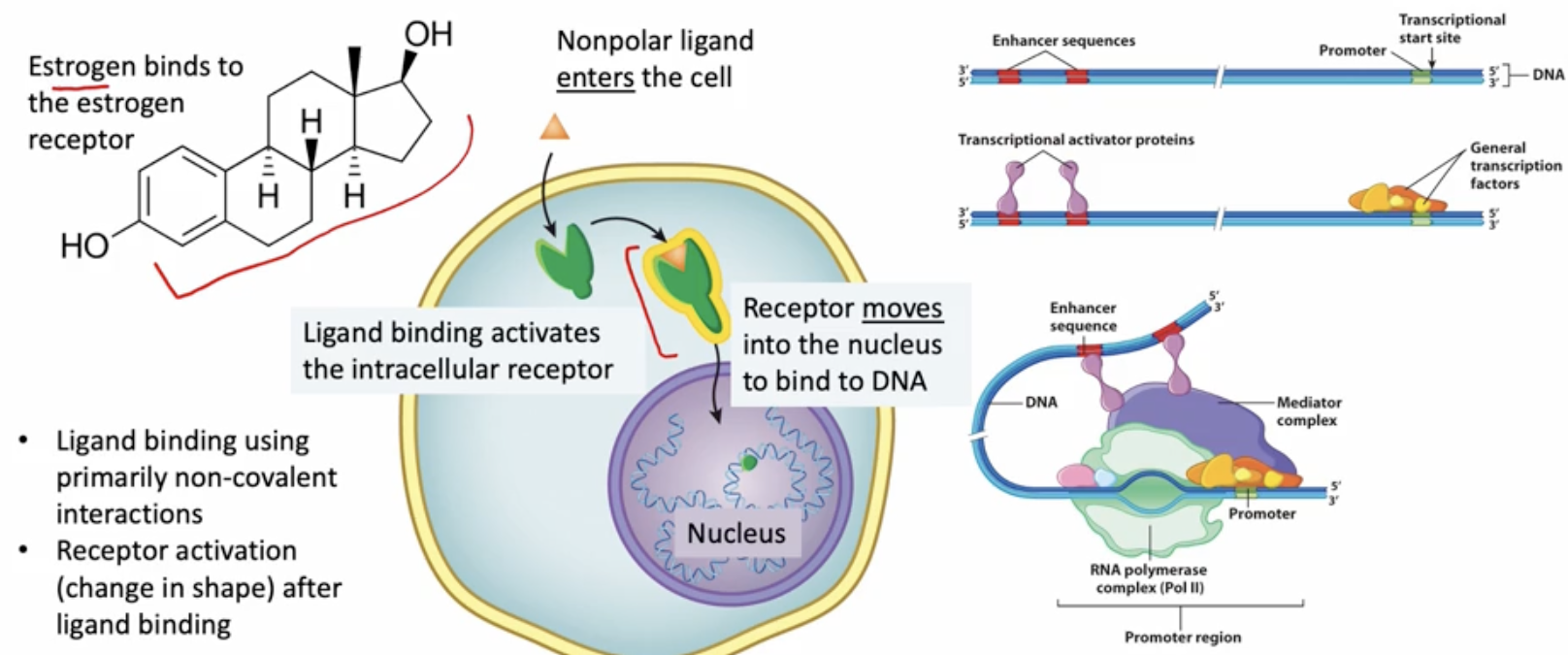
Receptors can be found on the cell surface or inside the cells
What types of ligands likely bind to receptors inside the cell
Nonpolar cells are able to move through the cell very easily
The cellular response for a steroid horomone is a change in gene expression(transcription and translation)
Ligand binding using primarily non-covalent interaction
Receptor activation(change in shape) after ligand binding
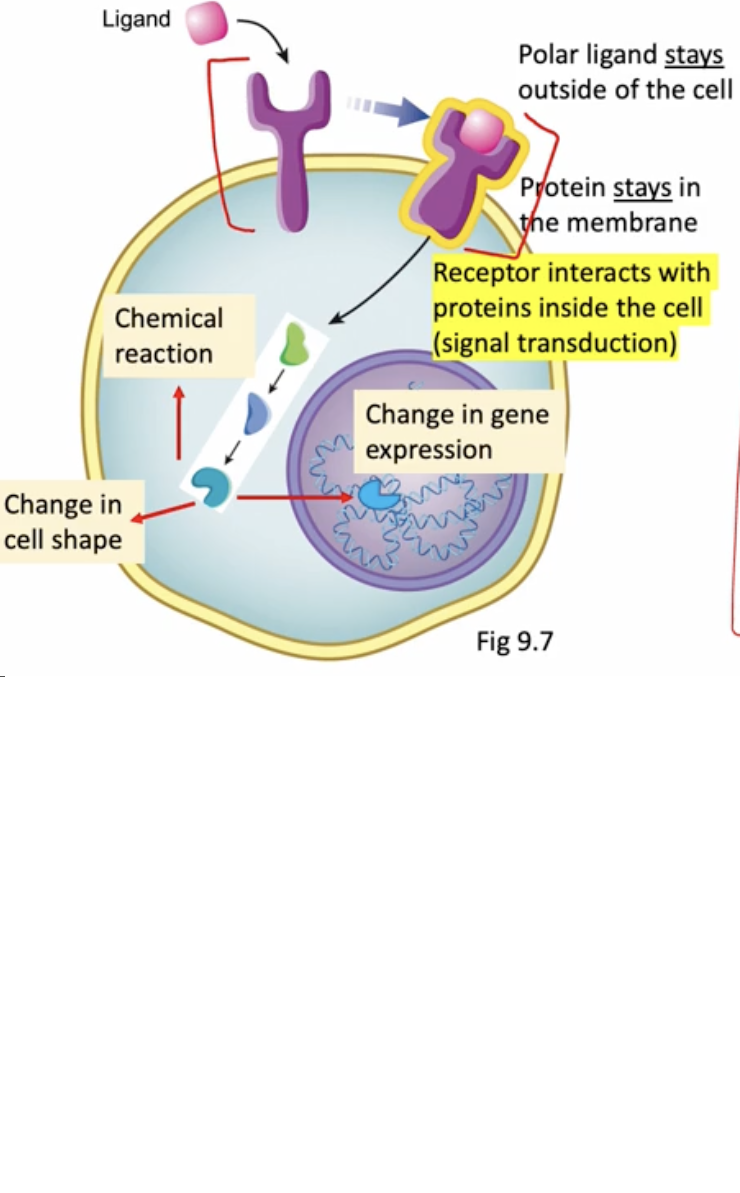
Cell-surface receptors must relay the signal through protein intermediates
Ligand binding using primarly non-covalent interactions
Receptor activation(change in shape) after ligand binding
Cellular response could be a change in the cytoplasm or a change in the nucleus
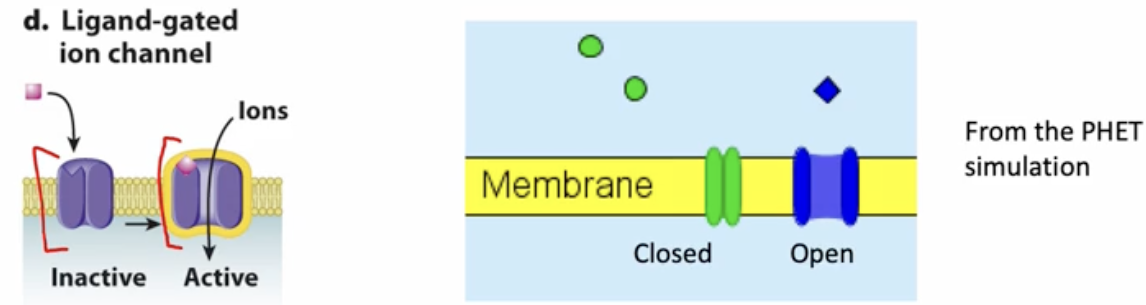
Ligand-gated ions channels allow specific ions to cross membranes when ligands are present
Example: ions channels that initiate muscle contractions
G protein coupled receptor signal transduction
G proteins, protein:protein interactions, second messengers, phosphorylation are all part of the signal transduction of GPCRs
Example: adrelanine signaling in flight or fight
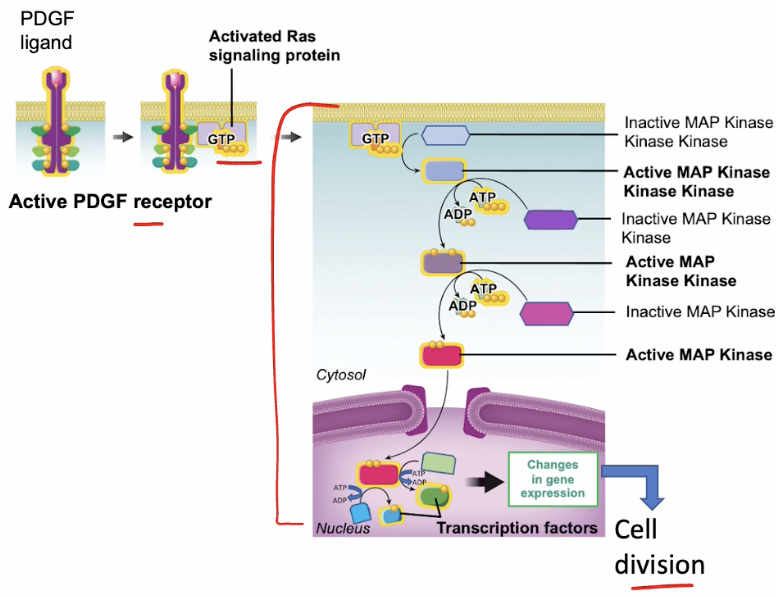
Receptor kinase activation and intitail signal transduction
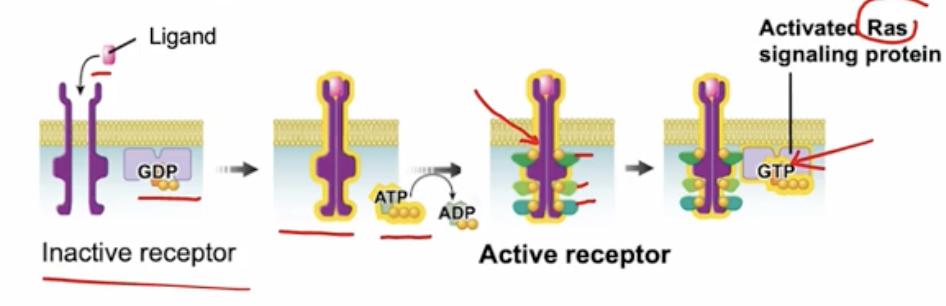
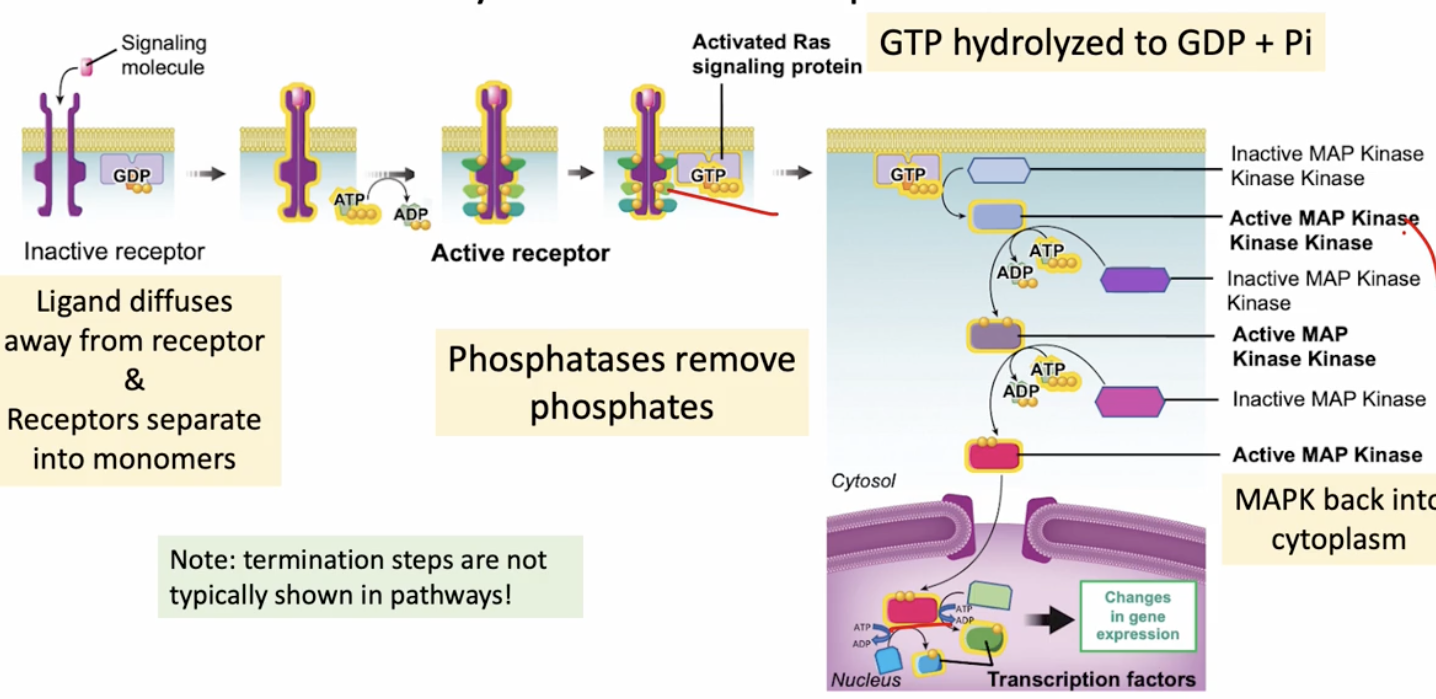
Ligand brings together two monomers to form a dimer
Each receptor acts as a kinase to phosphorylate the other receptor
Signal transduction
The phosphorylated receptor dimer binds to signal transduction proteins in the cytoplasm
Ras activated by GDP-GTP exchange
Active Ras activates Map K3
Map Kinase phosphorylation cascade
MapK moves into the nucleus to phosphorylate transcription factors
Cellular Response
Change in gene expression through altered transcription factor function
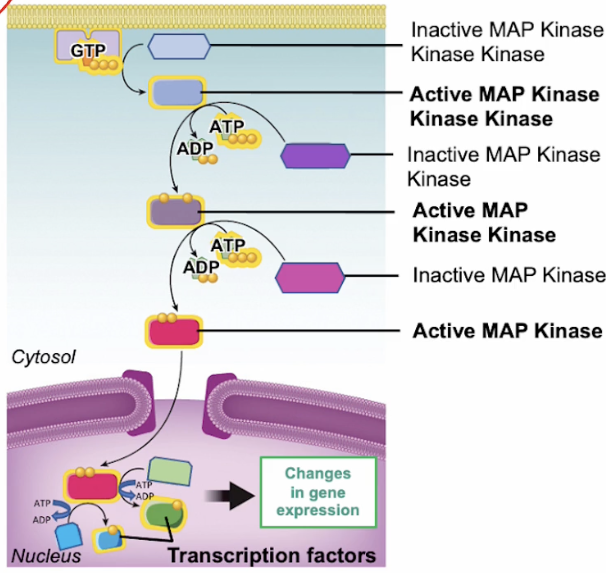
Simplified Receptor kinase pathway
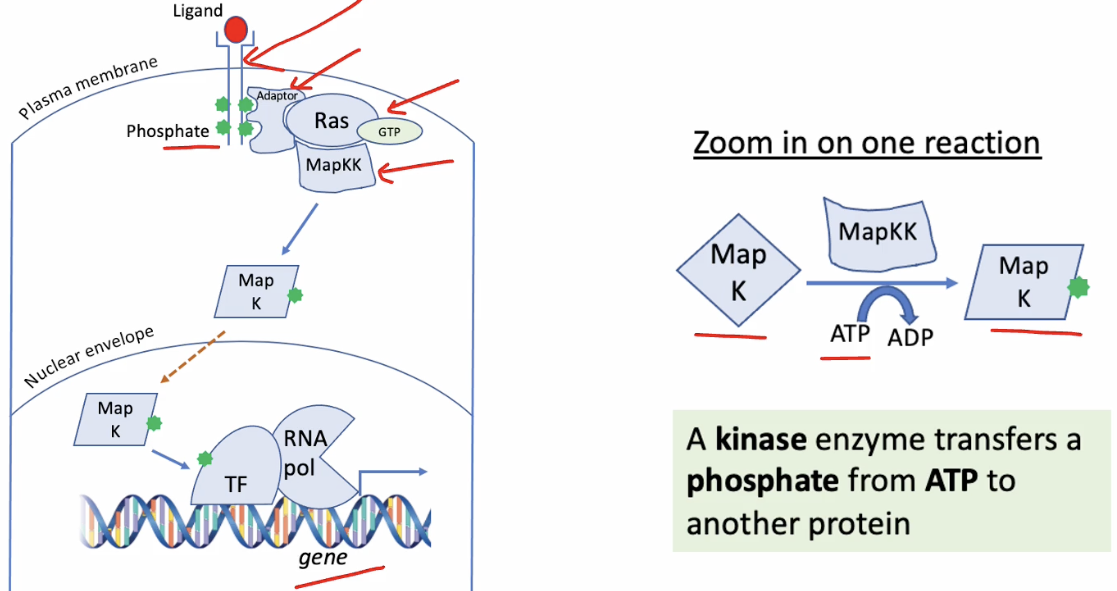
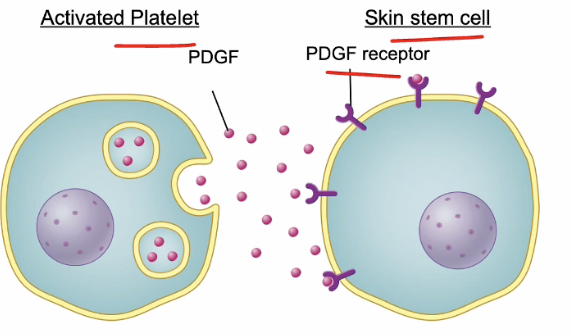
Example of receptor kinase signaling: cell division in wound healing
Cells near the injury release PDGF, a growth factor protein
PDGF binds to receptors on skin stem cells
Summary
Receptors are classified as cell-surfaced or intercellular
Cell surfavve receptors typically bind polar ligands, intracellular receptors typically bind nonpolar ligands
Steroid hormone receptors are a type of intracellular receptor
The cellular response to a steroid hormone is a change in gene expression
No signal transduction proteins required
Cell-surface receptors often require many proteins for signal transduction
Ligand-gated ion channels allow ions to cross membranes
G protein-coupled receptors activiate G protein and cause 2nd messengers to be produced as part of their signal transduction
Receptor kinase pathways use G proteins and phosphorylation in signal transduction
Signal amplification and termination
Complex signal transduction cascades are more common than intercellular signaling paths
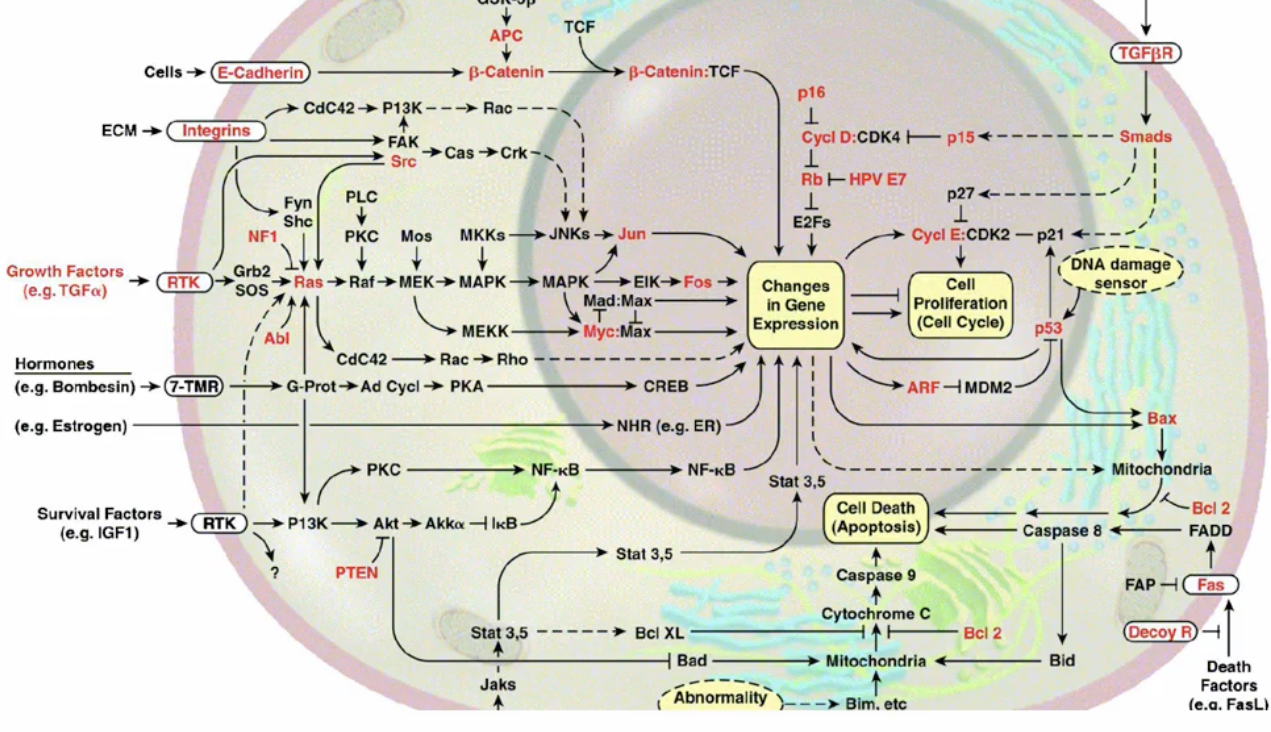
Signal cascades allow for amplification and modulation of signals
Amplification: allows for a single intial signal to generate a large cellular response
Multi-step pathways: each step of the pathway is an opportunity for fine-tuning of signals
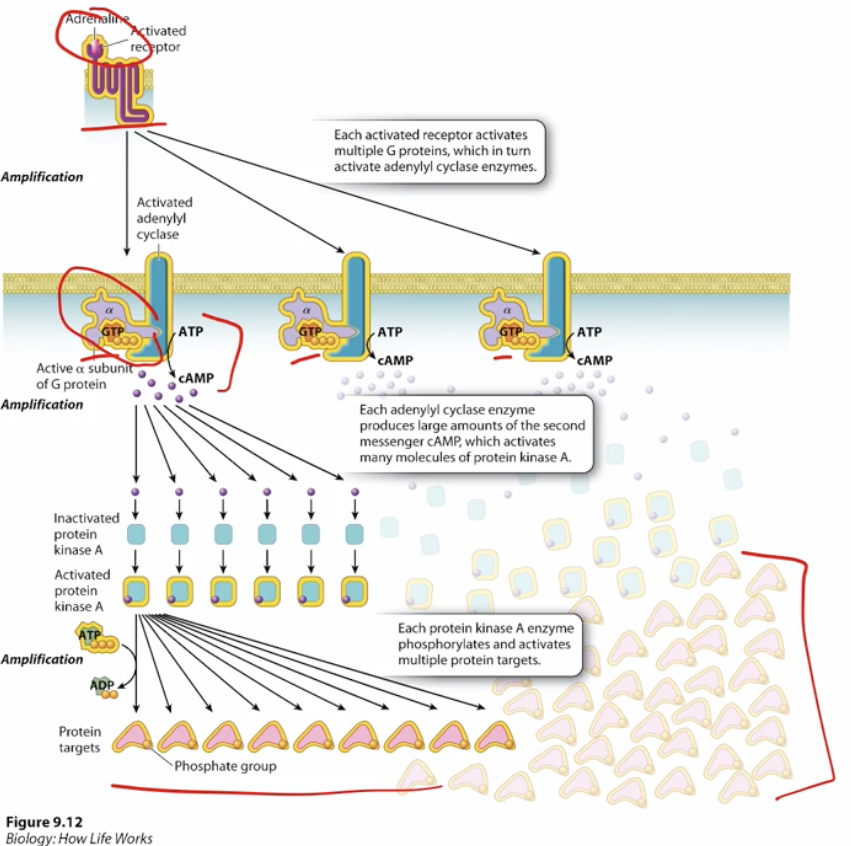
Termination of a GPCR pathway: every activating step must be inactivated
Signal termination is necessary to;
Stop the response to the initial signal
Allow the cell to respond to a new signal
Signal amplification occurs in the Receptor Kinase pathway
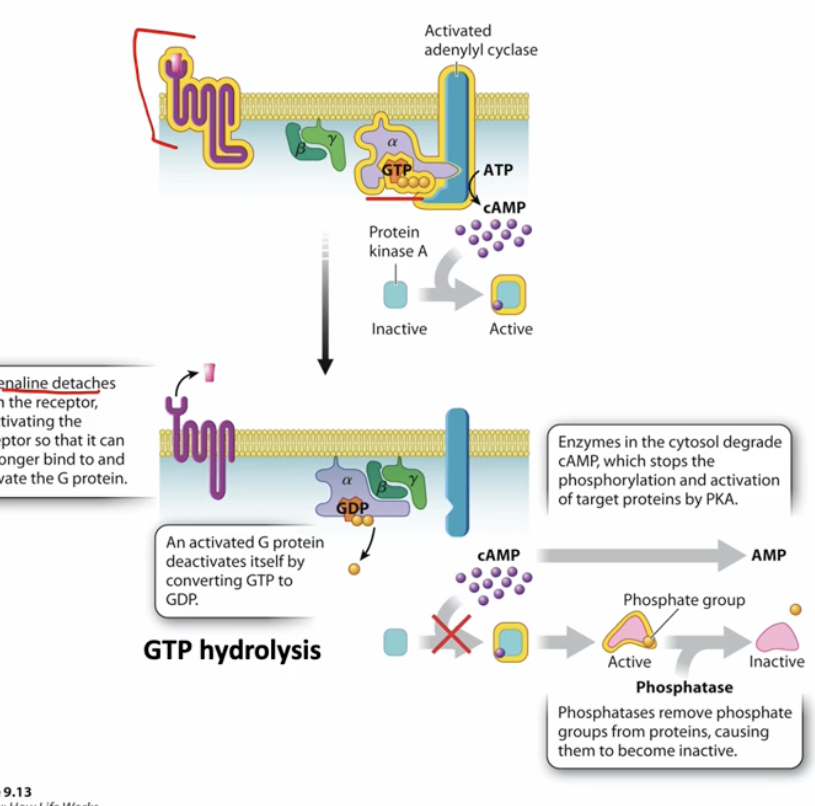
Termination: Every activated step must be inactived
Summary
Amplification and modulation of signal transduction are key advantages of multi-step signaling pathways
GCPR pathway amplification steps: G protein activation, production of cAMP, & phosphorylation of target proteins by active kinase
Receptor kinase pathway amplification: Map Kinase cascade
Signal termination is the effective reversal of the activation step
Required to end events in response to the signal and to allow new signals to be received
Failure to end the response to a cell division signal could be associated with cancer