Alveus
Alveus — clear, exam-friendly definition
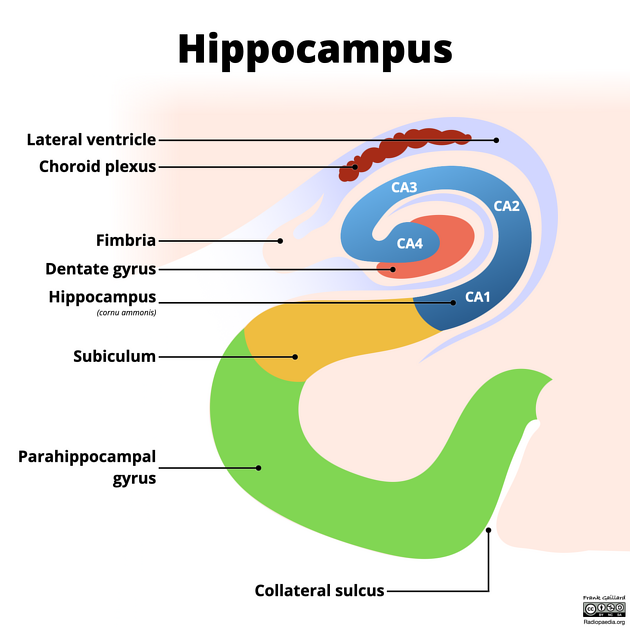
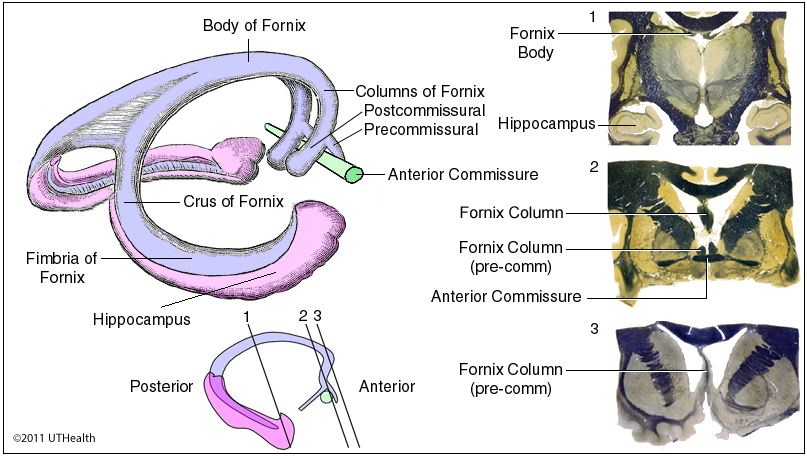

The alveus is a thin layer of white matter on the ventricular (superior) surface of the hippocampus, formed by efferent fibres of hippocampal pyramidal neurons.
Key points to remember 🧠
Location:
Covers the superior surface of the hippocampus (adjacent to the lateral ventricle)
Composition:
Myelinated axons from pyramidal cells of the hippocampus
Function:
Conveys output fibres from the hippocampus
Continuity:
Alveus → fimbria → fornix
Fibres gather in the fimbria
Then form the fornix, the major output pathway of the hippocampus
High-yield relationship (often asked)
Alveus = initial sheet of fibres
Fimbria = bundled fibres along hippocampal edge
Fornix = major tract carrying hippocampal outputs to mammillary bodies and septal nuclei
One-line oral exam answer
The alveus is a thin layer of white matter on the surface of the hippocampus that carries efferent fibres forming the fimbria and fornix.