COGNITIVE PSYCHOLOGY
Cognitive Psychology Definition and Origin
Definition: focuses on how we process information
APA Definition (2020): Studies mental processes like perceiving, attention, thinking, language, and memory through inferences from behavior.
Renaissance period (between 1400 and 1700)
Began scientific study of the brain.
Scholars studied nature and the human body's mechanics.
René Descartes proposed:
Dualism (mind and body as separate)
Monism (mind and body as coexisting)
Development of Cognitive Psychology:
A reaction to Behaviorism's focus on overt (observable) behavior and its "black box" view of brain functions.
George Miller
pioneered memory studies with an experimental method in 1956.
Information Processing (1970s):
Approach to understanding mental processes.
Helped to formulate models to represent such as attention, perception, and memory.
Cognitive information processing models
Based on scores from controlled tasks testing the same cognitive aspect under consistent conditions.
Normative score: group’s average performance
Cognitive Tasks: Offer an objective way to explore mental processes, challenging Behaviorism's "black box" view.
Mental imagery:
considered to be a series of pictures in the mind’s eye without input from the outside world.
involves internal visual representations, studied by Stephen Kosslyn (1979).
Limitations of Cognitive Psychology:
Relies on lab research, often using university students.
Findings may involve subjective interpretation.
Mental processes are complex and interdependent.
Cognitive neuroscience helps address these issues.
Cognitive Neuroscience
Cognitive Neuroscience:
Studies physical brain mechanisms in cognitive processing.
Enabled by advances like fMRI, which map brain function and show interconnectedness with specific functions.
Scanning Techniques in Cognitive Neuroscience:
Single Unit Recording
Measures activity of a single neuron using a micro-electrode, highly sensitive to individual cell activity.
Event-Related Potentials (ERPs)
Electrodes on the scalp record averaged brain activity as a continuous waveform, often derived from EEG data.
Useful for reaction time studies but limited to simple cognitive tasks.
Positron Emission Tomography (PET)
Uses radioactive substances to create spatial images of neural activity.
Detects brain regions active during cognitive tasks but lacks precision in quantifying activity levels.
Functional MRI (fMRI)
Measures blood oxygenation changes to detect active brain regions with high clarity.
Useful for studying memory, emotion, and cognitive task processing.
Enhanced fMRI (efMRI)
Measures blood oxygen level-dependent (BOLD) signals and oxygen extraction fraction (OEF) for detailed analysis of brain activation during tasks.
Magnetoencephalography (MEG)
Detects magnetic fields generated by neural activity using magnetometers to produce structural and functional images.
Repetitive Transcranial Magnetic Stimulation (rTMS):
Non-invasive magnetic pulses stimulate specific brain areas, aiding in brain function research.
Applications and Limitations:
Techniques like PET and fMRI provide insights into brain activity during cognitive tasks and have been used to study aggression, memory, and emotional processing (e.g., Raine et al., 1994).
PET scans highlight processing deficits in the prefrontal cortex linked to aggression.
fMRI shows reduced amygdala activity in psychopaths for negative emotional stimuli.
ERPs and EEG are useful for reaction time studies but are limited by noise and simple task constraints.
Cognitive Neuropsychology
Cognitive neuropsychology: developed the concept of modularity
Modularity: ‘the orchestrated activity of multiple cognitive processors (modules)’ (Ellis and Young,1988).
Modules: Each processes specific stimuli within its domain but communicates with closely linked modules.
Domain specificity: how the modules function; they respond only to particular types of stimuli.
Jerry Fodor
Introduced the concept of cognitive modules to explain how the mind relates to language.
Suggested the mind consists of related but independent "organs" working together to produce behavior (The Modularity of Mind).
Argued cognition is a multi-tiered system, similar to the digestive system.
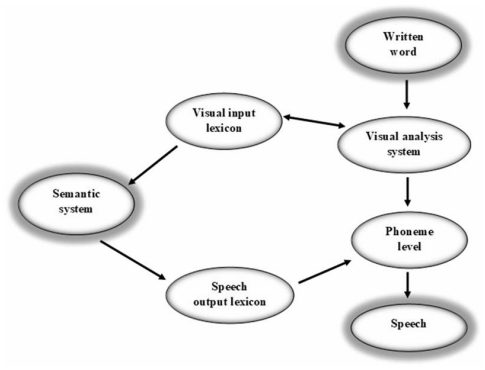
Cognitive Modularity in Neuropsychology:
Central to studying brain damage and cognitive deficits.
Assumes deficits in one task don't affect others.
Limitations:
Tracing deficits to specific brain areas may be oversimplified.
Performance differences could be due to task difficulty, not module dysfunction.
Double Dissociation: Compares performance across individuals with different brain damage to identify task-specific deficits.
Computational Cognitive Science
Computational Cognitive Science:
Uses computational models based on theoretical assumptions.
Models can be categorized as:
Computational models:
use algorithms
Generate theories about human cognitive performance.
Provide cognitive architectures: computer programs designed to understand cognition.
Domain-generic computational cognitive models: capture key cognitive structures, mechanisms, and processes.
Domain-generic processing: enables cross-module analysis across various/many cognitive domains.
Mathematical models:
use equations
predicts behavior but lacks reliable explanations.
Based on limited input data and involves "number-crunching" without deep insights.
Verbal-conceptual models: describe relations and processes using informal language.
Production systems
a cognitive processing model made up of a set of rules, known as production rules.
consist of a series of ‘if’ and ‘then’ statements.
Information in working memory is compared to the "if" condition of a rule, and when matched, the "then" action is executed.
Areas of Cognitive Psychology
Areas according to British Psychological Society (BPS):
4 core-areas: perception, memory, thinking, and language
sub-areas: attention, learning, problem-solving, and communication
The Beginnings of Cognitive Psychology
Cognitive Psychology by Ulric Neisser (1967)
marks the start of the 'cognitive revolution.'
George Miller and Jerome Bruner
credited with initiating cognitive research.
founded the Centre for Cognitive Studies at Harvard in 1960.
Attention and Perception
Attention to stimuli enables us to process and understand sensory information.
Attention and perception are interdependent, helping us make sense of our environment and reduce potential chaos.
Learning
occurs through interaction with the environment, with attention and perception playing key roles.
Memory
essential for storing and retrieving information when needed.
Thinking: Decision-Making and Problem-Solving:
Reasoning is essential for hypothesis testing.
Problem-solving strategies like means-ends analysis, progress monitoring, and planning can be effective when applied correctly.
Language and Communication:
Reading, writing, and speech are integral components of language.