Neuroscience
chapter 1 (history)
biopsychology/neuroscience used interchangeably
dated to 1700 BC
first recorded writing about brain
edwin smith surgical papyrus
surgical techniques and brain
egyptians didn’t prioritize the brain, greeks did
dark ages
trepanation
first attempt at brain surgery
bore hoke in skull to drain pus or let out evil spirits, relieve pressure
renaissance
brain depicted in art
andreas vesalius created anatomy books
scientific revolution , 17th/18th century
renes descartes (1596-1650)
mind and body are separate (dualism)
governed by material flesh and the nonphysical soul
soul and mind are one, reside in pineal gland (monism)
empiricism
knowledge through sensory experience of natural world
19th/20th century
great advances
staining techniques
charles darwin
wilhelm wundt
camillo golgi
santiago ramon y cajal
phrenology
reading bumps on the skull (pseudoscience)
importance of biopsychology
foundations of other psychology disciplines
effective in applied psychology
future
nanotechnology
brain-computer interface
whole brain emulation
transhumanism
chapter 2 (functional anatomy)
nervous system
central nervous system
brain and spinal cord
peripheral nervous system
nerves outside of CNS
somatic - conscious muscle movement
autonomic - not conscious
sympathetic - fight or flight
parasympathetic - low arousal
made up of cells
cell membrane keeps structure
protein transport
extracellular fluid
intercellular fluid
neuron
cell body/soma (entirety of cell)
dendrites (branches that protrude from cell body)
receive stimulation from other neurons
chemical or electrical stimulation
axon (only one)
contains microtubials that allow neurotransmitter to travel down axon
terminal branches
terminal butons
myelin sheath - covering of axon
types of neurons
anaxonic
bipolar
pseudounipolar
multipolar
supported by glial cells
supply nutrients, insulate neurons, cleanup, protect neurons from disease
four types
astrocytes (CNS)
oligodendrocytes (CNS)
microglia (CNS)
schwann cells (PNS)
anatomical directions
dorsal - above
ventral - below
anterior / rostal - toward the face or front
posterior - toward the tail or back
superior - above
inferior - below
lateral - to the side
medial - to the middle
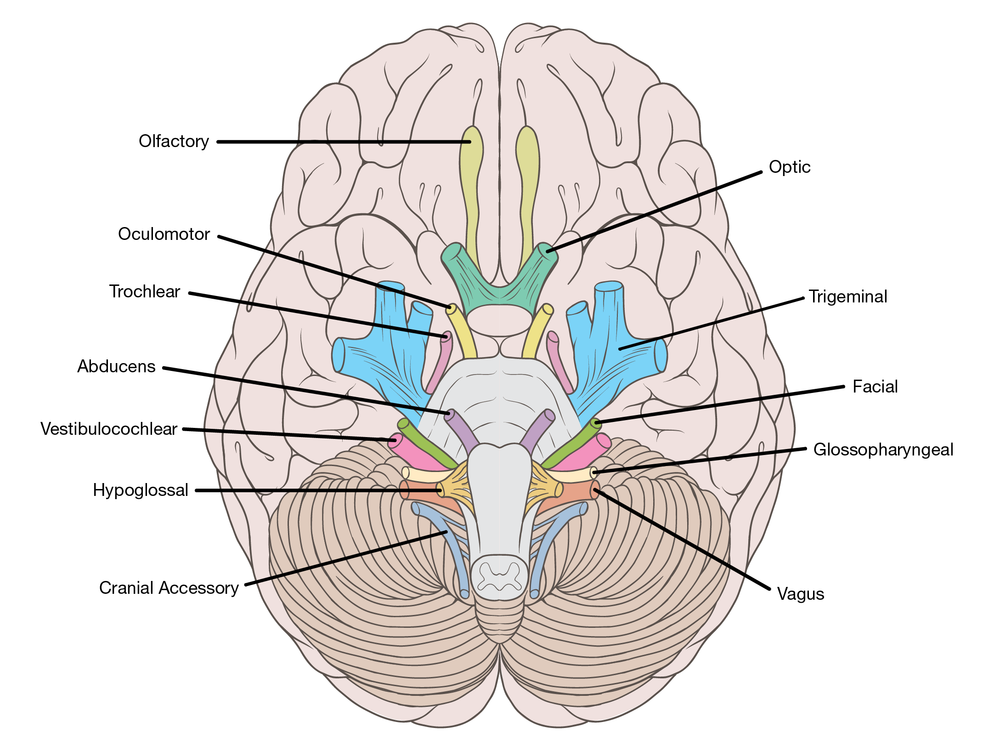
twelve cranial nerves
“on old olympic towering tops a fin and german vault, skip, & hop”
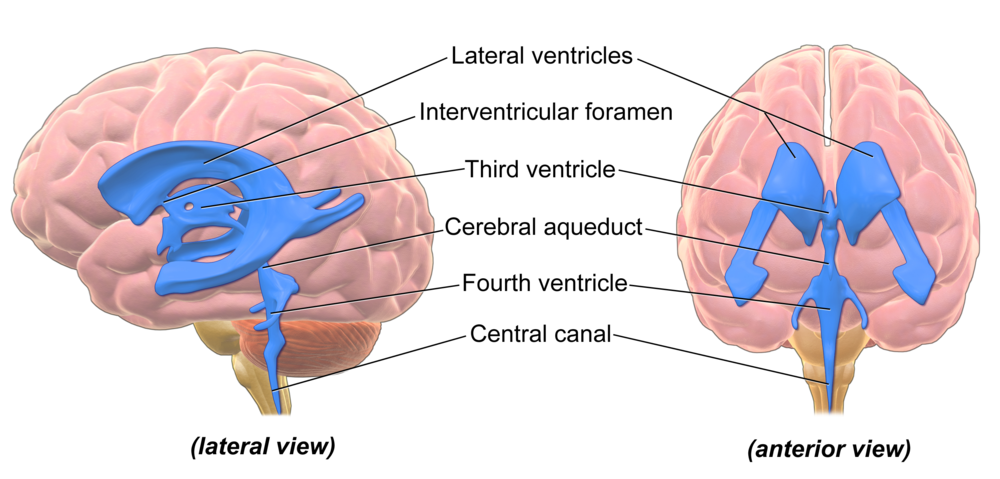
cerebral spinal fluid and ventricles
CSF
clear liquid
removes waste
found in/around spinal cord, brain, and in ventricles
ventricles are spaces within the brain
two lateral ventricles
third and fourth ventricle
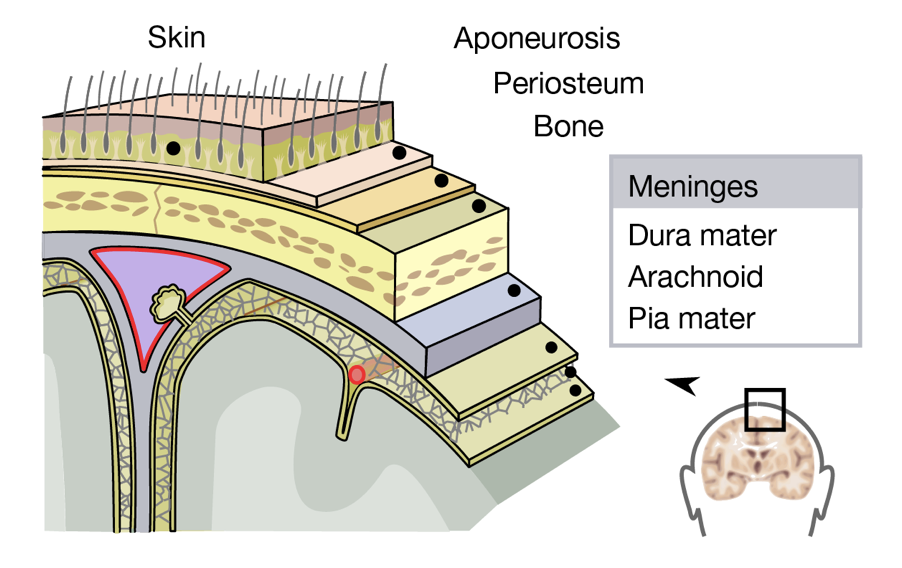
meninges
dura mater
outer layer rests against skull
pia mater
membrane following contours of cerebral cortex
arachnoid
web like membrane between dura and pia
contains CSF and blood vessels
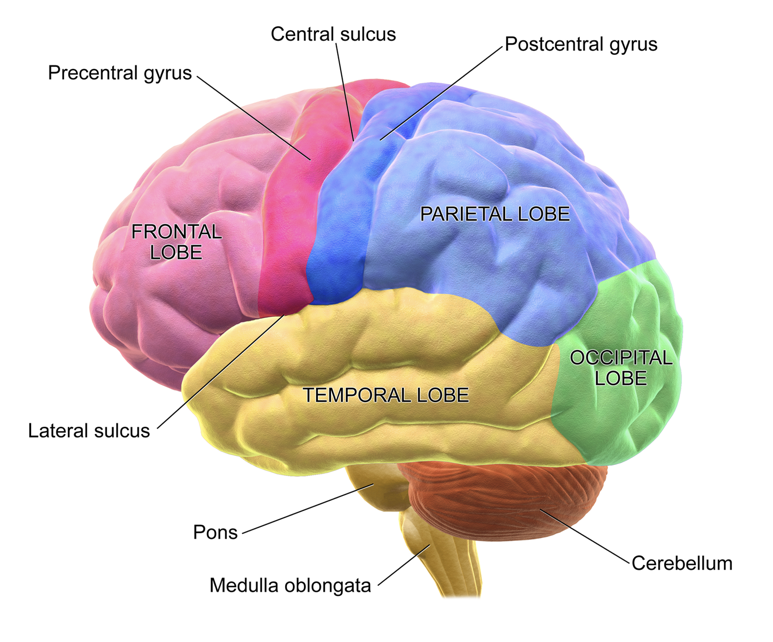
telecephalon
cerebral cortex (neocortex)
frontal lobe - decision making, motivation, attention, cognitive resoning
parietal lobe - integration of sensory information
occipital lobe - visual processing
temporal lobe - language, visual, and auditory perception
limbic system (emotions, learning, motivation, sexual behavior)
amygdala
hippocampus
cingulate cortex
fornix
septum
basal ganglia (coordinates smooth muscle movement)
striatum
globus pallidus
nucleus accumbens
diencephalon
thalamus (relay sensory information)
lateral geniculate nucleus (visual)
medial geniculate nucleus (auditory)
ventral posterior nucleus (touch)
hypothalamus (hormone regulation)
pituitary gland
optic chiasm
mammillary bodies
mesencephalon
superior colliculus
inferior colliculus
periaqueductal grey
substantia nigra
ventral tegmentum
metencephalon
pons
cerebellum
purkinje cells
myelencephalon
medulla oblongata
reticular formation
chapter 3 (neuron communication)
ions (charged particles)
membrane potential
neuron membrane surrounds cell
semi-permeable
maintains electrical charge between inter and extra cellular fluid
membrane potential (The voltage difference between the intracellular fluid and extracellular fluid across the membrane of a neuron.)
resting potential (the voltage difference between the intracellular fluid and extracellular fluid across the membrane of a neuron)
depolarization
repolarization