Ethics
Ethics is NOT the same as feelings
Feelings tell us what we like or dislike, but they can change and be biased. Ethics looks at what is right or wrong based on reasons, not emotions.Ethics is NOT religion
Religion gives moral rules based on faith or beliefs. Ethics can be discussed and understood even without religious beliefs and applies to everyone, regardless of religion.Ethics is NOT following the law
Laws tell us what is legal, but something legal can still be unethical (e.g., unfair laws). Ethics asks, “Is it right?”, not just “Is it allowed?”Ethics is NOT culturally accepted norms
Just because a practice is normal in a culture doesn’t mean it is ethical. Ethics questions traditions when they cause harm or injustice.Ethics is NOT science
Science explains how things work using facts and experiments. Ethics deals with values and decisions about what we should do, which science alone cannot answer.
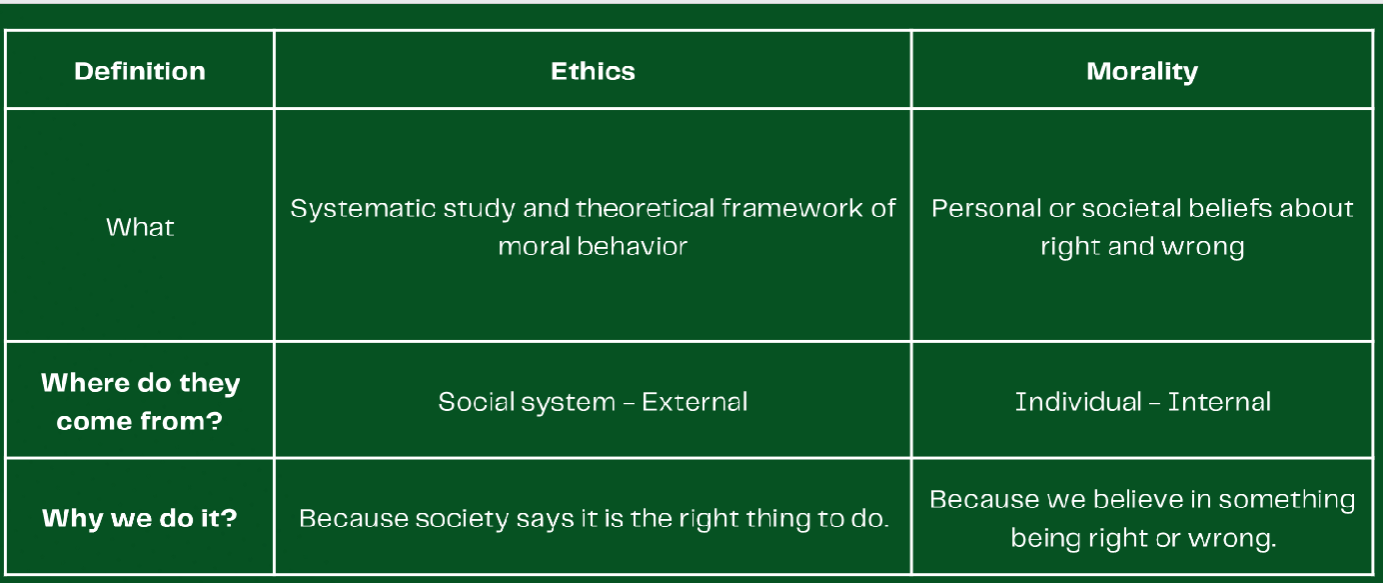
What
Ethics
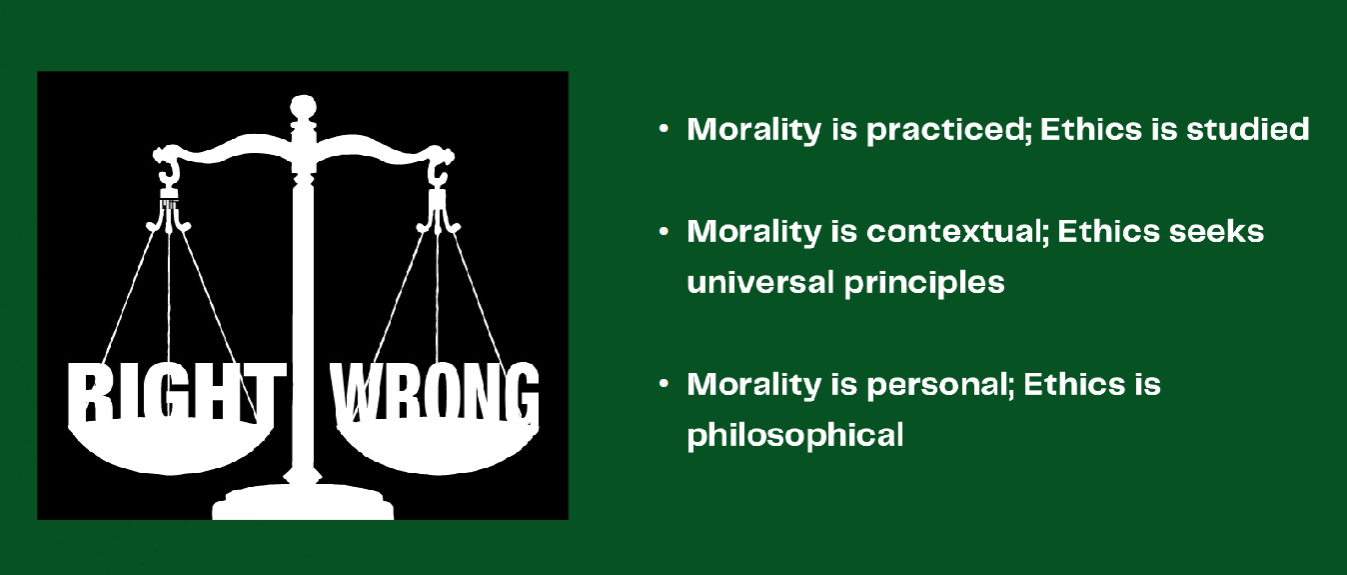
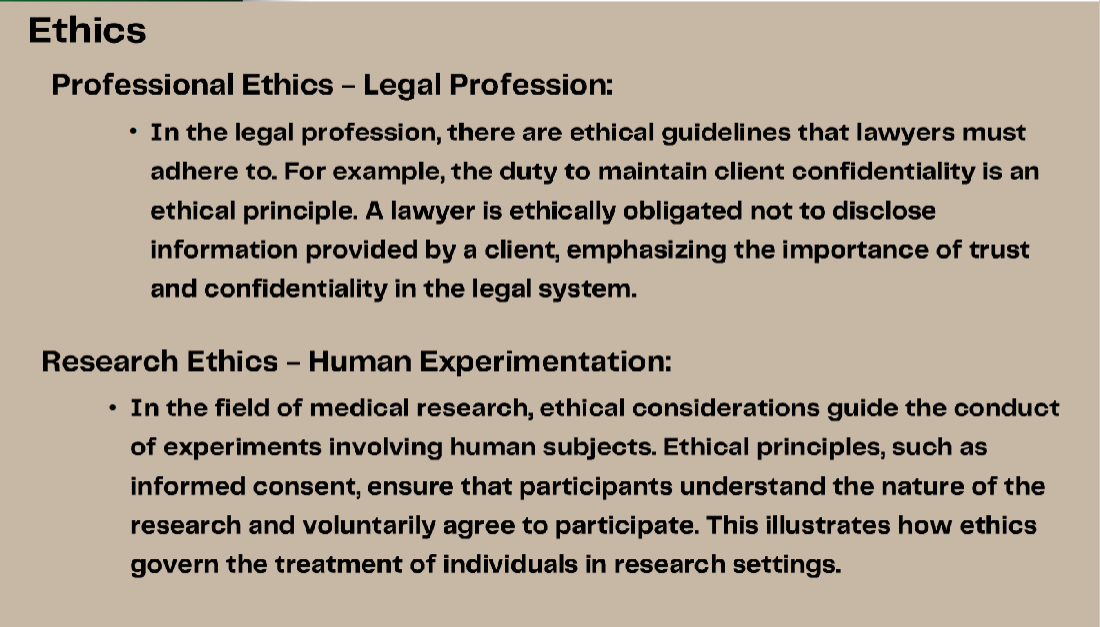
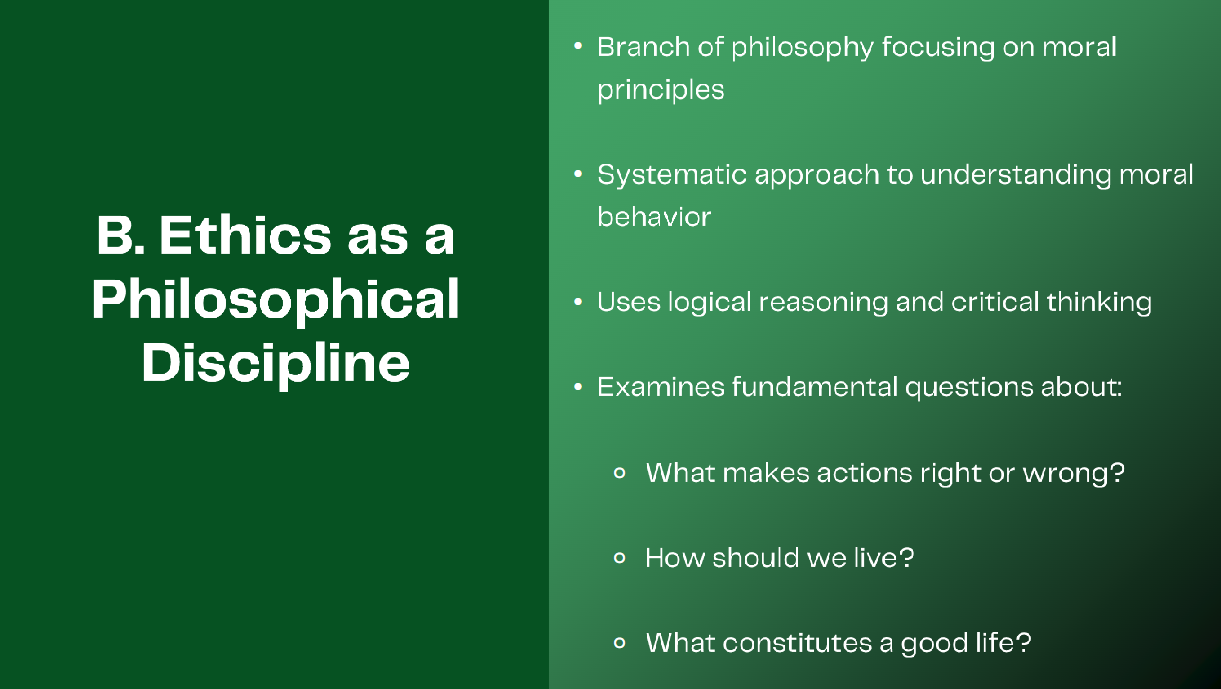
Ethics is the formal and systematic study of what is right and wrong. It uses theories, principles, and rules (often taught in school or used in professions like nursing, medicine, and law).Morality
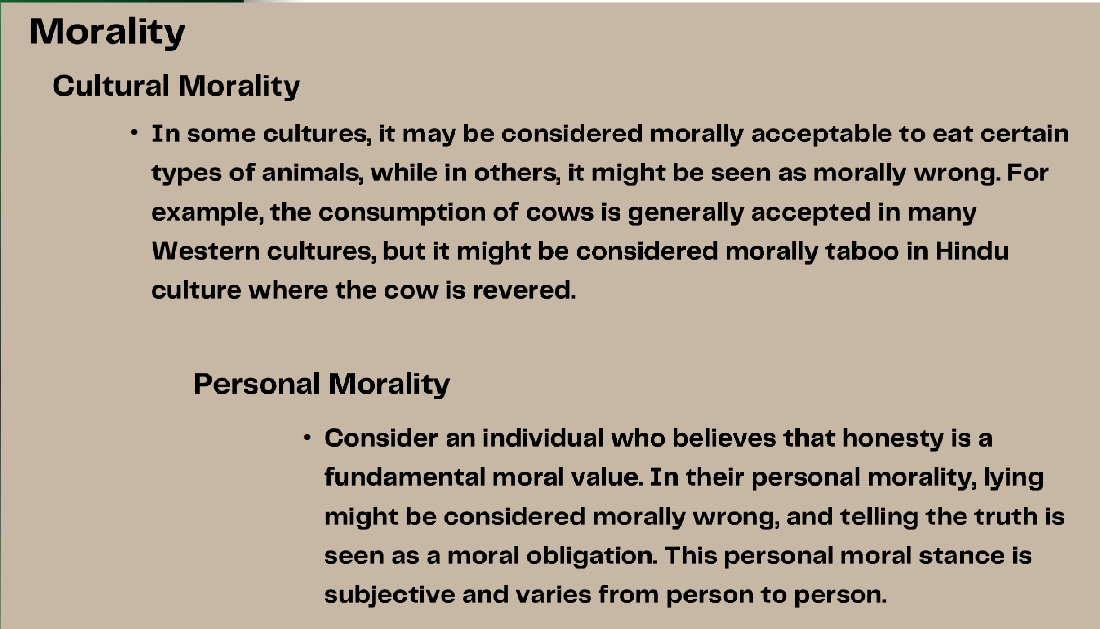
Morality refers to personal or societal beliefs about right and wrong—what people actually believe and practice in daily life.
Where do they come from?
Ethics – External (Social system)
Ethics comes from outside the individual, such as professional codes, laws, institutions, and philosophical theories.Morality – Internal (Individual)
Morality comes from inside the person, shaped by upbringing, culture, religion, and personal experiences.
Why we do it?
Ethics
We follow ethics because society or a profession says it is the right thing to do, and there are standards to guide behavior.Morality
We act morally because we personally believe something is right or wrong, even if no rules are written.
Branches of Ethics
Meta-ethics
studies the nature of moral statements
key questions
what is goodness?
are moral values objective or subjective
do universe moral truths exist?
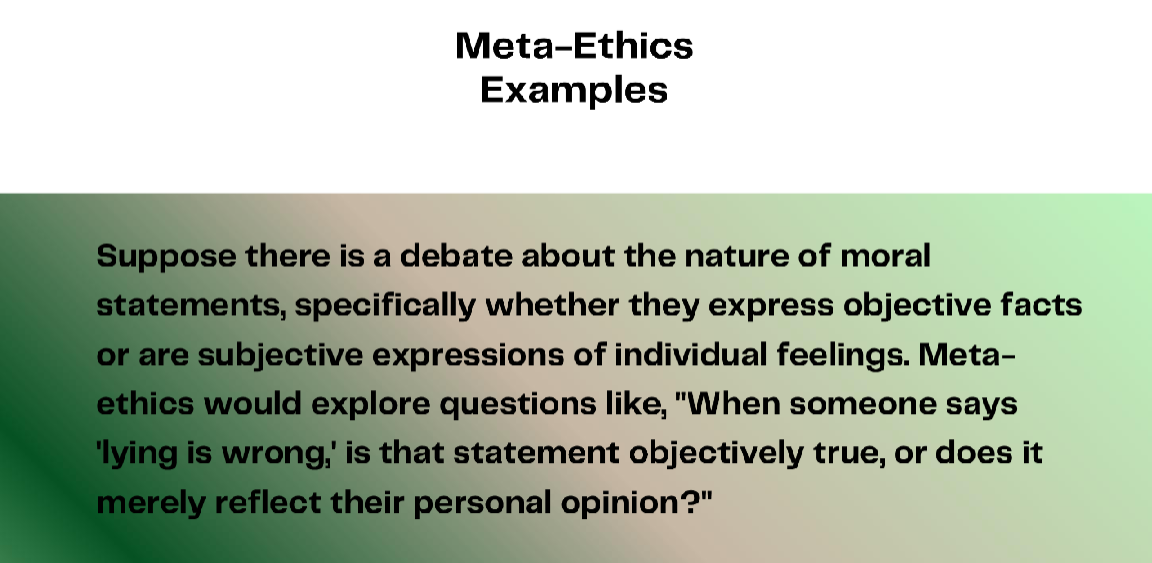
Meta-ethics is about understanding what moral statements really mean, not deciding whether something is right or wrong. It asks questions like whether moral statements are facts that are true for everyone or just personal opinions and feelings. For example, when someone says “lying is wrong,” meta-ethics asks if that statement is objectively true for all people, or if it simply reflects what that person believes or feels. In simple terms, meta-ethics studies the nature, meaning, and truth of moral judgments, rather than judging actions themselves.