Human Growth and development
Human development is a lifelong process of physical, behavioral, cognitive, and emotional growth and change. The longstanding nature vs. nurture debate encompasses the scientific discourse about whether individuals are a product of genetic and biological factors or a product of their environment and learning. While the nature vs. nurture debate has continued for over a century, most scientists today view nature and nurture as inextricably interconnected. In other words, genetic and biological factors influence the individual’s environment and experiences and, conversely, a person’s environment and experiences can directly affect the physical structure and activity of the brain. Even as the nature vs. nurture debate continues, the Human Genome Project provides a striking example of how types of human behavior may be traced to certain strands of DNA located on specific chromosomes.
Human Genome Project
Within the realm of child development, "growth" refers to a steady and permanent rise in physical size, whereas "development" pertains to the advancement of motor and cognitive abilities. Both processes are significantly influenced by one's genetic makeup, diet, and surroundings. Assessing growth and development is a vital part of a child's physical check-up. Identifying any delays or issues in growth or development early on is important for effectively addressing and managing a child's health concerns. Development is an ongoing journey that begins at birth and continues into adulthood. Although physical growth typically stops after the teenage years, development does not cease with adolescence. Each stage of development presents its own unique set of challenges and possibilities.
Universal Principles of Human Growth and Development
Universal Principle | Description |
|---|---|
Cephalocaudal principle | Human development follows a head-to-toe progression. Infants gain control over their neck and head before they can control their extremities. |
Proximodorsal principle | Human development progresses from the center of the body in an outward direction. The spine develops first, followed by extremities, then fingers and toes. |
Simple to complex | Human development evolves in an orderly fashion from simple to complex. Infants accomplish head control before they are able to crawl. |
Continuous process | Human development is a continuous process characterized by periods of growth spurts and periods of slow and steady growth. |
General to specific | Human development occurs from large muscle movement to more refined muscle movements. |
Individualized rates | Human development varies from individual to individual. Each person has their own growth timetable and rate of development. |
Periods of human growth and development reflect unique changes that occur at various stages throughout the lifespan. The next sections examine physical growth and development during the stages of conception through adolescence, young adulthood through middle adulthood, and older adulthood.
Conception Through Adolescence
Human development begins with conception, which marks the beginning of prenatal development. Prenatal development is followed by the newborn, infancy, childhood, and adolescent stages. Each stage of development between conception and adolescence is characterized by unique physical, cognitive, and emotional changes that define each stage.
conception
Conception Through Newborn Stage
Conception occurs when a single male sperm cell penetrates and successfully fertilizes the female egg. Of the millions of sperm cells ejaculated into the vagina, only a few hundred will complete the journey to the fallopian tubes. If an egg is present in the fallopian tube, sperm cells simultaneously begin to push their way into the egg. When one sperm cell penetrates the cellular wall of the egg, chemical changes occur in the wall of the egg that block the entry of all other sperm. The nuclei of the egg and sperm combine into a single cell, where two independent sets of 23 chromosomes are interchanged. At this point, pregnancy begins, all inherited characteristics are determined, and the development of the human being begins.
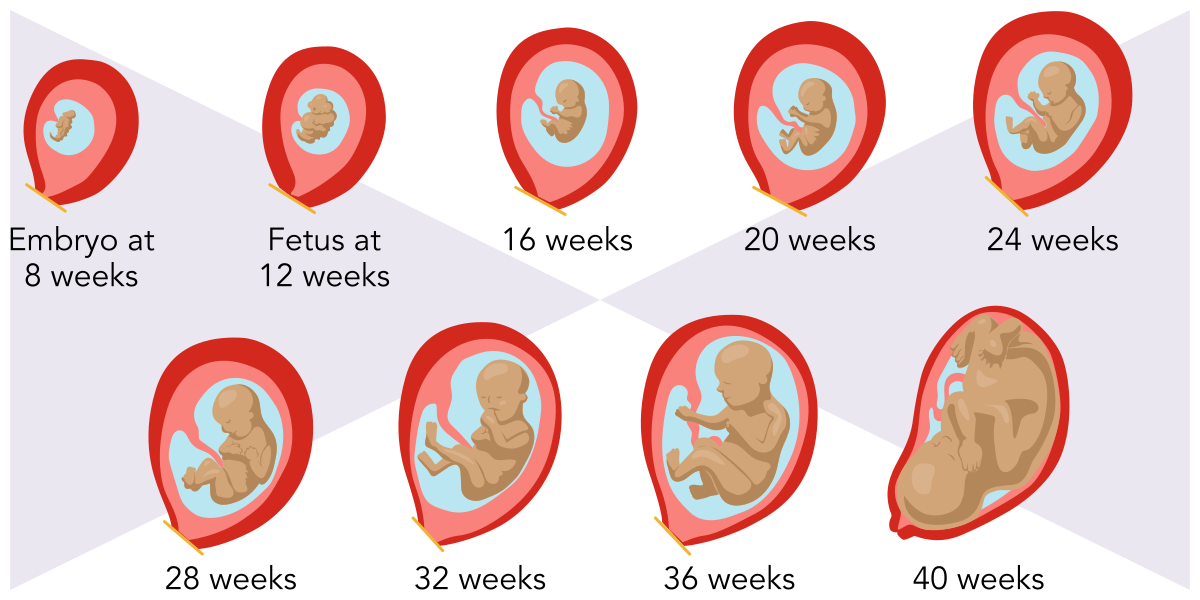
Prenatal developmentPeriod of development that occurs from conception to birth. It takes an average of 38 to 40 weeks.
Prenatal development from conception to birth takes an average of 38 to 40 weeks and is divided into three periods: zygote, embryo, and fetus. The zygote period begins with conception and lasts approximately 2 weeks. The zygote undergoes a series of cell divisions and continues to divide and change as it moves down the fallopian tube to the uterus, where it implants itself into the uterine wall. This process takes approximately 7 days. Once the organism is implanted into the uterine wall, it is referred to as an embryo. The implanted zygote continues to undergo cell division and differentiates as a cluster of cells near the center of the zygote, eventually developing into an infant. Structures that support, nourish, and protect the developing organism are formed, including the placenta, a structure through which nutrients and waste are exchanged between the mother and the developing infant. Implantation and differentiation of cells mark the end of the zygote period and the beginning of the embryonic period.
prenatal development
The embryonic period usually begins the third week after conception and lasts until the end of the eighth week. During the embryonic stage, body structures and internal organs develop. Three cell layers form during the embryonic period. The outer cell layer (ectoderm) will become the hair, outer layers of the skin, and the nervous system. The middle cell layer (mesoderm) will become the muscles, bones, and circulatory system. The inner cell layer (endoderm) will form the lungs and digestive system. By the end of the embryonic period, most organs have started to form. They will continue to grow in size and complexity throughout the fetal period.
embryonic period
The fetal period begins at the ninth week and ends at birth. During the fetal period, the fetus becomes larger, its body systems begin to function, and its brain begins to regulate body functions. Between 22 and 23 weeks, most bodily systems function well; hence, this period is called the age of viability. Although the fetus looks distinctly babylike during this time, it is not yet mature. Infants born prematurely have a lower chance of survival mainly because of their underdeveloped nervous and respiratory systems. Nevertheless, many premature infants can survive if they receive quality medical and nursing care.
fetal period
viability
During prenatal development, the health of the mother is of primary concern. Indeed, risk factors related to the mother’s nutrition, age, and exposure to teratogens can all affect prenatal development. Because the mother is the sole source of nutrition, a balanced diet with adequate caloric content is required during pregnancy. Proteins, vitamins, and minerals are essential for healthy prenatal development. Failure to consume adequate amounts of folic acid may put the fetus at risk for spina bifida, a disorder in which the neural tube does not close properly during the first month of pregnancy. Failure of the neural tube to close properly can result in permanent damage to the spinal cord and nervous system.
teratogens
Maternal age also plays a role in the health of the fetus and the overall pregnancy. Older individuals may have difficulty getting pregnant and may be at higher risk for chromosomal defects such as Down syndrome. Some pregnant teenagers may be less likely to seek prenatal care, have an increased risk for prematurity or low-birth-weight infants, and may be less likely to finish their education.
Pregnant clients must also be aware of exposure to teratogens—agents that can cause physical malformations and affect prenatal development negatively. The effects of teratogens on the unborn child depend on the duration of exposure, the amount of the teratogenic substance, and the stage of embryonic or fetal development when exposure occurs. The previous pregnancy labeling of medications (A, B, C, D, X) was replaced with the Pregnancy and Lactation Labeling Rule (PLLR) by the U.S. Food and Drug Administration. This rule, implemented to enhance the safety of medications, provides a comprehensive framework for health care professionals to understand the potential risks and benefits of using medications during pregnancy and lactation. Teratogens can take various forms, including medications (such as antibiotics and warfarin), chemicals (like polychlorinated and polybrominated biphenyls), maternal conditions (such as diabetes mellitus and epilepsy), infections (like rubella, influenza, syphilis, and varicella), and substance use (including alcohol, tobacco, and illicit substances). This diverse range of teratogens underscores the importance of caution and awareness during pregnancy.
Newborn (Birth to 28 days)
Toward the end of pregnancy, expectant mothers may find it more difficult to breathe, tire more easily, and feel physically uncomfortable. When labor begins, the uterus will contract until the contractions become stronger and more rhythmic. In tandem, the cervix enlarges to approximately 10 cm. In a vaginal birth, the newborn (neonate) passes through the cervix, enters the vagina, and crowns (the top of the newborn’s head appears), indicating that delivery is imminent. Upon delivery of the newborn, the placenta is expelled, fetal circulation ends as the umbilical cord is tied, and the newborn takes their first breath.
At 1 min and 5 min after birth, the newborn is assessed and assigned scores based on color, heart rate, reflexes, muscle tone, and respiration. Each trait is scored as 0, 1, or 2. These scores are then added together to yield the overall Apgar score. The highest (best) possible Apgar score is 10. A score of 7 or higher indicates the newborn is currently transitioning well to extrauterine life. Apgar scores may be influenced by gestational age, birth weight, maternal medication or anesthesia use, and congenital anomalies. The Apgar score is intended to help practitioners quickly determine whether a newborn requires immediate medical care and is not designed to predict long-term health issues.
Apgar score
Apgar Scoring
Letter | Indicator | 0 Points | 1 Point | 2 Points |
|---|---|---|---|---|
A | Appearance (skin color) | Blue; Pale | Pink body; Blue extremities | Pink |
P | Pulse | Absent | Below 100/min | Over 100/min |
G | Grimace (reflect irritability) | Floppy | Minimal response to stimulation | Prompt response to stimulation |
A | Activity | Absent | Flexed arms and legs | Active |
R | Respiration | Absent | Slow and irregular | Vigorous cry |
The newborn’s head is large in proportion to the rest of its body. The skull consists of six soft bones separated by bands of cartilage called sutures, with fontanels (“soft spots”) being found at the anterior and posterior of the newborn’s skull. The newborn’s head appears to rest on its chest, and the arms and legs are proportionately short and held in a flexed position. Many newborns are covered with fine hair called lanugo that disappears in the first few days after birth. The skin creases have a white, cheese-like covering called vernix caseosa, which protects the fetus’s skin during pregnancy. The abdomen is soft and protruding. Expected behavioral characteristics of a neonate include sucking, crying, sleeping, and movements. These movements are often sporadic and generally involve all four extremities. Crying is an instinctive behavior for newborns and expresses a variety of feelings, including hunger, discomfort, and overstimulation.
fontanels
lanugo
vernix caseosa
At birth, the nervous system is immature, and newborns respond to their environment through a series of reflexes. The presence of certain reflexes indicates normal neurological function and can help the practitioner estimate gestational age. Nurses may help conduct the various physical and neurological assessments that occur following the birth of the newborn. In addition to assessment of reflexes, other newborn screenings include tests to detect congenital hearing loss, metabolic and genetic disorders, and congenital hip dysplasia.
Expected Reflexes Present in the Newborn
Reflex | Stimulation | Newborn Response |
|---|---|---|
Rooting | Stroke the cheek or touch the side of the mouth | Turns toward source, opens mouth, begins to suckle |
Moro | Sudden movement or loud noise | Startles, extends arms and legs, then pulls them inward toward the body |
Tonic neck | With the newborn lying supine, turn the head to the side | Extends the arm and leg on that side |
Sucking | Mouth touched by an object | Suckles on the object |
Babinski | Stroke the sole of the foot | Toes fan outward and the foot turns inward |
Grasping | Palm touched by an object | Grasps the object in the palm |
Blinking | Flash of light or puff of air | Closes eyes |
Stepping | Newborn held upright with the feet touching a surface | Moves feet as if to walk |
The newborn’s height, weight, head circumference, and vital signs are measured and recorded immediately after birth. The newborn’s temperature may be slightly lower than expected due to both an immature temperature-regulating mechanism and heat loss as the newborn adjusts to life outside the uterus. Best practices include placing newborns in skin-to-skin contact with the mother, using light blankets to warm the newborn, and covering the neonate’s head to prevent further heat loss. Count respirations for a full minute; the neonate’s respiratory rate generally ranges between 30 and 60/min. Also, take an apical pulse for a full minute. It typically ranges from 110 to 160/min in the newborn. The average newborn blood pressure is 60 to 80 mm Hg systolic and 40 to 50 mm Hg diastolic.
During prenatal development and soon after birth, infants begin to recognize their mother by smell and sound, which sets the stage for an attachment relationship. Infant behaviors and responses evoke interactions with their caregivers that serve as the first step in the formation of attachment relationships. Attachment may be evidenced by the way a caregiver looks at, talks to, and holds the newborn. According to attachment theorists John Bowlby and Mary Ainsworth, human attachment is an enduring emotional bond that connects one person to another over time and space. They suggested that individuals need to develop a relationship with at least one primary caregiver to ensure expected social and emotional development. If attachment does not occur or is not reciprocated, the result may be behavioral or emotional difficulties for the child.
human attachment
Infancy: 1 month Through First Year of Life
Infancy spans the period of human development from 1 month of age to toddlerhood. During infancy, individuals experience dramatic physical, cognitive, social, and emotional growth and development. In fact, growth is more rapid in infancy than during any other period after birth. This fast rate of growth requires ample sleep. Infants sleep as much as 20 hr per day. However, by the end of the first year, the infant will sleep only approximately 12 hr per day. Infant sleep patterns are characterized by periods of light sleep, stirring movements and noises, and inconsistent routines. During the first year, most infants require morning and afternoon naps in addition to sleeping at night.
infancy
During the first 2 months, infants develop the ability to hold their head erect while in a prone position. At this age, infants observe movements, gaze at an object for several seconds, cry, and make other sounds. By the end of the fourth month, infants can grasp objects with both hands, bring their hands to their mouth, and often begin cooing and babbling at their caregivers and holding their heads steady for brief periods. Infants at this stage have minimal head lag and can turn their heads toward sounds, utter sounds, and chuckle. At 6 months, infants can pick up objects and transfer the object from hand to hand, roll from front to side/back, push themselves up with arms straight when in a prone position, and enjoy vocal play. Deciduous teeth start to emerge at about 6 months. When teething, an infant may be fussy and uncomfortable or refuse to eat due to swollen and painful gums. By 9 months of age, infants can wiggle and change from a prone to a sitting position, pick up and play with toys, transfer objects from one hand to another, and sit unsupported. They can babble, begin to understand simple commands, and may display fear of strangers. By the end of the first year, infants can pull themselves up to a standing position and walk while holding onto furniture.
deciduous teeth
As noted earlier, brain development begins during the prenatal period. At 4 weeks’ gestation, the neural plate folds to form a tube that ultimately becomes the brain and spinal cord. At birth, the brain weighs approximately 12 oz and is roughly 25% the weight of an adult brain. During both infancy and toddlerhood, the brain grows rapidly. Complex brain development during the first year of life is evidenced by infants’ behaviors as they explore and interact with their environment. This brain development is enhanced by stimulation and use of senses, sound nutrition, and communication.
Although the timing varies, infant growth and development are both sequential and patterned. By 5 months, infants are double their birth weight. They are triple their birth weight by their first birthday. Nurses often measure the infant’s growth and development. Age and gender-related growth charts can be used as a general tool by health care providers to evaluate children’s growth. The actual weight and length are generally considered less important than evidence showing that the infant is growing steadily and consistently. Growth charts were originally developed by the National Center for Health Statistics in 1977. In 2000, the Centers for Disease Control and Prevention (CDC) revised the former charts, and the World Health Organization (WHO) adopted the newer version for national use. The WHO established average height and weight charts for children from birth to 2 years of age. Currently, the CDC has 16 versions of the growth charts. Due to increasing rates of childhood obesity and the limitations of older growth charts that stopped at the 95th percentile, the CDC introduced new Extended BMI-for-Age Growth Charts in 2022. These charts provide a more detailed way to assess children and teenagers with very high body mass indices (BMIs) and assist with early detection and management of childhood obesity. The extended BMI charts can be used for children 2 years of age or older.

Developed by the National Center for Health Statistics in collaboration with the National Center for Chronic Disease Prevention and Health Promotion, 2000
Growth chart for malesGrowth charts can be used as a general tool to evaluate children’s growth.
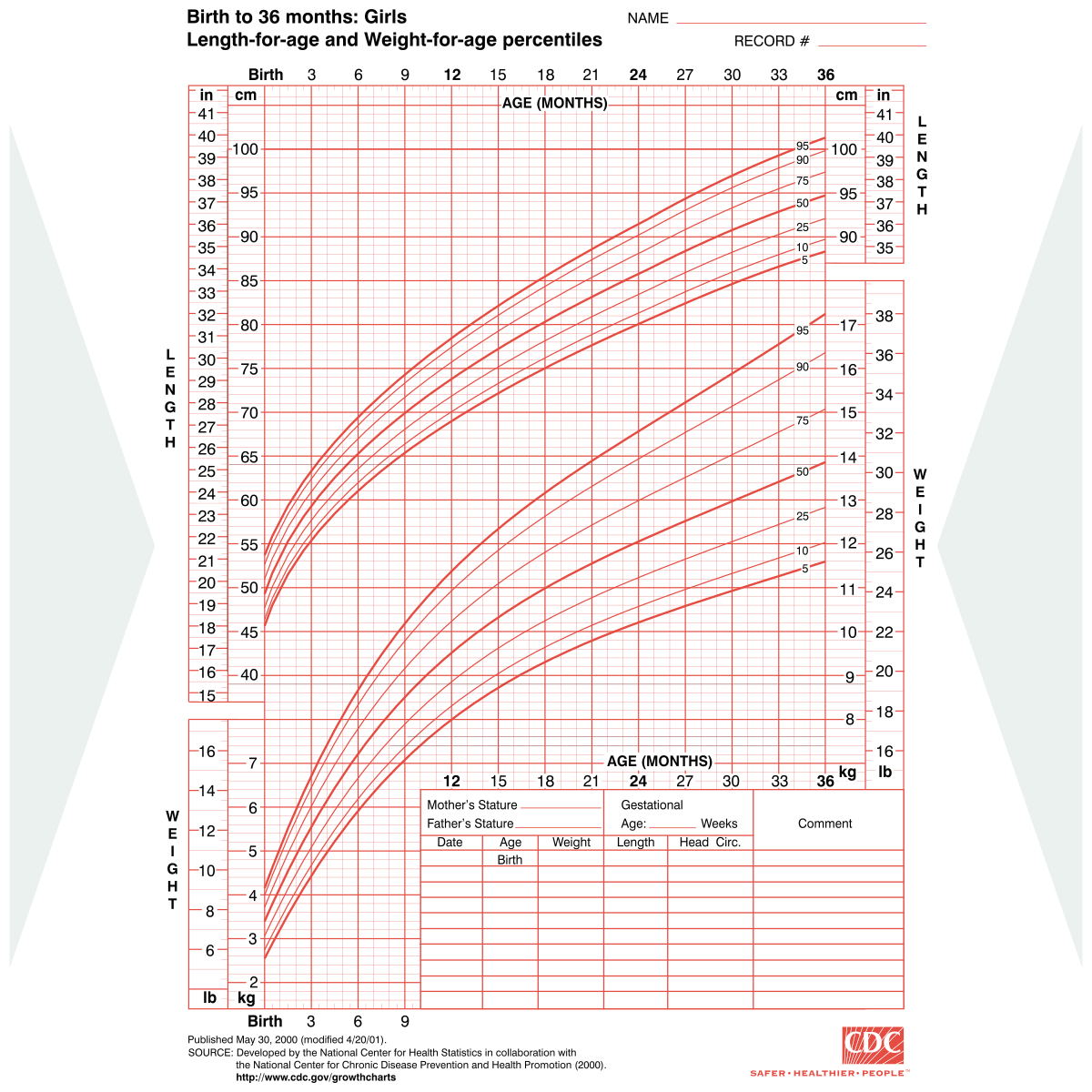
Developed by the National Center for Health Statistics in collaboration with the National Center for Chronic Disease Prevention and Health Promotion, 2000
Growth chart for femalesThere are multiple growth charts. Providers should use the one that matches the child's sex.
Click to download this file.
Click to download this file.
Vaccines to protect against serious or potentially fatal diseases should begin during infancy and continue throughout the lifespan. Vaccines are generally spaced over the first 2 years of life and given in a series of doses. Recommended vaccines include those that protect the child against diphtheria, measles, mumps, rubella, polio, tetanus, and pertussis. However, immunization schedules may vary based on the infant’s health status.
vaccine
Nurses play a key role in health promotion by assisting infants and their families to achieve optimal growth and development. They should encourage injury prevention and good health practices such as proper nutrition, interactive play, car seat and crib safety, adequate sleep and rest, and regular visits to health care providers for health screenings, administration of immunizations, and ongoing wellness visits.
Toddlerhood
Toddlerhood spans the time from when a child begins to walk until they walk and run with ease. This developmental period generally extends from 12 to 36 months and is a time of great physical, cognitive, and psychosocial development. By age 1 year, most toddlers can pull themselves up to a standing position and walk by holding on to furniture. Motor skills become more refined, teeth continue to erupt, and children may be able to drink from a cup as their grasp improves. Most 2-year-old toddlers can walk up and down stairs, play with blocks, and feed themselves by hand or with a spoon. Toddlers at this age may be toilet trained, especially during waking hours, and typically learn bowel control before they master bladder control. Successful toilet training depends on physical maturity, sphincter control, brain maturation, and the ability to communicate the need for toileting. Schedule changes, emotional distress, fatigue, or health alterations can cause setbacks in toilet training. Accidents are expected, especially when children are engrossed in play and other activities. Toilet training should be started using a positive, consistent approach when the child demonstrates readiness.
toddlerhood
As their cognitive and physical abilities increase, toddlers become more interactive with their environment and seek greater independence. When 2-year-old toddlers experience frustration, they often cry or have temper tantrums. By age 3, children have reached the end of toddlerhood, and their gross motor skills have progressed so that they are able to readily climb, run, and jump. Development of fine motor skills has progressed to the point that they can handle small objects, assemble simple puzzles, and build a tower of blocks. Toddlers can put their thoughts into words, problem solve in limited ways, and begin to connect names with objects. They have also developed object permanence—understanding that an object does not disappear even when it can’t be seen, which begins at 9 months of age but is now fully developed. However, some may still experience separation anxiety and cling to their parents. Toddlers use gestures and words to communicate, such as raising their arms to be picked up or pointing to a toy to play. During toddlerhood, children play alongside (rather than with) other children, a phenomenon called parallel play.
object permanence
parallel play

© Jupiterimages/Stockbyte/Getty Images
Parallel playGenerally, toddlers will play side by side but not interact with each other.
Language acquisition and skills develop throughout toddlerhood and improve with practice. Language can be enhanced by talking with children, describing objects and their usage, and reading aloud. Two-year-old toddlers can use as many as 50 words and generally understand at least 200 other words. Children in this age group often begin speaking using nouns and verbs in two-word sentences, such as “me up,” and combine the message with a gesture such as raising their arms to be picked up and held. By age 3, toddlers can speak in short sentences and ask questions, sing along to songs, and read along with simple books.
It is essential to establish sound eating patterns, good nutrition, and meal routines during toddlerhood, as eating practices taught at this stage of development build a foundation for lifelong eating habits. Toddlers need nutritious foods that promote muscle, bone, and brain development, including foods that contain adequate proteins, vitamins, and minerals. Fresh fruits and vegetables are good food sources for fiber and other vital nutrients. Toddlers generally like consistency and familiar mealtime routines that foster family interaction and socialization. Sometimes toddlers refuse to eat because their appetites fluctuate, they may not be hungry, or they are too tired or too engrossed in playtime to eat.
Toddlers generally require 10 to 12 hr of sleep at night and 1 to 2 hr of sleep during the day. A consistent bedtime routine helps toddlers get ready for sleep, and short nap periods during the day can help them from becoming irritable and overtired.
Sort the following findings into the concerning (not achieving expected growth and development) or expected (achieving expected growth and development) group for a 6-month-old infant
Drag the options on the left to the corresponding category on the right (or click the option on the left and then the corresponding category on the right).
Concerning
Expected
Preschool Age
The preschool stage of early childhood refers to children from age 3 to 6 years old. As children grow, their world begins to expand. As a result, preschoolers become more independent and begin to focus on people and activities outside of the family. Interactions with others help shape the preschooler’s personality and ways of thinking.
preschool
During the preschool years, physical development occurs at a slow and steady pace, and both gross and fine motor skills become more refined. By age 5, preschoolers can skip, turn somersaults, catch a ball, and balance on either foot with good control. They can recite simple songs and rhymes, state their first and last names, and count to 20, and some may begin to read simple books with a few words on each page. They can cut with safety scissors, color within the lines, and ride a tricycle or bicycle with training wheels. During this stage, children also notice a difference between girls and boys and help to dress and undress themselves.
Children this age often begin to spend more time away from home and their primary caregivers, and many attend preschools. Their vocabulary and language skills increase as they explore and interact with their ever-expanding environment. Speech is almost entirely understandable as preschoolers learn to speak sentences of five to seven words. Associative play is characteristic of preschool children. Associative play is defined as a small group of preschoolers who interact with each other in a similar or identical activity, albeit with no well-established rules. Indeed, their play is often fueled by their imaginations. Preschoolers may enjoy dressing up and pretending they are a ballerina, teacher, or firefighter. By the end of this stage, however, the preschooler’s play becomes more cooperative. Cooperative play involves small groups of children engaging in games or activities that may have rules, but where those rules can be changed at the whim of the dominant child. Screen time for preschoolers should be limited to no more than 1 hr per day of quality programming, whether at home, at school, or in afterschool care.
associative play
The recommended amount of sleep for preschoolers is 10 to 13 hr per day, including naps. Children this age are usually very active and often resist taking a nap. However, naps are essential for them to restore and replenish their energy. Some preschoolers wake up during the night after experiencing bad dreams. Caregivers can soothe their preschoolers and help them relax by reassuring them that they are safe and not alone.
Proper dental care and healthy dietary practices during the preschool years—indeed, throughout the entire lifespan—help promote optimal dental and physical health. The healthiest meals and snacks for young children include a variety of fruits and vegetables, protein foods, whole grains, and limited fats. Beverages that contain added sugars or salt should be consumed on a limited basis. Preschoolers should be encouraged to brush and floss daily and should visit the dentist every 6 months.
Middle Childhood
Middle childhood occurs between the preschool years and adolescence. This stage typically begins when the child starts elementary school around 6 years of age and lasts until the onset of puberty, which occurs around 12 years of age. The physical, psychosocial, cognitive, and moral growth that occurs during this stage lays the groundwork for the individual to become a productive member of society. During middle childhood, the child’s environment expands beyond the family, home, and neighborhood to include school, a faith community, and other social institutions.
The rate of growth during middle childhood is slow and consistent until the growth spurt associated with puberty begins. Differences in height, weight, and build among children of this stage reflect the child’s genetic background, nutrition, and exercise. Children’s posture changes as their center of gravity shifts downward, and muscle strength increases. They grow stronger as muscle strength and flexibility improve. Fine motor skills continue to develop during middle childhood as movements become steadier and more controlled. Although developmental changes are relatively gradual during middle childhood, the cumulative differences between children aged 6 and those aged 12 are substantial. A sense of body image begins to develop around age 6 as children become more aware of their bodies and how they compare to others. Although most children will not experience the physical changes of puberty during this stage, for those who do, there will be variations in the age at which they begin to develop secondary sexual characteristics.
As children grow and develop during middle childhood, they typically learn to ride a bicycle, jump rope, hit a baseball, and kick a soccer ball. They may become involved in playing sports, learning to play a musical instrument, dancing, attending art classes, and engaging in other social activities. In addition, during the middle childhood years, friends and peer relationships become important. Most children gravitate toward peers of the same gender and may openly express dislike for the opposite sex. As children mature, friendships become more serious and evolve to include peers from diverse groups and different genders. Thinking becomes more complex as social activity increases. Emotions have wide ranges depending on the child’s chronological age and psychosocial maturity. In the early part of middle childhood, children may use simple emotions to express their feelings, such as tears and anger. As children progress toward adolescence, tears are less evident and often viewed as childish and immature. Children in middle childhood often become emotional about how they think others perceive them, especially their peers, as peer acceptance becomes increasingly important during these years.
Middle childhood is marked by increased development of language skills and the ability to concentrate for longer periods of time. Children in this stage develop more mature and logical ways of thinking and are able to take responsibility for keeping their rooms clean and caring for their possessions. They may be given chores to help around the house, which instills a sense of family cohesion and personal responsibility.
The expanding environment of middle school children increases their exposure to unhealthy snacks, fast-food restaurants, and sugary food items. In recent years, rates of childhood obesity have been growing. This health problem can lead to serious health alterations such as diabetes mellitus, coronary heart disease, and hypertension in later life. Therefore, healthy food selections and a well-rounded, nutritional diet during childhood are essential. Because sedentary habits during childhood are also linked to a risk for obesity and heart disease in adults, children in this age group should get at least 1 hr of physical activity per day.
It is recommended that preteen children, aged 11 to 12 years, receive vaccines to protect against meningitis, tetanus, diphtheria, pertussis, human papillomavirus (HPV), and influenza. Recommendations for the COVID-19 vaccine are dependent on the age and health of the child. Recommendations are updated frequently based on the current circulating variants. As the effects of immunizations received during infancy and early childhood begin to fade, preteens and adolescents may need booster vaccines that extend their protection from various diseases. Parents should discuss recommended immunizations for their child with the provider.
immunizations
Dental hygiene is important during middle childhood, as deciduous teeth begin to fall out and permanent teeth emerge. Permanent teeth may appear very large in relation to the rest of the facial structures and sometimes result in malocclusion, which can affect chewing ability and appearance. Dental care should include daily toothbrushing, flossing, and regular dental checkups.
malocclusion
Adolescence
Adolescence is the stage of human growth and development that occurs between the ages of 12 and 20 years. During this stage, the individual transitions from childhood to adulthood. Adolescence is a time of dramatic physical, cognitive, and psychosocial growth. This period of development bridges the gap between dependence and independence, and between childhood and adulthood.
Puberty begins during preadolescence, a stage of development that is expected to begin between ages 11 and 13. Puberty takes years to complete and may last through the end of adolescence, after most of the physical changes related to this development have already taken place. Puberty begins with a growth spurt in height and weight and the development of secondary sex characteristics. It ends with the onset of menarche (first menstrual period) in females and spermarche (sperm production) in males—the stage of development in which humans become sexually mature. The onset of puberty is influenced by genetics, environmental factors, and gender, but typically occurs earlier in females than in males. Although individual variations occur in the age of onset, duration, and pace of the physical changes of puberty, the sequence of these changes is relatively consistent among individuals.
puberty
The rapid growth and development that occurs during puberty results in the emergence of sexual differences between females and males in regard to adult body size, composition, and shape. In addition to maturation of the primary sex organs that are present at birth and involved with reproduction (penis and testes in males; vagina and ovaries in females), secondary sex characteristics emerge during puberty (breasts in females; pigmented facial hair in males). Secondary sex characteristics play no direct role in reproduction but appear during puberty. Pubic hair is initially sparse and lightly pigmented but then grows darker and coarser. In males, the larynx and vocal cords increase in size, resulting in a deepening of the voice. In females, the distribution of fat and an increase in the width and roundness of the hip and pelvic regions become evident. Both males and females produce sebaceous glands that become larger and more active, which may result in the appearance of acne. Many adolescents worry or become self-conscious about these rapid and observable physical changes, which may prompt painful comparisons with their peers. Because physical changes do not always occur in a regular cadence, adolescents may go through awkward stages, both in their appearance and their physical coordination.
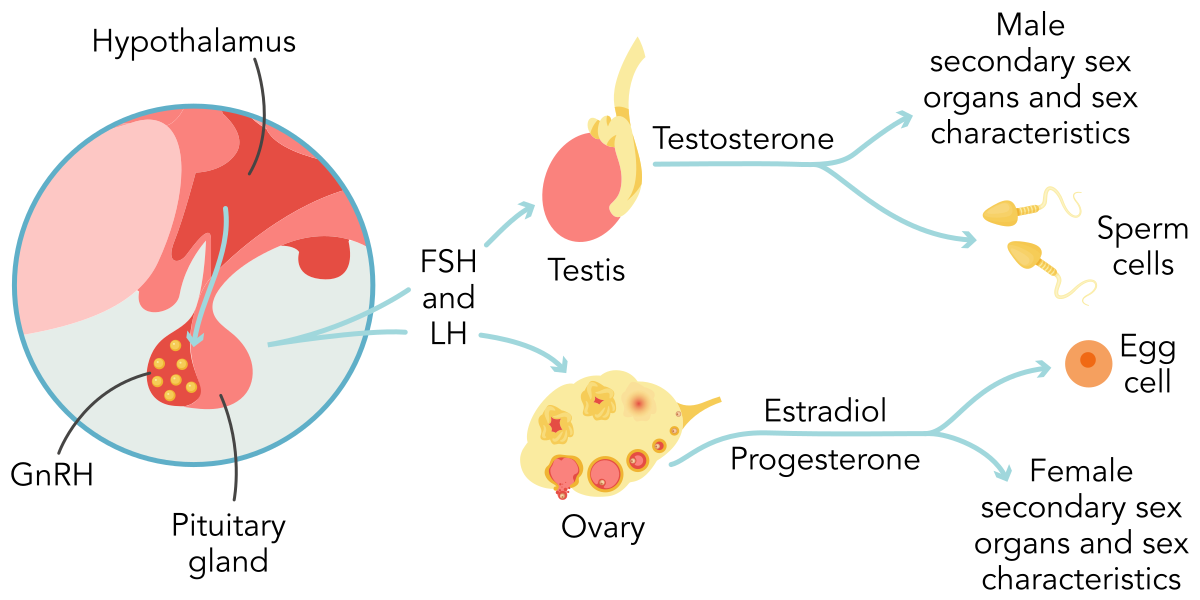
Brain and hormonal changes during pubertyHormonal changes occurring during puberty are triggered by the hypothalamus.
Hormonal changes occurring during puberty are triggered by the hypothalamus, an area of the brain that begins to release gonadotropin-releasing hormone (GnRH). GnRH is transported to the anterior pituitary gland and stimulates the secretion of the gonadotropins. Follicle-stimulating hormone (FSH) stimulates the development of eggs in females and sperm in males, and luteinizing hormone (LH) stimulates the testes to secrete testosterone and the ovaries to secrete estrogen. Testosterone and estrogen stimulate the development of primary and secondary sex characteristics and influence the physical growth spurt in adolescence.
During adolescence, the brain becomes more complex, and the number of folds in the cerebral cortex increases. Unused brain pathways are eliminated in a process called synaptic pruning as myelination increases. The brain becomes more efficient and functional during this stage of development, which in turn brings about major cognitive changes. Cognitive function is rapid as the adolescent’s capacity for attention, memory, and cognitive processing matures. Some of the most significant changes in the brain occur in the prefrontal cortex, the anterior area of the brain involved in decision making, abstract thinking, problem solving, and impulse control. These executive functions of the brain mature as the individual moves toward late adolescence and early adulthood. Paradoxically, while adolescents are developing the ability to think like adults, including the ability to evaluate risks and rewards, they are often risk takers. Some may give more credence to social rewards and, therefore, give in to peer pressure. Some scientists believe that adolescents are genetically programmed to be risk takers—an evolutionary benefit that helps build confidence and motivation to eventually leave their family of origin and begin a life of their own.
Other body systems also undergo rapid growth and development during adolescence. The heart and lungs increase in size and capacity, leading to enhanced strength and endurance. Exercise and physical activity can further help to improve cardiac and respiratory function. The stomach and intestines increase in size and capacity, and eye–hand coordination and dexterity improve.
Psychosocial changes are also occurring at a rapid pace during adolescence; indeed, they are nearly as dramatic as the physical changes associated with puberty. During adolescence, individuals develop a sense of identity. Adolescents tend to spend more time with their peers than with their family and begin to form intimate relationships and separate from their parents as they become more independent and individuated. They may experience a strong desire to conform to their peer group due to their need for acceptance and belonging, especially in early to mid-adolescence. As sexual maturation progresses, adolescents experience a heightened sense of sexuality and may engage in romantic relationships, which may lead to sexual exploration.
The most noticeable transformations during adolescence are of a biological nature. Both genders experience puberty, the period when they reach sexual maturity. Generally, girls reach maturity about 18 months sooner than boys, resulting in what could be described as a disparity in maturity. This difference is particularly evident in the behavior of middle school boys in comparison to girls of the same age. Studies indicate that boys who mature earlier often gain advantages in sports and the social prestige that comes with athletic achievement. Conversely, early maturing girls may experience social challenges when interacting with their later-maturing peers, potentially leading to a higher risk of depression and eating disorders. Boys who mature later and may not be as athletically adept can be subjected to mockery and social exclusion by their peers.
The rapid growth and development occurring in adolescence require healthy food choices and sound nutrition. Caloric intake for both males and females is needed to support physical growth and development associated with puberty. Surveys conducted at the national and population levels in the United States reveal that adolescents frequently do not adhere to dietary guidelines concerning overall nutrition and specific nutrient consumption. Their intake of fruits and vegetables falls significantly short of what is advised. This scant consumption is linked to a higher frequency of fast-food intake. Specifically, a considerable number of adolescents consume too much energy from fats and/or added sugars, and they do not get enough vitamin A, folic acid, fiber, iron, calcium, vitamin D, and zinc as per dietary recommendations. Iron deficiency is notably prevalent among adolescent girls, partly due to blood loss during menstruation and insufficient iron in their diet; this deficiency can negatively affect both brain function and physical capacity. Additionally, adolescent girls often do not consume enough calcium, which can elevate the risk of fractures during their teenage years and the potential for osteoporosis later in life. A significant percentage of adolescents also show insufficient levels of vitamin D, which can vary based on factors like diet, skin color, sun exposure, and body weight. Proper levels of vitamin D are crucial for accumulating optimal bone density, and low levels, regardless of body weight, have been linked to cardiovascular risk factors such as high blood pressure, insulin resistance, cholesterol levels outside of the expected range, and metabolic syndrome. In some cases, adolescents rely extensively on fast foods and unhealthy food choices, which can lead to obesity or disordered eating.
During adolescence, second molars erupt, and by early adulthood, third molars or wisdom teeth appear. By the end of adolescence, the jaw reaches adult size. Oral health is one of the most widely unmet health care needs of adolescents, and dental injury and disease can have a profound effect on overall health in this group. Adolescents may be at higher risk for dental issues due to sports injury, oral piercings, increased sugar intake, nicotine initiation, and orthodontic considerations. Lifelong dental health habits are created during childhood and adolescence, and good dental hygiene and regular visits to the dentist will have a significant impact on overall health in adulthood.
Physiological Development Practice Activity
Determine to which developmental stage each of the milestones listed below belongs.
Drag the options on the left to the corresponding category on the right (or click the option on the left and then the corresponding category on the right).
Infancy
Toddlerhood
Preschooler
Young and Middle Adulthood
In most Western cultures, there is no clearly defined age that signals the end of adolescence and the full achievement of adulthood. Some theorists refer to the period from late adolescence through the mid- to late twenties as a distinctive stage of adulthood, often referred to as emerging adulthood—a time when individuals are no longer adolescents, but not yet fully adults. Emerging adulthood is a time when individuals explore higher education, careers, relationships, and commitments. In other cultures, adulthood depends on how it is defined, and the type of rituals and role transitions that each culture creates.
Young adults usually complete their physical growth by age 20. All organs and body systems are fully developed and mature by this age. However, brain development does not stop with the completion of puberty, when adult brain size is attained. Instead, brain maturation continues beyond adolescence, extending until approximately age 25 years. Most young adults are active and generally healthy overall, so they tend to postpone seeking health care. Physical strength typically peaks in early adulthood and declines as individuals approach middle age. Physical growth and development during adulthood are minimal, but weight and muscle mass will inevitably vary based on diet, exercise, and lifestyle.
While the notion of adulthood is recognized universally, the specific traits that signify reaching adulthood vary widely from one region to another. The shift from teenage years to early adulthood takes on various forms—there are similarities among young adults who belong to the same group or share cultural backgrounds, yet the patterns of transition can be quite different for those from other groups, influenced by cultural and societal variances among populations. Milestones such as landing a first job, getting married, having a first child, or moving out of the parental home tend to happen at older ages compared to past generations. Furthermore, the journey toward marriage has become more prolonged, with a growing number of young adults choosing to be in long-term relationships and live together before marriage. Certain role transitions mark the attainment of adulthood, including voting, completing an education, leaving home, beginning employment, establishing financial independence, forming intimate relationships, and becoming a parent. By the late twenties, most young adults live independently, are involved in long-term relationships, and have established a career path. Nevertheless, how they navigate this life stage is highly dependent upon personal, family, and social resources. Most individuals develop the qualities necessary for becoming self-sufficient, engaging in mature, committed relationships, and assuming more adult roles and responsibilities, which lays the foundation for success during later adult years.
Navigating role transitions and expanding responsibilities during young adulthood can be difficult for some individuals. Robbins and Wilner first coined the term quarterlife crisis to describe the sometimes-rocky transition from adolescence into adulthood. Many young adults in their twenties may feel challenged as they adjust to the real world and must deal with major issues such as debt from educational loans, establishing a home and family, starting a career, and managing social responsibilities.
Middle adulthood spans the period of life from the mid-forties through the early sixties. Until recently, middle adulthood was defined as the period when traditional childbearing roles were completed; however, due to social changes and females entering the workforce and delaying marriage and childbearing, this definition has changed. While opinions vary, middle adulthood is generally considered a time of growth and progression, rather than one of decline and deterioration. Roles of middle adulthood include adjusting to new family and work responsibilities, establishing economic stability for the present and future, and maintaining healthy lifestyles and physical well-being.
During middle adulthood, body weight becomes redistributed, body contour changes due to increased fat deposits in the trunk region, and overall height may decrease gradually. While the timing and rate of physiological changes vary, middle-aged adults experience a lack of muscle tone and elasticity that gives the skin a flabby, less firm appearance. Muscle strength also decreases, and bone mass slowly declines. The muscles of the heart and lungs lose elasticity, blood pressure slightly increases, and visual and aural acuity decline.
Despite considerable differences among individuals, both males and females undergo alterations in their sexual performance as they get older, which can be attributed to biological, physiological, and hormonal factors that affect each gender distinctively. With advancing age, males often report issues related to sexual desire, achieving and maintaining erections, and ejaculatory function. In contrast, aging females frequently describe a diminished sexual appetite, difficulties in achieving orgasm, and vaginal dryness that can lead to discomfort or pain during sexual activity. Climacteric in females is referred to as menopause; it marks the cessation of menses and results in a progressive decrease in estrogen and progesterone production. The completion of menopause signals the end of reproductive capacity. Menopause generally begins with noticeable changes in the menstrual cycle, including hot flashes, night sweats, vaginal dryness, and heart palpitations. Males experience climacteric, biological changes as well, though they are gradual and less dramatic than those experienced by females.
Advancing age may change an individual’s opportunities and options for sexual expression. Some view the middle adult years as a time for decreased sexual activity, pleasure, and interest. Many others in middle adulthood enjoy heightened sexual pleasure and desire, perhaps related in part to declining worry about pregnancy and children leaving the family home. Despite the physiological changes in both males and females, many people enjoy sexual activity throughout the lifespan.
Roles and responsibilities change in middle adulthood, as less time may be spent on child-centered activities, and couples have more time for each other. Middle adulthood is the time when most parents launch their adolescent or young adult children fully into the world and start adjusting to life without children living in the family home. Many people become grandparents in middle adulthood, and some assume the role of caregiver to allow their grown children (i.e., the grandchildren’s parents) to work or complete their educations. Members of the middle adulthood group are often called the sandwich generation, referring to their frequent need to simultaneously care for aging parents and growing children/grandchildren. Caring for aging parents and growing children can be stressful. The financial stress created by paying for or helping to pay for children’s college education and/or financially supporting aging parents adds even more stress to the individual and the relationship. These role changes lead to a reacquaintance between the partners as they define their new roles and responsibilities. Deepening intimate bonds can allow partners to grow and strengthen their relationship.
The manifestations of the age-related changes occurring in middle adulthood can impact self-esteem. In societies that embrace physical attractiveness and a youthful appearance, staying and looking young may be an added stressor for some middle-aged adults. Physical changes such as weight gain can negatively affect self-image in these individuals.
Healthy food choices and sound nutrition are required to promote physical, emotional, and cognitive functioning and to decrease the potential for health alterations due to chronic disease. Calcium and vitamin D are essential elements for maintaining strong bones and teeth. A daily multivitamin may be taken but should not be used as a substitute for healthy, natural food sources. Obesity is a major health problem in adults that may lead to other health problems later in life. Obesity, which is influenced by both poor diet and inactivity, has been linked to the development of conditions such as diabetes mellitus, hypertension, asthma, and cardiovascular disease.
Good oral hygiene and dental health are important during the adult years. Potential for tooth loss, decay, and gum disease increases with age due to problems with decreased saliva production, receding gums that expose root surfaces to decay-causing bacteria, or difficulties flossing and brushing because of cognitive problems, ill health, or physical limitations.
Late Adulthood
According to the U.S. Census Bureau, people older than the age of 65 make up the fastest-growing age demographic in the United States. Although the number of older adults is increasing, chronological age often provides scant information about a specific individual because every older adult is unique. Today, the average life expectancy for people living in the United States is 78.4 years. Expectancy, along with age and ethnic composition, has major implications for nursing care of older adults.
Population 65 Years and Older by Age and Sex: 2020
Age | Total Population | Male | Female | |||
|---|---|---|---|---|---|---|
Number | Percent | Number | Percent | Number | Percent | |
65 years and older | 55,792,501 | 16.8 | 24,99,120 | 7.5 | 30,793,381 | 9.3 |
65 to 74 years | 3,311,965 | 10 | 15,516,471 | 4.7 | 17,595,494 | 5.3 |
75 to 84 years | 16,344,101 | 4.9 | 7,196,612 | 2.2 | 9,147,489 | 2.8 |
85 years and older | 6,336,435 | 1.9 | 2,286,037 | 0.6 | 4,050,398 | 1.2 |
(Numbers in thousands. Data based on sample. For information on confidentiality protection, sampling error, nonsampling error, and definitions, visit www.census.gov/acs.) Note: Details may not sum to totals due to rounding. Percentage is based upon the total U.S. population. | ||||||
Gerontology is the interprofessional study of aging across the lifespan. It includes the study of physical, mental, and social changes that impact people as they age; the investigation of societal changes resulting from an aging population; and the application of this knowledge to influence policies and programs. In recent decades, the study and science of aging have led to several cultural, medical, and economic advances for older adults. Gerontologists (professionals from diverse fields on aging) and policymakers have advanced the belief that old age is a time of potential rather than decline, and that quality of life is largely dependent on an individual’s personal outlook on life, level of functionality, and ability to perform acts of daily living.
gerontology
Older adults, especially those 80 years and older, often have limited functional capacity and higher rates of age-related health disorders. Growing older brings inevitable physiological changes. Spinal curvature may occur as a result of decreases in trunk length and intervertebral discs becoming compacted. Shoulder width, muscle mass, and body fat decrease, and chest circumference increases. Females who have reached menopause lose bone mass at a faster rate than males, which increases their risk for osteoporosis. Postural changes also occur that result in a shift in gravity. Older adults experience a loss of bone and muscle mass, joint stiffness, and diminished range of motion that can affect balance and strength, which, in turn, increases their potential for falls.
Changes in the aging cardiovascular system occur as heart valves thicken and become more rigid. A loss of elasticity in the blood vessels and lung tissue renders older adults more susceptible to both cardiac and respiratory disorders. The gag reflex is diminished in the gastrointestinal system; peristalsis decreases, and external sphincter control of the bladder and rectum may weaken. The skin continues to lose elasticity and becomes wrinkled, thinner, drier, and more fragile. A loss of subcutaneous adipose tissue occurs, and nails become brittle and dull. Hair begins to gray, and hair loss is common, especially in males. Working memory may decline, and reaction time slows down. Age-related changes in sight, hearing, and taste can interfere with functionality and overall general well-being as the sensory system becomes less efficient. Peripheral vision diminishes, conductive hearing loss may occur, and the number of taste buds decreases. Older adults may also have more trouble sleeping than younger adults, resulting in fatigue and a decline in strength and endurance.
Immunizations are important for older adults, just as they are for children and adolescents. All adults need immunizations to protect them against serious health conditions. The effectiveness of some childhood vaccines can wane over time, such that they may need to be repeated later in life. All adults should receive the seasonal influenza vaccine, especially if they have chronic health conditions. The zoster (shingles) vaccine is recommended for adults greater than 50 years of age to protect against shingles and its complications. The pneumococcal vaccine and COVID-19 vaccine are potentially recommended for adults greater than 65 years of age, depending on their prior immunization status. The yearly influenza vaccine is recommended for all adults. Adults over the age of 60 are recommended to consult with their provider to determine if the respiratory syncytial virus (RSV) vaccine is right for them.
Good nutrition is important at every age, and older adulthood is no exception. A nutritious diet in older adulthood provides energy, controls weight gain, and may prevent some health alterations such as osteoporosis, hypertension, type 2 diabetes mellitus, cardiovascular disease, and certain cancers. Healthy dietary patterns for older adults include high consumption of vegetables, fruits, whole grains, legumes, and seafood, and low consumption of sweetened foods, refined grains, and processed meat. Some older adults lack healthy nutrition because they live alone, have lost loved ones, are unemployed, lack funding for food, have a decreased appetite, or lack a supportive social network that might lead to changes in diet quality. Dietary habits evolve for older adults depending on their overall health and psychological/physiological well-being. Hence, consideration of these factors is important for determining the impact of dietary intake on the quality of life in older adults.
With proper oral hygiene and regular visits to the dentist, older adults can enjoy good dental health throughout their lives. Indeed, dental health is an important contributing factor to health and adequate nutrition in older adults. Missing teeth and ill-fitting dentures cause difficulty in chewing and the perception of taste of foods. Reduction in saliva production, decreases in dental pulp and enamel, and decline in the oral mucosa as a protective barrier expose older adults to pathogens and chemicals that can enter the oral cavity and lead to poor dental health. Nurses play a key role in helping older adults appreciate the need for sound nutrition, ongoing dental care, and healthy oral hygiene practices.
Fine and Gross Motor Development Practice Activity
Play the video and respond to the following question.
Fine and Gross Motor Development
Video Transcript
During a well-baby check, a 10-month-old infant's parent expresses concern that the baby is not walking independently yet. Which of the following statements should the nurse make?
a
"That is concerning. I will inform the provider immediately."
b
"I noticed your baby is able to sit unsupported, so I wouldn't worry."
c
"Walking independently is not expected at 10 months of age. At 12 months, an infant is expected to walk while holding onto furniture."
d
"Was your infant born prematurely? If so, that would explain why they aren't able to walk on their own yet."
Well done!
The nurse should inform the parent that walking independently is not an expected developmental milestone for a 10-month-old infant. However, at 12 months, the infant should walk while holding onto furniture. This is not a concern that should be reported to the provider. Telling the parent not to worry is nontherapeutic communication that dismisses the parent's concern. Since this is a developmental milestone that 10-month-old is not expected to achieve, the history of prematurity would not be pertinent.
Human development is a lifelong process of physical, behavioral, cognitive, and emotional growth and change. The longstanding nature vs. nurture debate encompasses the scientific discourse about whether individuals are a product of genetic and biological factors or a product of their environment and learning. While the nature vs. nurture debate has continued for over a century, most scientists today view nature and nurture as inextricably interconnected. In other words, genetic and biological factors influence the individual’s environment and experiences and, conversely, a person’s environment and experiences can directly affect the physical structure and activity of the brain. Even as the nature vs. nurture debate continues, the Human Genome Project provides a striking example of how types of human behavior may be traced to certain strands of DNA located on specific chromosomes.
Theories of Psychosexual, Cognitive, Psychosocial, and Moral Development
For decades, the biomedical model of human growth and development, which focuses only on biological factors, dominated medical training and practice. This model was later challenged by developmental psychologists, who proposed the biopsychosocial model of development. The biopsychosocial model includes biological factors such as genetic and health-related factors; psychological factors, such as cognitive, emotional, and personality factors; sociocultural factors, such as interpersonal, societal, cultural, and ethnic factors; and life-cycle forces that reflect differences in how the same event affects individuals of different ages. Bronfenbrenner’s ecological systems theory, later revised to become the bioecological model, explains how individuals and their environments interact to influence human growth and development. The biopsychosocial model was developed to be more inclusive and is described as a balanced state interconnected with internal systems and external contexts such as society and family. It includes biological, social, and personal factors accommodations.
Human development involves a complex, somewhat predictable pattern of gradual changes across multiple domains that begins at conception and continues throughout the lifespan. Expected individual development includes physical maturation, physiological function, and accomplishing expected tasks within or across the developmental domains associated with the individual’s chronological age. Developmental milestones signify the achievement of a skill that most individuals accomplish during a certain age range. The interconnected processes of psychosexual, psychosocial, cognitive, and moral development help explain this dynamic process, as it cannot be fully explained by a single theory.
Sigmund Freud: Psychosexual Development
Sigmund Freud’s (1856 to 1939) theory on psychosexual development was among the first attempts to bring psychology under the same scientific structure and methodology as medicine and biology. Freud described five stages of psychosexual development that occur in a predetermined sequence and are focused on the development of the child’s libido. Each stage is characterized by sexual pleasure in erogenous zones of the body, including the mouth, anus, and genitals. Erogenous zones are areas of the body sensitive to stimulation. Freud believed that the adult personality is the result of moving successfully from one psychosexual stage to the next, and that failure to resolve conflicts or being fixed in any of the psychosexual stages results in personality problems.
The five psychosexual stages described by Freud are oral, anal, phallic, latent, and genital. Each stage is associated with an age range, an erogenous body part, and a developmental achievement level.
Freudian Psychosexual Development
Stage | Age Range | Erogenous Zone | Developmental Achievement |
|---|---|---|---|
Oral | Birth to 18 months | Mouth, lips, tongue | Wean from breast |
Anal | 18 months to 3 years | Anus | Elimination, toilet training |
Phallic | 3 to 6 years | Genitalia | Resolve Oedipus or Electra complex |
Latency | 6 to 12 years | None | Development of defense mechanisms |
Genital | 12 years to adulthood | Genitalia | Reach sexual maturity |
Oral Stage
The oral stage of psychosexual development spans from birth until 18 months of age. During this stage, the infant’s mouth is the focus of gratification and pleasure, as infants breastfeed or suck from a bottle and explore their environment by placing objects in their mouth. Weaning from the bottle or breast is the key achievement in the infant’s oral stage of psychosexual development; it helps the infant learn delayed gratification and lays the foundation for independence and building trust. Fixation at this stage is characterized by too much or too little gratification, which can lead to immature personality development and preoccupation with oral activities such as drinking alcohol, smoking, or overeating.
Anal Stage
The second stage of psychosexual development is the anal stage, which occurs from age 18 months to 3 years. During this stage, the erogenous zone moves from the mouth to the anus. The main source of gratification at this stage is bowel and bladder control. Toilet training is an especially sensitive task that usually occurs around 2 years of age; however, toilet training should be delayed until the child is ready physiologically, cognitively, and emotionally. Markers for toilet training readiness include walking, putting on and removing clothing, following instructions, expressing a desire to toilet, and staying dry through a nap or through the night. Through toilet training, children learn to eliminate body wastes, manage related toileting activities, and respond to parental instructions. The style of parenting influences successful resolution of the anal stage, as the child faces potential reprimands and feelings of inadequacy. Positive parenting practices and child-centered approaches to toilet training can instill competence and self-control. Conversely, demanding parenting practices that overemphasize toilet training can lead to complications such as stool withholding, encopresis, and enuresis.
Phallic Stage
The phallic stage occurs between the ages of 3 and 6 years and is perhaps the most controversial stage of Freud’s psychosexual theory. During this stage, children begin to experience pleasure associated with their genitalia as they become aware of their bodies, the bodies of others, and the physical differences between males and females. Masturbation, undressing, and walking around naked are typical behaviors for this age. According to Freudian theory, during the phallic stage, boys develop an unconscious sexual attraction to their mother and perceive their father as a potential rival for their mother’s affection and attention (Oedipus complex), while girls develop an unconscious sexual attraction toward their father and wish to be rid of their mother, who is seen as a competitor for their father’s affection (Electra complex). Children resolve the Oedipus and Electra complexes by taking on roles and characteristics of the same-sex parent, which forms the foundation for sex-role identification. Parental disapproval of the child’s preoccupation with the genitalia during the phallic stage can result in feelings of shame or a confused sexual identity.
Latency Stage
The latency stage occurs from 6 to 12 years of age. It is a period of development when children suppress or channel their sexual desires toward more socially acceptable activities. During this time, the libido is relatively repressed or sublimated. Freud did not identify any erogenous zone for this stage, as the child begins to focus on activities such as school, sports, and building friendships. Failure to successfully resolve the latency stage can result in an inability to form healthy relationships as an adult.
Genital Stage
The fifth stage of psychosexual development, known as the genital stage, begins with the onset of puberty and lasts throughout adult life. Like the phallic stage, the erogenous zone of the genital stage is centered on the genitalia. However, because the individual’s ego is fully developed, sexuality is consensual and adult, rather than solitary and infantile. At this stage, the individual seeks psychological detachment and independence from the parents and creates meaningful and lasting relationships. Failure to resolve the genital stage may result in an inability to develop meaningful, healthy relationships.
Critique of Freud’s Psychosexual Theory
Today, Freud’s theory is considered controversial and a subject of both scientific and feminist critique. This theory is difficult to evaluate scientifically because the concepts of libido are impossible to measure—and therefore cannot be tested. Freud’s theory is based on case studies and the recollections of adult clients, rather than on direct observation or study of children or empirical research. Lastly, this theory focuses primarily on heterosexual development and largely ignores homosexual development. For years, researchers have studied the structures and complexities of human relationships. According to Freud's psychoanalytic theory, the early relationships a child forms with their parents will influence their romantic relationships throughout the remainder of their life.
Erik Erikson: Psychosocial Development
Eric Erikson (1902 to 1994), a noted psychologist and follower of Sigmund Freud, developed a theory of psychosocial development in which the stages of development emphasize social and environmental factors, rather than sexual urges and biological forces, as was the case in Freud’s theory. Both theorists believed that personality develops in a series of predetermined stages. Erikson’s theory describes the impact of social experience across the lifespan.
Erikson’s theory of psychosocial development includes eight stages of psychosocial development that occur in a series between birth and death. Each stage includes a unique crisis that builds on the tasks of the previous stage. Successful resolution of the crisis at a particular stage leads to psychosocial growth and development. Erikson’s eight stages are trust vs. mistrust, autonomy vs. shame and doubt, initiative vs. guilt, industry vs. inferiority, identity vs. role confusion, intimacy vs. isolation, generativity vs. stagnation, and integrity vs. despair.
Trust vs. Mistrust (Infancy)
The first stage of Erikson’s theory is trust vs. mistrust. Erikson believed that a sense of trust in self and others is the foundation of human development and is essential for the formation of a healthy identity. This stage centers on the infant’s basic needs for caring and comfort being met through the interaction between the infant and the caregivers. If caregivers expose the child to warmth, security, and regard, the infant’s view of the world will be based on trust. Specifically, when caregivers are reliable and consistent sources of food, comfort, and affection, the infant learns trust. In contrast, when infants’ needs go unmet, or they are neglected and mistreated, they learn that the world is unpredictable and a potentially dangerous place. Thus, when caregivers do not provide a secure environment and fail to meet the infant’s basic needs, a sense of mistrust and caution may result. Development of mistrust can lead to feelings of suspicion, withdrawal, and a lack of confidence. An infant’s successful resolution of this stage requires a consistent caregiver who is available to meet the child’s needs and foster a sense of trust in self and others. The formation of trust results in faith, optimism, and hope.
Autonomy vs. Shame and Doubt (Toddlerhood)
As children gain control over their bodies and begin to explore their environment, they develop a sense of independence and autonomy. Autonomy in toddlerhood is the result of imitation and maturation, evidenced by the acquisition of skills involving feeding, mobility, dressing, and elimination. For children to gain independence, parents and other caregivers need to provide encouragement, patience, and a secure environment from which the child can venture out and explore. Children at this age are intrigued by the world around them and begin to develop an interest in music, animals, plants, and the outdoors. When caregivers encourage independence and self-sufficiency, toddlers begin to develop a healthy self-concept. If caregivers are highly restrictive or punitive, expect too much, or disallow toddlers from making some of their own healthy choices, children may experience a sense of shame and doubt regarding their ability to function in the world. With love and support from caregivers, along with opportunities to explore their environment, children can develop self-reliance and autonomy.
Initiative vs. Guilt (Preschool)
During this stage of psychosocial development, preschoolers continue to explore their environment and try out different roles. Initiative adds to autonomy as children learn basic skills to master the world around them. Their understanding of how the world works increases as they begin to behave and act with purpose. Imagination, exploration, and curiosity allow children to expand their potential; however, risk-taking behaviors also increase, such as crossing the street or climbing a tree alone. Preschoolers ask lots of questions, wonder why, and imagine possibilities for themselves. This sense of initiative is moderated by guilt when they realize that their initiative may place them in conflict with others, and they cannot pursue their desires without consequence. Toddlers may become frustrated or angry if a goal is not achieved or their ambitions are thwarted. Purpose is achieved with a balance between individual initiative and a willingness to cooperate with others. Parents and caregivers need to permit their toddlers to explore their environment within safe limits and boundaries. When parents and other caregivers encourage and support children’s quest for independence while simultaneously helping them make prudent and acceptable choices, children develop a sense of direction and purpose. Without this freedom and guidance, children may develop feelings of guilt and inadequacy.
Industry vs. Inferiority (Childhood)
Children at this stage are becoming more aware of themselves as individuals and learning complex skills such as reading, writing, problem solving, and telling time. They can manage most of their personal needs with minimal assistance. During this stage, children acquire many new social and physical skills, including pursuing interests in sports, music, art, and education. Erikson believed that the elementary school years were critical for the development of self-confidence, productivity, and a sense of accomplishment. He further believed that attitudes about work learned during childhood formed the foundation for attitudes about work later in adulthood. When children are encouraged to achieve while at the same time praised for their accomplishments, they learn industriousness, perseverance, and putting work before pleasure. When they are ridiculed or punished for their efforts or fail to complete their work, they may develop a sense of inferiority and incompetence. Similarly, if children are discouraged from pursuing their interests and talents, they may develop a sense of inferiority.
Identity vs. Role Confusion (Adolescence)
This stage of development is a transitional stage between childhood and adulthood—one characterized by rapid and dramatic physiological, emotional, and social changes. Adolescents are concerned about their appearance, body image, how they appear to others, achieving a sense of identity, dealing with their emerging sexuality, and finding their place in society. It is common for adolescents to experience role confusion; as a result, they often experiment with a variety of behaviors, activities, beliefs, and friendships. Forming an identity and answering the central question of “Who am I?” often contributes to role confusion and risk-taking behaviors.
Erikson described adolescence as a time for exploration and identity formation. If this stage is resolved successfully, adolescents will achieve a sense of identity and purpose. According to Erikson, adolescence forms a bridge between earlier stages of development and anticipation of later stages to come. The dramatic biopsychosocial forces occurring in adolescence may lead to conflict with adults as life decisions about career, education, relationships, politics, religion, and family are being made. Erikson believed that identity formation is often extended for longer periods of time in modern American society, as adolescents gain and master the complex skills necessary to succeed in a fast-paced, technologically advanced society. Without support, limits, and guidance, adolescents can experience role confusion and an unachieved identity. Erikson’s model suggests that successful mastery of this stage results in devotion and fidelity to others and a commitment to one’s personal ideals.
Intimacy vs. Isolation (Early Adulthood)
This stage of psychosocial development spans the period of early adulthood, as individuals begin to form intimate, committed relationships with other people. Building on the previous stage of identity formation, young adults develop close, personal relationships with others and make the concessions and compromises that loving, reciprocal relationships require. Successful resolution of this stage results in the ability to love and form lasting, meaningful relationships. If individuals struggle to form an achieved identity, they may develop superficial and unfulfilled relationships, which in turn may lead to a sense of isolation and loneliness.
Generativity vs. Stagnation (Middle Adulthood)
Erikson defined generativity as the process by which individuals in middle adulthood reflect on their accomplishments and engage in meaningful ways to support future generations. Following the establishment of intimate relations achieved in the previous stage, adults continue to build their lives by focusing on career, family, community, and society. To achieve generativity, adults undertake activities and causes that benefit others, such as raising a family, mentoring, coaching, and becoming more involved with community and societal efforts. Adults who successfully resolve this stage care for others, take pride in their accomplishments, enjoy watching their children grow into responsible adults, adjust to the physical changes associated with aging, and enjoy mature love and unity with their life partner. Success in this stage leads to feelings of usefulness and accomplishment. Conversely, those who fail to successfully resolve this stage experience stagnation—a state of being unconcerned about the welfare of others and feeling unproductive, uninvolved in the world, and dissatisfied with one’s life.
Integrity vs. Despair (Late Adulthood)
In the final stage of psychosocial development, individuals in late adulthood contemplate and reflect upon their lives by retrospectively looking back and taking stock of their accomplishments and failures. Those who have few regrets and an overall sense of satisfaction and accomplishment experience a sense of fulfillment, peace, and integrity. Integrity is achieved if individuals accept their life choices and have little desire to relive or redo their lives. This stage can occur during earlier life stages if the person feels they are near the end of life, such as when receiving a terminal illness diagnosis. Individuals who feel regret and dissatisfaction with life may experience feelings of despair and hopelessness and feel as though their life has been wasted and unproductive.
Erikson and his wife, Joan Erikson, also proposed a ninth stage of psychosocial development, characterized by the unique challenges and daily difficulties of old age created by living into one’s eighties, nineties, and beyond. Erikson posited that individuals in old age revisit the previous eight stages and deal with the previous conflicts in new ways as they cope with the physical and social changes of growing old. Those who successfully come to terms with these changes in later life experience a deeper awareness of their life, a connection to the universe, and a positive perspective about life.
Critique of Erikson’s Theory on Psychosocial Development
Erikson’s theory of psychosocial development primarily focuses on development in males and views of adolescence during the process of identity formation. Erikson believed that adolescents who successfully resolve the developmental task of identity achievement vs. role confusion are more likely to be successful at resolving the developmental tasks associated with later life stages. Erikson’s theory has been challenged as to whether individuals really search for identity only during adolescence—other researchers suggest that identity formation and development continue well into adulthood. Nevertheless, Erikson’s theory provides a lifespan approach to understand human development and emphasizes the social nature of human beings and the importance of social relationships for human development.
Match the lifespan stages to the expected stage of Erikson’s theory of psychosocial development.
Drag the options on the left to the corresponding category on the right (or click the option on the left and then the corresponding category on the right).
Infancy
Toddlerhood
Preschool
Childhood
Adolescence
Early adulthood
Middle adulthood
Late adulthood
Psychosocial Development Practice Activity
Determine to which developmental stage each of the psychosocial milestones listed below belongs.
Drag the options on the left to the corresponding category on the right (or click the option on the left and then the corresponding category on the right).
School-age
Adolescence
Early adulthood
Middle adulthood
Late Adulthood
Jean Piaget: Cognitive Development
Jean Piaget (1896 to 1980) was one of the most influential developmental psychologists of the 20th century. His theory on cognitive development describes how an individual acquires knowledge, intellect, and cognition over time. Piaget believed that intelligence is an inborn, natural ability that develops as children grow and adapt to their environment. Thus, his theory focuses on how children construct knowledge and how these constructions change over time. Piaget believed that children naturally attempt to make sense of their world throughout infancy, childhood, and adolescence as they begin to understand the workings of both the physical and social world. In turn, he suggested that children begin to construct knowledge in new ways at critical points during development.
Piaget claimed that children go through four distinct stages of cognitive development: sensorimotor, preoperational, concrete operational, and formal operational thought. Each stage represents a fundamental change in how children understand and organize their environment and how they acquire more sophisticated types of reasoning. Piaget acknowledged that children may pass through these stages at different ages but contended that cognitive development follows a consistent sequence of stages that may not be skipped, where each stage is manifested by new intellectual and cognitive abilities and a more intricate comprehension of the world.
Piaget’s Stages of Cognitive Development
Stage | Age | Developmental Characteristics |
|---|---|---|
Sensorimotor | 0 to 2 years | With increased mobility and awareness, infants explore the world through direct sensory and motor contact. Object permanence and separation anxiety emerge. |
Preoperational | 2 to 7 years | Children use symbols (words and images) to represent objects and learn to express themselves through language and symbolic gestures, but do not yet reason logically. |
Concrete operational | 7 to 12 years | Children can think logically about concrete objects and can add and subtract. They understand the concepts of reversibility and spatiality, and can classify, socialize, and apply rules. |
Formal operational | 12 years to adult | Adolescents reason abstractly and think in hypothetical terms. They can test hypotheses, and can expand and refine their thinking and reasoning skills as they achieve cognitive maturity. |
Sensorimotor Stage (0 to 2 Years)
Piaget believed that the first 2 years of life form a distinct phase of human and cognitive development. Infants learn about the world through basic functions such as sucking, grasping, looking, and listening. The way your child engages in play, acquires knowledge, communicates, behaves, and is physically active provides valuable insights into their developmental progress. Developmental milestones refer to the abilities that the majority of children (75% or more) are expected to achieve by a specific age. For example, by 9 months of age, a child should show several facial expressions such as being happy or sad, respond when they hear their name called, and smile or laugh when playing a game such as peek-a-boo.
By age 12 months, infants become more active by shaking, throwing, or putting objects in their mouths. Through trial and error, they use their sensory and motor skills to learn about themselves and their environment. They learn that objects continue to exist even though they cannot always be seen—an important milestone in cognitive development called object permanence. Children begin attaching names and words to objects as they learn that objects are separate and distinctive and exist on their own. Cognitive development increases as infants become physically mobile as they begin to crawl and walk, allowing them greater opportunity to explore their environment and make new discoveries. Children at this stage begin to learn that they are separate from their environment—that is, from other individuals and objects around them.
Preoperational Stage (2 to 7 Years)
During this stage, young children can think symbolically and use their imagination and memory to engage in play, fantasy, and make-believe. This stage is characterized by egocentrism—children see themselves as the center of the universe and are unable to accept or understand other points of view. Children at this stage learn through play, and their thinking is largely based on intuition and not completely logical. They may attribute feelings and motives to objects, a condition known as animism. For example, a child may say, “Bad toy,” believing that a toy can behave badly.
Children in the preoperational stage form mental representations of ideas and actions and use creativity and insight. They may become frustrated or stubborn since they do not comprehend that other people have ideas and emotions different from their own. At this stage, children struggle with the concept of conservation—the understanding that a quantity stays the same even if the size or shape of the container in which it is placed changes. Although the foundation for language is developed during the sensorimotor stage, the emergence and mastery of language is one of the major hallmarks of the preoperational stage of cognitive development. The language and thinking skills of children at this stage are improving, but they still tend to think in concrete terms).
Concrete Operational Stage (7 to 12 Years)
During the concrete operational stage, thinking is still literal and sometimes rigid. Children at this point have not developed abstract and hypothetical thinking, though they are becoming more adept at using logic. Egocentrism gradually wanes as children have more experiences with friends and family who assert their own perspectives; the children, in turn, begin to realize that theirs is not the only point of view. In essence, children begin to understand that events can be interpreted in different ways and that their opinion may not be the only one, and they realize that their thoughts are unique to them and that others may not share their perspective.
As cognitive development increases and children’s ability to think evolves, they can converse on diverse topics and perform many mental operations. Concepts of reversibility, spatiality, and conservation are developed at this stage. Reversibility occurs when children learn that some things that have been changed can be returned to their original condition. Spatiality skills, such as locating objects and determining shapes, are necessary for locomotion and mobility as children process information about location and space. Conservation is the ability to see objects or quantities as remaining the same despite a change in their physical appearance. Children at this stage can classify and organize objects into categories such as length and weight. Concrete operational thinking is limited to the here and now; however, thinking abstractly and hypothetically is beyond the ability of these children.
Formal Operational Stage (12 Years to Adulthood)
The formal operative stage of cognitive development extends from adolescence into adulthood and is marked by children’s and adolescents’ expansion of their abilities beyond concrete and literal thinking to abstract and hypothetical reasoning. Adolescents can draw logical conclusions from a set of facts, organize their thoughts, problem solve, and perform deductive reasoning. David Elkind (born 1931) posited a theory of adolescent egocentrism and described specific characteristics of adolescent thinking, including the imaginary audience—characterized by a heightened level of self-consciousness and a belief that the individual’s appearance and behaviors are constantly being scrutinized. The personal fable, which also emerges during this period, is the belief that the adolescent’s thoughts and feelings are unique, which often leads to risk-taking behaviors and feelings of invulnerability. The personal fable of feeling special combined with the imaginary audience, such as the belief that everyone is watching them, leads some adolescents to believe that other people may grow old and die, but not them. Bad things may happen to other people, but not to the adolescent.

© Monkey Business Images/Shutterstock
Adolescent egocentrismOften, adolescents have a heightened level of self-consciousness and a belief that their thoughts and feelings are unique, which may lead to risk-taking behaviors and feelings of invulnerability.
As adolescents mature and share experiences with others, they learn that many of their thoughts and feelings are actually shared by others, helping them feel both less alone and less unique. A key achievement of formal operative thought is the ability to theorize, hypothesize, and consider multiple potential solutions to problems.
Match the characteristics to the correct stage of Piaget’s cognitive development.
Drag the options on the left to the corresponding category on the right (or click the option on the left and then the corresponding category on the right).
Formal operational
Concrete operational
Preoperational
Sensorimotor
Critique of Piaget’s Theory
Although Piaget’s theory represents one of the most comprehensive theories on cognitive development, it has several shortcomings. Specifically, it overestimates cognitive competence in adolescence, does not account for variability in children’s performance, and undervalues the influence of culture and the environment on cognitive functioning and development. Other researchers have criticized Piaget’s theory, noting that it broadly explains cognitive growth, pairs abstract terminology with hard tasks, and questions whether cognitive growth occurs in stages.
Lawrence Kohlberg: Moral Development
Lawrence Kohlberg (1927 to 1987) constructed his theory of moral development by expanding on Piaget’s stages of cognitive development. Moral development refers to the changes in a person’s thoughts, emotions, and behaviors that influence their beliefs about right and wrong. Kohlberg believed that children progressively develop moral reasoning as they gain the ability to think logically, and he contended that moral development continued throughout the lifespan based primarily on the principle of justice. In addition, he suggested that stages cannot be skipped and that it is extremely rare to regress in stages or lose higher-stage abilities.
Kohlberg developed his theory of moral development by posing stories that contained ethical dilemmas to his study participants. There were no correct answers in these scenarios, as Kohlberg was more interested in the reasoning used to justify the decision. Kohlberg’s best-known moral dilemma is the story of Heinz, whose wife is dying. Kohlberg posed various dilemmas to children, adolescents, and adults and analyzed their responses to develop his theory of moral development. Kohlberg identified three levels of moral development, which are further subdivided into six stages of moral reasoning.
Kohlberg’s Heinz Dilemma
In Europe, a woman was near death from cancer. One medication might save her, a form of radium that a pharmacist in the same town had recently discovered. The pharmacist was charging $2,000, 10 times what the medication cost him to make. The sick woman’s husband, Heinz, went to everyone he knew to borrow the money, but he could get together only about half of what it cost. He told the pharmacist that his wife was dying and asked him to sell it cheaper or let him pay later. But the pharmacist said, “No.” The husband got desperate and broke into the man’s store to steal the medication for his wife.
After reading about Heinz, respond to the following questions.
Should Heinz steal the medication? Why or why not?
Suppose the person dying is a stranger. Should Heinz steal the medication for a stranger? Why or why not?
Should an individual do everything they can to save another’s life? Why or why not?
Do you think it is illegal for Heinz to steal the medication? Why or why not?
Do you think it is unethical for Heinz to steal the medication? Why or why not?
If this dilemma involved your loved one, and you were in Heinz’s position, what would you do?
After responding to the questions, use the table describing Kohlberg’s theory of moral development to assess your level and stage of moral reasoning.
Kohlberg’s Theory of Moral Development
Level and Age | Stage | Motivation |
|---|---|---|
Preconventional reasoning (4 to 10 years) | Punishment and obedience Instrumental relativism | Rules obeyed to avoid punishment Rules obeyed for personal gain |
Conventional reasoning (10 to 13 years to adulthood) | Good boy—nice girl | Rules obeyed for acceptance and approval |
Law and order | Rules obeyed to maintain social order | |
Postconventional reasoning (adolescence to adulthood) | Social contract | Rules challenged if they impinge on the rights of others |
Universal ethical principles | Individuals formulate and apply their own rules based on ethical principles |
Preconventional Stage (4 to 10 Years)
The preconventional level of moral development is based on external forces and is controlled almost exclusively by rewards and punishments. Thinking is largely egocentric and guided by systems of punishment and reward. Individuals at stage 1 of preconventional moral reasoning assume a punishment and obedience orientation and follow the rules in an effort to avoid punishment. At stage 2, which is characterized by an instrumental orientation of preconventional moral reasoning, children recognize that there is more than one point of view and perceive punishment not as proof of being wrong, but rather as something to be avoided. In this stage, individuals act on their own needs and may obey rules for personal gain, such as being considerate to others because they expect a favor in return. Children at this stage are beginning to learn that there are benefits to pleasing others.
Conventional Stage (10 to 13 Years)
The conventional level of moral development is associated with conformity and law and order. At this stage, individuals follow the rules and listen to authority figures as they begin to understand that there are certain expected behaviors. At the conventional level, there is little discernment of moral and legal principles. Instead, children believe that authorities determine what is right, and disobeying rules is considered wrong. At stage 3 (good boy—nice girl), the individual wishes to win the approval of others and learns that being good and showing concern for others earns acceptance and acknowledgment. During stage 4 (law and order), moral decisions begin to consider societal perspectives such a displaying a sense of duty, showing respect for authority, and maintaining social order. Individuals at this stage believe that roles, expectations, and laws exist to maintain social order and promote the common good. Kohlberg suggested that some individuals may stay at the conventional level of moral reasoning for the rest of their lives, relying on the moral principles from social or religious authority figures rather than establishing moral reasoning for themselves.
Postconventional Level (Adolescence Through Adulthood)
Lawrence Kohlberg, an American psychologist and theorist, describes moral reasoning as the process of determining what is ethically correct or incorrect. Kohlberg's theory, which is rooted in the cognitive development perspective, suggests that moral understanding is based on overarching ethical principles that are not ingrained during early childhood but rather emerge from advanced logical thinking. According to his framework, moral reasoning evolves through six distinct stages, which are grouped into three main levels. Individuals at the initial level of moral reasoning, known as the preconventional level and comprising stages one and two, make ethical decisions based on self-interest. Those at the intermediate level, the conventional level, which includes stages three and four, make moral judgments in alignment with societal rules and norms. Finally, individuals at the most advanced level, the postconventional level, which encompasses stages five and six, base their moral decisions on universal ethical principles and collective values. Kohlberg believed that some individuals never attain this higher level of moral reasoning.
Critique of Kohlberg’s Theory
Carol Gilligan (born 1936) criticized Kohlberg’s theory because it failed to explore female experiences in relation to moral development. According to Kohlberg, males function at a higher level of moral reasoning compared to females. Gilligan suggested that moral development in females is different than moral development in males because females develop morality based on principles of caring rather than the principle of justice. Both Kohlberg and Gilligan have made significant contributions to the study of moral development. However, recent scholars have been critical of their work, concluding that both males and females exhibit some degree of justice and caring, and not simply one or the other. Kohlberg’s theory also seems to suggest that certain levels and stages of moral reasoning are better than others and fails to describe how various moral values and principles might be viewed differently by individuals from diverse cultures and societies.
Match the characteristics to the correct level of Kohlberg’s Theory of Moral Development.
Drag the options on the left to the corresponding category on the right (or click the option on the left and then the corresponding category on the right).
Preconventional reasoning
Conventional reasoning
Postconventional reasoning
Theories of Psychosexual, Cognitive, Psychosocial, and Moral Development
The Role of the Nurse in Developmental Stages
Nurses care for a wide variety of clients at all ages and stages across the lifespan. From caring for pregnant clients and the prenatal development of their babies to providing end-of-life care, nurses practice in a variety of settings and fulfill many roles and responsibilities as they collaborate with other members of the health care team to provide client-centered, evidence-based, holistic, and culturally sensitive care. Nurses must be knowledgeable about the physiological, emotional, psychosocial, cognitive, and moral development that occurs across the lifespan so that they can appropriately identify and respond to alterations in client health from conception to death. In particular, nurses use the nursing process, a five-step sequential framework used to assess, analyze, plan, implement, and evaluate a client’s plan of care.
This section focuses on various health risks and concerns that clients may experience across the lifespan, the impact that each risk or condition may have on the individual, and the role of the nurse related to each risk or concern. This lifespan approach is categorized using six developmental stages: the prenatal period, infancy through toddlerhood, childhood, adolescence, adulthood, and late adulthood.
Prenatal Development: Conception Through Newborn
Nurses play a key role in the early detection and identification of pregnant clients at risk for complications. Nursing interventions to reduce risks before, during, and after birth can lead to optimal outcomes for both the pregnant client and the newborn. Nursing care is aimed at health promotion to assist the pregnant client and ensure that their developing fetus attains optimal growth and development. Nurses provide ongoing education about good health practices, proper nutrition, and regular visits with health care providers during prenatal development and following the birth of the newborn. Although early assessment of the pregnant client and developing fetus can lead to early diagnosis and treatment of unexpected conditions, alterations in health may still occur—and nurses play an essential role in addressing these concerns.
Down Syndrome
Down syndrome, also called trisomy 21, occurs in infants who are born with an extra copy of chromosome 21. This extra chromosome changes how the infant’s body and brain develop, which can cause physical, mental, and emotional challenges. Down syndrome is the most prevalent genetic disorder in the world and the most common genetic cause of intellectual disabilities, affecting 1 in 640 newborns. Infants diagnosed with Down syndrome experience varying degrees of intellectual disabilities as well as other health concerns, including congenital heart defects, gastrointestinal anomalies, weak neuromuscular tone, auditory and visual impairment, characteristic facial and physical features, and early-onset Alzheimer’s disease. The severity of these conditions and life expectancy vary considerably among individuals with Down syndrome.

© Eleonora_os/Shutterstock
Newborn who has Down syndromeInfants who have Down syndrome are born with an extra copy of chromosome 21.
The incidence of Down syndrome increases with maternal age. Screening to detect this condition is an important part of routine prenatal care and may be performed during pregnancy. Screening tests typically include a combination of a blood test and ultrasound procedure; the presence of certain components in the blood (MS-AFP, Triple Screen, Quad-screen) and extra fluid accumulation behind the fetus’s neck region could indicate a genetic problem. If a child receives a positive screening test, diagnostic testing using chorionic villus sampling (CVS), amniocentesis, or percutaneous umbilical blood sampling (PUBS) is conducted to confirm the diagnosis.
Down syndrome is a lifelong condition that affects nearly every aspect of an individual’s life. Early interventions to improve physical and intellectual abilities and to help children reach their full potential include speech, occupational, and physical therapy. At birth, nurses assist with a head-to-toe assessment of the newborn and provide support and education to the parents by encouraging good nutrition and a well-balanced diet, exercise and activity, hearing and vision screenings, and regular appointments with their health care provider. Families of children with Down syndrome may need emotional support and ongoing education on ways to care for their child.
Spina Bifida
Spina bifida is part of a larger group of neural tube defects that generally occur in the lumbosacral region of the spinal column, affecting approximately 1,500 newborns in the U.S. each year. In spina bifida, the neural tube does not close properly, leaving an opening through which the spinal meninges and spinal cord may protrude. The result is damage to the spinal cord and nervous system.
The etiology of spinal bifida involves genetic, environmental, and nutritional factors. Low folic acid (folate) intake is a chief contributor to spina bifida, and pregnant clients need to be educated on the importance of consuming folic acid (folate) during their pregnancy to prevent neural tube defects. Certain medications, particularly those used to treat epilepsy and bipolar disorder, have been associated with a higher risk of giving birth to babies with congenital defects, including spina bifida. Screening tests to detect spina bifida may be conducted during pregnancy using blood tests, ultrasound procedures, and amniocentesis. In some cases, spina bifida may be corrected with fetal surgery during the last months of pregnancy, and in other cases, spina bifida might not be diagnosed until after the infant is born. Evidence of spina bifida includes a hairy patch of skin or a dimple on the infant’s back. The infant is then further examined using imaging such as magnetic resonance imaging (MRI) or computed tomography (CT) scans to confirm the diagnosis.
The effects of spina bifida can range from mild to severe. Some individuals may experience little or no disability, whereas others may be severely limited and require the use of crutches, braces, and wheelchairs. With support and ongoing care, most people affected by spina bifida can lead full, productive lives.
Nurses need to encourage pregnant clients to consume 400 mcg of folic acid every day, in addition to consuming a variety of foods that contain folate, such as legumes, green leafy vegetables, and eggs. When parents receive a diagnosis of spina bifida, they often express a range of feelings, worries, and fears. Nurses can provide support and education to help these families understand their infant’s condition. Early nursing interventions include preventing infection, performing sterile dressing changes at the neural opening, monitoring vital signs, conducting neurological assessments, performing range-of-motion exercises, administering prescribed medications, and maintaining the infant in a prone position to prevent pressure on the neural sac. In addition, nurses can provide ongoing support by encouraging families to express their feelings and emotions and helping them hold and cuddle the infant using proper safety techniques.
Depending on the type and location of the neural tube defect, spina bifida can have pervasive impacts on affected individuals' physical, neurocognitive, psychological, and social functioning. Nurses are instrumental in providing care and support for individuals and families throughout the lifespan to help them better understand and live with spina bifida.
Fetal Alcohol Spectrum Disorders
Clients who consume alcoholic beverages during pregnancy may give birth to infants with fetal alcohol spectrum disorders (FASDs), which are triggered when alcohol in the mother’s blood passes to the fetus through the umbilical cord. The most extreme form of FASD, known as fetal alcohol syndrome (FAS), is most common in pregnant individuals who drink heavily over the course of their pregnancy. FAS is the leading cause of developmental disabilities in the United States. Children with FAS usually grow and develop more slowly than other children and often experience serious attention, cognitive, and behavioral problems. Scientists have not yet determined if there is a safe amount of alcohol to drink during pregnancy; therefore, pregnant clients are advised to completely abstain from drinking alcohol during pregnancy. FASDs are preventable if someone does not drink alcohol during pregnancy. If someone drinks alcohol during pregnancy before they know they are pregnant, it is essential to stop drinking immediately to protect the fetus from acquiring FASD.
Infants and children with FASDs often have a low birth weight, misshapen face, small head, thin upper lip, short nose, and widely spaced eyes. As they grow, these children may display hyperactive behavior, attention and memory problems, learning disabilities, speech and language delays, poor judgment skills, and a variety of health problems. Diagnosing FASDs may be challenging because there are no specific medical tests for these conditions, mothers may not be forthcoming about their alcohol consumption, and FASDs can mimic other conditions, such as attention-deficit/hyperactivity disorder.
Courtesy of Cleft and Craniofacial Center at Cincinnati Children’s Hospital Medical Center
Fetal alcohol spectrum disordersInfants and children who have FASDs often have a low birth weight, misshapen face, small head, thin upper lip, short nose, and widely spaced eyes.
FASDs last a lifetime. While there is no cure, early treatment and intervention can improve affected children’s development and help them reach their full potential. Nurses can provide support and ongoing education to help parents better understand FASDs by discussing the importance of behavioral management, fostering social skills, providing a nurturing and stable home environment, utilizing community resources, and seeking assistance with special educational needs if indicated.
Infancy Through Toddlerhood
During the period from infancy through toddlerhood, children grow at a rapid and steady pace and achieve many developmental milestones. As they grow, toddlers begin to experience a sense of self-reliance and independence that increases their desire to do things for themselves, such as dressing, feeding, and toileting. These accomplishments pave the way for the preschool and childhood years. Nurses can help parents keep infants and toddlers safe and feeling secure as they explore their surroundings and establish a sense of healthy independence. Nurses also assess young children for health care needs as well as gauge their progress related to psychomotor, cognitive, language, communication, and social skill development. In addition, nurses assess and modify plans of care related to family dynamics, behavior, sleep, nutrition, toilet training, socialization, school readiness, and health promotion.
Failure to Thrive (Growth Faltering/Faltering Weight)
Failure to thrive (FTT), also known as growth faltering or faltering weight, refers to children whose current weight or rate of weight gain is much lower than that of other children of similar age and gender. Children with FTT have height and weight measures that typically fall below the third (or fifth) percentile and slower rates of growth and development related to undernourishment or malnutrition. FTT may occur in infants who are underfed by caregivers as well as in infants with developmental delays, swallowing difficulties, unwillingness to eat enough food, or repeated vomiting from severe gastroesophageal reflux, all of which may result in insufficient calories to support growth. This problem may also occur in conjunction with health conditions such as cystic fibrosis, celiac disease, severe allergies, and absorption problems, or in children with chronic medical conditions or genetic disorders. Neglect or abuse may be associated with FTT if food is purposely withheld from an infant or child. While symptoms vary, children with FTT generally do not gain weight at the expected rate; they may be irritable, easily fatigued, lack age-appropriate social responses, and exhibit delayed physical skills and motor development. Such children may experience learning and behavior difficulties later in childhood.
FTT is usually discovered during a physical health assessment of the child. It is important to determine whether it is related to a medical condition or environmental factors such as maltreatment or neglect. In some cases, the exact cause cannot be determined. The plan of care is based on the etiology, age of the child, health history, family support, and symptomology.
Nurses are vital members of the health care team, whose interventions are based on specific client needs. They may conduct a comprehensive assessment of the child with FTT to measure height and weight and to assess skin turgor, vital signs, manifestations of malnutrition, and level of responsiveness. When interviewing parents or caregivers, nurses observe and assess their interactions with the child and acknowledge positive parenting behaviors displayed by the caregiver. Nurses can also educate parents on ways to properly feed the child and how to provide a well-balanced diet and discuss access to adequate food sources and the availability of community and family support systems.
Autism Spectrum Disorder
Autism spectrum disorder (ASD) is a developmental condition that affects communication, socialization, and behavior. It is known as a spectrum disorder because of the wide variation in the type and severity of symptoms that individuals with ASD experience. Although ASD can be diagnosed at any age, symptoms generally appear in the first two years of life. This condition occurs in all ethnic, racial, and economic groups, and manifestations include difficulty communicating and interacting with other people and exhibiting behaviors that impede an individual’s ability to function appropriately in school, work, and other areas of life.
The current definition of ASD includes conditions that were previously considered distinct entities, including autism, Asperger’s syndrome, childhood disintegrative disorder, and an unspecified form of pervasive developmental disorder. Manifestations of ASD commonly occur within the first year of life, and each child with ASD has a unique pattern of behavior and level of severity. Some individuals display signs of ASD in early infancy, while others may develop as expected for the first few months or years of life, then abruptly become withdrawn or aggressive or lose language skills they have already acquired.
Children with ASD vary in level of intelligence. Some children with ASD have difficulty learning, and some have manifestations of lower-than-expected intelligence. Other children with ASD have expected to high intelligence and learn quickly yet have trouble communicating and applying what they know in everyday life, and adjusting to social situations. Common manifestations of ASD include difficulty with communication and social interaction, lack of eye contact and facial expression, aversion to being touched, difficulty recognizing nonverbal cues, performing repetitive movements, developing rituals and routines, and subsequently becoming upset if those patterns are altered, and fixating with intensity on various objects. As children mature, those with the least severe ASD may become more socially engaged, show fewer behavioral issues, and eventually lead lives that are well-integrated into general society. In contrast, children with more severe ASD often continue to have difficulty with language and social skills, and the adolescent years can bring serious behavioral and emotional problems.
Screening for ASD usually occurs during visits with the child’s health care provider. Additional screening might be needed if a child is at high risk for ASD. Risk factors include having a family member with ASD, older parents, genetic conditions, and a very low birth weight. Children who show developmental problems during the screening process will likely be referred for a second stage of evaluation, which is performed by a team of health care professionals experienced in diagnosing ASD. The outcome of this evaluation will result in a formal diagnosis and recommendations for treatment.
ASD has no single known cause, but both genetics and environment are believed to play a role in triggering its development. In addition to genetic disorders, scientists are exploring whether factors such as viral infections, medications used during pregnancy, complications during pregnancy, or air pollutants might be factors in causing ASD. Extensive research has shown no causal link between ASD and any vaccines.
ASD is a lifelong condition. While it cannot be prevented, early diagnosis and intervention can improve affected children’s behavior, skills, and language development. Treatment for ASD should begin as soon as possible after diagnosis. Early treatment can reduce difficulties while helping individuals learn new skills and emphasize their strengths.
Nursing care of children with ASD should be provided slowly and carefully to avoid causing fear and anxiety. A thorough nursing assessment includes an interview with caregivers to obtain information regarding the child’s health history, eating and sleeping patterns, and triggers that might cause fear or anxiety during the assessment. Nurses can also have caregivers complete screening questionnaires for ASD. As part of the integrated care process, nurses partner with caregivers and other members of the health care team to address the child’s special needs. It is important to find out as much information as possible from caregivers and teachers of children with ASD to provide client-centered, holistic, optimal care. In addition, nurses provide ongoing education and resource information for children and caregivers on how to manage ASD symptoms or behaviors and methods for effective coping.
Child Maltreatment
As defined by WHO, child maltreatment is the abuse or neglect of children younger than 18 years of age, including both physical and emotional ill-treatment, sexual abuse, neglect, and negligence. Childhood maltreatment also includes any form of exploitation that results in actual or potential harm to the child’s health, survival, development, or dignity. Maltreatment in early childhood is multifaceted and known to have cascading effects on the child’s physiological, neurologic, social, emotional, and cognitive development. Childhood maltreatment represents a failure of the child’s family and society to provide for the child’s basic needs for safety, security, and support.
International studies reveal that 6 in 10 children younger than 5 years of age regularly experience physical punishment or psychological violence at the hands of parents and caregivers. Childhood maltreatment is a global problem with serious lifelong consequences, including physical, emotional, behavioral, and social impairment. In some cases, childhood maltreatment can result in serious physical danger, including death.
Physical abuse is any nonaccidental physical injury that a child sustains while being cared for by a parent or caregiver. It may include bruising, shaking, burning, kicking, and other forms of physical abuse and violence. Psychological abuse refers to attitudes and behaviors exhibited by the parent or caregiver that interfere with the child’s mental and social well-being. Examples include shaming, yelling, demeaning, and failing to provide love and affection. Neglect is failure of the parent or caregiver to provide for the basic physiological needs of the child, including food, shelter, clothing, care, and guidance, which causes harm to the child’s safety, health, and well-being. Child sexual abuse includes any sexual activity involving a minor. Children cannot consent to any form of sexual activity, so sexual abuse of any kind is a criminal offense. Child sexual abuse may include fondling, exploitation, sexual activity of any kind, sex trafficking, or any sexual conduct that is harmful to a child’s mental, emotional, or physical welfare.
The behavioral and mental health consequences of childhood maltreatment may contribute to health conditions such as heart disease, suicide, and sexually transmitted infections, as well as inequalities in education. As members of the health care team, nurses realize that children are the victims of childhood maltreatment and must not be blamed. They need to be alert for signs of maltreatment of any kind, and if indicated, report their findings to the proper authorities since they are mandatory reporters. Nurses are essential members of the health care team in preventing childhood abuse and neglect, reducing the incidence of maltreatment, and minimizing its consequences. As part of their role, they may provide educational programs for parental and caregiver support, skill-building sessions to teach and support positive parenting and caretaking, and skill-building classes for children and adolescents to help them learn to avoid abuse and exploitation. Nurses may also perform home visits in a community setting to provide ongoing education and support to children and families, implement nursing interventions to minimize risk factors and promote healthy family functioning, and disseminate evidence-based information to prevent and address issues associated with childhood maltreatment.
Childhood
Childhood is a period of slow and steady growth spanning the ages of 6 to 12 years, a time when children begin their formal education but before they reach puberty. During this stage of development, children’s psychomotor, cognitive, communication, and social skills are improving rapidly. Children at this stage need guidance regarding good oral and personal hygiene, healthy eating patterns and good nutrition, and adequate exercise to promote strength, endurance, and optimal health throughout the lifespan. Nurses can help children address their health care needs by encouraging safe and healthy behaviors to prevent chronic diseases, rather than waiting and attempting to change unhealthy behaviors later in adulthood. In particular, nurses encourage regular visits for vision and hearing testing, immunizations, and dental care. They also provide education and support to help children avoid accidents and injuries, eat a healthy diet, exercise to prevent childhood obesity, and avoid smoking, vaping, and the use of alcohol and other substances.
Accidents/Unintentional Injury
Accidents (unintentional injuries) such as injuries caused by burns, drowning, falls, poisonings, and bike and motor vehicle accidents are the leading causes of death among children in the U.S.. During the childhood years, cognitive and motor skills improve. As children become more independent and exposed to environments outside the home, they may be more likely to experience accidents and other unintentional injuries. Some children are risk takers and attempt activities beyond their physical capabilities, which can place them at further risk for injury.
Unintentional injuries are the leading cause of death in children of all age groups. One study found significant differences in children who live in rural areas than those living in urban areas. Children in rural areas were found to have higher death rates from fires and motor vehicle accidents. Death from suffocation was highest in children under 1 year of age. Death caused by fire or flame in children ages 1 to 4 years old was four times higher in rural areas than in urban areas. Death rates among children age 14 to 17 years from poisoning, which includes drug toxicity, was similar in children living in rural and urban areas. Motor vehicle accidents are the leading cause of death in children ages 5 to 13 years, with death rates being twice as high in rural areas as compared to urban areas.
The nurse’s role includes educating children and parents about safety measures to prevent and avoid injuries and accidents, such as wearing bicycle helmets, seatbelts, and life jackets for water activities. Other injury prevention topics include burns, drowning, poisoning, and fall prevention; sports, bicycle, and playground safety; and road traffic and pedestrian safety. Education related to dealing with bullying behaviors both in-person and online, prevention of school violence, dealing with stress and implementing healthy coping strategies, preventing sexually transmitted infections, and preventing substance misuse and abuse become especially important for school-age children as they approach adolescence.
Accidents and unintentional injuries are also the leading cause of death for adolescents. Adolescence is often a time of heightened risk taking, such as texting while driving, failing to use seatbelts or helmets, and responding to peer pressure by engaging in activities that may put youths in peril. Stressing the importance of not drinking and driving, exercising caution during athletic events and activities, wearing protective sports gear, and firearm safety can increase the likelihood of children exercising good safety practices into the adolescent years.
Attention-Deficit/Hyperactivity Disorder
Attention-deficit/hyperactivity disorder (ADHD) is characterized by an ongoing pattern of inattention and/or hyperactivity–impulsivity that interferes with functioning or development. Children who experience inattention may be disorganized, lack persistence, and have difficulty focusing and staying on task. Hyperactivity is characterized by restlessness, constant movements, and fidgeting. Impulsivity is marked by a child making hasty or imprudent decisions that occur in the moment without much thought; these impulsive actions have the potential to result in harm or be perceived by the child as having an immediate reward. Children with impulsivity issues may be socially intrusive or make decisions without considering the long-term consequences.
Many children have issues paying attention, staying focused, and acting impulsively; however, in children with ADHD, these behaviors occur more often, are more serious, and interfere with or reduce their ability to function socially and academically. For a child to receive a diagnosis of ADHD, the health care provider first ensures that any ADHD symptoms are not related to another medical or health condition. ADHD is diagnosed when manifestations of inattention and/or hyperactivity–impulsivity are chronic or long-lasting, impair the child’s ability to function, and cause the child to fall behind in expected developmental progress for age. Although symptoms can occur as early as 3 to 6 years old, most children with ADHD receive a diagnosis during the elementary school years.
Hyperactivity–impulsivity is the predominant symptom of ADHD in early childhood. Manifestations of inattention become more noticeable as the child reaches elementary school and can cause the child to struggle academically. During adolescence, hyperactivity seems to lessen as teenagers display less restlessness or fidgeting, though inattention may persist. Many adolescents with ADHD have difficulty sustaining relationships, and they may struggle with learning disabilities, conduct disorders, anxiety and depression, and substance use (National Institute of Mental Health, 2023).
There is no cure for ADHD, but several treatment options are available to reduce symptoms and improve functioning, including psychotherapy, education, medications, or a combination of treatments. When assessing a child with ADHD, nurses will consider the child’s chronological age, level of comprehension, and ability to communicate. Nurses can offer education and support to children and families on ways to help children focus and organize tasks and schoolwork, monitor their behavior, and improve social skills. Other education topics include teaching parents and caregivers how to use a system of rewards and consequences to change a child’s behavior and how to structure situations in ways that support desired behavior and promote success. Nurses can encourage parents to collaborate with their child’s teacher to appropriately structure classroom activities and homework to help the child succeed. Stress management techniques and support groups can help parents deal effectively with their child’s behavior and help them succeed. Physical activity allows children to exert energy and feel less restless and can help them attain adequate rest and sleep. Finally, nurses may administer prescribed medications that can help reduce hyperactivity–impulsivity to improve the child’s ability to focus, play, and learn. Whatever the treatment plan, families of children with ADHD need guidance and support to help their child reach their full potential.
Asthma
Asthma is the most prevalent chronic respiratory disease worldwide, affecting more than 300 million people of all ethnic and age groups, and the most common chronic disease in children. Asthma affects approximately 6 million children in the United States. If poorly managed or undiagnosed, it can result in trips to the emergency department, hospital stays, missed school days for children, and missed workdays for parents and caregivers.
Asthma tends to run in families, and most children with this respiratory disease display symptoms before age 5. The bronchial tubes in infants and young children are small and narrow, and various conditions and environmental contaminants can inflame the airways, causing them to constrict. In children with asthma, the airways become irritated and swollen, with excessive secretion of mucus, resulting in a narrowing of the airways and spasms in the bronchi. The signs of childhood asthma can range from a cough that lingers for days or weeks to sudden and frightening medical emergencies. Common manifestations include coughing, wheezing on inspiration and expiration, chest tightness, and difficulty breathing. Asthma may be triggered by a wide variety of pollutants, including dust mites, pollen, mold, secondhand smoke, pet dander, and chemicals in the environment.
Diagnosing asthma in children is challenging and remains a clinical diagnosis, as no single diagnostic test exists. Thus, multiple tests, including bronchodilator response and bronchial provocation challenge, may be used to diagnose asthma in children. Diagnosis is made through a medical exam that measures airflow in and out of the lungs; however, this test may be difficult for young children to tolerate. Allergy tests may also be conducted to identify which allergens trigger symptoms of asthma.
When a child receives a diagnosis of asthma, the plan of care depends on the severity and frequency of asthma symptoms. If not properly managed, asthma can be life-threatening. Therefore, proper management of the condition is essential. The overall objective in the plan of care is to decrease the number and frequency of asthma attacks and thereby improve quality of life. Nurses can provide education and support to help children, parents, and caregivers adhere to the plan of care, by helping them learn how to self-monitor and assess symptoms, understand triggers that might cause an asthma attack, use a nebulizer and inhaler as prescribed, and make changes to the environment to reduce or eliminate contaminants. Other recommendations include increasing fluid intake to help liquefy secretions and using peak flow meters to determine airway resistance—a factor that can alert the child and caregiver to an imminent asthma attack. Medications may be prescribed to dilate the bronchi and improve air exchange, reduce buildup of secretions, and decrease swelling in the airway. Nurses also encourage parents and caregivers to collaborate with teachers, coaches, school nurses, and other relevant caregivers to implement the plan of care at school. Finally, the plan of care includes measures to prevent and address a flare-up or a severe attack of asthma and ways to reduce or eliminate environmental allergens or contaminants to promote the child’s well-being and optimal care.
Childhood Obesity
Obesity is a serious and rapidly growing problem that often begins in early childhood. The prevalence of childhood obesity in the U.S. is estimated at 19.7%, and this condition affects approximately 14.7 million children and adolescents. Once considered an adult problem, obesity in childhood is now a major health concern: Many obese children grow to become obese adults, especially if one or both parents are obese. Childhood obesity increases the risk for diabetes mellitus, hypertension, cardiac conditions, pulmonary complications such as sleep apnea, musculoskeletal problems, and psychological disorders. Overweight and obese children are also teased and bullied more often than their peers of healthy weight, resulting in lower self-esteem and an increased risk for depression.
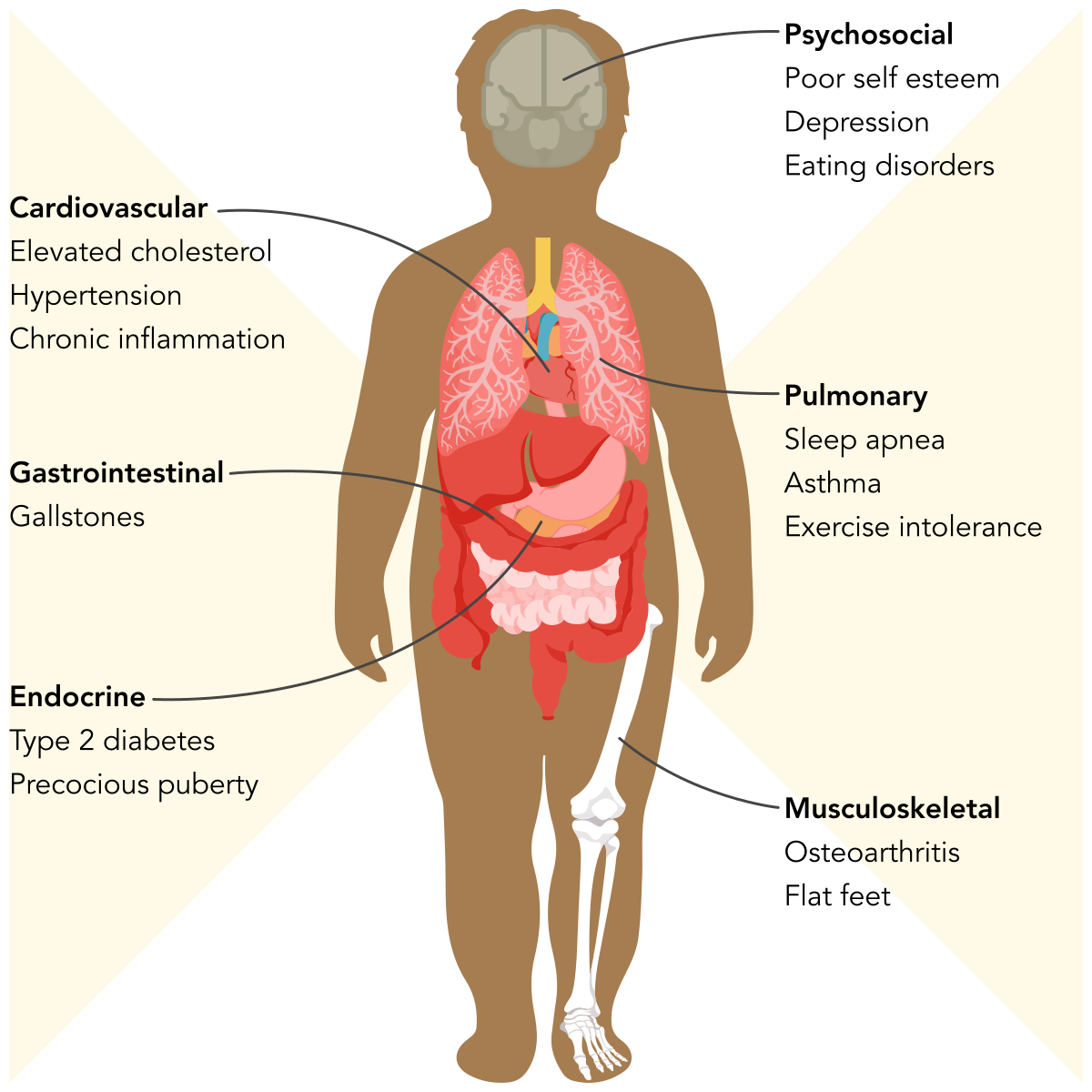
Complications of childhood obesityChildhood obesity increases the risk for diabetes mellitus, hypertension, cardiac conditions, pulmonary complications such as sleep apnea, musculoskeletal problems, and psychological disorders.
During the school years, children develop eating patterns independent of their parents. In too many cases, ready access to vending machines and fast-food restaurants makes it increasingly difficult for children to make healthy food choices. Contributors to childhood obesity include eating high-calorie foods and fast foods on a regular basis, drinking sugary juices and sodas, and eating high-calorie baked goods and snacks from vending machines. Lack of exercise and physical activity combined with consuming too many calories are the main contributors to childhood obesity; however, genetic and hormonal factors may also exacerbate the problem. Heightened levels of stress can increase children’s risk for obesity if they overeat to cope with problems or to deal with emotions. In addition, socioeconomic factors may contribute to childhood obesity. Food insecurity and geographic location can limit family access to resources and could influence the purchase of less nutritious foods. Families may rely on prepackaged, calorie-dense foods to save money.
Primary prevention of childhood obesity must begin early to promote healthy lifestyle habits across the lifespan and to ensure optimal health in adolescence and adulthood. Nurses can promote healthy lifestyle habits by helping children and families make healthy food choices, plan meals ahead of time, engage in regular exercise, and pursue an active lifestyle. Ideally, school-age children will help parents and caregivers plan, select, and prepare healthy meals and snacks—lifestyle changes are more successful when they involve the whole family. Replacing sugar-sweetened beverages and high-calorie foods with healthy choices such as fruits, vegetables, yogurt, nuts, whole grains, and hummus promotes a healthy weight and lifestyle. Eating as a family, eating in restaurants on a limited basis, adjusting portions, and limiting screen time are other effective ways to prevent overweight and obesity in children. Parents and caregivers of children who lack school-based activities and physical education classes can participate with their children in daily exercise.
A nurse is preparing to conduct an educational session about health promotion of children. Which of the following information should the nurse include in the session?
Select all that apply.
a
Limiting screen time assists with preventing obesity in children.
b
Limit wearing seatbelts in the rear of the vehicle.
c
Encourage socialization with peers.
d
Encourage childhood immunizations.
e
Encourage regular dental checkups.
Adolescence
Adolescence is a time of rapid growth and development, as the adolescent experiences dramatic physiological and hormonal changes associated with puberty, remarkable changes in appearance, and increases in cognitive development, such as the ability to hypothesize and think abstractly. During this stage, individuals experience many new life events and encounters as they establish a sense of identity. As a population, adolescents are physically healthy, and most possess a well-functioning immune system. Proper nutrition, making sound decisions, and practicing healthy lifestyle habits can all make positive contributions to their overall health. Yearly checkups should include vision and hearing screenings, measurements related to growth and development, dental exams, healthy eating and physical activity assessments, and vital sign recordings to ensure optimal health.
Nurses can help adolescents and families understand the physical, emotional, sexual, cognitive, and social development of adolescents to help them anticipate and manage the unique experiences and stressors of adolescence. They may provide education and support on a variety of topics, such as hygiene issues, the physical changes experienced during adolescence, prevention of substance use, healthy eating, and healthy lifestyles.
Substance Use
Individuals are most likely to begin abusing tobacco, alcohol, and illegal and prescription drugs during adolescence and young adulthood. Adolescents use mind-altering substances for many reasons, including a desire for new experiences, the belief that substances will help them deal with problems or perform better in school or athletics, and because their friends are using substances and they want to belong and fit in. Among the many factors that influence whether an adolescent tries drugs and alcohol are the availability of these substances within the neighborhood, community, and school, and whether friends and family members are using them. Some adolescents use drugs and alcohol to cope with family problems, physical or emotional abuse, or mental illness. An inherited genetic vulnerability, personality traits, mental health conditions, and beliefs that drugs are harmless also make it more likely that an adolescent will use drugs.
Substance use during the adolescent years is particularly damaging because the brain is still developing, and various areas of the brain, including the prefrontal cortex, are not yet mature. The prefrontal cortex is responsible for problem solving, making sound decisions, and controlling emotions and impulses. Brain development is not fully mature until an individual reaches their mid-twenties, so judgment and the ability to make sound decisions are still limited in adolescents. While most youths do not escalate from trying drugs to developing an addiction or an abuse disorder, simply experimenting with drugs can lead to risky behaviors, such as driving while intoxicated or engaging in unsafe sexual activity. If an adolescent develops a pattern of repeated use, it can lead to serious consequences, including academic failure, relationship problems, impaired memory, and the risk of toxicity.
Most tobacco users start using tobacco products primarily during adolescence. Adolescents can develop symptoms of withdrawal after short-term use of nicotine. Some of the adverse effects of nicotine withdrawal in adolescents are depression, anxiety, and difficulty concentrating. The adverse health effects of tobacco use are well documented.
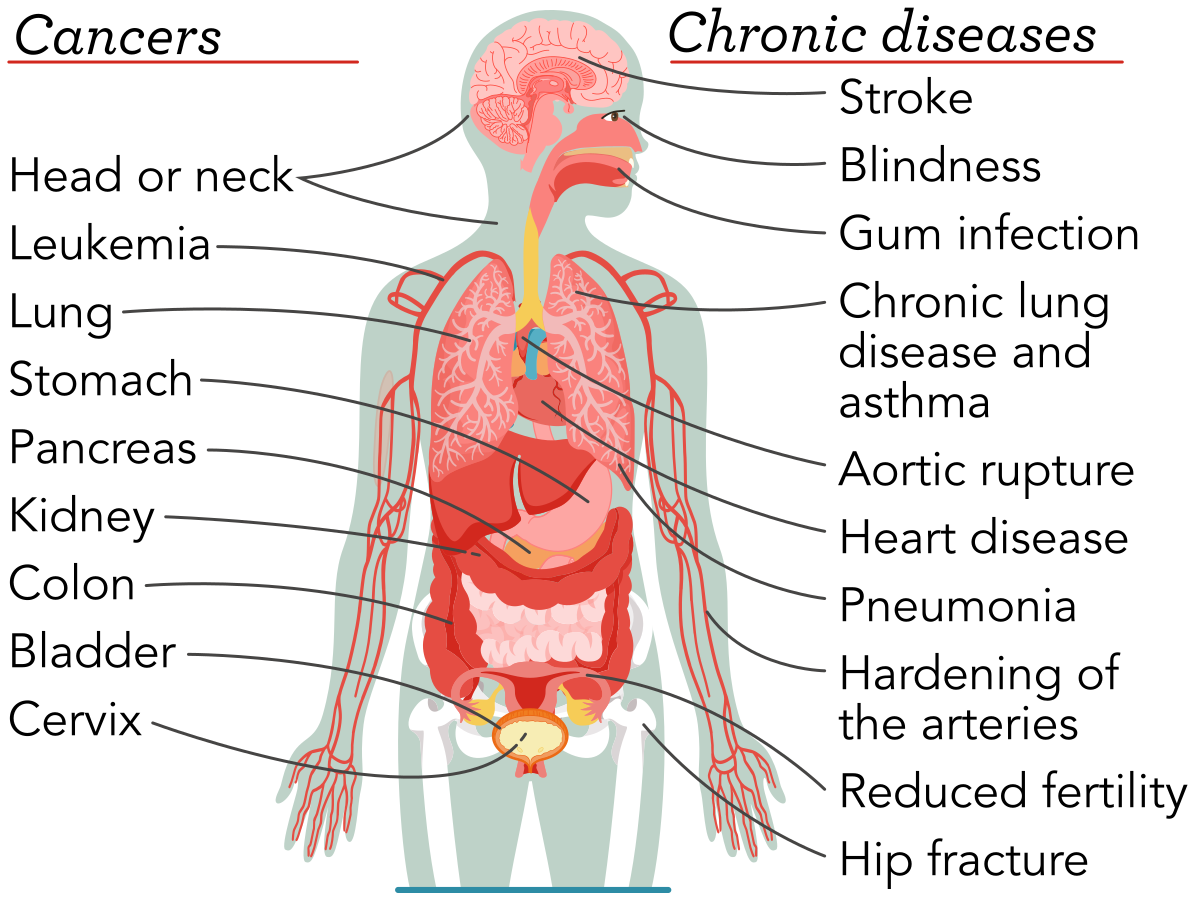
Risks from smokingSmoking increases an individual's risk of developing multiple cancers and chronic diseases.
Some adolescents use chewing tobacco or snuff and may consider these forms of tobacco to be safer than smoking because they are smokeless. In reality, the chemicals in chewing tobacco and snuff can cause oral bleeding, ulcers, erosion of tooth enamel, and increased risk of oral cancer. Electronic cigarettes (also known as e-cigarettes or vaping) were originally developed to wean individuals off smoking cigarettes. However, most of these products contain nicotine, a highly addictive substance, along with other harmful substances that can impair brain development. Although some users believe vaping to be less harmful than smoking, scientists are still learning about the long-term health effects of e-cigarettes, which include pulmonary disorders, symptoms of dependence, and increased blood pressure.

© Aliaksandr Barouski/Shutterstock
VapingLong-term health effects of vaping include pulmonary disorders, manifestations of dependence, and increased blood pressure.
According to the Substance Abuse and Mental Health Services Administration (SAMHSA), adolescents use alcohol more than any other drug, including tobacco and marijuana. In the SAMHSA survey, nearly one in five individuals aged 12 to 20 years reported drinking alcohol in the past month, and they are more likely to drink as they get older. Consuming alcohol lowers inhibitions, impairs judgment, and exposes adolescents to serious harm, including risky sexual behavior and physical and sexual assault. Unfortunately, some adolescents move beyond moderate drinking to binge drinking—defined as five or more drinks in a row within one day within the past 30 days for males and four or more drinks in a row within one day within the past 30 days for females. Binge drinking causes a rapid increase in blood alcohol levels and may be life-threatening. Severe alcohol use disorder, previously known as alcohol dependence or alcoholism, is a chronic disease evidenced by an inability to limit drinking, continuing to drink despite personal or professional problems, needing to drink more to get the same effect, and wanting a drink so badly you can’t think of anything else. Adolescents who start drinking early are at risk of suffering from alcohol addiction; those who start drinking before the age of 15 are four times more likely to meet the criteria for alcohol dependence. Long-term alcohol-related health consequences include liver disease, high blood pressure, psychological disorders, and various cancers. It is illegal for individuals younger than age 21 to purchase or publicly consume alcohol in the U.S., and youths who violate the law risk serious legal consequences.
Other drugs of abuse used by adolescents include cannabis, stimulants, inhalants, steroids, and opioids such as OxyContin, hydrocodone, fentanyl, and heroin. Preventing toxicity deaths caused by the opioid epidemic is a top priority for the U.S.
Primary prevention is a priority for nurses, who seek to help adolescents avoid the risks associated with substance use, abuse, and addiction. Early education and positive role modeling by parents and other significant adults in the adolescent’s life may be helpful deterrents to using substances. Emphasizing the risks of drug and alcohol abuse can provide an understanding of the problem and address any reluctance the adolescent may have about using substances and giving in to peer pressure to use drugs and alcohol. Prevention programs provide adolescents with practical skills to avoid high-risk behaviors, an understanding of the risks and consequences of substance use, and strategies to prevent and decrease drug use. Nurses may also provide resources for counseling and support groups, and if indicated, provide resources for outpatient or inpatient treatment. Adolescents need to be included in the plan of care and instructed about the adverse effects of substance use.
Eating Disorders
Eating disorders, including anorexia nervosa and bulimia nervosa, are psychological disorders that involve extreme disturbances in eating behavior. Anorexia nervosa is diagnosed in individuals who are at least 15% below their ideal body weight and have an intense fear of gaining weight. Physical signs and symptoms of anorexia include extreme weight loss, not making expected developmental weight gains, a very thin appearance, amenorrhea, dizziness or fainting, hair that thins or falls out, intolerance of cold, dehydration, and low blood pressure. Bulimia nervosa often starts in adolescence as individuals go through cycles of eating enormous amounts of food followed by vomiting, using laxatives and diuretics, and engaging in hours of aerobic exercise to lose weight. Warning signs of bulimia include extreme preoccupation with being overweight, binge eating in short periods, feeling out of control, and use of laxatives or diuretics or excessive exercising following meals.
Eating disorders emerge due to a complicated mix of different factors, including those related to genetics, social environments, and psychological health. The likelihood of developing anorexia nervosa has a strong genetic component, though bulimia nervosa and binge eating disorder also tend to run in families. A comprehensive twin study from Sweden indicates a significant genetic link between anorexia nervosa and bulimia nervosa. The risk factors for eating disorders can be broad and overlap with those for other mental health conditions, or they can be specific to eating disorders themselves. Broad risk factors include experiencing physical or sexual abuse, being subjected to harmful parenting practices, or society’s expectation to be thin. Once an eating disorder develops, several factors contribute to its persistence, such as the physical and brain-related changes resulting from malnutrition and from cycles of bingeing and purging, along with learned behaviors and the development of habits related to the disorder. Other factors include being obsessed with perfectionism, being worried about making mistakes, and attempting to live up to high personal and parental standards and expectations. Manifestations of eating disorders include distorted body image, skipping meals, frequent weighing, unusual eating habits, erosion of tooth enamel, and intense interest in exercise. Adolescents with eating disorders often deny that anything is wrong and may display feelings of anxiety and depression. They may withdraw from friends and become overly sensitive to criticism. Although eating disorders are far more common in females, males account for 10% of diagnosed cases of eating disorders.
Treatment for eating disorders depends on the specific disorder and typically encompasses a combination of interventions, including psychotherapy, nutrition education, medical monitoring, and sometimes medications. Having an organized approach to eating disorder treatment can help adolescents manage symptoms, return to a healthy weight, and maintain their physical and mental health. Nutrition education helps individuals understand eating disorders and develop a plan to achieve and maintain healthy eating habits. Moreover, the benefits of a healthy diet need to be discussed with all adolescents.
Routine nutritional screening should be part of the health care program provided to all adolescents. Areas to include in the nursing assessment are past and present diet history, food records, eating habits, attitudes, health beliefs, and socioeconomic and psychosocial factors. Because adolescents rarely volunteer information about their eating behaviors, it is important to take a thorough dietary history. If left undetected and untreated, eating disorders can lead to significant health problems in later life. The most effective programs help change attitudes about weight and provide ways to resist social pressure to be thin.
A nurse is caring for an adolescent who is suspected of having anorexia nervosa. Which of the following findings should the nurse expect?
Select all that apply.
a
Report of dizziness
b
Hypertension
c
Intolerance to heat
d
Weight loss
e
Irregular menstrual cycle
Depression and Suicide
The challenges of adolescence can lead some youths to become depressed. Depression is associated with biochemical changes in the brain, as well as high levels of stress and anxiety. Depression affects an adolescent’s personal, academic, social, and family life. If left untreated, it can end in thoughts or acts of suicide. Adolescents suffering from this mental illness may have a pervasive feeling of sadness, irritability, and low self-esteem. They often sleep poorly, have difficulty concentrating, believe family members and friends do not care about them, and are dissatisfied with life.
Among the many causes of depression include changes in brain chemistry, changes in hormones, inherited traits, early childhood trauma, and learned patterns of negative thinking. Several factors increase the risk of adolescent depression, including low self-esteem, being a victim of physical or sexual abuse, having a learning disability, having a physical or mental health condition, and having a family history of depression. Depression can lead to problems such as alcohol and drug use, academic and relationship problems, and attempted or completed suicide.
Globally, suicide ranks as the fourth leading cause of death among teenagers aged 15 to 19 years. Among 45 nations, the U.S. holds the seventh-highest suicide rate for young people between the ages of 10 and 19 years. In the U.S. in 2020, suicide was the second most common cause of death for the 10 to 14 age group, with 581 deaths recorded, and the third most common for those aged 15 to 19, with 2,216 deaths. Factors that increase the risk of suicide include mental health conditions such as major depression, addiction to substances, or psychotic disorders; expressing thoughts or intentions about suicide or death; engaging in self-harm behaviors such as cutting without suicidal intent; a history of attempting suicide; behavioral changes that involve a rise in impulsiveness, hostility, or conflicts in relationships or with the law; identifying as gay, lesbian, bisexual, transgender, or gender-nonconforming; experiencing a history of physical or sexual abuse; and having a family history of suicide attempts or deaths from suicides. On the other hand, several protective factors may help shield young people from thoughts and actions related to suicide, including strong family bonds characterized by shared activities and emotional backing, a sense of connection to others and to societal or community institutions, religious beliefs and ethical objections to taking one’s own life, and limited access to methods and means that could be used to die from suicide.
Although depression is a serious health condition that can affect every aspect of an individual’s life, certain strategies may help alleviate the problem. Implementing techniques to mitigate stress and to build resilience and self-esteem and engaging in psychotherapy to improve school performance and social relationships may lead to improved mental health. Nurses need to be alert for signs of depression and the potential for self-harm. Using a calm, supportive manner, nurses can ask if troubled adolescents have plans to hurt themselves or have made preparations to complete a suicide and determine whether they are able to cope and manage feelings in an effective manner. Any adolescent who expresses thoughts of suicide must not be left alone. Such a youth must be assisted in obtaining professional help. Therapy is essential to treat feelings of depression and hopelessness that may lead to thoughts of suicide. Medications may be prescribed to alleviate symptoms of depression.
Adulthood
Once an individual reaches adulthood, physical growth and development are complete. Most physiological changes during adulthood appear gradually and at different times for each individual. During this stage of development, adults face certain age-related health realities. Both muscular strength and coordination slowly decrease as individuals age. There is a gradual decline in cardiac output, skin and muscle tone and elasticity diminish, and hair begins to thin and turn gray. Adults need good nutrition, adequate rest, and physical fitness. Weight management is important because obesity can lead to many detrimental health conditions, such as diabetes mellitus and heart disease. The best approach to weight control is to engage in nutritious eating and lifelong healthy diet and exercise patterns. If such healthy lifestyle habits were established in childhood and adolescence, individuals are more likely to continue to practice these habits throughout adulthood. Nevertheless, dealing with life stressors and complexities can lead to stress-related illnesses such as heart attacks, hypertension, migraine headaches, obesity, and various cancers. Implementing self-care and healthy coping techniques can help individuals manage these kinds of stresses more effectively.
Goals of middle adulthood include establishing and fulfilling family roles and responsibilities, securing economic stability for the present and the future, maintaining good health, and establishing a career. Chronic illnesses such as diabetes mellitus, heart disease, and cancer may impact achievement of these goals and potentially lead to impaired family relationships, altered self-image and self-esteem, financial stress, social isolation, and medical concerns. Thus, primary prevention of these disorders is an essential factor in the individual’s plan of care. Lifestyle habits that support good health include daily exercise and physical activity, making healthy food choices, avoiding excessive consumption of alcohol, not smoking, and engaging in self-care activities to reduce stress. Adults must pay close attention to diet and exercise because heart disease and cancer remain the leading causes of death for this age group. Routine physical exams and health screenings are recommended to detect and treat any health conditions.
For their adult clients, nurses can provide education and support to improve and reinforce healthy lifestyle habits, explain physiological and psychological principles of good health, and offer evidence-based information regarding the causes, manifestations, transmission, and treatment of various health conditions. As part of their role, nurses assess the knowledge base of each client and family, their ability to manage health conditions, the effectiveness and availability of healthy coping strategies, and the need for referrals to community and social services.
Heart Disease
According to the American Heart Association, heart disease is the number one cause of death for adults in the U.S. Heart disease is an umbrella term that covers a range of conditions, including coronary artery disease, arrhythmias, congenital heart defects, and hypertension. Nearly half (48%) of all U.S. adults have some type of heart disease. Manifestations depend on the type of heart disease an individual is experiencing. For example, symptoms of cardiovascular disease may include chest pain, shortness of breath, weakness or numbness in the arms and legs, and pain in the neck, jaw, upper abdomen, or back region. Manifestations may be different for males and females: Men are more likely to experience chest pain, while women are more likely to have shortness of breath, nausea, and extreme fatigue along with chest discomfort. Manifestations of a heart arrhythmia include fluttering in the chest, racing or slow heart rate, chest pain or discomfort, shortness of breath, and vertigo. Other forms of cardiovascular disease include impairment in the electrical conduction, valvular disorders, and disease from infection (endocarditis).
The causes of heart disease vary by type. Atherosclerosis—the most common cause of cardiovascular disease—occurs when fatty plaques build up in the arteries. These deposits thicken and stiffen the artery walls and subsequently inhibit blood flow throughout the body. Atherosclerosis can be caused by an unhealthy diet, lack of exercise, being overweight, and smoking. In general, risk factors for developing heart disease include non-modifiable factors, including age, genetic history of heart disease, gender, and modifiable factors, including smoking, poor diet, hypertension, diabetes mellitus, obesity, lack of exercise, stress, and dyslipidemia. The AHA recommends focusing on seven goals to prevent heart disease: eating a healthy diet, exercising regularly, avoiding excess weight, not smoking, and keeping blood pressure, cholesterol, and blood sugar within a healthy range.
Nurses play a key role in primary prevention measures to promote health and prevent heart disease. Prevention measures include adhering to a healthy lifestyle that includes the AHA’s seven recommendations. Nurses may also recommend routine screenings, including monitoring blood pressure, lipid screening, and noting progress toward optimal health. Because hypertension is a major risk factor for heart failure, achieving and maintaining a healthy blood pressure level can markedly lower the risk of heart disease. Hypertension can be treated with lifestyle changes and, if indicated, blood pressure–lowering medications.
Cancer
According to the American Cancer Society, cancer is the second most common cause of death in the U.S. (after heart disease). Cancer comprises a group of diseases characterized by the uncontrolled growth and spread of cancer cells. If this spread is not limited, it can result in death. Approximately 80% of all cancers in the U.S. are diagnosed in people 55 years of age or older, and an estimated 40 of 100 males and 39 of 100 females will develop cancer during their lifetime.
Although the causes of cancer are not completely understood, various factors are known to increase the disease’s occurrence—namely, smoking, excess body weight, and inherited genetic mutations. Some cancers can be prevented, especially those caused by tobacco use and other unhealthy behaviors. In a recent study conducted by the ACS, at least 42% of newly diagnosed cancers in the U.S. were potentially avoidable, including those caused by smoking, excess body weight, alcohol consumption, poor nutrition, and physical inactivity. Screenings for skin, breast, prostate, lung, colorectal, and cervical cancers are known to reduce mortality for many cancers. Nearly one in five cancers are caused by excess body fat, alcohol consumption, poor nutrition, and a sedentary lifestyle—risk factors that are considered both preventable and modifiable. Nurses play a crucial role in providing education and support to their adult clients with cancer.
Nursing assessment for cancer involves collecting data through a comprehensive health history, physical assessment, and diagnostic studies. Primary prevention is the most effective way to reduce the burden of cancer. Many cancers can be prevented by practicing healthy lifestyle habits such as engaging in daily physical activity, eating a nutritious diet, avoiding excessive sun exposure, not smoking, avoiding excessive consumption of alcohol, and having routine checkups and health screenings.
Nurses will collaborate with clients diagnosed with cancer to address treatment goals that might include surgery, radiation therapy, chemotherapy, and other targeted therapies. In some cases, clients may decide to live out their lives without pursuing treatment. Receiving a cancer diagnosis and undergoing cancer treatment present numerous challenges for clients and their families, which can affect their physical functioning, mental health, and quality of life. The client plan of care includes educating clients and their families about cancer and its treatment, ways to manage manifestations of the disease and side effects of cancer treatments, and pain management; assessing the client’s emotional state; and providing ongoing education and emotional support.
Type 2 Diabetes Mellitus
Diabetes mellitus (DM) is a chronic metabolic disorder characterized by persistent hyperglycemia, which may be due to impaired insulin secretion, insulin resistance, or both. Type 2 diabetes mellitus, the most common type of diabetes mellitus, accounts for approximately 90% of all cases. Although it is most commonly seen in persons older than 45 years, the incidence of this disease is currently increasing in children, adolescents, and younger adults due to rising levels of obesity, physical inactivity, and energy-dense diets. Individuals most likely to develop type 2 diabetes are age 45 or older, have a family history of diabetes mellitus, and are overweight or obese. Physical inactivity and hypertension also increase the chances of developing type 2 diabetes mellitus. High glucose levels in clients with this form of diabetes mellitus, if not treated, can cause other serious health problems, such as heart disease, vision loss, and kidney disease.
Manifestations of type 2 diabetes mellitus often develop over several years and can persist for a long time without being noticed. Among these manifestations are polyuria, polydipsia, blurred vision, fatigue, sores or wounds that are slow to heal, and dry skin. Individuals experiencing such manifestations or those at risk for the disorder need to have their blood glucose levels measured to receive an accurate diagnosis. Early detection and treatment of type 2 diabetes mellitus can decrease the risk that clients will develop complications such as heart and kidney disease, neuropathy, impaired hearing and vision, circulation problems, poor oral health, and mental health issues. Many of these complications can be prevented or delayed with healthy lifestyle changes, such as losing weight, eating healthy food, being physically active, and glucose testing. In some cases, individuals with type 2 diabetes mellitus take prescribed medications to help manage their condition.
Self-management is a critical element in type 2 diabetes mellitus care. Clients will collaborate with nurses and other members of the health care team to establish and implement a comprehensive plan of care. This plan of care includes weight management, exercise, glucose testing and monitoring, foot and dental care, adequate rest and sleep, stress-reduction activities, and medication management. Nurses should encourage clients to keep their regular appointments and provide education, support, and guidance to implement and modify the plan of care as indicated.
Late Adulthood
Individuals in late adulthood are the fastest-growing segment of the U.S. population. According to the Population Reference Bureau (2024), the number of Americans greater than 65 years of age is projected to increase from 58 million to more than 82 million by 2050, when this cohort will account for approximately 23% of the population. During late adulthood, many physiological changes occur as part of the expected aging process—for example, decreased cardiac output, loss of elasticity in the respiratory system, reduced physical strength and motor function, decreased glucose tolerance, and discolored, wrinkled, and fragile skin. The leading causes of death in older adults are heart disease, cancer, lung disease, stroke, and Alzheimer’s disease. Accidents and falls are also more likely in this group due to alterations in sensory perception and gait, as well as the onset of neurological and cognitive disorders. The prevalence of certain lifestyle issues, such as loneliness and social isolation, may be higher among older adults. Some older adults face other challenges, including increasing obesity rates, economic disparities, rising divorce rates, and living alone or in assisted living centers.
Health promotion strategies for individuals in late adulthood focus on maintaining and increasing functional capacity, improving self-care, and increasing the individual’s social network to promote longer independence and overall quality of life. Both health promotion and health maintenance in late adulthood emphasize exercise, healthy eating, and maintaining a healthy lifestyle. Older adults need adequate rest and sleep as well as physical activity to restore energy and help prevent acute and chronic illnesses. Nurses can provide education and support to older adults by advocating for living conditions and environments that support well-being and healthy lifestyles, adequate housing, emotional and social support, access to affordable health care, and community resources.
Osteoporosis
Skeletal maturity, defined as the point at which bone density is greatest and the skeleton is at peak development, occurs at approximately age 18 years for females and 20 years for males. Bone density then stays relatively stable until females experience menopause and males reach late adulthood. In the years following menopause, females often experience a rapid loss of bone density that causes the bones to become weaker and more brittle, so that they are easier to break and take longer to heal if injured. Severe loss of bone density can result in osteoporosis, a disease in which bones become porous and more susceptible to fractures. In severe cases, osteoporosis can cause spinal vertebrae to collapse. As individuals age, the spinal column loses mineral content and bone density, causing the spine to become curved and compressed. Foot arches may also be less pronounced, causing a loss in height. Movements may become slow and limited, gait can be unsteady, and individuals are more easily fatigued.
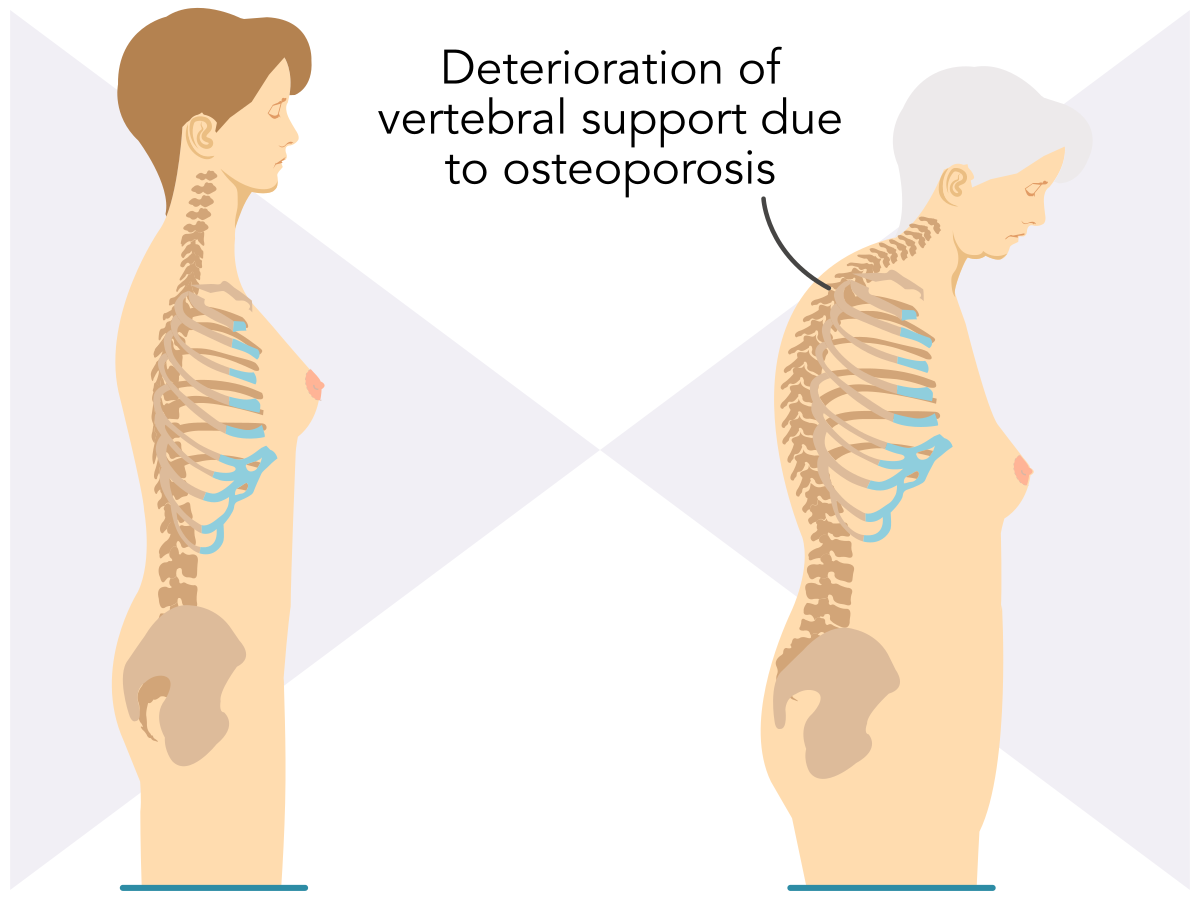
Female spine shown in side view
Deterioration of vertebrae in osteoporosisAs individuals age, the spinal column loses mineral content and bone density, causing the spine to become curved and compressed.
Approximately half of all females older than age 50 will experience a fracture of the hip, wrist, or vertebra during their lifetime. Spinal fractures are the most common type. In general, white, older females are the most likely to experience a loss of bone density. Risk factors include having insufficient amounts or poor absorption of calcium and vitamin D, decreased estrogen levels in females following menopause, decreased testosterone levels in males as they age, being confined to bed due to prolonged illness, certain medications (seizure medications, hormone treatments), and history of eating disorders. Other risk factors are a family history of osteoporosis, drinking excessive amounts of alcohol, and smoking.
Osteoporosis is the most common type of bone disease, though it has few noticeable manifestations in the early stages. In some cases, people will experience a compression fracture before they realize they have osteoporosis. Other manifestations include loss of height, stooped posture, or a dowager’s hump. Dual-energy X-ray absorptiometry (DEXA) scan is a low-radiation X-ray that may be performed to measure bone density levels, bone loss, and risk for fracture. DEXA scans are used to diagnose osteoporosis, then are usually repeated every two years to assess the progression of the disorder and to determine how well treatment is working. Vertebral fracture assessment (VFA) may be done in combination with a DEXA scan to better identify fractures. Treatment for osteoporosis includes dietary changes and daily exercise, calcium and vitamin D supplements, and medications used to strengthen bones.
Exercise is essential in preserving bone density, and weight-bearing exercises are especially helpful in this regard. Examples include walking, jogging, or playing tennis; using free weights, weight machines, and stretch bands; balance and core exercises such as yoga and Pilates; and using rowing machines. Eating a diet rich in calcium and vitamin D and/or using supplements to make up for the shortage if diet lacks the recommended amounts is also beneficial. Other interventions include not smoking, limiting alcohol consumption, and removing environmental hazards, such as throw rugs, to reduce the risk of falls. Because osteoporosis is associated with a heightened risk for falls, other safety measures include installing grab bars and anti-slip flooring and wearing shoes with low heels that fit well. Nurses can help promote bone health by improving awareness, identifying clients at risk for osteoporosis, and encouraging healthy lifestyles. A collaborative approach with the interprofessional team can assist individuals who have osteoporosis by discussing the importance of balanced nutrition and regular exercise to promote bone health and prevent falls that can result in bone fracture.
Identify the statements as correct or incorrect.
Drag the options on the left to the corresponding category on the right (or click the option on the left and then the corresponding category on the right).
Correct
Incorrect
Alzheimer’s Disease
The National Institute on Aging defines Alzheimer’s disease as a progressive, irreversible brain disorder that slowly destroys memory and thinking skills and, in time, inhibits the ability to carry out basic tasks and activities of daily living. Alzheimer’s disease is ranked as the fifth leading cause of death for adults in the U.S. who are greater than 65 years of age. While Alzheimer’s disease is the most common cause of dementia among older adults, it is not an expected or inevitable part of aging. The loss of cognitive functioning experienced with dementia affects thinking, memory, and reasoning, which then interferes with an individual’s daily life and activities. Depending on the types of brain changes occurring, the causes of dementia can vary, and manifestations can range from mild to severe.
Scientists continue to study the complexities of brain changes involved in the onset and progression of Alzheimer’s disease. Changes in the brains of individuals with this disease may actually begin years before memory and other cognitive problems appear. Even while significant brain changes are taking place, individuals may seem to be symptom-free. Over time, unexpected deposits of proteins form plaques throughout the brain, resulting in a loss of healthy neuron function and connection with other neurons, which then causes the neurons to die and parts of the brain to shrink. In the final stage of Alzheimer’s disease, brain damage is extensive, and brain tissue has diminished significantly.
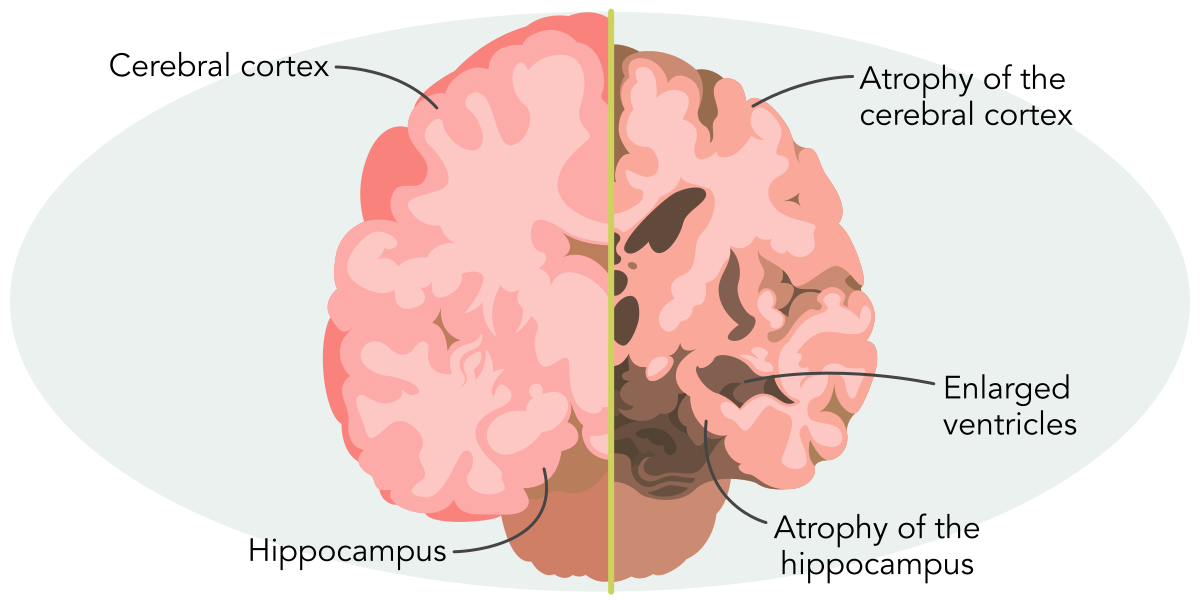
Brain changes in Alzheimer’s diseaseThis cross-section of brain depicts some of the changes that occur in the brains of clients who have Alzheimer's disease.
The first manifestations of Alzheimer’s disease vary from individual to individual, although memory problems are often one of the first signs of cognitive impairment. At first, memory problems may be mild and do not significantly impact daily life. As the disease progresses, the individual experiences gradual declines in memory, learning, attention, and judgment; confusion as to time and place; difficulties in communicating and finding the right words; and inappropriate social behaviors and changes in personality. As the disease progresses, these manifestations become more pronounced and are displayed more regularly. Delusions, hallucinations, and other related behaviors develop and worsen over time, and spouses and family members become strangers. In its advanced stages, Alzheimer’s disease often causes incontinence and a loss of mobility. Clients often become completely dependent on other people for their care and may eventually need to live in assisted care facilities. Alzheimer’s disease (AD) relentlessly advances from its initial phase, known as mild cognitive impairment (MCI), through to mild, moderate, and severe stages of dementia. Ideally, tracking the progression of AD involves using a mix of established assessment tools filled out by a caregiver, like the Functional Activities Questionnaire or the Quick Dementia Rating System, along with cognitive tests, such as the Mini-Mental State Examination (MMSE), the Montreal Cognitive Assessment (MoCA), or the clinical dementia rating (CDR) scale. Although the progression as gauged by these instruments does not always follow a straight path, research has shown that on average, client’ scores on the MMSE drop by about 3 to 3.5 points each year. A small percentage (less than 10%) experience a more accelerated decline, losing 5 to 6 points per year on the MMSE. Clients who develop AD later in life (after 80 years of age) may experience a slower deterioration compared to those who are younger. However, the presence of early neuropsychiatric manifestations such as psychosis, restlessness, and hostility is linked to a faster deterioration. The average lifespan following an AD diagnosis is reported to be between 8 and 10 years, but this can vary widely from 3 to 20 years, depending largely on the level of impairment at diagnosis. Life expectancy is also influenced by the age at which manifestations first appear. Ultimately, patients often die from complications related to the disease’s advanced stage, such as dehydration, malnutrition, or infections.
Diagnosis of Alzheimer’s disease is made by obtaining a comprehensive health history, performing a physical assessment, and conducting tests to assess memory, problem-solving ability, attention, counting, and language. Other tests include brain scans to confirm the diagnosis. These scans may be repeated over time to measure the progression of cognitive changes. A definite diagnosis of dementia can be established only after death, by linking clinical indicators with an examination of brain tissue in an autopsy.
Although Alzheimer’s disease cannot be stopped or reversed, early treatment helps to preserve daily functioning and gives families time to plan for the future by attending to financial and legal matters, instituting safety issues, learning about living arrangements, and building support networks. Treatment may include medications to help reduce manifestations and manage behavioral problems.
Nursing assessment of older adults should include assessment of cognitive functioning to test memory, judgment, abstract thinking, retention, and calculation abilities. Providing a quiet, uninterrupted setting to carry out this assessment helps ensure valid test results.
Living with Alzheimer’s disease can have significant physical, emotional, and financial costs. Over time, clients may become bedridden and unable to recognize family and friends. Nurses offer ongoing education and support to clients and families, including evidence-based information about the stages and progression of the disease, ways to manage challenging behaviors, resources for living arrangements and community support, respite care for caregivers, and support groups.
Case Study
Scenario Introduction
Mr. Gomez, age 68, has been referred to a specialty clinic to be assessed for symptoms related to alteration in cognition. His wife reports a gradual history of memory loss, confusion about time and place, and difficulty finding the right words to communicate. Mr. Gomez retired at age 63 from employment as a marketing director because he was experiencing cognitive challenges and difficulty interacting with clients. Since retiring, his memory function and other cognitive abilities have progressively declined. His wife is stressed and concerned; she is seeking consultation for her husband’s condition.
Scene 1
Scene 2
Scenario Conclusion
Alice calmly reassures Mrs. Gomez that the team at the clinic will be able to help her and Mr. Gomez.
Based on Alice’s interactions with Mr. And Mrs. Gomez, identify three main health issues or concepts contained in the case scenario.
Click the card to flip and check your answer.
Client safety, inability to perform ADLs, caregiver role strain
Based on the health issues or concepts identified, what actions might Alice take next?
Click the card to flip and check your answer.
Conduct tests to further assess cognitive functioning, further assess the home environment, assess the couple’s financial/social support, physical assessment
What specific strategies should Alice use to relieve the couple’s worry and distress?
Click the card to flip and check your answer.
Consult with home care and/or occupational therapy. Provide education about managing Mr. Gomez’s behavior and the progression of the disease; provide information about respite care and support groups to assist Mrs. Gomez; educate the couple about any prescribed medications.
The Role of the Nurse in Developmental Stages