Gas Exchange in Humans
Human gas exchange system
Consists of lungs and air passages. This system allows Oxygen to enter the blood and Carbon Dioxide to leave the blood through the alveoli. The lungs are in the chest in the thoracic cavity, protected by the ribcage
System is inside the body because:
Air isnt dense enough to support and protect the delicate structure
The body would lose water and dry out
Pathway of Air
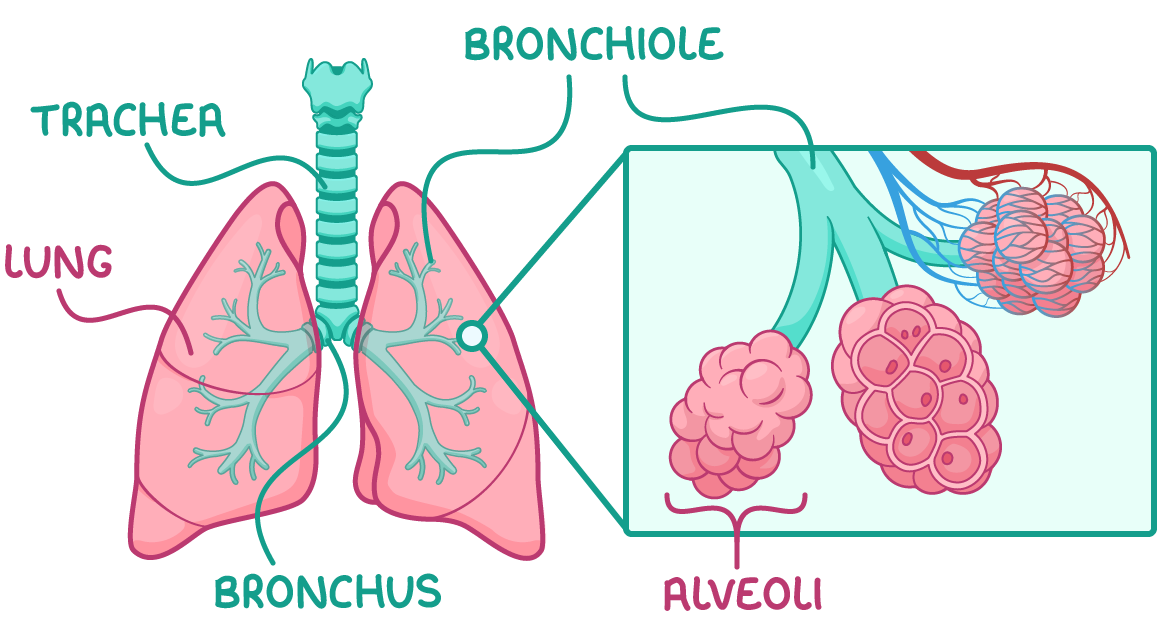
Air enters the trachea
Air travels into the two bronchi, with one bronchus going to each lung
Air travels into smaller airways (bronchioles)
Air travels into cluster of air sacs (alveoli) at the ned of the bronchioles
Cilliated Epithelium
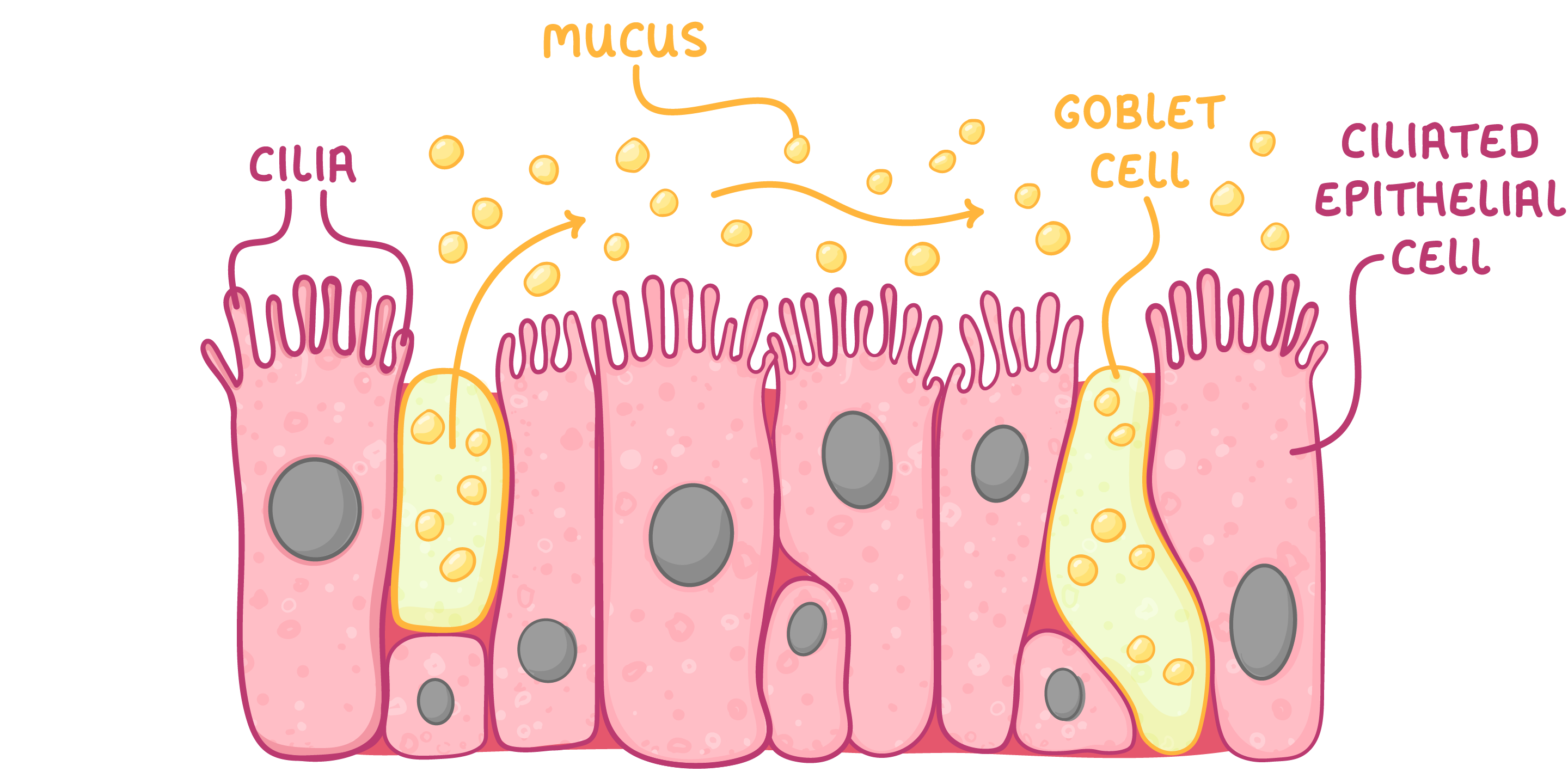
Cilliated epithelium is located throughout most of the airways
Contains Goblet cells and cilliated epithelial cells
Goblet Cells - Produce and secrete mucus traps dust and microbes
Ciliated epithelial - These waft the mucus upward to the mouth so it can be swallowed
Structure and Adaptations of Airways
Trachea:
Reinforced with cartilage to keep airway open
Smooth muscles can contract or relax to constrict or dilate the airway and change airway
Elastic tissue allows for stretching and recoiling
Lined with cilaited epithelial cells and goblet cells
Bronchioles
No cartilage, can change shape
Smooth muscles can contract or relax to constrict or dilate airway and change airflow
Elastic tissue allows for stretching and recoiling
Alveoli and Blood Vessels
Alveoli - tiny air sacs at the ends of bronchioles. They are surrounded by a network of capillaries so gases can be exchanged between the air in the alveoli and the blood
Gas exchange occurs across the alveolar membrane of the alveoli
Oxygen diffuses from the alveoli to pulmonary capillaries where it binds to the haemoglobin in the red blood cells
Carbon Dioxide dissociates from the haemoglobin and diffuses from the blood into the alveoli
Adaptations of the alveoli for gas exchange
One layer of epithelial cell - fast difussion
Large surface area - This increase rate of gas exchange
Partially Permeable - only certain gases can move across the the wall
Surrounded by network of capillaries - These bring blood close to air for gas exchange
Elastic fibres - allow for stretching and recoiling
Collagen fibres - These contain strong collagen that prevents alveoli from bursting and limits overstretching