4f. Monopsony
Monopsony
A monopsony means there is one buyer and many sellers.
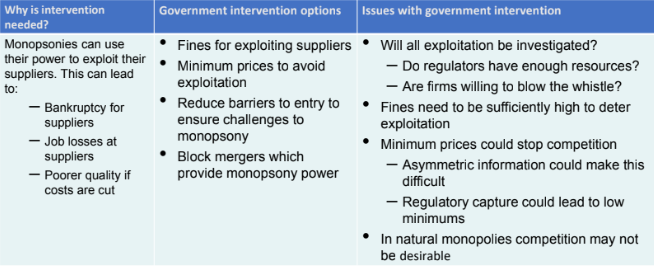
A monopsony has buying or bargaining power in their market.
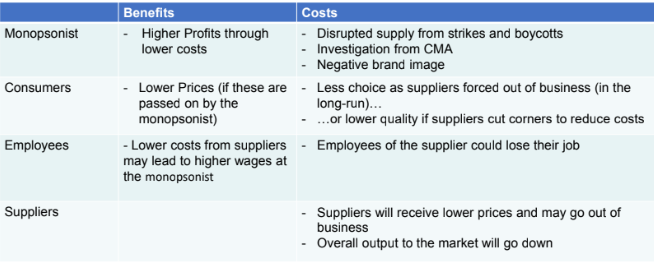
This buying power means that a monopsony can exploit their bargaining power with a supplier to negotiate lower prices.
The reduced cost of purchasing inputs increases their profit margins
Monopsony exists in both product and labour markets
Monopsony
A pure monopsony is where there is one buyer and many sellers.
E.g. Network Rail buy all rail track maintenance equipment in the UK
However, like in a monopoly, the degree of monopsony power varies
E.g. State schools hire most teachers in the UK
How can monopsony power be created?
Monopoly power
A firm that is a monopoly is often a monopsony*
Niche market
There are not many uses for the product e.g. plutonium
Legal
State granted monopsony e.g. handguns for police
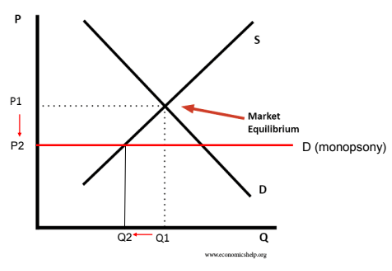
A monopsonist is only willing to pay P2 rather the free- market equilibrium of P1, therefore output in the market falls from Q1 to Q2 as firms cannot afford to supply at this price.
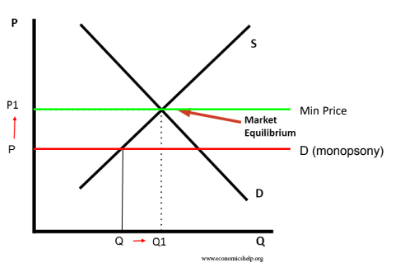
A minimum price (if set correctly) has the effect of reversing the power of the monopsony and returning the price and quantity to equilibrium