ESS Renewable Energy Sources
ESS –
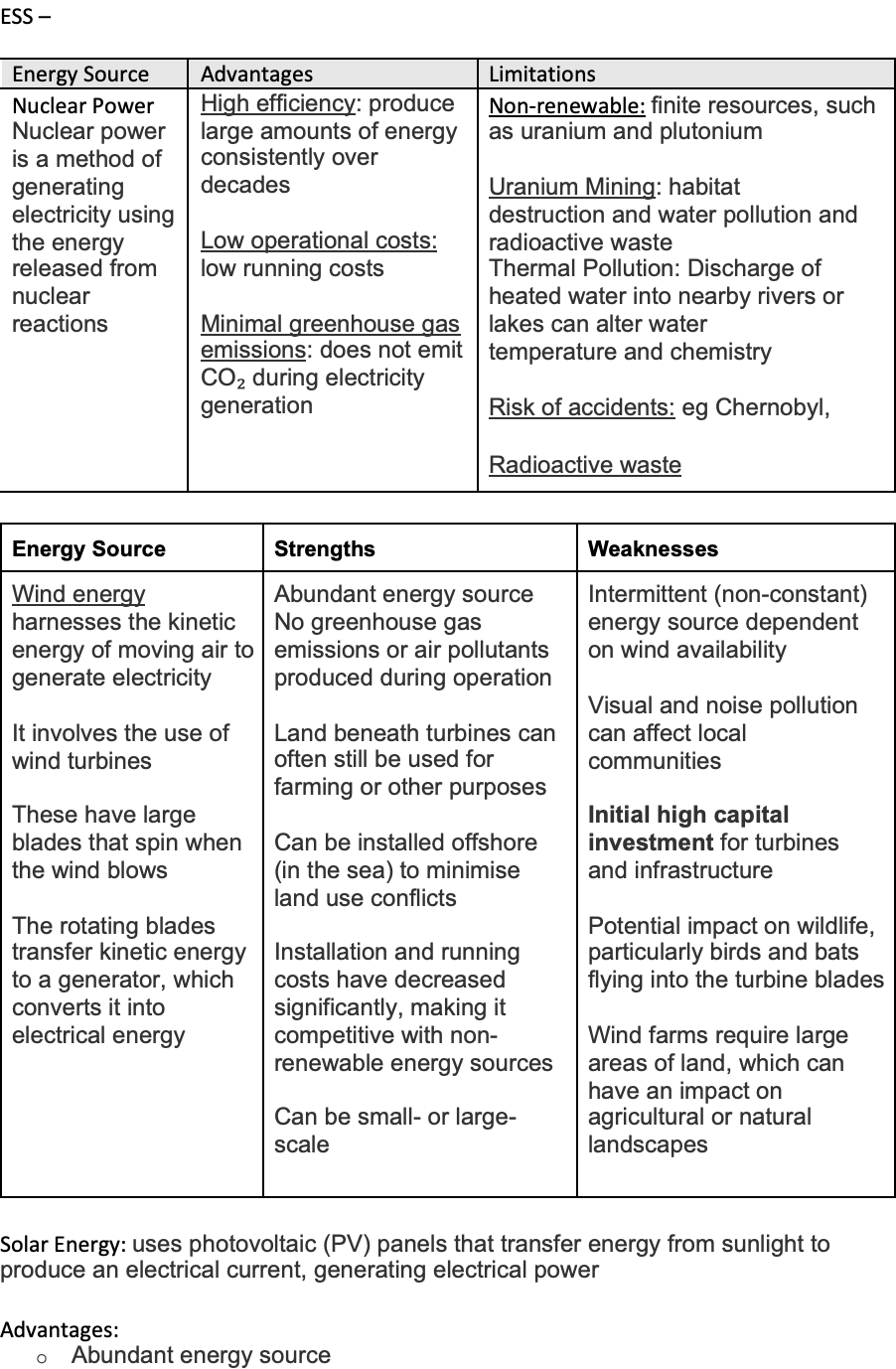
Energy Source | Advantages | Limitations |
Nuclear Power Nuclear power is a method of generating electricity using the energy released from nuclear reactions
| High efficiency: produce large amounts of energy consistently over decades Low operational costs: low running costs Minimal greenhouse gas emissions: does not emit CO₂ during electricity generation
| Non-renewable: finite resources, such as uranium and plutonium
Uranium Mining: habitat destruction and water pollution and radioactive waste Thermal Pollution: Discharge of heated water into nearby rivers or lakes can alter water temperature and chemistry
Risk of accidents: eg Chernobyl,
Radioactive waste |
Energy Source | Strengths | Weaknesses |
Wind energy harnesses the kinetic energy of moving air to generate electricity It involves the use of wind turbines These have large blades that spin when the wind blows The rotating blades transfer kinetic energy to a generator, which converts it into electrical energy | Abundant energy source No greenhouse gas emissions or air pollutants produced during operation Land beneath turbines can often still be used for farming or other purposes Can be installed offshore (in the sea) to minimise land use conflicts Installation and running costs have decreased significantly, making it competitive with non-renewable energy sources Can be small- or large-scale | Intermittent (non-constant) energy source dependent on wind availability Visual and noise pollution can affect local communities Initial high capital investment for turbines and infrastructure Potential impact on wildlife, particularly birds and bats flying into the turbine blades Wind farms require large areas of land, which can have an impact on agricultural or natural landscapes |
Solar Energy: uses photovoltaic (PV) panels that transfer energy from sunlight to produce an electrical current, generating electrical power
Advantages:
Abundant energy source
No greenhouse gas emissions or air pollutants produced during operation
Suitable for various scales of application (from house rooftops to very large solar farms)
Can be integrated into existing buildings and infrastructure
Solar is progressively becoming less expensive and more efficient
Solar energy can be generated in remote places where they don't have electricity (e.g. to power solar street signs in rural areas)
Disadvantages:
- Intermittent (non-constant) energy source dependent on sunlight availability
- Initial high capital investment for solar panels and equipment
- Requires significant land area for solar farm installations (which could otherwise be used for agriculture)
- Energy storage solutions needed for night-time or cloudy days
Potential environmental impact during manufacturing and disposal of panels (electronic waste)
- Some people dislike the appearance of large solar farms (visual pollution)
Hydropower
Hydropower uses flowing water to generate electricity through turbines in dams
Advantages:
Reliable and predictable source of energy
Low greenhouse gas emissions during operation
Multi-purpose benefits, including flood control and irrigation
Long lifespan of hydroelectric plants with low operating costs
Can respond to demand quickly, generating large scale amounts of electricity in a short period of time
Disadvantages:
Disruption of river ecosystems and fish migration routes
High initial capital costs for dam construction and infrastructure
Dam construction and reservoir formation floods habitats and can require relocation of human communities
Climate change impacts on water availability is affecting reservoir levels, making them less reliable
Salmon cannot move – Claifornia dam
Tidal energy: uses the energy of rising and falling tides to turn a turbine and generate electricity
Advantages:
Abundant energy source
No greenhouse gas emissions or air pollutants produced during operation
Predictable and reliable source of energy due to regular tidal patterns
Can produce a large amount of electricity at short notice
Minimal visual impact when installed underwater
Long lifespan of tidal turbines with minimal maintenance
Disadvantages:
High initial costs
Limited availability of suitable sites
Potential environmental impact on marine ecosystems and fish migration
Maintenance challenges and costs due to underwater installations
Possible interference with shipping lanes and navigation
Geothermal: Indonesia and philipines
Geothermal energy harnesses heat from within the Earth's crust for electricity generation or heating purposes.
The Earth's interior is extremely hot
Water can be poured into shafts below the Earth's surface
The water is heated and returned via another shaft as steam or hot water
Steam can be used to turn a turbine and generate electricity
The hot water can also be used to heat homes
Advantages:
Sustainable energy source
Reliable and stable source of energy available at all times
Small land footprint compared to other renewable sources (e.g. wind and solar)
Geothermal power stations are usually small compared to nuclear or fossil fuel power stations
Long lifespan of geothermal plants with low operating costs
Disadvantages:
Site-specific; limited to regions with near-surface geothermal activity
High initial drilling and exploration costs
Can result in the release of greenhouse gases from underground
Geological risks such as earthquakes or ground subsidence
NON-RENEWABLE:
Non-renewable energy comes from energy sources that will eventually run out, including:
Fossil fuels
Nuclear energy (using uranium as a fuel)
Fossil fuels
Fossil fuels include:
Coal
Crude oil, which is refined into petrol, diesel and other fuels
Natural gas (mostly methane), which is used in domestic boilers and cookers
Fossil fuels are formed from the remains of plants and animals
Chemical energy stored in fossil fuels originally came from sunlight
Energy from the sun was transferred to chemical energy stores within plants through photosynthesis (plants use energy from sunlight to make food)
Animals ate the plants and the energy was then transferred to their chemical store
Advantages
The current systems of transport and electricity generation used by human societies rely heavily on fossil fuels
These fossil fuels are generally readily available on a daily basis
In the past, fossil fuels have been reliable for large-scale energy production (although this is changing as supplies start to become depleted and prices rise)
Efficient—fossil fuels typically have a high energy density (they produce a large amount of energy per kilogram)
Disadvantages
It takes millions of years for fossil fuels to form:
This is why they are considered a non-renewable energy resource
The increasing demand for decreasing supply causes prices to increase
Fossil fuels are predicted to completely run out within the next 200 years
Burning fossil fuels pollutes the atmosphere with harmful gases such as:
Carbon dioxide, which contributes to the greenhouse effect
Sulphur dioxide, which produces acid rain
Both carbon and sulphur can be captured upon burning, preventing them from being released into the atmosphere, but this is expensive to do
Oil spills can occur during transport of fossil fuels, which damage the marine environment and wildlife over very large areas
Prices fluctuate rapidly
Conflict and political disagreements (such as the war in Ukraine) can have an impact on supplies