Digestion III
Stomach
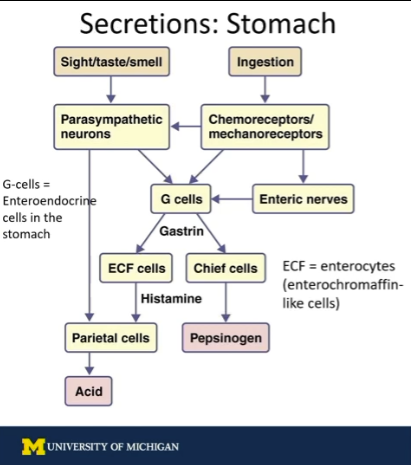
eat something, smell, taste, make secretions (make stomach acid)
feed forward
G cells in stomach make gastrin
ECF cells → target parietal cells which makes acid (ph stomach = 2)
chemoreceptor or mechanoreceptor
eat something → stretching of stomach
G cells- gastrin
send message to chief cells → pepsinogen
HCI and pepsionogen lead to digestion
Intestine
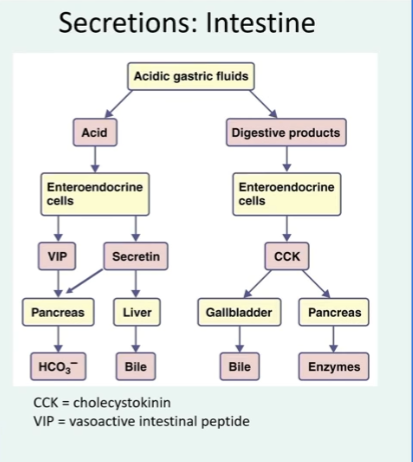
acid and digestive products come out
acid
enterendocrine cells
make VIP
target pancreas to make bicarbonate
neutralize
secretin
target liver
makes bile (emulsifier)
digestive product
enteroendocrine cells
make CCK
target gallbladder (storage bile)
release bile
target pancreas
release all pre pro enzyme: trypsinogen
Appetite control
Appetite control
Ghrelin stimulates hunger (stomach)- goblin hungry
stimulate NPYRH in hypothalamus → NPY (works upwards)
stimulate hunger
increase gastric motility and acid secretion
highest before meals and lowest after
negatively correlated with weight
prader will syndrome → high grelin
inhibit POMC to not make you hungry
PYY suppresses appetite- secreted by colon when full
makes you feel full
increased from dietary fiber and break down of proteins
Leptin suppresses appetite, decreases sensitivity in obesity (white adipose tissue=fast)
hormone produced by fat cells, target hypothalamus
inhibit neuropeptide Y
pituitary gland- secretion of POMC to make you feel full
negative feedback loop
obesity new target when produce lot leptin, might cause leptin resistance
Hypothalamic/Pituitary hormones
Neuropeptide Y increases appetite
POMC increases satiety
Page 4
Starvation
brain use glucose for food
conserve glucose, use fat to produce glucose
through beta oxidation produce CO2
goes to liver continue to make more ATP
stored glycogen also broken down and broken down via TCA
Metabolism reorganization to survive
Conserve glucose, shift to lipid metabolism
Digestive system adapts based on food intake
lipid (produce ketone bodies, not as much ATP produced for same amount of energy) to protein metabolism and amino acid convert FFA and glucose
eventually skeletal muscle degradation
early starvation:
fatty acid go to liver to make more ATP
stored glycogen used to produce glucose to produce ATP to make energy for brain
late starvation:
fatty acids instead of being used to make CO2 to get ATP are made into ketone bodies to go feed brain
extreme starvation
break down protein (can be turned to ketone bodies as well)- atrophy
Page 5
Obesity
Hyperphagy- overeating, in animals, maladaptive in humans
18.5 underweight
25 overweight
30 obese
correlation with T2DM
eat too much fat cells become larger
stroke and hypertension for fattys
BMI used to determine obesity status
NEFA- adiphocytes more fatty acid available and produce more insulin
body stops responding to insulin affect liver, heart, muscle
BMI = weight/height²x 703
Page 6
Small intestine functions
Preproglucagon released by alpha cells and L-cells
Products like Glucagon, GLP-1, GLP-2
GIP stimulates Glucagon secretion
nutrients leads to GLP-1 antagonist
L cells of small intestine in presence of nutrients
produce preproglucagon (small intestine and alpha cell in pancreas)
not active
broken down to proglucagon
this is then cleaved to glucagon- glycogenesis
GLP-1: suppressed appetite- target is hypothalamus
decreases NPY (neuropeptide Y)
GLP-2: inhibit appetite
inhibit gastric emptying
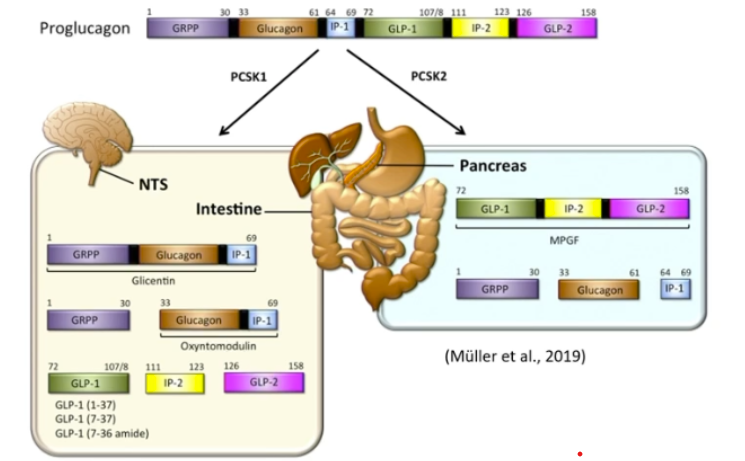 glycentin can be further broken down to GLP 1, GLP 2
GLP 1 target gremlin, so ghremlin cant bind to hypothalamus
ghrenlin antagonist
no longer hungry
Page 8
New GLP-1 agonists
Ozempic
all are GLP-1 agonists
Semiglutide (wegovy- people lose weight), Liraglutide, Exenatide, Dulaglutide (insulin sensitizer, doesn’t help with weight loss- trulicity), Tirzepatide
Approved for diabetes and obesity
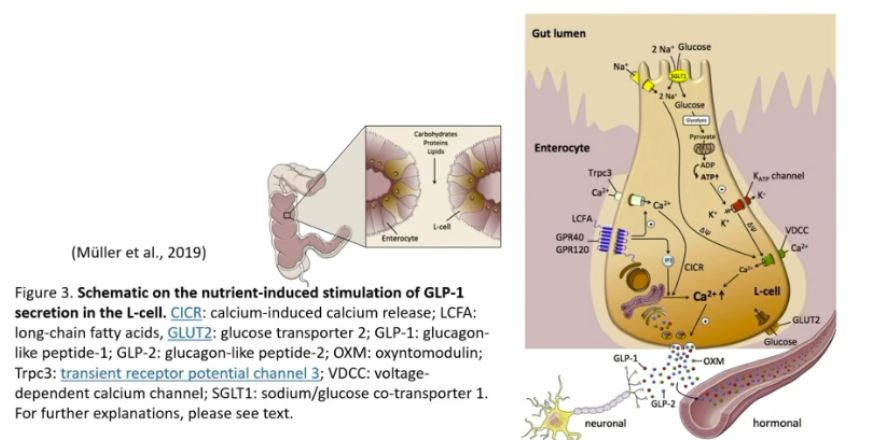 in presence of glucose, gene pre-proglucagon make GLP-1 and GLP 2
GLP-1 is pleitropic
has many effects
isoreceptor idea
decrease food intake (ozempic)
increase learning and memory
decrease in inflammation (decrease in obesity)
Wegovi increase insulin secretion for type II diabetes
proliferation of Ozempic as weight loss drug- half had prediabetes
by week 68 weight declined with semiglutide than placebo (14.9 to 2.4)
placebo lost 2-4%
lost 16% on semiglutide
86.4% lost more weight than placebo
after stopping- most gained weight back
Page 11
Semiglutide study for obesity treatment
Significant weight loss with semiglutide
More subjects lost weight with semiglutide
Some