6.4 - Muscle and Tendon Injuries
Muscle and Tendon Injuries
Most common injuries during sports and physical activity affect muscles and tendons.
Types of injuries include:
Muscle strains and tears
Tendonitis
Delayed onset muscle soreness (DOMS)
Muscle Strains and Tears
Muscle strains result from excessive twisting or pulling on a muscle or tendon, which, if left untreated, can lead to tears in the muscle or tendon fibers.
They can be either acute or chronic, with acute strains often occurring in contact sports or when heavy objects are improperly lifted, while chronic strains develop from prolonged overuse and repetitive motion.
The severity of strains and tears is classified into three categories: first-, second-, and third-degree.
First-degree injuries are the mildest, with slight swelling, bruising, and pain experienced only at the end of full range of movement or during muscle stretching or contraction.
Second-degree injuries are more severe and typically require physiotherapy treatment upon diagnosis.
Third-degree injuries are the most severe, often necessitating surgery and rehabilitation, with a recovery period ranging from six to twelve months.
Delayed Onset Muscle Soreness (DOMS)
Delayed Onset Muscle Soreness (DOMS) is the result of microscopic tearing deep within muscle fibers.
Typically felt when starting a new exercise program, changing routine, or increasing exercise intensity/duration.
May last from several hours to several days post-exercise.
Any unfamiliar movement can lead to DOMS, especially those involving forceful muscle contractions while lengthening (e.g., downhill running).
Soreness usually peaks within 24 to 72 hours post-exercise and subsides after 5 to 7 days.
The severity of soreness depends on the activity performed, intensity, and duration.
DOMS pain differs from immediate acute pain of muscle strain or exercise fatigue.
Swelling can accompany muscle tearing.
Minimize DOMS through proper warm-up, cool-down, and gradual intensity increases.
If experiencing DOMS, consider icing, gentle stretching, and adequate rest for recovery.
If soreness persists beyond a few days, consult a physician.
Tendonitis
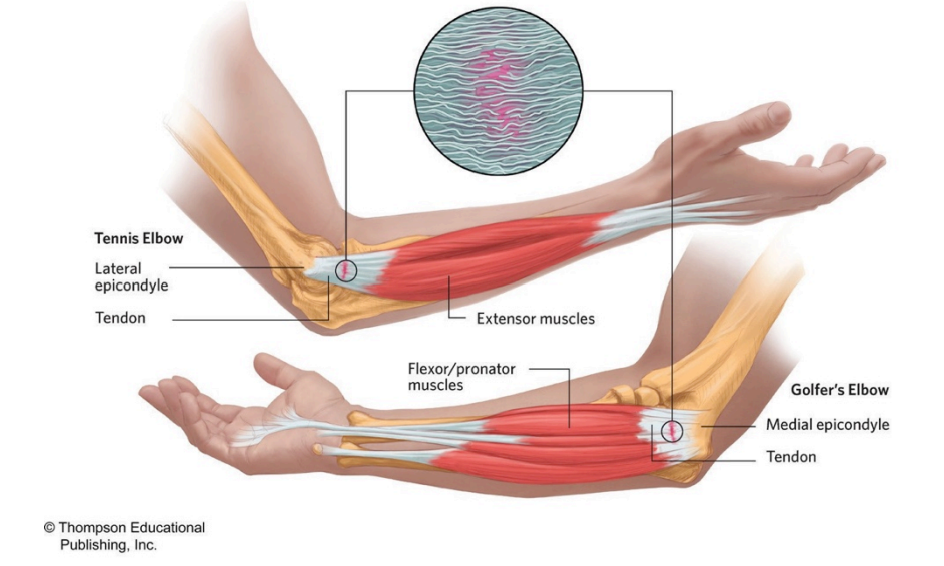
Tendonitis typically arises from overuse, often when starting a new activity that irritates the joint tendon, with specific names depending on the affected area, like "Achilles tendonitis" or "tennis elbow."
Symptoms include:
Pain or tenderness around the affected tendon
Stiffness limiting movement
Sharp pain during joint movement, sometimes accompanied by mild swelling, numbness, or tingling.
Treatment varies based on the type of tendonitis but commonly involves:
Rest, avoiding aggravating movements
Using splints
Applying ice packs
Taking anti-inflammatory medication
Participating in physical therapy
Prevention strategies include:
Proper warm-up exercises
Employing correct technique
Using suitable equipment to reduce the risk of tendonitis.