3.1: Drugs and Alcohol
Drug Use and Abuse
- Drug: any substance other than food that alters the structure or functioning of a living organism when it enters the bloodstream
- In 2018, 1 in 19 adults between the ages of 15 and 64 used at least one illicit drug.
- In 2016, over 3 million deaths were attributable to alcohol.
- Nearly 17% of the adult population smokes cigarettes, and 80% of the people who smoke cigarettes are from low- and middle-income countries.
- Sociologically, the term drug refers to any chemical substance that:
- Has a direct effect on users’ physical, psychological, and/or intellectual functioning,
- Has the potential to be abused, and
- Has adverse consequences for individuals and/or society.
- Differences in drug use can be attributed to variations in drug policies.
- Policies include treating drug use as public health issues, widespread prohibition, and criminalization of drug use and distribution such as the case with the War on Drugs in the U.S.
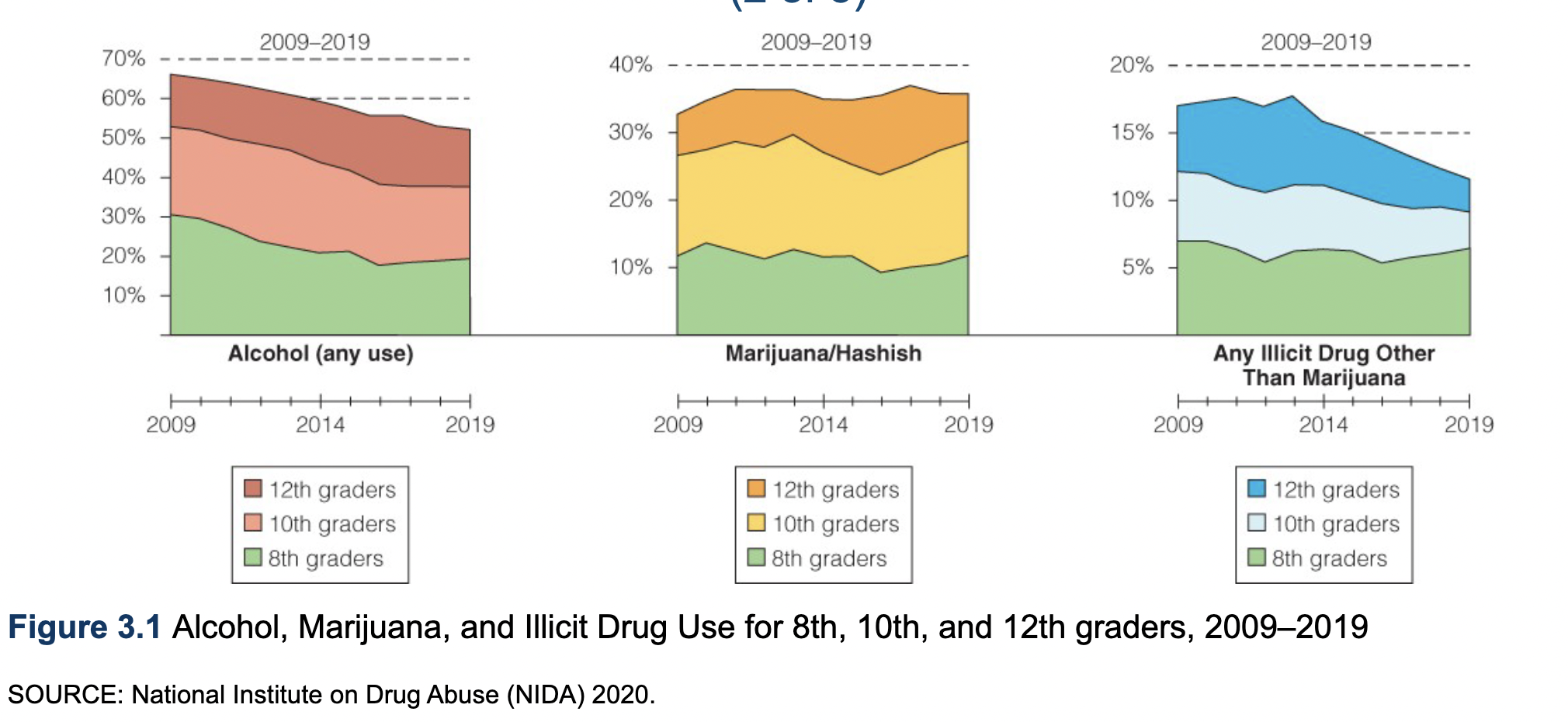
- War on drugs: a public policy approach to the illicit drug trade in the United States, initially implemented by the Nixon administration in the 1970s, which focused on the widespread prohibition and criminalization of drug use and distribution
- In the United States, cultural definitions of drug use are contradictory.
- Some drugs are condemned while others encouraged and tolerated.
- In the 1800s and early 1900s, opium was used in medicines as a pain reliever, and morphine as a treatment for dysentery and fatigue.
- Amphetamine-based inhalers were legally available until 1949, and cocaine was an ingredient in Coca-Cola until 1906, when it was replaced with the caffeine drug.
- Use of illegal drugs in the United States is common.
- In 2018, nearly one out of every five Americans aged 12 and older had used an illicit drug in the month prior to the survey year.
Sociological Theories of Drug Use and Abuse
Key Terms
- Drug abuse: when acceptable social standards of drug use are violated, resulting in adverse physiological, psychological, and/or social consequences
- Chemical dependency: a condition where drug abuse is compulsive; users are unable to stop
- Substance use disorder: a medical diagnosis used when recurrent use of alcohol and/or drugs causes clinically significant health problems, disabilities, and inability to meet major responsibilities at work, school, or home
- Theories of drug use explain how structural and cultural forces, biological and psychological factors, influence drug use and society’s responses to it.
Applying Theories
- Structural-Functionalist Perspective
- Drug abuse is a response to anomie or weakening of societal norms that occurs during rapid social change.
- Inconsistencies and social strains lead to drug use. Economic disruption and social isolation during COVID-19 led to more than 32% increase in alcohol consumption.
- Anomie can also exist at an individual level when a person suffers estrangement and turmoil.
- Eg. An adolescent whose parents are experiencing divorce
- Drug use is a response to the absence of a perceived bond between the individual and society.
- Conflict Perspective
- Powerful class influence definitions of what drugs are illegal, and penalties for illegal drug production, sales, and use.
- Drug use occurs in response to inequality perpetuated by a capitalist system and is a means of escaping oppression and frustration.
- Alcohol is mainly consumed by white males who are more likely to be in positions of power and profit from the sales and distribution of liquor.
- Racial disparities in drug arrests and incarceration persist.
- Historical pattern continues as the increase in opioid use primarily by white people is referred to as the opioid epidemic, provoking sympathy.
- Symbolic Interactionist Perspective
- Emphasizes the importance of definitions and labeling, and meanings.
- People internalize labels that influence their drug use.
- Drug use is learned via verbal and non-verbal language and interactions.
- Peer influence and social media are strong predictors of teen substance use.
- Interactions between teens and parents provide a strong source of drug abuse prevention.
- Symbols are used for political and economic agendas and campaigns against drug use (D.A.R.E., M.A.D.D.).
- Biological Theories
- Focused on genetics in predisposing one to drug use
- Genetics are not destiny since lifestyle choice and environmental factors have a significant influence on the likelihood of addiction.
- Psychological Theories
- Psychological explanations focus on the tendency of certain personality types to be more susceptible to drug use.
- Substance use disorder is disproportionately high among people with mental illness and may be reflective of a cumulative burden of social factors.
Patterns of Drug Use in the United States
Alcohol: The Drug of Choice
- Heavy drinking: five or more drinks on the same occasion on each of five or more days in the past 30 days
- 11.8% of respondents in Dept. of Health and Human Services survey
- Binge drinking: drinking five or more drinks on the same occasion on at least one day in the past 30 days
- 48% of respondents in the same 2018 survey
- 12- to 20-year-olds consume 90% of their alcohol in this manner.
- Males are more likely to binge drink compared to females.
- Drinking culture and social context influence binge drinking behavior.
Tobacco and Nicotine
- In 2018, fewer than one in six Americans were current smokers.
- Characteristics of smokers:
- Male
- Native Americans and Black Americans
- Adults with a GED
- People who identify as LGBT → often smoke due to psychological distress
- In 2019, more than one-third of 8th, 10th, and 12th grades reported using e- cigarettes in the past month.
- E-cigarette: a battery-operated device that produces a vapor that contains nicotine, which can then be inhaled
Marijuana
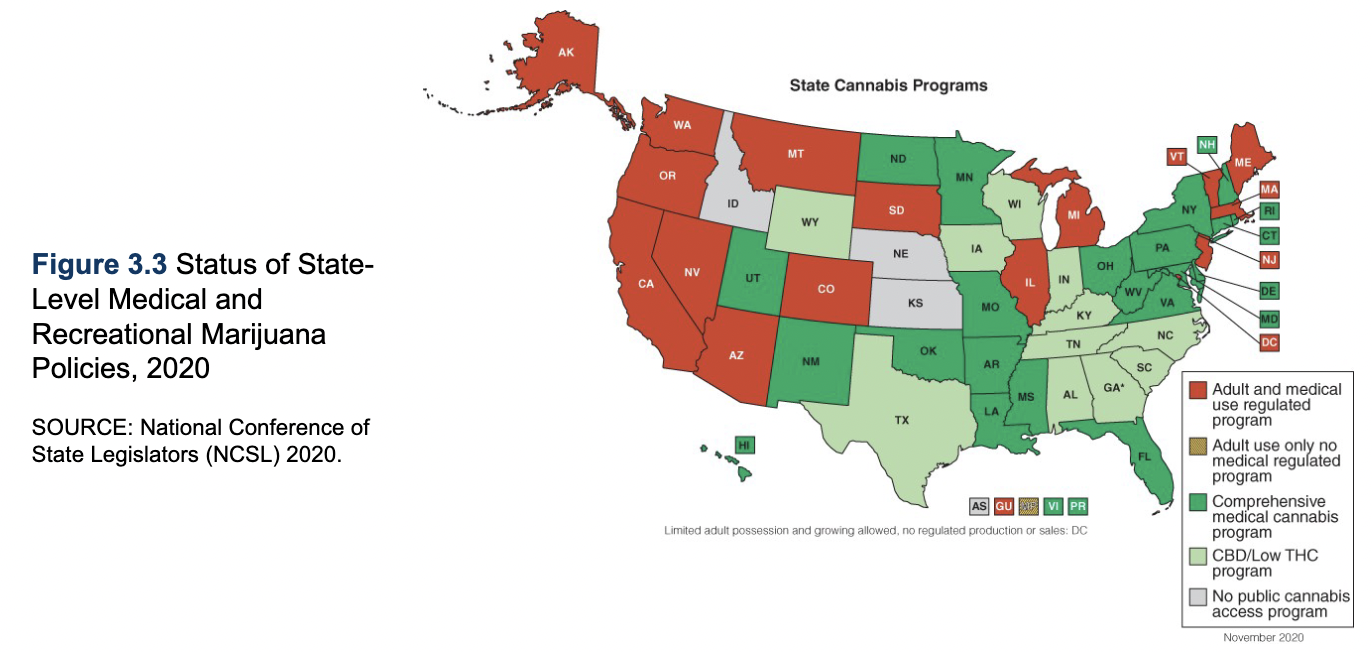
- States have been easing legal restrictions on marijuana.
- Many fear that marijuana is a gateway drug.
- Gateway drug: a drug which commonly leads people to experiment with and use other drugs
- Research findings show that people who experiment with one drug are likely to experiment with another, and drug users use several drugs concurrently.
- Fear about potential harms of marijuana.
- There is widespread support for some form of decriminalization.
Prescription Drugs and the Opioid Crisis
- Psychotherapeutic drug: the non-medical use of any prescription pain reliever, stimulant, sedative, or tranquilizer
- Nearly two-thirds of all drug overdose deaths in 2017 were due to the misuse of prescription painkillers.
- Deaths over the last twenty years included prescription drugs, heroin, and synthetic opioid overdose deaths.
- Drug lords now use sophisticated techniques to target middle America with less expensive and more available heroin.
Meth: The Resurging Epidemic
- Usage rates and admissions to treatment program for methamphetamine abuse showed a steady decline after a peak in 2005.
- Between 2008 and 2015, amphetamine hospitalizations increased by 245% and surpassed a 45% increase in opioid-related hospitalizations.
- Those seeking help for substance abuse disorders are reporting polydrug abuse disorder.
- Polydrug abuse: occurs when a user becomes dependent on two or more drugs simultaneously
- Secondary addiction to a drug helps to counteract the negative effects of the primary drug.
Societal Consequences
The Cost to Children and Family
- Approximately 1 in 10 children under the age of 18 lives with a parent in need of treatment for drug or alcohol dependency.
- These children are more likely to:
- Live in an environment riddled with conflict.
- Have a higher probability of physical illness including injuries or death from an automobile accident.
- Suffer with child abuse and neglect.
- 1 in 3 children in foster care was removed due to parental drug use.
- Grand-family: to children being raised by non=parental family members
Crime and Drugs
- At least 65% of the U.S. prison population is estimated to have an active substance use disorder.
- Another 20% did not meet definition of a substance abuse disorder but were under the influence of drugs or alcohol at the time of their crime.
- Crime and drug use are associated with low socioeconomic status.
- Some criminal offenses are directly the result of drug and alcohol use, possession, sale, etc.
The High Price of Alcohol and Other Drug Use
- The annual cost of substance abuse and addiction is $467.7 billion.
- The annual cost of alcohol abuse is $249 billion or $2.05 per drink.
- $179 billion in lost workplace productivity, $28 billion to treat people for health problems due to excessive drinking, $25 billion connected to alcohol-related crimes, and $13 billion in car crashes caused by alcohol impairment
- Annual costs of smoking-related illnesses in the United States is at least $300 billion, much of which are absorbed by taxpayers.
- Thousands of lawsuits have been filed against pharmaceutical companies for the destruction of lives and economic costs from the opioid epidemic.
Physical and Mental Health Costs
- Alcohol abuse causes 1 in 10 deaths annually among 20–64-year-olds.
- Fetal Alcohol Spectrum Disorders predictors include:
- Late recognition of pregnancy by mother, amount of alcohol consumed by mother 3 months prior to pregnancy, and quantity of alcohol consumed by father.
- Fetal Alcohol Syndrome (FAS): a syndrome characterized by serious physical and mental handicaps as a result of maternal drinking during pregnancy
- Cigarette smoking and secondhand smoke impact the health of the smoker and others including infants and fetuses.
- Children who work in tobacco fields risk green tobacco sickness from the absorption of nicotine through the skin from tobacco leaves.
- Drug use and abuse disproportionately effect the vulnerable in society.
The Cost of Drug Use on the Environment
- Cultivation, production, and trafficking impacts the natural environment.
- Narco-deforestation describes the fast rate of tropical forest loss due to cocaine trafficking in Central and South African countries.
- Crack: an illegal crystallized drug product produced by boiling a mixture of baking soda, water, and cocaine
- Crime displacement: illicit drug producers moving to remote areas to avoid detection.
- Water contamination, endangering fish and wildlife, and clear-cutting of natural vegetation are a few environmental consequences in Mexico and the United States.
Strategies for Action
Two Primary Approaches
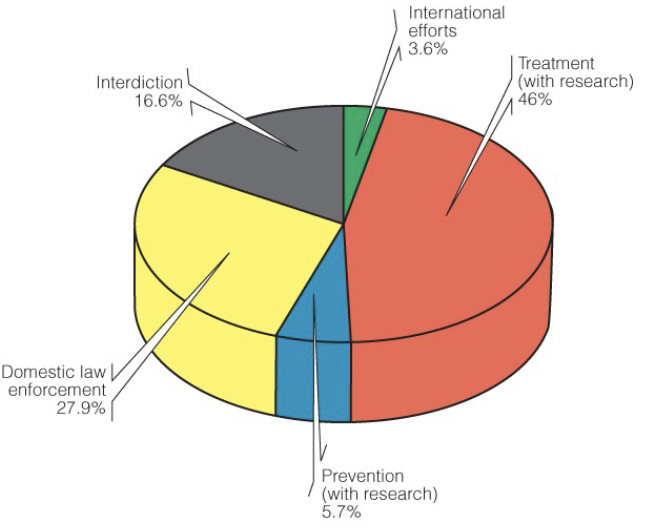
- Demand reduction: focuses on reducing the demand for drugs through treatment, prevention, and research
- Drug courts: special courts that divert drug offenders to treatment programs in lieu of probation or incarceration
- Harm reduction: a public health position that advocates reducing the harmful consequences of drug use for the user as well as for society as a whole
- Supply reduction: focuses on reducing the supply of drugs available on the streets through international efforts, interdiction, and domestic law enforcement
Alcohol, Tobacco, and Prescription Drugs
- Economic Incentives
- Increase cost of product through taxation
- Government Regulation
- Nonsmoking policies, age restrictions, regulation of markets
- Legal Action
- Lawsuits and settlements
Criminalization Strategies and The War on Drugs
- Race, Gender, and Social Class Inequalities
- Rate of imprisonment on drug charges is nearly six times higher for Black Americans compared to Whites.
- In 2017, 25% of women in prison were convicted of a drug offense, compared with 14% of men.
- Social class measured by education and neighborhood poverty is the strongest predictor of drug related incarceration.
- Drug Policy Reforms and Drug Courts
- Deregulation and Legalization
Medicalization Strategy: Addiction as Disease Management
- Inpatient and Outpatient Treatment
- Twelve Step Program
- Community-Based Prevention and Public Health Strategies
- Prevention
- Public Education Campaign
- Warning Labels
- Family, School, and Community Based Prevention Programs
- Warning Labels
Two Primary Issues
- Two issues need to be understood in drug use:
- Why does the individual use alcohol or other drugs?
- Many individuals have been failed by society.
- Policies addressing the social cause of drug use must be a priority.
- Why does drug use vary dramatically across societies, often independent of a country’s drug policies?
- A more balanced approach is needed recognizing that not all drugs have the same impact on individuals and societies.